Wheel cleaner vs tire cleaner: What’s the difference?
Wheel cleaner is for wheel faces, barrels, and brake dust; tire cleaner is for rubber sidewalls and browning. Use iron remover when bonded metal contamination is the problem. Using the wrong product can stain finishes, leave dressing residue, or strip too much from rubber. This guide explains each cleaner by surface and contamination type, then gives a simple choose-this-not-that workflow for wheels, tires, and iron fallout.
| Contamination type | Surface | Safe product | Do not use | Dwell / agitation |
|---|---|---|---|---|
| Brake dust | Wheel face | Wheel cleaner; switch to iron remover if the dust is baked on | Tire cleaner | Allow about 30–60 seconds, then use light agitation if needed. |
| Brake dust | Wheel barrel | Wheel cleaner for light buildup; iron remover for bonded fallout | Tire cleaner | Short dwell, then wheel brush or barrel brush |
| Road film | Wheel face | Wheel cleaner or pH-neutral car soap for light film | Tire cleaner | Brief dwell, gentle wipe or mitt pass |
| Road film | Lug area | Wheel cleaner | Tire cleaner | Let dwell, then use a small brush |
| Rubber browning | Tire sidewall | tire cleaner | Wheel cleaner | 30–60 seconds, then scrub with a tire brush |
| Old dressing | Tire sidewall | tire cleaner | Wheel cleaner | Longer dwell if buildup is heavy, then agitate and rinse |
How each cleaner works on different surfaces
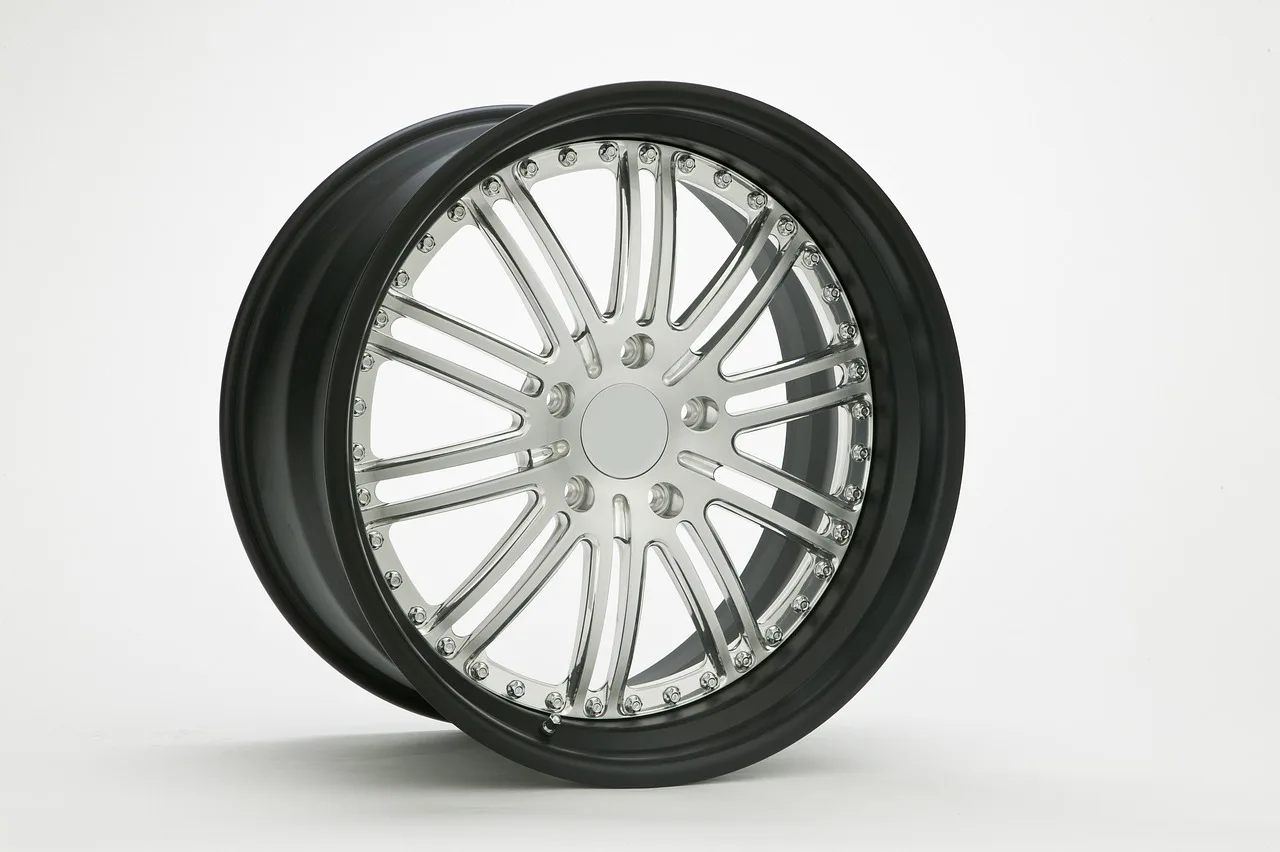
Wheel cleaner is made for wheel surfaces and their contamination, including light brake dust and road film. tire cleaner is made for rubber sidewalls and the brown buildup that collects there. The materials are different, so the chemistry and the safe-use zones are different too.
How the jobs differ by surface
Wheel cleaner belongs on the face, inner barrel, lug area, and spoke pockets, where metal or coated metal collects grime. Tire cleaner belongs on the sidewall, where road grime, oxidation, and dressing residue sit on rubber. For finish-sensitive work, wheel-finish care matters as much as the cleaner itself.
How the jobs differ by contamination
Wheel cleaner fits road film and light brake dust. Tire cleaner is suited to brown rubber staining and dressing buildup. The split is by contamination type, not by which bottle sounds stronger.
Can you use tire cleaner on wheels?
Only if the product label explicitly says it is safe for the specific wheel finish and application area. In general, tire cleaner is for rubber sidewalls, not wheel faces or barrels. It is often a high-pH or alkaline degreaser, and some descriptions call it a foaming alkaline cleaner with a pH in the approximate 11–13 range. That chemistry is designed to strip rubber browning and dressing, not treat wheel finishes.
Why rubber-only formulas are a bad fit for wheel faces
Wheel faces and barrels are metal or coated metal surfaces. They may be painted, chrome, polished, clear-coated, powder-coated, or bare aluminum. A tire cleaner can be too aggressive for that job and can leave residue where it should not.
What can happen on clear coat, chrome, or polished metal?
On sensitive finishes, the risk is not just poor cleaning. Wrong chemistry can haze a polished surface, mark delicate chrome, or leave a film that takes extra work to remove. If the wheel finish is valuable or uncertain, stay with a wheel cleaner that is rated for that surface.
What cleaner should you use on brake dust?
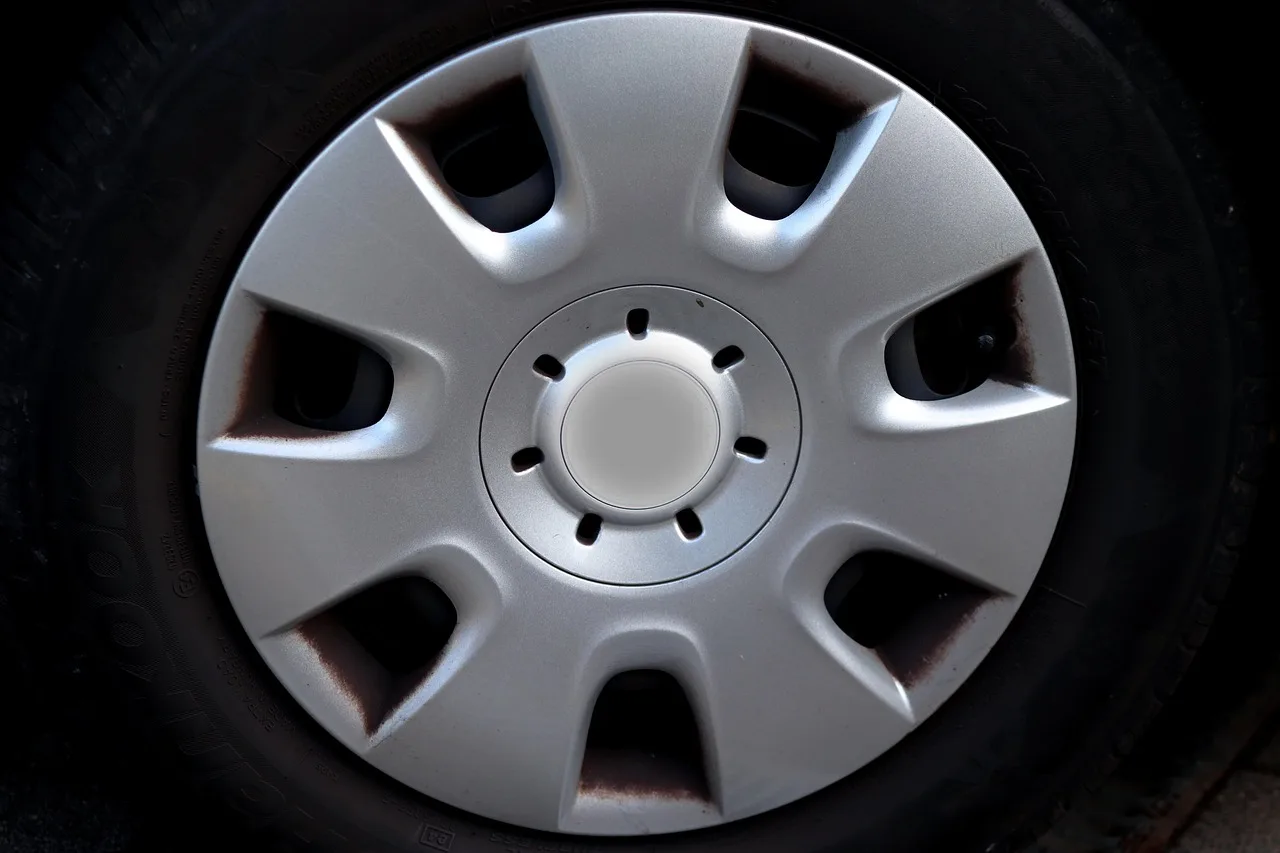
Use wheel cleaner for normal brake dust, then move to an iron remover if the dust is baked on or the wheel still feels gritty after rinsing. Brake dust is iron-based contamination, and heat can fuse it onto the wheel surface. That is where a dedicated iron remover is the better fit.
Why brake dust is a special case
Brake dust comes from the brake system and is rich in iron particles, which is why it can bond to hot wheels and refuse to rinse off cleanly. A normal wheel cleaner can lift loose contamination, but it may not break down bonded iron fallout. For that step, an iron remover is the more targeted chemical.
When wheel cleaner is enough
If the wheel has light brown dust, light road film, or a fresh layer of grime, wheel cleaner is the first choice. Let it dwell, agitate if needed, and rinse before it dries. On many daily drivers, that is enough to clear the surface without extra steps.
When to switch to iron remover
If you see stubborn orange or dark specks that do not release with wheel cleaner, use iron remover. The chemistry is built for bonded metal contamination and often gives the familiar color-changing reaction many users look for. It is the right call for neglected wheels, especially when the dust has had time to bake in.
Picture a sedan with dark gray alloy wheels and a visible brown haze behind the spokes after a long highway week. A standard wheel cleaner may clear the loose film, but the speckled iron fallout in the barrel can stay put until an iron remover breaks it down.
What cleans brown tires and old dressing?
Tire cleaner is the right choice for brown sidewalls and old dressing residue. That brown film is a tire-surface problem, often tied to road grime and dressing buildup. Wheel cleaner is not the right tool there, and car soap usually does too little when the residue has built up over time.
How tire cleaner handles rubber browning
Rubber browning sits on the sidewall and often shows up as a dull tan or brown smear after wiping. Tire cleaner is made to cut that film, and a short dwell helps it work before you agitate. A 30–60 second dwell time is a common benchmark for many tire cleaners.
Where car soap falls short
Car soap can remove loose dirt, but it is usually not strong enough for oxidized dressing residue or embedded browning. If the sidewall still looks gray-brown after a wash, the cleaner did not go far enough. That is the cue to use a tire cleaner and a brush.
A common first-timer mistake is spraying wheel cleaner on a sidewall that has months of brown buildup, then wiping it once and calling the tire clean. That usually leaves the brown film behind because the product was aimed at the wrong surface and the agitation was too light.
How does finish safety change by wheel type?
Finish matters because wheel cleaner should match the coating or metal on the wheel. The safer the finish, the more room you have to work. The more delicate the finish, the more important it is to stay with a compatible wheel cleaner and avoid over-scrubbing.
Painted and clear-coated wheels
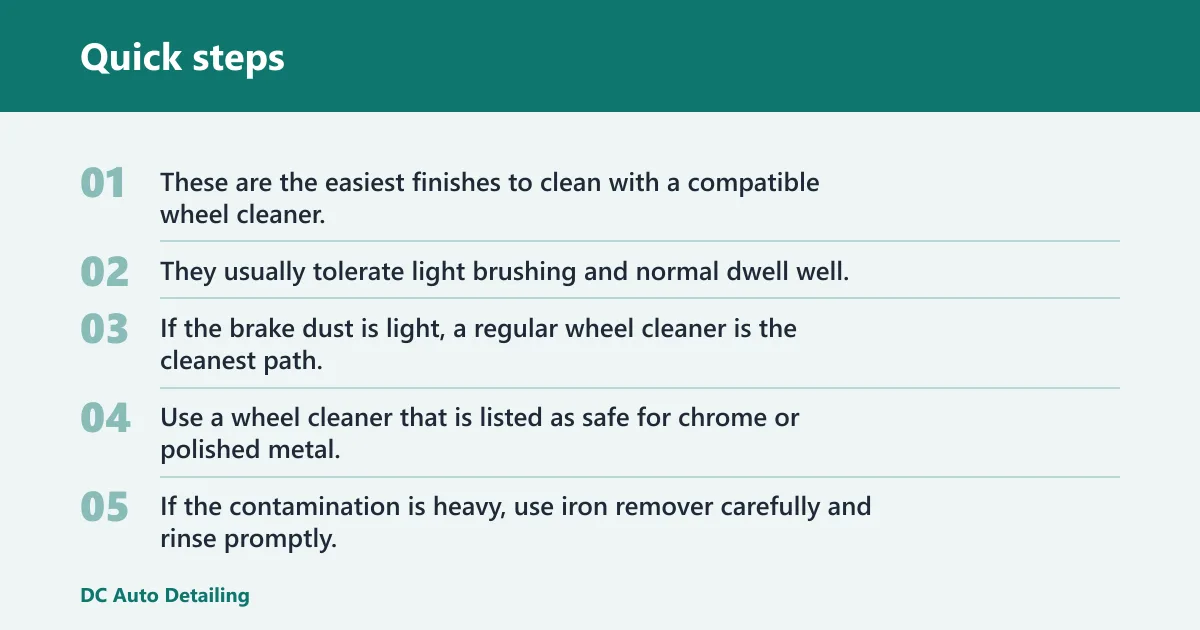
These are the easiest finishes to clean with a compatible wheel cleaner. They usually tolerate light brushing and normal dwell well. If the brake dust is light, a regular wheel cleaner is the cleanest path.
Chrome and polished surfaces
These finishes deserve more caution. Use a wheel cleaner that is listed as safe for chrome or polished metal, and avoid letting any product dry on the surface. If the contamination is heavy, use iron remover carefully and rinse promptly.
Powder-coated and aluminum wheels
Powder-coated wheels often handle wheel cleaner well, but the exact topcoat still matters. Aluminum can be more sensitive depending on the finish, so check compatibility before full coverage. If a wheel has a mixed finish, treat it like the most sensitive area on the wheel.
Why pH-neutral is not a universal pass
pH-neutral and acid-free are helpful labels, but they do not automatically make a product safe for every finish or for uncoated metal. Formula strength, surfactants, dwell time, and the wheel’s actual coating all matter. The safest move is to verify the label against the specific finish before full use.
How much scrubbing do you need?
That depends on contamination and finish. Wheel cleaner should do part of the work, but it is not a no-touch solution for every wheel. Give the chemical time to loosen the film, then use a brush or mitt where needed and rinse before the product dries.
Daily driver workflow
For a lightly soiled daily driver, spray wheel cleaner, let it dwell for 30–60 seconds, agitate the face and barrels, then rinse. Use tire cleaner only on the sidewalls after the wheel is done. This keeps the cleaner matched to the surface and avoids cross-contamination.
Neglected vehicle workflow
For a neglected vehicle, start with the wheel face and barrel using wheel cleaner. If bonded brake dust remains, use iron remover next. Then clean the tires separately with tire cleaner so the wheel product does not get pulled onto the rubber.
Ceramic-coated wheel workflow
Ceramic-coated wheels usually need less scrubbing, not more product variety. A gentle wheel cleaner is often enough for routine maintenance, because the coating helps resist buildup. For heavy brake dust, use iron remover carefully and rinse well.
Should you scrub, soak, or switch products?
The right move depends on what is still on the surface after the first pass. If the contamination is loose, a brief dwell and light agitation usually solve it. If it is bonded, especially on wheel faces and barrels, switching to iron remover is cleaner and safer than repeated scrubbing.
When a brush is the right next step
Use a brush when wheel cleaner has loosened the grime but the residue still clings in crevices, lug recesses, or spoke pockets. A wheel brush helps reach those areas without forcing the chemical to do all the work.
When a second chemical is better than more pressure
If the wheel still shows embedded specks after rinsing, more pressure rarely helps as much as the right chemical. Iron remover is designed for bonded metal fallout, while wheel cleaner is better for general soil and dust. The product choice should follow the contamination, not just the look of the wheel.
Choose wheel cleaner if…
Choose Wheel cleaner if the contamination is on the wheel face, barrel, or lug area, and the problem is light grime, road film, or normal brake dust. It is also the safer first pick for painted, chrome, polished, clear-coated, powder-coated, and aluminum wheels when the label supports that finish. If the dust is baked on, move up to iron remover.
Choose tire cleaner if…
Choose tire cleaner if the job is brown sidewalls, old dressing, or rubber that looks dull and stained after washing. It belongs on the tire only. Give it dwell, brush it, and rinse before it dries for the cleanest result.
Frequently asked questions
What is the difference between wheel cleaner and tire cleaner?
Wheel cleaner is made for wheel surfaces and their contamination, including light brake dust and road film. tire cleaner is made for rubber sidewalls and the brown buildup that collects there. The materials are different, so the chemistry and the safe-use zones are different too.
What cleaner should I use for brake dust on wheels?
Start with wheel cleaner for normal brake dust. If the dust is heavy, baked on, or still embedded after dwell and agitation, use iron remover. Brake dust is iron-based contamination, so iron remover is the stronger fit when wheel cleaner does not finish the job.
What cleaner removes brown tires and old tire dressing?
tire cleaner is the right choice. Brown sidewalls and old dressing residue sit on the rubber, not on the wheel. A short dwell of 30–60 seconds, followed by brushing, usually works better than soap alone or a wheel product used in the wrong place.
Is wheel cleaner safe on painted, chrome, or polished wheels?
Often yes, but only if the formula is rated for those finishes. Many wheel cleaners are acid-free and pH-neutral, and some are described as safe for all finishes. Still, you should verify compatibility on the label before using it on chrome or polished surfaces.
When should I use an iron remover instead of a wheel cleaner?
Use iron remover when the wheel has bonded brake dust that wheel cleaner will not fully release. The chemical is built for heavy, baked-on contamination and may show a color change as it works. If the wheel only has light grime, wheel cleaner is usually enough.
Sources
- Tire Rack: What is brake dust?
- Detailer’s Domain: What is an iron remover?
- Adam’s Polishes: Wheel cleaning guide
- Chemical Guys: What is the best wheel cleaner?
- Griot’s Garage: Tire Cleaner