Why do my wheels get brake dust so fast?
Brake dust can return within a few days on many cars, and if one wheel gets much dirtier than the others, that pattern may point to a brake issue rather than normal buildup. Ignore it, and you can miss worn pads, a sticking caliper, or overheating that damages rotors. This guide shows which dust patterns are normal, which finishes collect dust fastest, and when to inspect the brakes.
What brake dust is and why it builds up fast
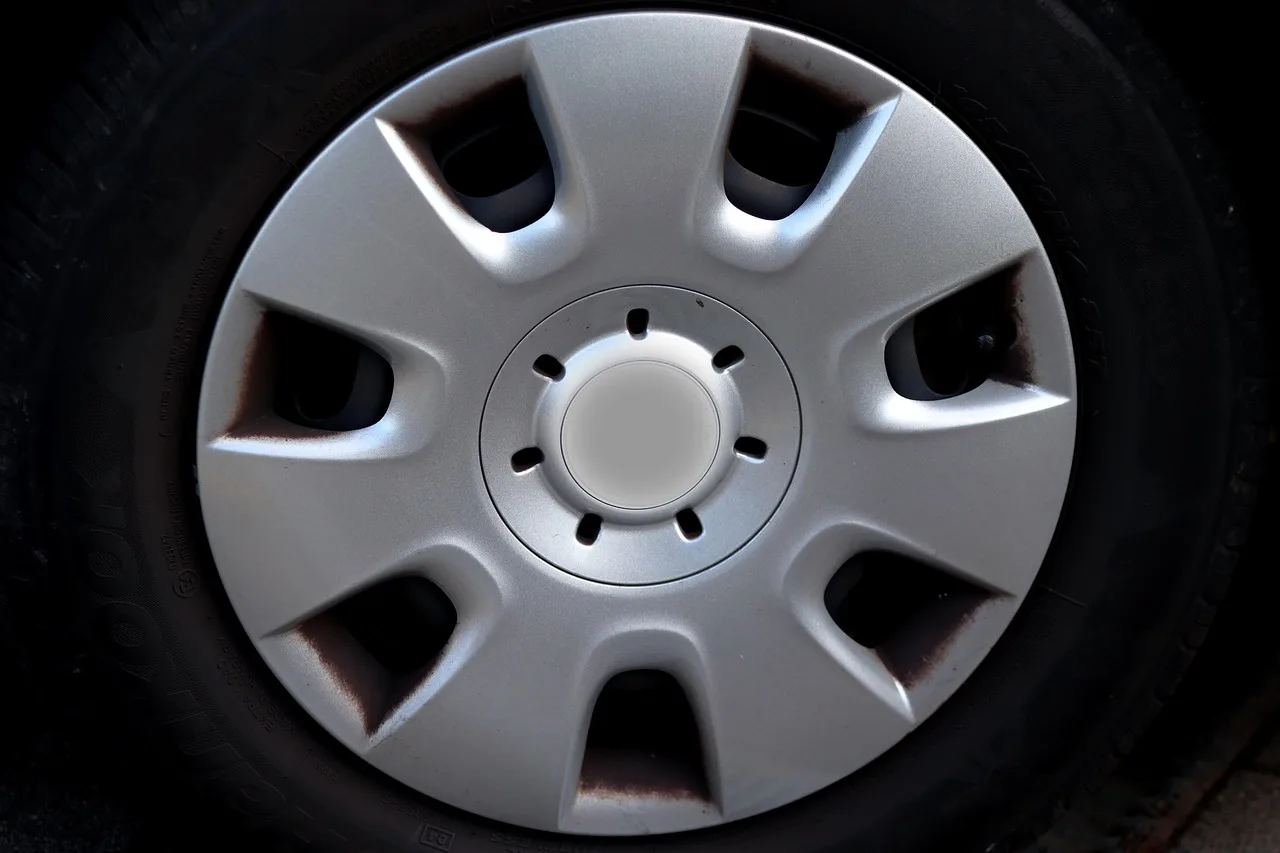
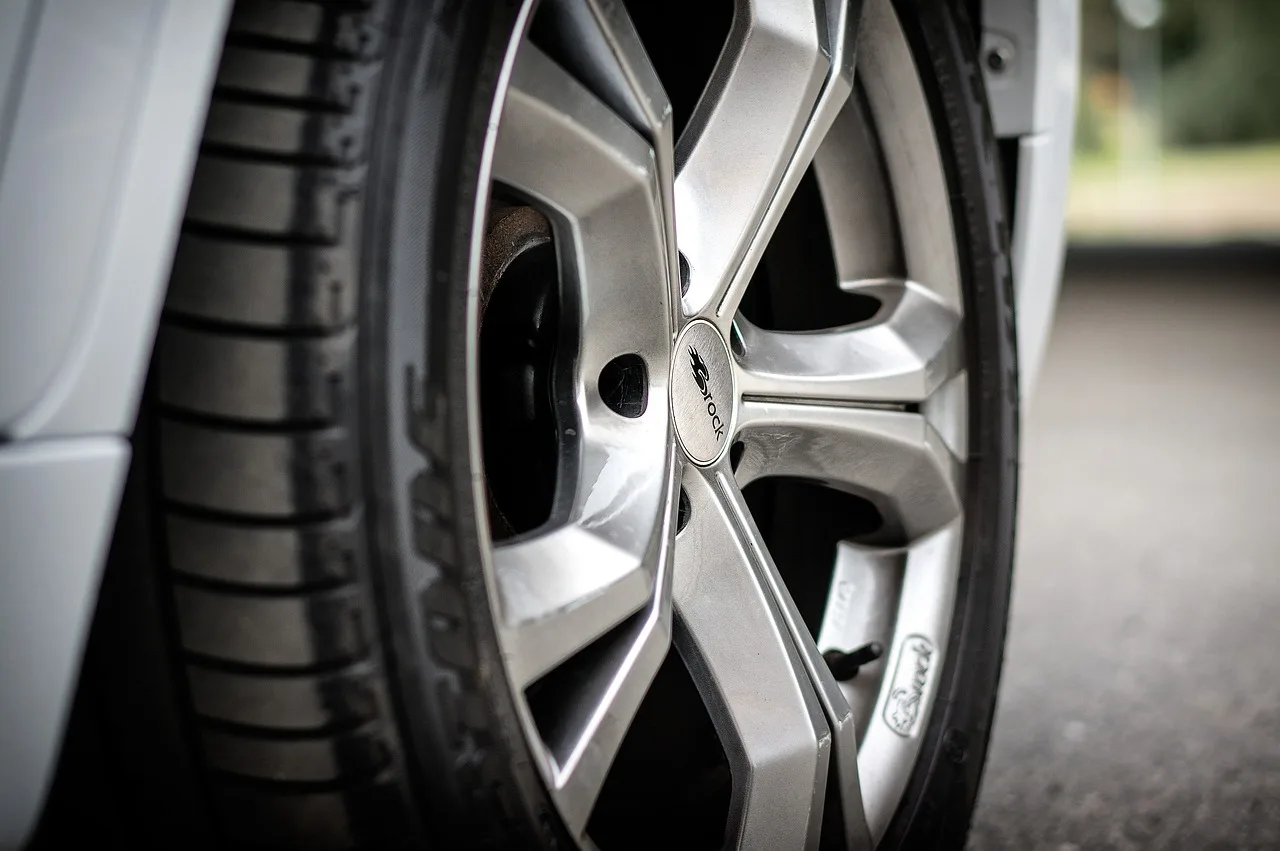
Brake dust comes from the braking system itself: friction material from the pad and iron shavings from the rotor. Heat can make those particles bond more tightly to the wheel face and barrel, so repeated stop-and-go driving can leave a black or gray film that may come back quickly after a wash.
What brake dust is made
Brake dust is a mix of pad material and rotor iron particles. That mix is why fresh dust often looks dark and metallic rather than like road grime. Once it lands on a hot wheel, it can oxidize into rust-like contamination and cling harder to clear coat, paint, chrome, polished aluminum, or matte finishes.
Why heat cycles make it stick harder
Repeated heat cycles matter. Each brake application can soften or bake the residue onto the surface, and the next stop can press more debris into the same spot. That is why dust on the barrel often stains before the face, and why a wheel can look dirty again even after a careful cleaning.
Why front wheels usually collect more
Front wheels usually look worse because they handle most stopping force. On many daily drivers, the front axle does more work during braking, so the front wheels pick up more dust than the rear. That pattern is normal when both fronts match each other and the rears stay noticeably cleaner.
Why do some wheels show more dust?
Pad compound, rotor wear, and driving style all change how much dust you see. Performance pads often make more dust for stronger braking, while ceramic or other low-dust pads usually leave less residue. Traffic, repeated stops, and frequent heat cycles can make even a healthy brake system look dusty fast.
Brake pad compound and dust output
Brake pad compound affects dust volume. A harder or more performance-focused pad can produce more particulate output, and that tradeoff may come with stronger bite, more noise, or higher cost. A low-dust pad usually reduces residue, but it is not a free upgrade for every driver or every vehicle.
Rotor wear and microscopic iron transfer
Brake rotors shed microscopic iron particles during braking. Heat and friction increase that transfer, which is why the front rotors usually create the biggest dust load. The particles can settle on the wheel face and deeper in the barrel, where they bond faster and become harder to remove.
Driving style, traffic, and repeated stops
Stop-and-go driving creates more brake applications per trip than highway cruising. Commuting traffic, short errands, and repeated slowdowns all add heat cycles, which gives dust more chances to stick. EVs and hybrids may show a different pattern because regenerative braking can reduce brake use, while heavy SUVs may still load the front axle heavily when the friction brakes do engage.
Picture a heavy three-row SUV used for school drop-off and downtown errands. The front wheels may darken first, even if the rear wheels stay fairly clean, because the vehicle still leans on the front axle when the friction brakes take over.
What your dust pattern is telling you
The location of the dust matters as much as how much dust you see. Front-only buildup can be normal. One wheel that stays much dirtier than the others is more suspicious. Heavy dust on all four wheels can point to a very dusty pad compound, frequent city driving, or a brake problem that needs a closer look.
Front-only dust versus all four wheels
Front-only dust on both front wheels is often normal on daily drivers. Dust on all four wheels can still be normal if the pad compound is dusty or the car sees repeated city use, but it should prompt a closer look at pad choice and driving pattern. When the rear wheels match the fronts closely, the car may be using aggressive pads or seeing a lot of heat.
One wheel that stays dirtier than the others
If one wheel is much dirtier than its opposite side, that points away from normal front-wheel bias. Uneven dust on a single wheel can suggest a dragging caliper, uneven pad wear, or a brake that is not releasing fully. That is the pattern that deserves inspection instead of another wash.
When fast dust points to dragging brakes
A wheel that heats up more than the others, smells hot, or leaves more dust after the same drive is a warning sign. A sticking caliper can hold a pad against the rotor, and that extra contact can throw off both wear and dust patterns. Fast dust on one wheel is not normal if it keeps returning in the same spot.
Brake dust pattern checker
Use this table to sort normal buildup from patterns that call for a brake check. The most useful clue is location: front only, one wheel, or all four. Severity matters too, but a single dirty wheel matters more than a little dust on both fronts.
| Dust location | Severity | Likely cause | Normal? | Next action |
|---|---|---|---|---|
| Front only | Light | Front-wheel braking bias, ordinary pad dust, city driving | Yes | Clean normally and watch whether both fronts match |
| Front only | Heavy | Performance pads, frequent stop-and-go driving, hotter rotors | Often yes | Consider lower-dust pads and protect the wheels with sealant |
| One wheel | Medium | Uneven pad wear or a caliper that is starting to drag | No | Inspect that corner and check for heat, wear, or pull |
| One wheel | Heavy | Dragging brake, stuck caliper, rotor issue | No | Schedule a brake inspection soon |
| All four | Light | General road use, mild pad dust, normal accumulation | Yes | Use a proper cleaner and a soft brush routine |
| All four | Heavy | Dusty pad compound, repeated braking, neglected cleaning | Sometimes | Review pad type, driving pattern, and wheel protection |
If the left front wheel is black after about a week while the right front and both rears only show a light gray film, that difference is not a typical front-axle pattern. That is not a normal front-axle pattern. A sticky caliper or uneven pad wear becomes more likely than simple commute dust.
How do wheel finish and cleaner choice change the result?
Wheel finish changes both how dust looks and how safely you can clean it. Clear-coated and painted wheels are usually easier to manage than raw polished aluminum, while chrome and matte finishes need careful product choice. Use a non-acid wheel cleaner or iron remover on cool wheels, and do not let it dry on the surface.
Clear coat, paint, chrome, polished aluminum, and matte surfaces
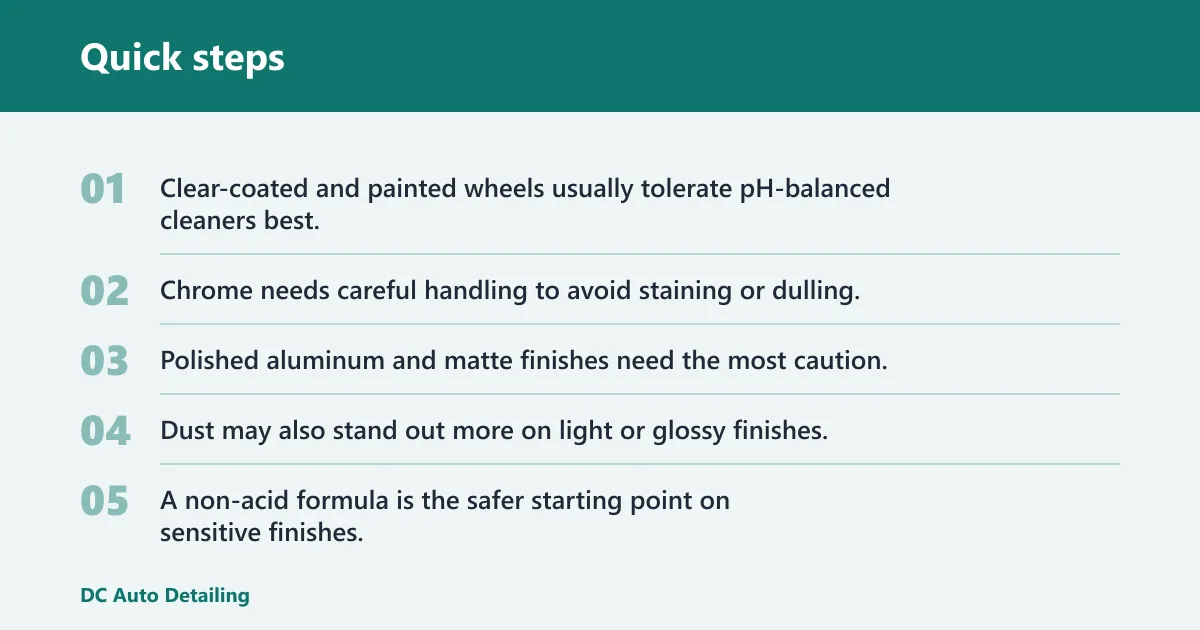
Clear-coated and painted wheels usually tolerate pH-balanced cleaners best. Chrome needs careful handling to avoid staining or dulling. Polished aluminum and matte finishes need the most caution, because aggressive chemistry can mark the surface or change the look. Dust may also stand out more on light or glossy finishes.
pH-balanced cleaner versus acid cleaner
A non-acid formula is the safer starting point on sensitive finishes. Acid-based cleaners can work faster, but they can attack finishes over time. That tradeoff matters if the wheel has chrome, polished aluminum, or a delicate matte surface. Stronger chemistry is not a better default.
Iron remover, dwell time, and drying risk
Iron removers turn purple as they dissolve embedded particles, which helps confirm iron contamination on the wheel surface. Use them on cool wheels, keep the dwell time about as short as the label recommends, and rinse before the product dries. If it dries on the wheel, the risk to the finish goes up and the cleaning gets harder.
How can you reduce brake dust on wheels?
You can reduce future buildup by making dust less likely to bond in the first place. A wheel sealant or coating helps dust rinse off instead of sticking, and a soft wheel brush removes residue without scratching. Low-dust pads can help too, but they may change braking feel, noise, and cost.
Sealant or coating for easier cleaning
A wheel sealant helps dust rinse off instead of bonding. A coating can do the same job for longer, but both need periodic reapplication. Wheel detailers leave a thin, water-repellent protective film, and the page says wheels should stay dry for at least two hours for better effect.
Soft brushes for faces, spokes, and barrels
A soft wheel brush should be used on the wheel face and spokes to avoid scratching. A separate barrel brush helps reach the inner rim, where the heaviest dust often hides. Keeping one brush dedicated to wheels also helps prevent grit transfer from paint or bodywork.
Low-dust pads and the tradeoffs to expect
Low-dust or ceramic pads can reduce residue, but the tradeoffs matter. Some drivers may notice changes in pedal feel, sound, or price. Performance pads often make more dust for stronger braking, so reducing dust output may mean giving up a bit of bite or accepting a different driving character.
What causes brake dust to return after washing?
Fresh cleaning only resets the surface. If the pads and rotors still shed dust, the wheels can dirty up again quickly, especially in traffic. The barrel usually stains first because it traps more debris, and a wheel detailer will remove fresh dust better than baked-on contamination.
Why a clean wheel can dirty up fast again
Brake dust comes back when the brake system keeps shedding material. A clean wheel does not stop that process. If the same car sees repeated city trips, the front wheels may show a new film in days rather than weeks, and a bad brake corner can re-dirty even faster.
Why the barrel stains first
The wheel barrel often gets the worst of it because the hidden inner rim catches dust, heat, and moisture. It is also the area most people miss during quick washes. If the barrel stays dark while the face looks acceptable, that does not mean the wheel is clean.
When repeat buildup means the brakes need a check
If the dust pattern keeps returning on one wheel, or one axle gets dramatically dirtier than the other, stop treating it as a cleaning issue. That is the point where a brake inspection makes more sense than another wash. Brake dust can harm wheels by causing corrosion, so ignoring the pattern can cost more than appearance.
- Let the wheels cool fully.
- Choose a non-acid wheel cleaner or iron remover for the finish.
- Apply it to the face, spokes, and barrel without letting it dry.
- Agitate with a soft brush, using a separate barrel brush.
- Rinse thoroughly and dry the wheel.
- Apply sealant or coating if you want easier future cleanup.
- Inspect for one-wheel dust, heat, or uneven wear if the pattern looks abnormal.
Frequently asked questions
What causes brake dust on wheels
Brake dust on wheels comes from pad material and rotor iron particles released during braking. Front wheels often collect more because they handle most stopping force. Stop-and-go driving, hotter rotors, and performance pads can all increase the amount you see, especially on the wheel barrel.
What causes brake dust on rims
Brake dust on rims builds the same way as on wheels: friction material and iron shavings leave the braking system, then stick to the surface. The rim barrel often shows it first. Finish type matters too, because some surfaces let dust bond faster and show staining sooner.
What causes excessive brake dust
Excessive brake dust usually points to a dusty pad compound, repeated braking, or a vehicle that does a lot of city driving. Performance pads often create more dust for stronger braking. If the dust is heavy on only one wheel, a dragging brake or uneven pad wear becomes more likely.