Best pet odor remover for cars: What to look for
Choose the best pet odor remover by matching the cleaner to the odor source: fresh urine needs an enzyme cleaner, embedded odors need an upholstery-safe extractor or stain remover, and lingering smell in HVAC needs a cabin-air treatment. Miss the source, and the odor returns, spreads, or leaves residue that can stain fabric and affect trim. EPA guidance on indoor odor control emphasizes source removal and ventilation rather than masking scents, and automaker interior-care guides similarly stress material-specific cleaning instructions for fabrics, leather, and suede-like surfaces. EPA indoor air quality guidance and vehicle owner manuals are the right baseline for safety and compatibility.
Top pick and odor-control options
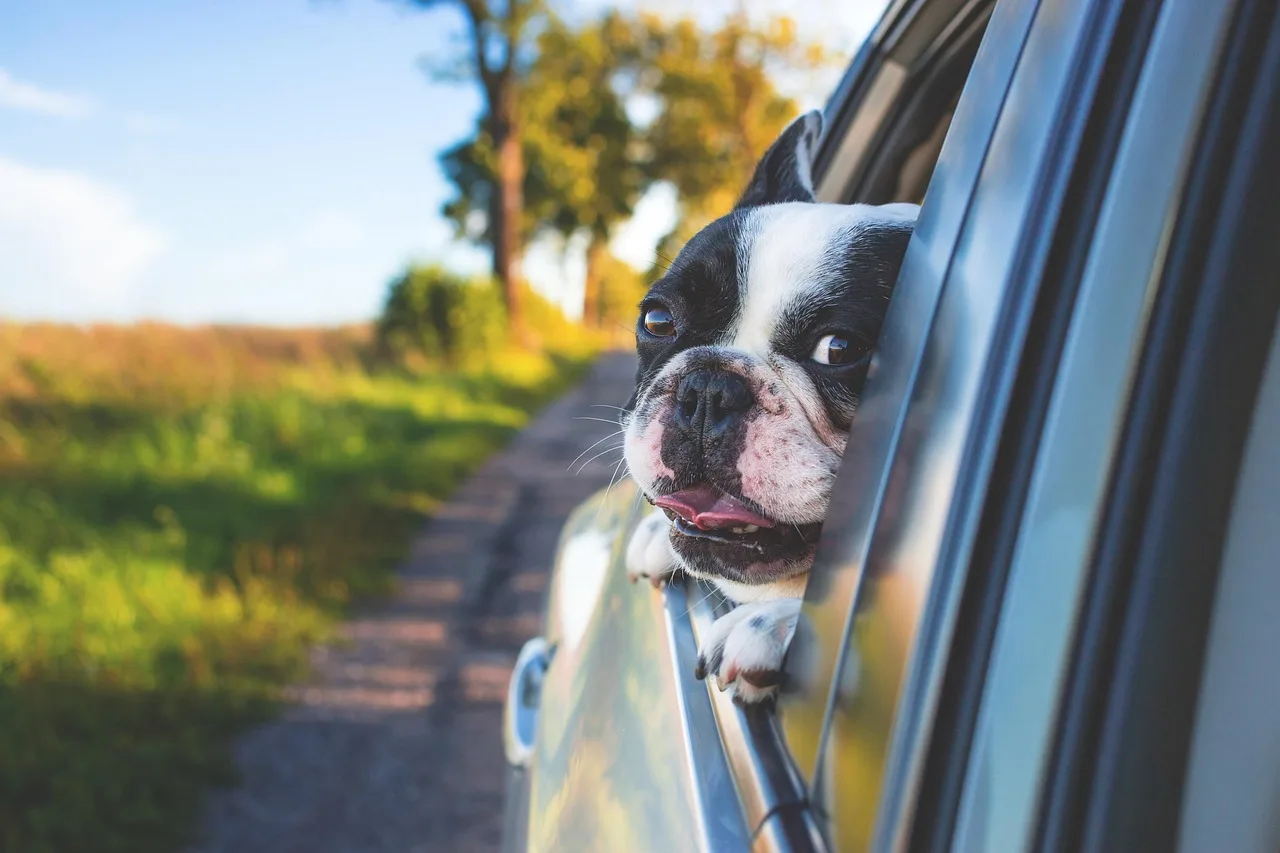
Top pick: an enzymatic cleaner for pet accidents, because it attacks the residue that actually causes the smell on carpet and upholstery. If the odor is only lingering after a clean-up, charcoal or gel can help with maintenance. If the cabin is heavily contaminated, a chlorine dioxide fogger or an ozone generator may be a last-resort option in an unoccupied vehicle, with source cleaning first and ventilation afterward. EPA warns that ozone can be harmful to lungs and should not be used around people or pets, and CDC/NIOSH classifies chlorine dioxide as a hazardous respiratory irritant; follow product labels and re-entry instructions exactly. EPA on ozone generators and NIOSH chlorine dioxide guidance.
Quick picks
| Option | Best for | Key fit | Limits |
|---|---|---|---|
| Enzymatic cleaner | Fresh urine, vomit, and other organic pet messes | Breaks down odor-causing residue at the source on carpets and upholstery | Not a standalone fix for deeply embedded odor without cleaning |
| Activated charcoal odor absorber | Passive maintenance after cleaning | Unscented odor absorption; bamboo charcoal bags are described as lasting up to 2 years | Works best for maintenance, not heavy contamination; may need sunlight recharging monthly |
| Odor eliminating gel | Ongoing freshness in a lightly used cabin | No-spray, passive format; common lifespans of 30-60 days or up to 90 days | Less effective on embedded organic residue |
| Chlorine dioxide fogger | Smoke, pet, food, and oil odors in fabric and crevices | Water activated and designed to reach fabrics and tight spaces | Requires an unoccupied vehicle and ventilation after treatment |
| Ozone generator | Deep odor removal in hard-to-fix cabins | Often positioned as a professional-grade option; one model is rated at 45,000mg/h | Works only in unoccupied spaces and needs post-treatment ventilation |
| Cabin filter replacement | Hidden odor control and maintenance | Helps stop a clogged filter from recirculating smells through the HVAC system | Does not remove residue from carpet, seats, or trim |
Pet odor decision matrix
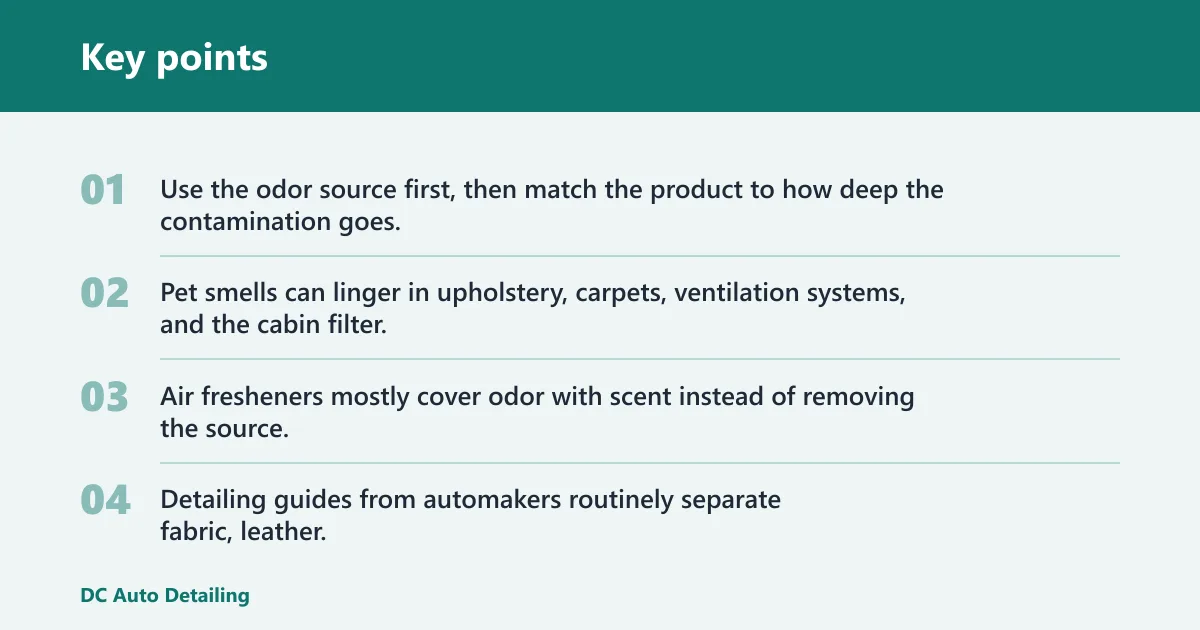
Use the odor source first, then match the product to how deep the contamination goes. Pet smells can linger in upholstery, carpets, ventilation systems, and the cabin filter, so a surface-only fix often fails. Air fresheners mostly cover odor with scent instead of removing the source, which is why the odor seems to come back after the scent fades. Detailing guides from automakers routinely separate fabric, leather, and suede-like materials because each has different cleaner compatibility and residue risk.
| Product type | Odor source | Contamination depth | Safety | Dwell time | Ventilation needs | Reapplication frequency | Best-use scenario |
|---|---|---|---|---|---|---|---|
| Enzymatic cleaner | Organic pet accidents | Surface to moderate in carpet and upholstery | Generally the safest first choice for interior fabrics when used as directed | Varies by label | Normal cabin airing after cleaning | Repeat if stain or smell remains | Fresh urine, vomit, or tracked-in residue on seats and carpet |
| Activated charcoal odor absorber | Lingering background odor | Light odor, not embedded residue | Unscented option with low chemical exposure | Passive | None for normal use | Monthly sunlight recharging is often suggested; bamboo charcoal bags are described as lasting up to 2 years | After cleaning, to help suppress smell between trips |
| Odor eliminating gel | General pet smell after cleanup | Light to moderate ambient odor | Fragrance-free options reduce masking | 30-60 days, or up to 90 days on some products | Normal cabin airing | Replace on schedule | Ongoing freshness in a daily driver |
| Chlorine dioxide fogger | Pet, smoke, food, and oil odors | Fabric, seams, and crevices | Use only in an unoccupied vehicle | Follow label directions | Ventilation required after use | Usually only after a deep contamination event | Heavy odor that persists after cleaning |
| Ozone generator | Deep-set odor | Can reach areas passive products miss | Unoccupied spaces only; follow treatment limits carefully | Varies by unit and cabin size | Post-treatment ventilation required | Occasional deep treatment, not daily use | Severe odor in a vehicle that has already been cleaned |
| Cabin filter replacement | Odor recirculating through HVAC | Hidden system source | Routine maintenance item | Install and verify fit | Normal ventilation through the HVAC system | Replace regularly | When smell returns with the fan or recirculation mode |
What should you look for first?
Start with the odor source, then decide whether the smell is on the surface or embedded in fabric and ducts. Urine, vomit, wet dog smell, and dander often need different cleaning and odor-control approaches. A good product label should tell you whether it targets organic residue, fabric odor, or passive suppression, and whether the cabin must stay empty during use. For Alcantara and suede-like materials, owner manuals usually warn against over-wetting and harsh agitation, so compatibility matters as much as odor strength.
Three checks that narrow the choice
- Identify the source. Fresh urine and vomit point to an enzymatic cleaner first. Wet dog smell often needs cleaning plus odor control. Dander can linger in fabric and HVAC, so a filter change and cabin treatment may matter.
- Judge the depth. A visible stain on a seat calls for direct cleaning. A smell that returns after the surface is dry often suggests residue deeper in carpet, foam, seams, or ventilation passages.
- Match the cabin limits. If the vehicle must stay in use, choose an enzyme cleaner, gel, or charcoal. If you can leave it unoccupied, a fogger or ozone generator may be appropriate for heavier odor.
Say your sedan has a lingering litter-box odor after a short errand, but no obvious spill. A charcoal bag can help with maintenance, yet the better first step is a fabric-safe clean on the seat and cargo area before any absorber goes in the cabin.
Suppose a sedan has one urine spot on the rear floor mat and the smell returns when the fan runs. Clean the mat and carpet first, then replace the cabin filter if the odor still comes back through the vents.
Enzymatic cleaner
An enzymatic cleaner is often a good fit for organic pet odors because it can break down odor-causing residue at the source. Use it on carpets and upholstery after blotting and vacuuming. If the smell is old, soaked-in, or tied to padding under the fabric, cleaning alone may not be enough and a deeper method may be needed. A practical detailing approach is to clean, dry, reassess, and only then escalate to extraction or part replacement if the odor remains in the backing or foam.
Where it works and where it falls short
Look for labels that say the product is safe for automotive carpet and upholstery. That matters more than a strong scent. A cleaner can smell pleasant while still leaving residue behind, and that residue is what keeps producing odor. For cloth seats, light agitation and blotting are usually safer than soaking; for leather, use a product specifically labeled for leather and follow the automaker’s conditioning guidance; for Alcantara or suede-like trim, use only the mildest compatible cleaner and minimal moisture.
When contamination reaches foam, underlay, or seams, repeat cleaning may help, but a spray alone is unlikely to solve a long-standing cabin odor. If the source is still in the vehicle, the smell can return after the fabric dries. In those cases, extraction is often the next step, and if the cushion or pad stays contaminated or distorted, pad replacement may be required.
For product selection and material-specific care, see pet odor enzyme cleaner guidance for cars and then check your owner’s manual for upholstery instructions before applying any liquid to leather, suede-like inserts, or stitched seams.
Activated charcoal odor absorber
Activated charcoal odor absorber is best for passive maintenance after cleaning. It is an unscented option, and bamboo charcoal bags are used for ongoing odor suppression. That makes it useful for maintenance, not for heavy contamination that still has active residue in the cabin. Manufacturer instructions commonly describe recharging in sunlight, but that is a maintenance step, not a substitute for removing the original odor source.
Why it fits after cleanup
Charcoal works better once the source has been removed because it absorbs leftover odor in the air instead of attacking the stain itself. The bags should be recharged in sunlight. That matters if you want the bag to keep working between deep cleans.
Use charcoal when the car is already clean but still carries a faint pet smell. Do not expect it to fix soaked carpet, dirty upholstery, or a clogged filter that keeps pushing odor back into the cabin.
Odor eliminating gel
Odor eliminating gel is best for ongoing freshness in a cabin that has already been cleaned. It is a passive, no-spray format, and fragrance-free versions reduce the chance that a strong perfume will hide the problem. Gel odor absorbers are a mid-term maintenance choice. Because the gel works by evaporation or absorption of odor compounds rather than scrubbing residue away, it is a maintenance tool rather than a primary cleaner.
What to verify before buying
Check whether the label gives an actual odor-absorption lifespan or only a scent claim. A gel that only smells “fresh” may be covering odor instead of removing it. Gel also tends to be weaker on embedded organic residue, so it should follow cleaning rather than replace it.
A gel makes sense in a commuter car that is already clean but still holds a faint dog smell after weekend trips. It is a poor fix for a stain that still has residue in the pile of the carpet.
Spray vs gel vs charcoal bag vs fogger vs ozone vs filter: which format should you use?
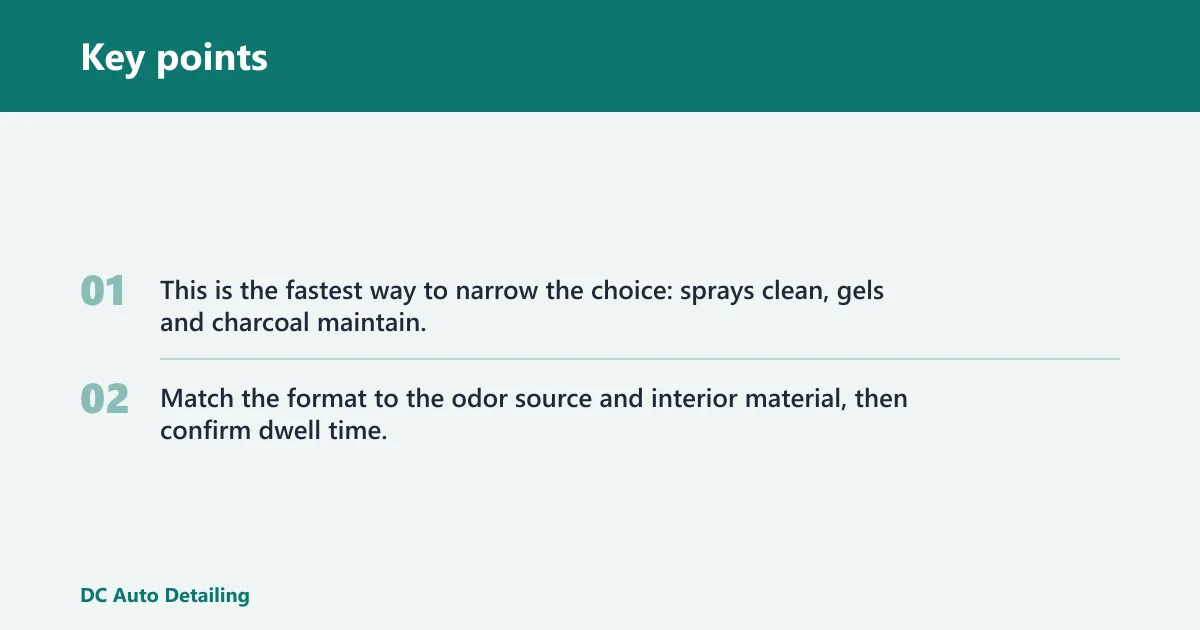
This is the fastest way to narrow the choice: sprays clean, gels and charcoal maintain, foggers reach fabric and seams, ozone is the deepest “reset” option, and cabin filters solve recirculation problems. Match the format to the odor source and interior material, then confirm dwell time, ventilation, and residue risk before you buy.
| Format | Pros | Cons | Dwell time | Ventilation / re-entry | Residue risk | Upholstery compatibility |
|---|---|---|---|---|---|---|
| Spray enzyme cleaner | Best first step for organic messes; targets source residue directly | May need repeat cleaning; weak on soaked padding without extraction | Label-specific | Normal airing after use | Low if used correctly; higher if over-wet or not blotted | Best on cloth and carpet; check leather/Alcantara labels carefully |
| Gel | Easy maintenance; passive; no overspray | Does not clean residue; limited on deep odor | 30-60 days, sometimes up to 90 days | Usually no special re-entry step | Low, but can mask odor instead of removing it | Cabin-safe as an air product, not a surface cleaner |
| Charcoal bag | Unscented; simple maintenance; useful between detailings | Passive only; slow on strong odor | Continuous use; recharge guidance varies | No special re-entry step | Very low | Safe around most interiors because it is not a wet treatment |
| Fogger | Reaches fabric, seams, and tight spaces better than surface sprays | Vehicle must be empty; not a substitute for cleaning the source | Follow label directions exactly | Unoccupied during treatment; ventilate afterward | Moderate if overused or if residue settles on surfaces | Useful for fabrics after source cleaning; test material compatibility first |
| Ozone | Strong deep-odor option for severe cases after cleaning | Safety-sensitive; can damage materials if misused; not for occupied vehicles | Varies by unit and cabin size | Unoccupied during treatment; ventilate thoroughly afterward | Low residue, but higher misuse risk | Use only with caution and only after checking material compatibility |
| Cabin filter | Addresses HVAC recirculation source | Does not clean seats, carpet, or trim | Installation time only | Normal HVAC operation after replacement | Very low | N/A; supports airflow rather than surface treatment |
Are foggers or ozone safe for cars?
Foggers and ozone generators can help with stubborn odor, but both have limits that matter. Use them only in an unoccupied vehicle, then ventilate afterward before anyone rides in the car again. They are not first-line fixes for a fresh mess, and they do not replace vacuuming, wiping, or stain removal. EPA states that ozone is a lung irritant and advises against using ozone devices in occupied spaces; CDC/NIOSH treats chlorine dioxide as a hazardous respiratory irritant, so label compliance and post-treatment airing-out are mandatory.
Chlorine dioxide fogger limits
A chlorine dioxide fogger is water activated and positioned for smoke, pet, food, and other stubborn odors from contaminated fabrics and surfaces. It can reach fabrics and crevices better than a spray, which is why it is often considered for deeper cabin odor. The tradeoff is re-entry safety: keep the vehicle empty during treatment and air it out afterward. Follow the product Safety Data Sheet and the label’s dwell time; for example, if the label calls for a specific air-out period before re-entry, wait the full period before anyone gets back in, especially for child seats, leather surfaces, and electronics-sensitive trim.
Ozone generator limits
An ozone generator is often positioned as a professional-grade option for deep odor removal, but it is not a routine odor-control method and EPA does not recommend it as a normal deep-clean choice for occupied spaces. It is intended for unoccupied spaces only, and the cabin needs post-treatment ventilation before anyone gets back in. EPA guidance on ozone generators is explicit that high indoor ozone can be harmful and does not make a vehicle safe to occupy sooner.
Both options are stronger than charcoal or gel, but stronger is not the same as safer. Use them only after source cleaning, and only when you can follow the product directions exactly. If the vehicle is needed immediately, choose a cleaner or passive absorber instead.
Cabin filter odor recirculation: when the HVAC is the problem
If the smell comes back when the fan runs or gets stronger in recirculation mode, the cabin filter may be part of the problem. A dirty filter can hold odor and redistribute it through the HVAC system, especially after pet hair, dander, or wet-carpet events. Replacing the filter is a maintenance fix, not a cleanup substitute, but it is often the missing step when the cabin smells clean until the blower turns on.
What the filter can and cannot do
A fresh cabin filter can stop a stale odor from being re-circulated, but it cannot remove contamination from seats, carpet, or the evaporator box if the source has soaked deeper. That is why filter replacement works best after the cabin has been vacuumed, cleaned, and dried. Automaker service guidance typically treats cabin filters as regular maintenance items and notes that airflow and odor issues can return if the filter is left dirty.
Which option works best for urine odor?
For pet urine odor, start with an enzymatic cleaner on the exact spot, then check the carpet, padding, and nearby trim for lingering residue. If the smell has spread through fabric or vents, a fogger or ozone treatment can be the next step, but only after the source is cleaned and the vehicle can be left unoccupied. If the pad remains saturated or the odor is still present after extraction, pad replacement may be the only reliable fix.
Why source treatment comes first
Urine odor keeps returning when the contaminated material is still inside the vehicle. That is why a fogger or ozone generator should be the second step, not the first. They may reduce remaining smell in the cabin, but they do not remove the wet source in the floor or seat.
Cabin filters matter here too. A clogged filter can recirculate odor, so a fresh filter may be part of the fix when the smell comes back with the HVAC system on.
How to choose the right option
Choose the product that matches the odor source, contamination depth, and vehicle safety limit. For fresh pet accidents, use an enzyme cleaner first. For light leftover smell, use charcoal or gel. For severe contamination in an empty vehicle, consider a fogger or ozone treatment after the source is removed.
A simple 3-question selector
- Is there a visible accident or stain? Yes means start with an enzymatic cleaner and physical cleaning. No means move to the next question.
- Does the smell come back after cleaning? Yes points to residue in carpet, upholstery, or the cabin filter. That is where charcoal, gel, or a deeper treatment may help, depending on severity.
- Can the vehicle stay unoccupied for treatment? If yes, a chlorine dioxide fogger or ozone generator becomes an option. If no, stay with cleaner, charcoal, or gel.
What weak claims look like
Be wary of labels that promise permanent freshness, super-fast odor removal with no cleaning, or a scent that “covers” pet smell. Real odor removal starts with the source. If the label never mentions upholstery, carpet, ventilation, or filter contact, it may be selling fragrance instead of removal.
Also check whether the product tells you how long it needs to dwell, whether the vehicle must stay empty, and whether it is safe for your material. Those details matter more than a bold scent description.
Frequently asked questions
What should I look for in a pet odor remover for my car?
Look for a product that matches the odor source, the material you need to treat, and the cabin conditions. For accidents, choose an enzyme cleaner. For lingering smell after cleaning, look at charcoal or gel. For deep odor, foggers or ozone can help, but only with the right safety steps and only after you verify upholstery compatibility.
Do enzyme cleaners work better than air fresheners for pet odors?
Yes. Enzyme cleaners attack the residue that creates the smell, while air fresheners mostly cover it with scent. If the source is still in carpet, upholstery, or padding, a fresh scent will fade and the odor will return. Cleaning first gives you a real fix instead of a temporary cover-up.
Which car odor remover is safest for upholstery and carpets?
An upholstery-safe enzymatic cleaner is usually the safest first choice for fabrics because it targets pet residue at the source. Always check the label for carpet and upholstery compatibility, then follow the dwell time and blotting directions. Stronger treatments may help later, but they are not the safest starting point.
How long do charcoal bags or gel odor absorbers last in a car?
Bamboo charcoal bags are used for ongoing maintenance, and some product pages say they should be recharged in sunlight. Gel odor absorbers are also maintenance tools. Both are maintenance tools, not fixes for deep contamination.
Will a fogger remove wet dog smell from a car interior?
A chlorine dioxide fogger can help with pet odor in fabric and crevices, including wet dog smell, but it should not replace cleaning. If the smell comes from hair, dander, or damp fabric, vacuuming and wiping come first. The vehicle must stay unoccupied, and ventilation is needed afterward.
Are ozone generators safe to use in a car?
Ozone generators are intended for unoccupied spaces only, so they are not safe for use while anyone is in the vehicle. They can help with deep odor, but only after the cabin is cleaned and only with post-treatment ventilation. Follow the product directions exactly and do not rush re-entry.
Sources
- U.S. EPA, Indoor Air Quality guidance: source control, ventilation, and odor management — https://www.epa.gov/indoor-air-quality-iaq
- U.S. EPA, Ozone Generators Sold as Air Cleaners — https://www.epa.gov/indoor-air-quality-iaq/ozone-generators-sold-air-cleaners
- CDC/NIOSH Pocket Guide to Chemical Hazards: Chlorine dioxide — https://www.cdc.gov/niosh/npg/npgd0149.html
- Manufacturer Safety Data Sheets and product labels for chlorine dioxide foggers, enzyme cleaners, charcoal bags, gels, and ozone units; follow the specific dwell time, ventilation, and re-entry instructions on the package
- Automaker owner’s manuals and interior-care guidance for carpet, cloth, leather, Alcantara/suede-like trim, and cabin filter maintenance; always verify material compatibility before use