Pet odor eliminator spray for cars: Does it work?
Pet odor eliminator spray for cars can work on light, fresh odors in fabric, but it usually only masks odor if the source is urine, soaked padding, or missed debris. Skip the source, and the smell returns after the first heat-up or rain. This guide explains when spray helps, when it buys time, and which hidden carpet, seat, and cargo-area materials make it fail.
For related cleanup steps, see car upholstery cleaning, wet-vac extraction, pet urine stain removal, and cabin air filter and vent odor diagnosis.
What pet odor sprays can and can’t remove
Yes, but only when the odor is still on reachable surfaces. An enzyme-based pet odor eliminator spray can break apart the odor source on upholstery, carpet, and floor mats, which makes it a better fit than fragrance-heavy products. It works best on fresh organic messes such as urine, feces, and vomit.
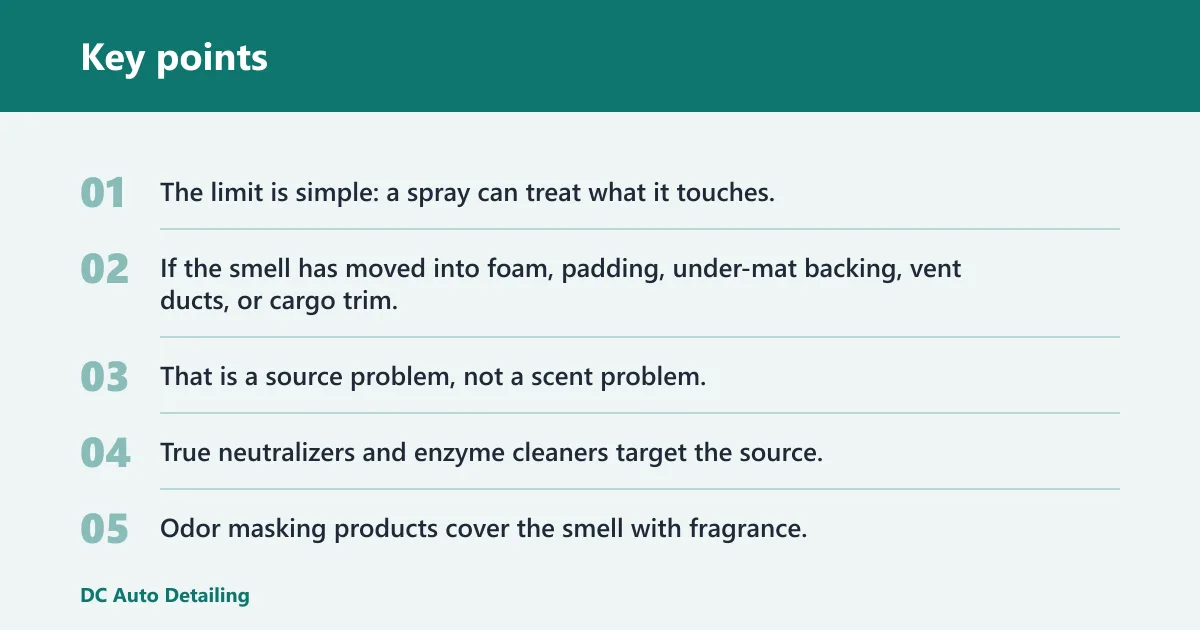
The limit is simple: a spray can treat what it touches. If the smell has moved into foam, padding, under-mat backing, vent ducts, or cargo trim, the surface may smell better for a while and then stink again. That is a source problem, not a scent problem.
What it can remove versus what it only covers
True neutralizers and enzyme cleaners target the source. Odor masking products cover the smell with fragrance, which may be acceptable for a short drive but usually fails on embedded pet odor. If the cabin smells fine only while the fragrance is strong, the original contamination is still there.
Car interiors make this harder because heat reactivates odor. A seat that seems acceptable in the morning can smell worse after the cabin warms up in the afternoon. That rebound is a sign the spray did not reach everything.
Which smells respond best to enzyme formulas?
Organic odors are the best match. Pet urine, wet dog smell on fabric, and dried vomit respond better than smoke, mildew, or old mixed odors. Authoritative product labels typically describe enzyme cleaners as suitable for organic residue on fabrics, carpets, and similar porous surfaces, and they often specify leaving the treated area damp for a defined dwell time.
That does not mean every formula performs the same way. Some products lean on fragrance more than chemistry. Others are built around enzyme action and are labeled for use on upholstery, carpet, and other washable automotive fabrics when spot-tested first.
Why old odors are harder than fresh messes
Fresh spills stay near the top layer longer. Old odors have usually soaked into fibers, backing, or padding, which gives the smell more places to hide. Pet urine odor is usually the hardest because it can reach fabric, foam, and padding before you ever notice it.
Old contamination often needs more than one round of treatment. If the source was never fully removed, the smell can return after drying or after the cabin warms up again.
Pet odor spray decision table
This table gives a car-specific way to judge whether spray alone is enough. Use it to decide when to treat again and when to move to extraction, shampooing, or professional detailing.
| Odor source | Affected surface | Likely success with spray alone | Recommended dwell time | Repeat-treatment count | When to escalate to extraction or professional detailing |
|---|---|---|---|---|---|
| Fresh wet dog smell | Cloth seat or fabric insert | Good if the fabric is lightly damp and the smell is new | 10-15 minutes | 1-2 treatments | If odor returns after drying or after one hot day |
| Pet urine | Seat cushion, carpet, or cargo liner | Limited if the spill reached padding or backing | Several hours or overnight | 2-3 treatments | If the smell comes back after heat, humidity, or rain |
| Feces or vomit residue | Upholstery or carpet fibers | Moderate on fresh residue, weak on dried contamination | 15-30 minutes for light residue; longer for heavy residue | 1-2 treatments | If staining remains or the odor is still strong after drying |
| Old repeated pet transport odor | Seats, carpet, cargo area, and trim | Poor if the cabin has layered contamination | Several hours | 2-4 treatments | If odor is tied to padding, vents, or mixed smells |
| Fragrance-covered smell | Any cabin surface | Poor, because the source is still there | Not enough on its own | Usually not worth repeating | Use extraction or shampooing first, then retest for remaining odor |
How to choose between spray and extraction
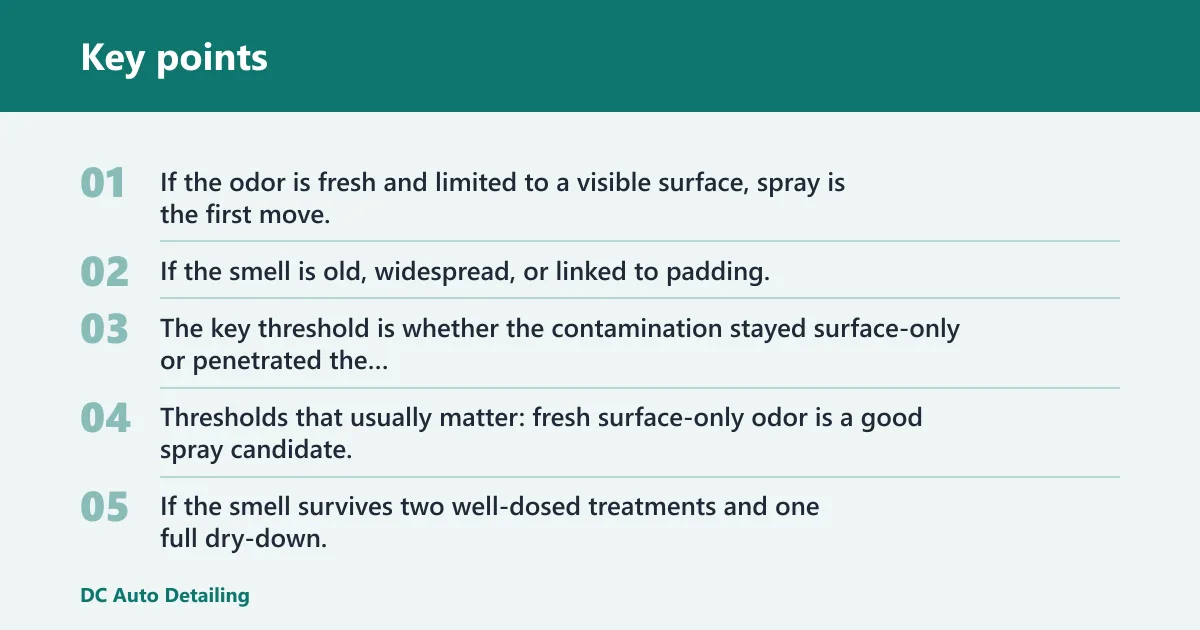
If the odor is fresh and limited to a visible surface, spray is the first move. If the smell is old, widespread, or linked to padding, extraction is the better bet because liquid residue must be removed, not just neutralized. The key threshold is whether the contamination stayed surface-only or penetrated the underlayer.
| Method | Best for | What it does | Strength | Limitation |
|---|---|---|---|---|
| Enzyme spray | Fresh, surface-level organic odor | Breaks down odor-causing residue on contact | Best first step for spot treatment | May not reach foam, backing, or deep padding |
| Air freshener | Temporary cabin masking | Adds scent to cover an odor | Fastest short-term improvement | Does not remove the source; odor usually returns |
| Extraction | Soaked carpet, seats, and padding | Lifts liquid and residue from deeper layers | Best for rebound odors and heavy contamination | More labor, equipment, and drying time |
Thresholds that usually matter: fresh surface-only odor is a good spray candidate, while old odor, visible staining plus padding soak, or repeat rebound after treatment points to extraction. If the smell survives two well-dosed treatments and one full dry-down, escalation is usually the smarter move.
What a practical review setup should include
A credible comparison should cover 3-5 car odor scenarios, not just one. Good scenarios include fresh wet dog on a cloth seat, urine on a rear carpet edge, vomit on a floor mat, repeated pet transport odor in cargo trim, and an odor that returns after the cabin is heated to normal summer car temperatures. Test exact surfaces, dwell times, and whether the odor reappears after one heat cycle.
Why some car odors come back
Sprays fail in cars for a few repeat reasons. The biggest one is hidden contamination. Carpet backing, seat foam, under-mat padding, vent ducts, and cargo-area trim can hold odor long after the visible surface smells better. When the area dries, the smell rises again.
That is why a quick mist often disappoints. The product may touch the top layer, but not the deeper layer where the odor source sits. The result is a temporary improvement, not a fix.
Upholstery foam and carpet padding
Car upholstery can absorb odor into fibers and foam underneath. Carpet and floor mats can do the same, especially when liquid reaches the backing. A light mist is often not enough for those layers because the active part of the spray never reaches the deepest contamination.
If the seat pad or carpet underlay was soaked, spray alone is usually a first step, not the final step. Shampooing or extraction is more reasonable once the surface has already been treated and the smell still lingers.
Under-mat contamination and hidden residue
Floor mats can trap odor under the mat, not just on top of it. Dirt, pet hair, and dried residue can hold scent in place. Remove the mat, treat both sides, and check the floor underneath. Skipping that step leaves a hidden odor source behind.
Say your dog had a small accident on a rear floor mat, and the top looks clean after wiping. If the carpet beneath still smells on the next warm afternoon, the problem was never just the mat surface.
Vent and cargo-area airflow
Cabin air can move odor through vents and rear cargo spaces. That matters after a pet rode in the back with the climate system running. A smell that seems to come from the dashboard may actually be coming from contaminated airflow or from the cargo area.
Authoritative service guidance for cabin odor diagnosis typically starts with checking the cabin air filter, HVAC intake, and vents because trapped debris or moisture can keep recirculating odor. Foggers may help with air space, but they do little for contaminated fabric, padding, or mats.
How to use pet odor eliminator spray in a car
Use the product on a clean, reachable surface and give it time to work. For light messes, that often means about 10-15 minutes of dwell time. For heavier contamination, the treated area may need to stay damp for several hours or overnight, since enzymes continue working while the surface stays wet.
- Vacuum loose hair, crumbs, and dried debris.
- Remove floor mats and treat the top and underside if needed.
- Spot-test a hidden area for colorfastness before full application.
- Apply enough spray to keep the affected area damp, not just lightly misted.
- Let the product sit for the full dwell time.
- Ventilate the cabin while it works and while it dries.
- Repeat only if the odor is still present after drying.
A common first-timer mistake is spraying the visible stain and stopping there. That can work on a fresh, small mess. It usually fails on deeper odor because the backing and foam never got treated.
Ventilation matters during application and drying. It reduces inhalation of mist and helps the interior dry faster, which is useful after a wet treatment has soaked into carpet or upholstery.
Can you use it on upholstery and floor mats?
Yes, car upholstery and floor mats are two of the main places these sprays are meant to reach. Fabric seats, carpeted floors, and cargo liners can all hold pet odor, and enzyme spray can be used on those surfaces when the product directions allow it. Spot-testing is still important first.
Cloth seats and fabric inserts
Cloth seats absorb odor into fibers, and old stains often need multiple treatments. Use enough product to reach the contaminated zone, not just the top thread layer. If the seat still smells after drying, the odor may have moved into the cushion foam below.
Product-label instructions commonly caution against saturating surfaces that may bleed, warp, or stain, so the safest approach is to apply to the affected area only and confirm compatibility on a hidden spot first.
Carpeted floors and cargo areas
Carpet and floor mats are often more forgiving than foam, but they still hold odor in fibers and padding. If the spill soaked through, the spray needs time to sit rather than a quick wipe. Repeat applications are common for deep-set smells.
For deep carpet odor, carpet cleaning guidance typically supports extraction after pre-treatment because lifting the residue is more effective than repeatedly masking the surface. That is especially true when the odor is old or returns after drying.
Leather, vinyl, and delicate trim
Leather and vinyl do not absorb odor the same way cloth does, but nearby seams, perforations, and stitching can still hold residue. Delicate trim should be spot-tested first for colorfastness and finish changes. Use care around finished surfaces, because the wrong product can leave marks.
Do not assume a fragrance-heavy cleaner is safer just because it smells pleasant. If it leaves the odor source behind, the cabin will still need deeper cleaning later.
What works best for urine smell?
For urine, enzyme spray is usually the better first choice, but only if it reaches the full contaminated area. Urine is harder than wet dog smell because it can soak into fabric, foam, and padding. That makes true odor neutralization more important than fragrance.
When enzyme spray is enough
It is most likely to work when the spill is fresh, small, and still mostly on the surface. If you catch it early, blot first, treat thoroughly, and let the area stay damp long enough for the enzymes to work. Light cases may need just one careful round.
Product-label evidence matters here: the best-supported use case is a fresh, surface-level urine spot on a washable material, treated according to the label’s dwell time and dried fully before reassessment.
When shampooing or extraction is the next step
If the smell remains after drying, or returns after heat, the urine likely reached deeper layers. At that point, shampooing or extraction is the better next step because the liquid source needs to be pulled out, not just treated on top. Old or repeated urine contamination often needs that extra step.
Suppose a rear seat smells fine after spraying, then smells again the next morning once the car sits in the sun. That pattern usually means the source was still inside the seat or carpet backing.
Safety and spot-testing before you spray
Check colorfastness on a hidden area first. That matters for delicate fabrics and finished surfaces, where even a good product can cause discoloration or a finish change. Keep the cabin ventilated during application, and do not let pets or kids back into the car until it is fully dry.
Manufacturer instructions and pediatric safety guidance both favor cautious use in enclosed spaces: keep products out of reach, avoid direct contact with eyes and skin, and follow label directions for ventilation, dwell time, and cleanup. If a label warns against use on a surface, treat that warning as the deciding factor.
What to do if the smell comes back after spraying the car
If the smell returns, treat that as a sign that the source is deeper than the spray reached. Recheck the seat foam, carpet backing, floor mats, cargo trim, and vents. If the odor keeps returning after one or two focused treatments, extraction or professional detailing is the better move.
Do not keep layering fragrance on top of the same source. That can make the cabin smell stronger without removing the problem.
Frequently asked questions
Does pet odor eliminator spray actually work on car smells?
Yes, for light, fresh odors on fabric and carpet it can work well. It is much less reliable when the smell has soaked into padding, foam, or hidden residue. In those cases, the spray may improve the cabin briefly, then the odor returns after heat or drying.
Will odor spray remove wet dog smell from car seats and carpet?
Often, yes, if the smell is still near the surface. Wet dog smell on cloth seats and carpet usually responds better than urine because it is less likely to penetrate deeply. Let the product sit long enough, keep the area damp, and repeat if the odor remains after drying.
Is enzyme spray better than air freshener for pet odor in a car?
Yes. Enzyme spray breaks apart odor-causing material, while air freshener mostly covers the smell with fragrance. If the source is still in the seat, mat, or carpet, the freshener fades and the odor comes back. Enzyme cleaner is the better choice when you want removal, not cover-up.
How long should pet odor eliminator spray sit in a car interior?
Light messes often need 10-15 minutes. Heavier contamination may need several hours or overnight so the enzymes keep working while the surface stays damp. If the product dries too fast, it may not reach the source deeply enough to neutralize the odor.
Can I use pet odor spray on car upholstery and floor mats?
Yes, if the product label allows use on fabrics and car interiors. Spot-test first on a hidden area for colorfastness. On upholstery and floor mats, the main issue is coverage: a light mist may miss the backing or foam, so deeper contamination may need repeat treatment or extraction.
What should I do if the smell comes back after spraying the car?
Assume the odor source is still present. Recheck the hidden areas under the mat, inside the seat foam, and in cargo or vent areas. If the smell returns after one or two treatments, spray alone is not enough; shampooing, extraction, or professional detailing is the next step.
Sources
Authoritative references used for guidance: carpet and upholstery cleaning best practices from cleaning-industry guidance; product-label instructions for enzyme cleaners on dwell time, ventilation, and surface compatibility; pediatric safety guidance for keeping cleaning products out of reach and using proper ventilation; poison-control guidance for accidental exposure and safe storage; HVAC and cabin air filter guidance for diagnosing recurring vent odors.