How much does ceramic coating maintenance cost per year?
Ceramic coating maintenance is not zero-maintenance. The yearly budget usually has four parts: regular washing, an optional booster spray, annual decontamination, and inspection of water beading and surface behavior. That mix helps keep the coating performing as intended instead of letting bonded grime sit on top of it.
What does ceramic coating maintenance include?
Wash interval and method
A ceramic-coated car should usually be washed every 2 to 4 weeks. Hand washing with a soft microfiber mitt and the 2-bucket method is a common safe routine because it removes loose contamination without adding abrasion. If hand washing is not practical, a touchless wash is the safer machine option.
Automated brush car washes are the problem. Their contact points can scratch or scour the coating, and repeated use can shorten coating life far faster than normal environmental wear. That makes a brush wash a hidden cost, since it can push you toward earlier correction or recoating.
Booster spray use
A ceramic-safe refresh spray can support hydrophobic behavior, so water sheets and beads more like the coating is fresh. It is a maintenance add-on, not a replacement for washing. Many owners use one bottle per year, often after a few washes or before harsh weather, rather than after every wash.
Decontamination and inspection
Annual professional decontamination usually includes iron removal and a clay bar or claybar treatment. That service helps reset surface performance when bonded fallout, rail dust, road film, and winter residue start to mute water behavior. Inspection matters too, because beading and sheeting are useful clues, but they do not tell you whether the coating is still fully intact under the dirt.
What is optional versus required?
- Required: pH-neutral washing every 2 to 4 weeks.
- Required: safe wash technique with microfiber mitts and minimal abrasion.
- Recommended: yearly decontamination for most daily-driven cars.
- Optional: booster spray when you want a short-term hydrophobic refresh.
- Conditional: professional inspection when beading drops off, contamination returns quickly, or the car sees harsh use.
How much does ceramic coating maintenance cost per year?
Most owners spend about $135 to $1,045 a year on maintenance, depending on how often the car is washed, whether booster spray is used, and whether decontamination and inspection are paid for. DIY care stays near the low end. Professional washing and detailing services move the total up quickly, especially on larger vehicles.
Typical yearly ranges by use case
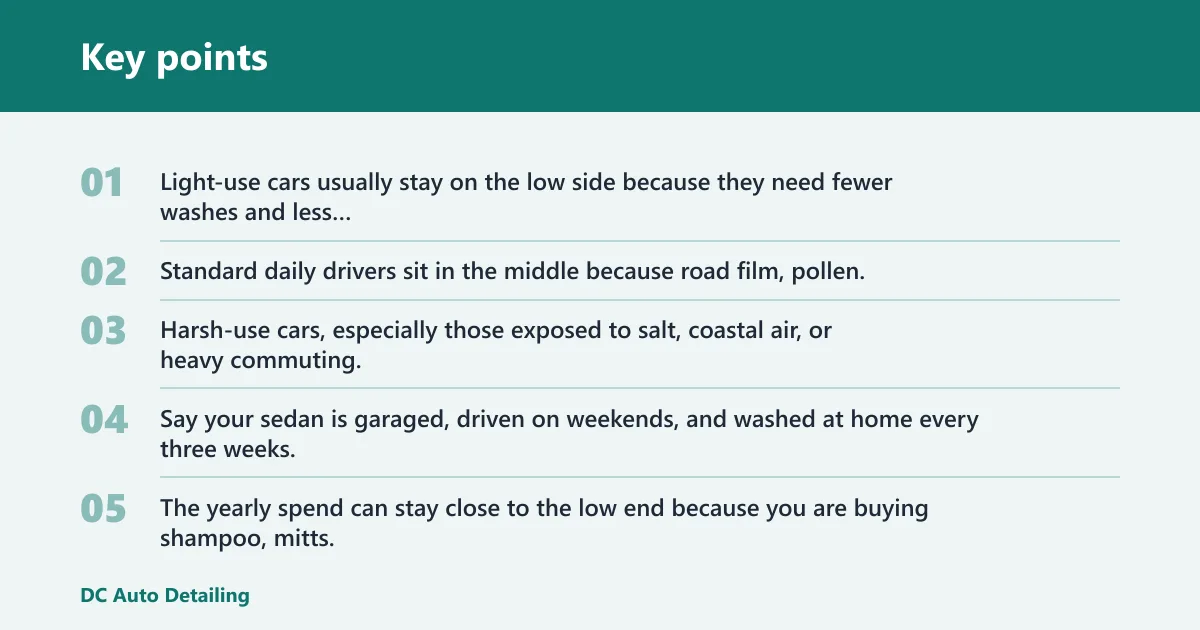
Light-use cars usually stay on the low side because they need fewer washes and less chemical cleanup. Standard daily drivers sit in the middle because road film, pollen, and bug residue build up more often. Harsh-use cars, especially those exposed to salt, coastal air, or heavy commuting, need more frequent wash cycles and more decon work.
Say your sedan is garaged, driven on weekends, and washed at home every three weeks. The yearly spend can stay close to the low end because you are buying shampoo, mitts, drying towels, and one decon service, not repeated full-service washes. If that same routine shifts to a full-size SUV or truck, the cost rises mainly because of higher soap usage, more towel turnover, and longer wash time.
Where DIY spending stays low
DIY maintenance is cheapest when you already own the basic wash gear and follow the same routine each time. A pH-neutral shampoo, soft mitts, drying towels, and a bottle of topper spray can keep recurring costs modest. The key is consistency, not product count.
Where professional help raises the bill
Professional maintenance raises the bill when you pay for exterior washing, decontamination, and inspection rather than doing them yourself. That is common for larger vehicles, busy owners, and cars that collect heavy contamination. It is also common after winter, when salt and grime need more labor to remove safely.
Detailer pricing examples vary by market, but recognized shops and nationwide detailers commonly price exterior maintenance washes, decontamination, and inspection as separate services rather than one bundled fee. That is why annual spend can jump quickly once you move from home washing to shop-based care. For broad pricing context, market examples from detailing brands and trade directories place routine maintenance washes well below correction-level work, while full decontamination and inspection add more labor.
Cost assumptions used in this guide
| Ownership scenario | Vehicle size assumption | Wash method assumption | Wash frequency per year | Wash cost | Booster spray cost | Decontamination cost | Inspection cost | Estimated yearly total | Notes |
|---|---|---|---|---|---|---|---|---|---|
| Light use | Sedan | Mostly DIY hand wash | 10 to 13 | $60 to $140 | $0 to $40 | $75 to $150 | $0 to $75 | $135 to $405 | Garage-kept, low-mileage car with hand washes every 3 to 4 weeks and one yearly decon. |
| Standard use | Sedan or crossover | DIY wash plus occasional pro help | 14 to 18 | $120 to $260 | $20 to $80 | $100 to $200 | $50 to $125 | $290 to $665 | Daily driven car with washing every 2 to 3 weeks, periodic topper use, and a yearly inspection or detailer check. |
| Harsh use | SUV or truck | Higher-labor pro maintenance | 18 to 26 | $200 to $450 | $40 to $120 | $150 to $300 | $75 to $175 | $465 to $1,045 | Coastal, winter-salted, or high-mileage use with more frequent washing, stronger contamination buildup, and more labor at decon time. |
What makes a car move from light use to standard or harsh use?
The jump usually comes from exposure, not age. A garage-kept sedan that sees clean roads can stay in the light-use band, while a commuter crossover on salted roads moves into standard use quickly. Harsh use starts when contamination is constant enough that the car needs shorter wash intervals and more frequent decontamination.
Light use triggers
Light use fits cars that are driven infrequently, stored indoors, and washed before grime has time to bond. Low annual mileage, mild weather, and minimal road-salt exposure keep the yearly bill down.
Standard use triggers
Standard use fits the typical daily driver. Regular commuting, parking outside, pollen seasons, highway miles, and routine rain exposure all push the car into a more regular maintenance cycle.
Harsh use triggers
Harsh use starts when the car sees winter salt, coastal spray, construction dust, heavy bug impact, or high-mileage commuting. Those conditions shorten the interval between washes and make decontamination more important, especially on larger panels and lower bodywork.
How often should you wash a ceramic coated car?
A ceramic-coated car should usually be washed every 2 to 4 weeks. That interval helps preserve hydrophobic performance and keeps loose contamination from sitting long enough to bond or stain. In harsh conditions, the interval shortens because winter salt, coastal film, and heavy commuting load the surface faster.
Why pH-neutral shampoo matters
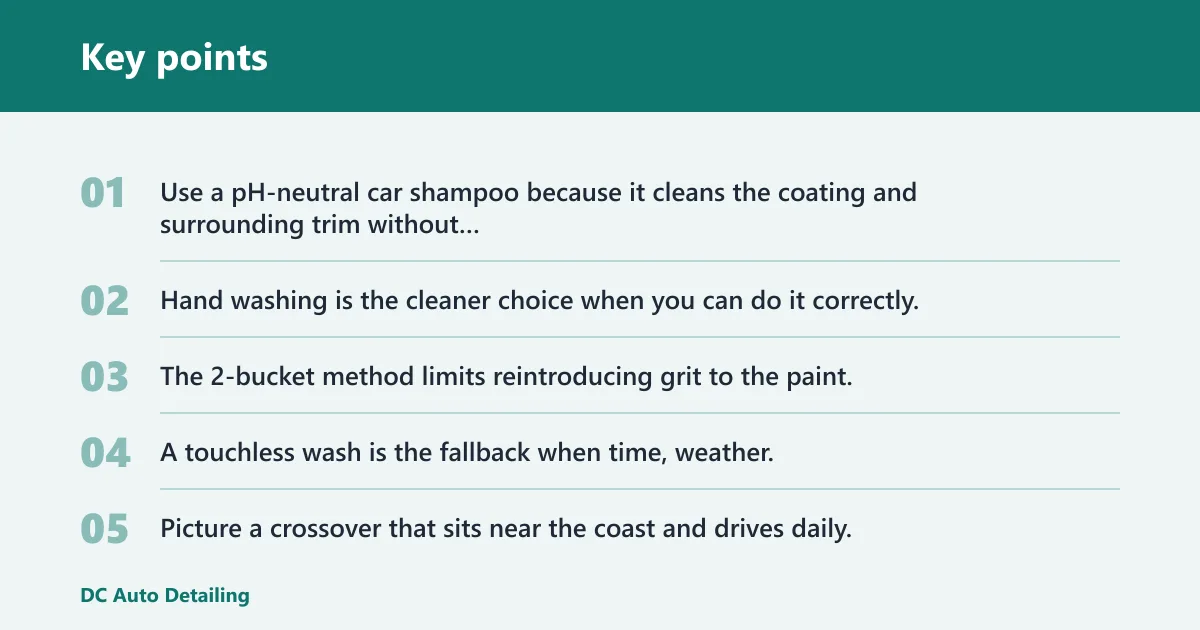
Use a pH-neutral car shampoo because it cleans the coating and surrounding trim without stripping protection sooner or leaving residue that changes how water behaves on the panel. The goal is removal, not correction.
Hand wash versus touchless wash
Hand washing is the cleaner choice when you can do it correctly. The 2-bucket method limits reintroducing grit to the paint, and a microfiber mitt is far less abrasive than brushes. A touchless wash is the fallback when time, weather, or location makes a proper hand wash unrealistic.
Picture a crossover that sits near the coast and drives daily. The owner may need a wash every 2 weeks because salt film starts dulling the beading before a 4-week interval would make sense. That is not a defect in the coating; it is the cost of tougher exposure.
Safe-wash basics from recognized brands
Most coating-care guides from respected brands repeat the same core instructions: pre-rinse thoroughly, use pH-balanced shampoo, wash from top to bottom, rinse mitts often, and dry with clean microfiber towels. That approach matters because ceramic coatings resist contamination better than bare paint, but they still need low-abrasion removal of dirt.
Do you need a coating maintenance spray?
You do not need a booster spray after every wash. A ceramic-safe refresh spray can bring back slickness and water beading temporarily, but it is an optional add-on. Its job is to support the coating between deeper services, not to replace washing or fix neglected contamination.
What booster spray does
Booster sprays leave behind a thin sacrificial layer that helps water bead and sheet more cleanly. That can make the coating look healthier and can reduce grime sticking as hard to the surface. The effect is temporary, so it should be treated as a maintenance step with a small recurring cost.
When the add-on is worth the cost
The add-on is worth it when the vehicle sees frequent rain, winter grime, or long highway weeks and you want to refresh hydrophobic behavior between washes. It is also useful after decontamination, when the coating is clean but the owner wants a bit more slickness. If the car is lightly used, the benefit may not justify the extra spend every month.
What maintenance shortens coating life?
Brush washes, acidic contamination, harsh wheel cleaners, and long gaps between washes are the main maintenance mistakes that shorten coating life. These issues do not always destroy the coating at once, but they can wear it down faster, mute water behavior, and force earlier correction or reapplication.
Brush wash damage
Automated brush car washes are a major failure cause because the abrasive contact can mar the surface. Once the coating picks up that wear, water beading and gloss often decline faster, and the car may need more frequent polishing to recover a clean look.
Bird droppings and bug strikes
Bird droppings and bug strikes are acidic contamination, and they should be removed quickly. Summer heat makes the etching risk worse because contamination bakes onto the panel faster. A coated surface can resist this better than bare paint, but it is not immune.
Wheel cleaner runoff
Wheel cleaner chemistry matters because acid wheel cleaners can degrade coating on nearby surfaces, and runoff can hit lower panels. That is especially important on SUVs and trucks, where splashes travel farther up the body. Chemical compatibility matters just as much as wash technique.
Missed decontamination and long wash gaps
Skipping annual decontamination lets iron particles and bonded road film sit on the surface. Washing still matters, but washing alone cannot remove every bonded contaminant. If you wait too long, the coating may still bead water but feel slower, look dirtier, and take more work to bring back.
When maintenance is no longer enough
Maintenance stops working when the coating no longer restores hydrophobic behavior after washing and decontamination, or when gloss and contamination resistance stay weak for weeks at a time. At that point, the issue is no longer surface dirt. The coating may be worn, uneven, or too thin to revive with routine care alone.
Signs the coating has faded
The clearest signs are weak beading, slower water release, stronger dirt sticking, and faster loss of slickness after a fresh wash. Those symptoms matter more than a single rainstorm, because temporary surface film can make a healthy coating look tired for a day or two.
When to decon, correct, or recoat
If decontamination restores the behavior, the coating still has life left. If a light polish improves the look and the surface responds again, a small correction may be enough. If water behavior stays flat after cleaning and the finish remains tired, recoating is usually the practical move.
Suppose a compact SUV has been through two winters of salt, one brush wash, and months of irregular upkeep. A decon service may improve the surface, but if beading returns only weakly and the paint still looks hazy, the better budget choice may be correction plus a new coating instead of repeated rescue work.
Is ceramic coating maintenance cheaper than reapplying wax?
Yes, ceramic coating maintenance is usually cheaper than repeatedly reapplying wax over the long term, especially if the car is washed correctly and maintained on schedule. Wax needs more frequent renewal, while a coating only needs routine washing, periodic decon, and an occasional topper spray if you want it.
Frequently asked questions
What maintenance is required for ceramic coated cars?
Regular washing with a pH-neutral shampoo, soft microfiber mitts, and a safe wash method is the core requirement. Annual decontamination is strongly recommended for most cars.
Do you need a coating maintenance spray after every wash?
No. A booster spray is a ceramic-safe refresh product, but it is not required after every wash. Many owners use it only when water behavior starts to weaken.
What is included in ceramic coating maintenance?
Maintenance usually includes washing, optional booster spray, annual decontamination, and inspection of water beading and surface contamination.
What maintenance can shorten the life of a ceramic coating?
Automated brush car washes, acidic bird droppings, bug residue left in summer heat, and aggressive wheel cleaners can all shorten coating life. Long gaps between washes also hurt.