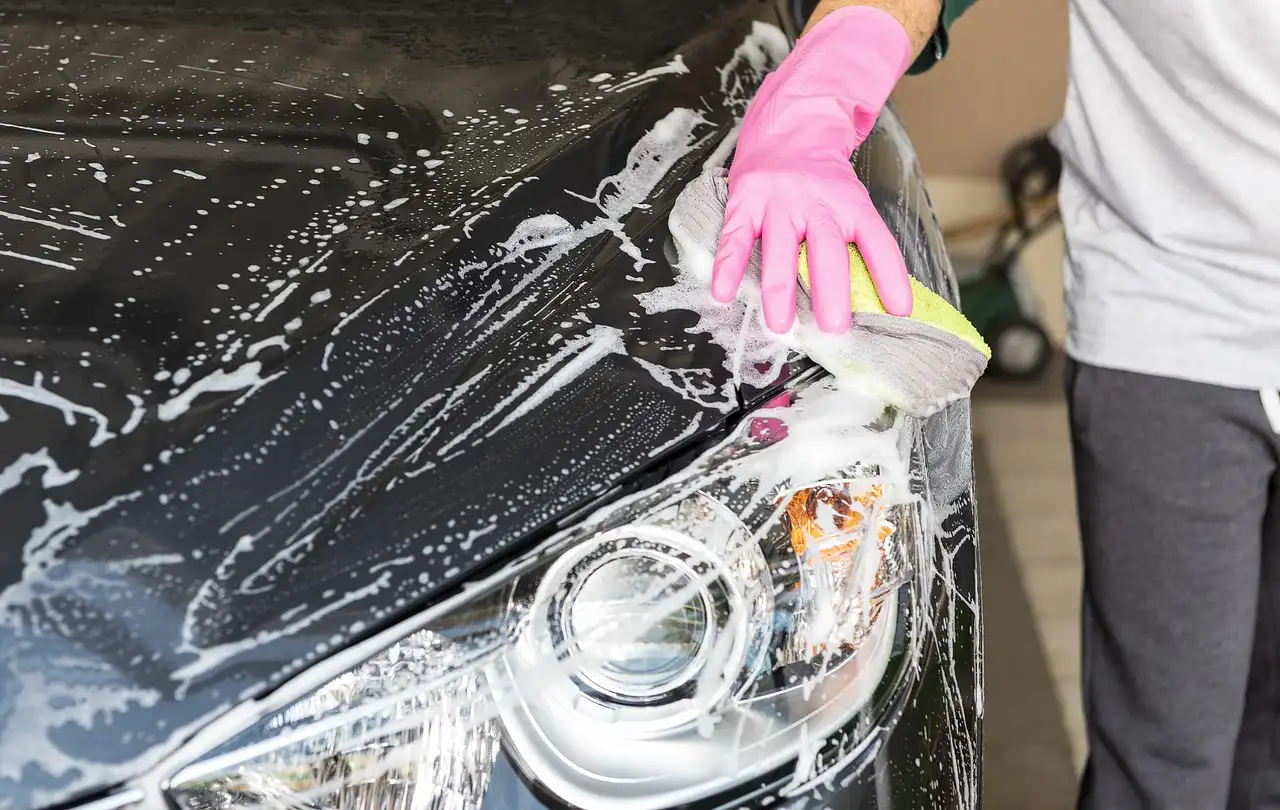
How to dilute car wash soap for a bucket wash
For many pH-neutral car wash soaps, a common mix is about 1 to 2 ounces per 3 gallons of water. For concentrated shampoos, follow the label because dilution varies by product. Too little soap can reduce lubricity and raise wash-marring risk. This guide breaks down dilution by soap type, bucket size, and label directions, with simple mix tables and adjustment rules.
What you’ll need
- One bucket or two buckets, depending on your wash method
- A microfiber or lambswool wash mitt with soft, nonabrasive construction
- A separate wheel cleaner and a separate wheel sponge or mitt
- A dedicated car wash soap matched to your protection level
- A measuring cap or marked measuring cup
- Clean water for mixing and rinsing
How much soap to mix
Start with the bottle’s label, then adjust by soap type and bucket size. A standard pH-balanced shampoo usually needs less product than a wash-and-wax or an off-label rinseless mix.
Standard shampoo
For a typical maintenance wash, a practical starting range is about 1 to 2 ounces per 3 gallons of water. That amount gives enough surfactant and lubricity for a hand wash without loading the bucket with excess suds. If the soap is labeled wax-safe, this range is usually the best fit for regular paint maintenance.
Concentrated shampoo
Concentrated shampoos often clean well at lower doses. Start around 1 ounce per 4 gallons, then adjust only if the label allows it.
Rinseless soap
Rinseless products are different from ordinary bucket shampoos. They are usually mixed at much lower dilution and used with a careful wipe-and-dry process rather than a heavy-foam bucket. If you want a bucket wash, use the label’s rinseless dilution exactly. Do not guess by foam level, because foam is not the same thing as cleaning power.
One-bucket and two-bucket mix examples
A one-bucket wash uses one wash bucket only, so the soap concentration must stay balanced for the whole session. A two-bucket wash splits the job into a soap bucket and a rinse bucket, which helps keep grit out of the wash solution and off the mitt. Consumer Reports recommends washing in sections and rinsing each area completely before moving on. (Consumerreports)
| Bucket size | Soap type | Practical dilution range | Too much vs too little | Per-wash cost estimate template |
|---|---|---|---|---|
| 2 gallons | Standard shampoo | 0.75 to 1.5 oz | Too much: film, harder rinsing, wasted product. Too little: draggy mitt, less lubricity. | Soap cost per ounce × ounces used ÷ washes per bottle |
| 3 gallons | Standard shampoo | 1 to 2 oz | Too much: residue on trim or glass. Too little: higher swirl risk on dusty paint. | Example formula: bottle price ÷ total labeled washes |
| 3 gallons | Concentrated shampoo | 0.75 to 1.5 oz | Too much: suds that outlast lubrication. Too little: thin solution that feels “grabby.” | Use the label’s wash count, then divide by your actual dose |
| 4 gallons | Concentrated shampoo | 1 to 2 oz | Too much: leftover slick film after rinsing. Too little: weak carry-off of road film. | Cost per wash = bottle cost ÷ estimated washes at your dose |
| 3 gallons | Rinseless soap | Use the label rate only | Too much: sticky residue. Too little: reduced glide and poorer wipe safety. | Bottle cost ÷ label wash count, then adjust for your dilution |
| 5 gallons | Standard shampoo | 1.5 to 3 oz | Too much: waste and possible protection interference. Too little: uneven cleaning across panels. | Price per ounce × dose = cost per bucket |
Add water first, then soap. That keeps the shampoo from clinging to the bucket bottom and helps it disperse evenly. Use warm water only for DIY mixing when the label permits it. Avoid hot body panels or direct sun, because heat speeds drying and can leave spots before you finish rinsing.
- Fill the bucket with clean water to the target volume.
- Add the measured soap dose to the water, not the other way around.
- Stir gently with the mitt or a clean stream of water until the mix is even.
- Use the label and your wash method to confirm the mix is appropriate for the product.
- If the water feels slick but not slimy, start washing a cool panel right away.
Suppose you are using a 3-gallon bucket with a standard shampoo. Start at 1 ounce. If the mitt feels dry on the second panel, add 0.5 ounce, stir, and recheck.
How to wash without scratching
Start with the roof and upper panels, then move to the lower doors and rocker areas so heavy dirt stays away from cleaner paint. Use a microfiber or lambswool mitt, rinse it often, and work one panel at a time. Car cleaning products add lubrication so dust and grime slide off paintwork; that lubrication matters more than how dramatic the foam looks.
- Rinse loose grit off the car first.
- Wash the roof, glass, and upper panels before the lower doors and rocker areas.
- Load the mitt with suds, then clean one panel in straight passes.
- Rinse the mitt in the rinse bucket after each panel or small section.
- Reload the mitt from the soap bucket only after it is clear of grit.
- Dry each cleaned section before moving to the next if the weather is warm or windy.
Picture a compact sedan parked in a driveway with light dust on the hood. A two-bucket wash with a soft mitt and a 3-gallon soap bucket gives enough glide for the hood and roof without dragging grit across the clear coat. The same car washed with a dry mitt and too little soap would be more likely to leave wash marks.
Can you use dish soap or wheel cleaner on paint?
Dish soap is not the right routine choice for paint because dish detergents can strip wax or other protective coatings from paint. Consumer Reports warns against household cleaning agents like dishwashing detergent on car paint and recommends a dedicated car-wash product instead. Wheel cleaner is a separate product and should stay off paint unless the label specifically allows it.
Dish soap and protection loss
Wax-safe shampoo is the safer choice for maintenance washes because it is made for automotive paint. A harsh household cleaner can remove wax, and a strong wash can shorten sealant life as well. If you rely on wax or sealant for gloss and water behavior, choose a dedicated shampoo and reserve dish soap for situations where protection removal is the goal.
Wheel cleaner stays with the wheels
Wheel cleaner is generally intended for brake dust and wheel contamination, not for painted body panels. Use a separate sponge or mitt for wheels, and keep it off the paint side of the wash. That matters on clearcoat, chrome, and painted wheels alike, because the tools that pick up brake grit should never touch the finish you are trying to preserve.
When a dedicated soap is the safer choice
Choose a dedicated car wash soap whenever you want to preserve protection, reduce marring risk, and leave less residue. A pH-balanced or pH-neutral formula is usually the right call for routine washing, especially on vehicles with wax, sealant, or ceramic-coated maintenance routines that depend on gentle cleaning.
Common mistakes
Most wash problems come from dosing errors or tool contamination, not from the brand name on the bottle. Too much soap can leave a film. Too little soap can make the mitt drag. And a wheel mitt used on paint can transfer heavy grime straight onto the clear coat.
- Using too much soap: Trim residue, hazy glass, and wasted product. Reduce the next mix by 0.5 ounce and recheck the feel.
- Using too little soap: The mitt feels grabby and the panel no longer glides. Add 0.5 ounce, stir, and test again on one panel.
- Washing in direct sun or on hot panels: Water flashes off too fast and can leave spots. Move to shade or wash when panels are cool.
- Reusing wheel tools on paint: Brake dust can scratch clear coat. Keep a separate wheel mitt or sponge.
- Skipping rinse and dry: Minerals left behind can spot the finish. Rinse each section completely and dry with a clean towel.
A common first-timer mistake is mixing a strong soap bucket because the foam looks “stronger,” then noticing a slight film on the black trim after rinsing. Foam does not equal cleaning power. Adjust by ounces, not by how impressive the bucket looks.
Frequently asked questions
How much car wash soap do I put in a bucket?
For most pH-neutral shampoos, start with 1 to 2 ounces in 3 gallons of water. If the bottle says “highly concentrated,” begin lower, around 1 ounce in 4 gallons, then follow the label. A measured dose is more reliable than a capful because bucket size changes the final mix.
How do you dilute car wash soap for a bucket wash?
Fill the bucket with water first, then add the measured soap and stir gently. Use the label as the first guide, then match the dose to bucket size and soil level. For routine maintenance on lightly soiled paint, aim for lubricity and rinse clarity rather than heavy foam.
Can I use dish soap to wash my car?
Dish soap can strip wax or other protective coatings, so it is not the best choice for regular washing. Consumer guidance recommends a dedicated car-wash product instead. If your goal is to preserve wax or sealant, choose a pH-balanced automotive shampoo made for painted surfaces.
What is the two bucket car wash method?
The two-bucket method uses one bucket for soapy water and one for rinsing the mitt. After each panel, you rinse the mitt in the clean bucket before reloading it with soap. That keeps grit out of the wash solution and lowers the chance of dragging debris across the clear coat.
Do I need to reapply wax after washing with dish soap?
If the wash stripped or noticeably reduced the wax, reapply it after the car is clean and dry. A water-beading check can help you judge protection loss, but the safest rule is simple: if you used a harsh household detergent, assume some protection may need refreshing.