Why does my car smell like mildew after rain?
If your car smells like mildew after rain, water is usually getting into the cabin through a leak. If the odor appears with the A/C, the HVAC system is more likely. Ignoring either one can soak insulation, grow mold, and damage the interior. This guide helps you match the odor pattern to the moisture source so you can find the leak, drain issue, or wet carpet fast.
Common sources of a mildew smell after rain
A rain-linked mildew smell usually means moisture entered the cabin, then sat in carpet, trim, or hidden foam long enough for odor to form. The smell can come from the wet area itself, or from stale moisture that reached the HVAC intake, cabin filter, or underfloor padding before the surface looked dry.
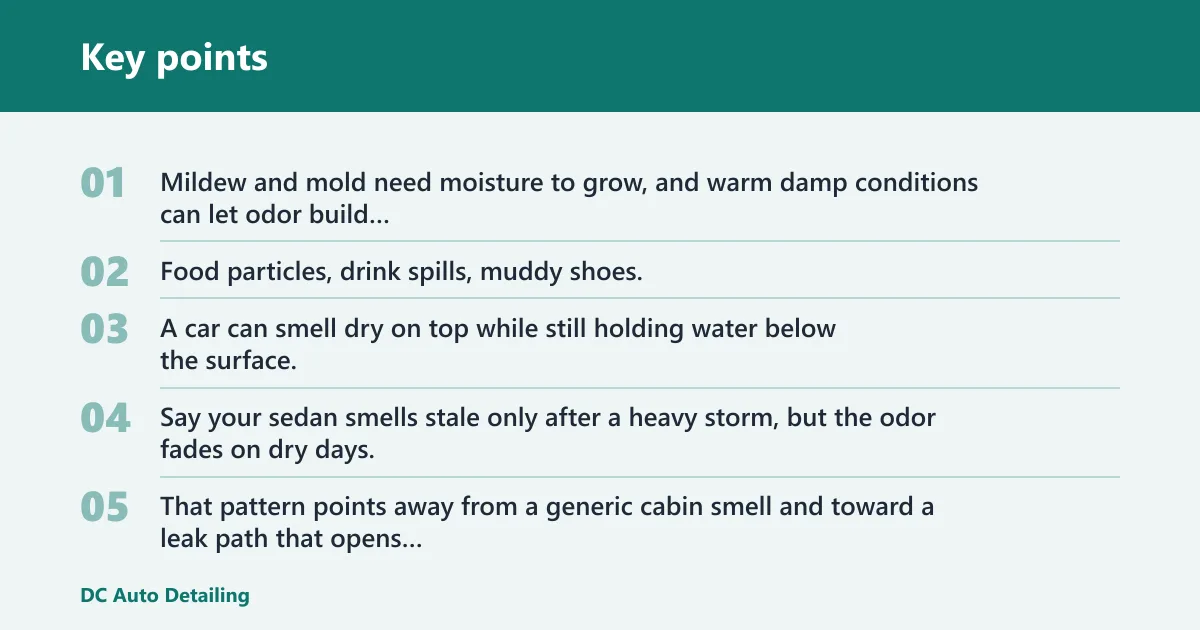
Mildew and mold need moisture to grow, and warm damp conditions can let odor build quickly on organic debris. Food particles, drink spills, muddy shoes, and damp carpet backing all add fuel to the problem. A car can smell dry on top while still holding water below the surface.
Mildew smell source table
| Symptom pattern | Most likely source | Next check | Urgency |
|---|---|---|---|
| Smell starts after rain, no A/C needed | Door seals, sunroof drains, cowl drain, trunk seal | Check carpet edges, pillars, spare tire well, and headliner trim for dampness | High if water is pooling or returning |
| Smell gets worse when A/C turns on | HVAC evaporator, evaporator case, cabin air filter | Inspect the passenger-side footwell and the filter for dampness or odor | High if odor is strongest at the vents |
| Passenger-side floor is wet | AC drain tube clog, HVAC case overflow, door leak | Confirm whether water appears after A/C use or after rain | Immediate |
| Headliner or A-pillar smells musty | Sunroof drains, roof seam, antenna or roof seal | Look for drip marks, soft trim, or moisture at pillar trim | High |
| Trunk or rear cargo area smells musty | Trunk seal, rear lamp gasket, hatch seal, hidden water in spare tire well | Lift cargo floor and check for standing water or rust staining | High if water collects |
Say your sedan smells stale only after a heavy storm, but the odor fades on dry days. That pattern points away from a generic cabin smell and toward a leak path that opens only when water load is high, such as a cracked door seal or a clogged cowl drain.
Is the smell coming from the AC?
If the smell gets stronger when the A/C runs, the HVAC system may be holding excess moisture inside the evaporator case or vent passages. One cause is excess moisture inside the HVAC system. A clogged evaporator drain can leave water pooled in the evaporator case, and trapped moisture in evaporator coils and vents can spread odor through the HVAC system.
The evaporator is supposed to remove heat and humidity from air, so condensation is normal. The problem starts when water does not drain away cleanly, or when a damp cabin air filter, organic debris, or old moisture stays inside the system. If smell worsens after turning on AC, the evaporator case may be the culprit.
HVAC odor checks
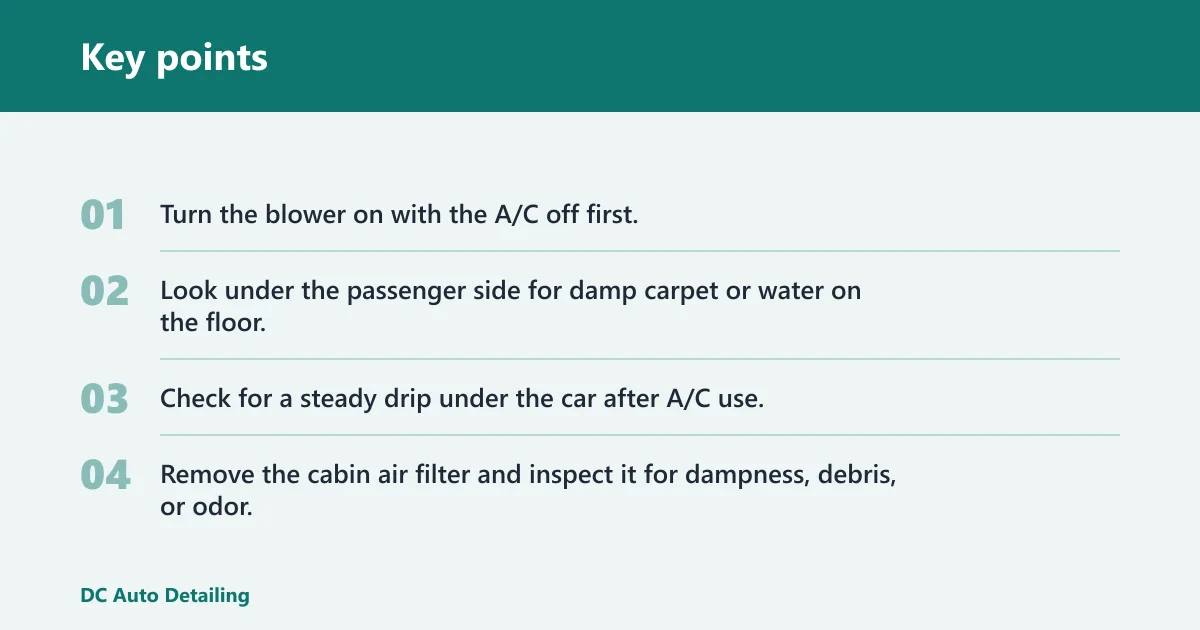
- Turn the blower on with the A/C off first. If the smell is weaker, then stronger when the compressor engages, the evaporator area moves higher on the list.
- Look under the passenger side for damp carpet or water on the floor. The passenger side floor is often wet when the AC drain is blocked.
- Check for a steady drip under the car after A/C use. No drip can point to a clogged drain tube, though model layout varies by vehicle.
- Remove the cabin air filter and inspect it for dampness, debris, or odor. A dirty or damp cabin air filter can hold smell even after the leak is fixed.
Picture a compact SUV where the cabin smells sour only after the defroster and A/C run together on a humid day. That pattern fits an HVAC odor path much better than a door leak, because the smell is tied to airflow through the vents instead of rainfall alone.
Do not treat the cabin filter as a final fix if it is wet or dirty. It can be part of the diagnosis, but the real problem may still be a blocked drain tube or standing moisture in the evaporator case.
Why does it smell only after rain?
Rain-only odor usually means outside water is entering the car somewhere, then soaking insulation, carpet backing, headliner material, or trim foam. Broken seals can let rain enter the car and wet seats, carpets, and other parts. Worn seals and clogged drains around windows or the sunroof can also cause slow leaks that show up only after storms.
Start by tracing where water can enter, not where you can smell it. Odor can move through trim and under carpet before it becomes obvious. A wet front floor does not always mean a floor leak; water can run down a pillar or along a wiring channel first.
Common rain leak paths
- Door seals and weatherstripping: rubber barriers around doors can crack, flatten, or separate from the body. Inspect the full perimeter for splits, hard spots, or gaps.
- Sunroof drains: hidden channels can clog with debris and overflow into the headliner or pillars after storms.
- Cowl drain: located under the windshield, it channels rainwater away. If it clogs with leaves and debris, water can overflow toward the cabin air intake.
- Trunk seals: rear leaks often show up as musty cargo odor or water in the spare tire well.
A common first-timer mistake is to clean the floor and stop there. If the leak path is still open, the smell returns after the next rain because the same hidden area gets wet again.
What if the carpet or upholstery is wet?

Wet carpet or upholstery means the odor source is in the cabin material itself, not just in the air. Cabin carpet and upholstery are porous, so they can hold moisture below the surface and keep producing odor until fully dried. The top layer may feel dry while padding underneath stays wet.
This is where mildew can linger. Wet or muddy shoes can bring mold spores into the car, and food particles or drink spills can increase cabin humidity and feed mold growth. If moisture stays trapped under trim, the smell can keep coming back even after a quick wipe-down.
Where water hides under trim
- Under floor mats and carpet padding
- Behind kick panels and sill trim
- Inside seat foam and lower seat fabric
- Under rear cargo flooring and around the spare tire well
- Inside headliner edges if the leak comes from above
Drying has to reach the material below the visible surface. Keeping the car under sun with windows open is suggested as a basic drying step, but that alone may not remove water trapped in insulation. Remove mats, lift the affected edge of carpet if possible, and check padding for dampness by touch and odor.
Use absorbent towels first, then airflow. A fan aimed across the open cabin helps more than a spray product covering the smell. If the carpet backing stays damp, the odor can keep returning for days or longer, depending on heat and humidity.
How long until mildew becomes a problem?
Mildew becomes a problem as soon as moisture sits in warm, organic material long enough for growth and odor to start. In humid climates, that can happen within 24 to 48 hours under the right conditions. The exact timing depends on temperature, airflow, and what the water soaked into.
Warm weather speeds odor return because it helps trapped moisture stay active. A damp cabin with carpet, insulation, dust, or spilled drinks gives mildew more to feed on. If visible mold appears, or the smell returns after rain, the problem is likely past a simple airing-out stage.
When to stop DIY drying
- Water keeps coming back after you dry the cabin.
- The smell is strongest under the dash or at the vents.
- You find wet insulation, soaked foam, or water in more than one area.
- Electrical components, airbags, or control modules are near the wet area.
- Visible mold appears on trim, carpet, or inside the HVAC housing.
Suppose a small sedan has damp passenger carpet after every rain and a musty odor that returns overnight. That pattern points to an active leak, not a one-time spill. In that case, drying without sealing the leak will only delay the smell.
How do you stop the smell from coming back?
Stop the return by finding the water source first, then drying and cleaning the affected area completely. If the leak remains, the odor will return. If the leak is fixed but the material still holds moisture or contamination, the smell can also persist until the cabin is fully dried and cleaned.
After the moisture source is repaired, clean the affected surfaces and inspect the HVAC parts that may have held odor. If smells persist, professionals may use ozone foggers and hot water extractors. Those tools are for the residue and odor load after the leak is gone, not a substitute for repair.
Practical next steps
- Identify the pattern: rain-only, A/C-only, or visible wetness in one area.
- Inspect the matching leak path: door seals, sunroof drains, cowl drain, AC drain tube, or trunk seal.
- Dry the cabin fully with open windows, airflow, and removed floor mats.
- Check the cabin air filter and replace it if it is damp or smells musty.
- Clean carpet, upholstery, and trim only after the water source is fixed.
- Escalate if water returns, the HVAC system smells sour, or electrical parts may have been soaked.
The best result comes from matching the smell to the moisture path. Rain odor points to leaks. A/C odor points to the HVAC system. Wet carpet points to trapped water in the cabin. Once you separate those patterns, the repair becomes much easier to target.
Frequently asked questions
Why does my car smell like mildew after rain?
Rain usually reveals a leak that lets water into carpet, trim, headliner material, or hidden insulation. The smell comes from moisture sitting in porous materials long enough for mildew to develop. If the odor appears only after storms, inspect seals, drains, and low spots where water can collect.
Why does my car smell musty after rain?
Musty odor after rain usually means damp organic material inside the cabin. That can include carpet padding, seat foam, trapped dirt, or debris in a drain path. Door seals, sunroof drains, and the cowl drain are common places to inspect first because they can let water in without obvious dripping.
Why does my car smell like mildew when it rains?
If the smell shows up during rain, the cabin is likely taking on water somewhere. A slow leak can wet material before you notice any puddle. Check the passenger floor, rear cargo area, headliner edges, and pillars to see whether the leak is entering from above, the side, or the front cowl area.
Why does my car smell like mildew when the AC runs in rain?
That pattern can point to both cabin moisture and HVAC moisture. Rain may be leaking into the car while the A/C adds condensation inside the evaporator case. If the smell gets stronger at the vents and the passenger floor is damp, inspect the AC drain tube, evaporator case, and cabin air filter.
Is a mildew smell in a car dangerous?
A mildew smell means moisture is present, and that can lead to mold growth if it continues. The odor itself is not proof of a health emergency, but visible mold, persistent dampness, or worsening respiratory symptoms should be taken seriously. Fix the moisture source and dry the cabin fully.
How do I stop the smell from coming back after rain?
Fix the leak first, then dry the affected materials all the way through. Clean carpet, upholstery, and the cabin filter only after the water source is corrected. If the smell returns after the next storm, keep tracing the leak path instead of masking it, because the cabin is still getting wet somewhere.