How to get cigarette smell out of a car step by step
To get cigarette smell out of a car, start with a full trash-out, vacuum, wipe hard surfaces, replace the cabin air filter, and if odor remains after two cleaning rounds, move to upholstery extraction and HVAC treatment. If you skip the source odor or stop too early, the smell keeps returning every time the car warms up or the fan runs. This workflow separates surface odor, embedded odor, and HVAC odor.
Quick answer
The fastest reliable fix is source removal: empty the cabin and trunk, vacuum ash and debris, clean hard surfaces, wash removable ashtrays, replace the cabin air filter, and then clean fabric, foam, and vents if odor remains. Cigarette smoke can bind to textiles, foam, and HVAC parts, so masking sprays alone usually fail. The EPA’s indoor air guidance also notes that source control is more effective than cover-up when removing smoke residue from enclosed spaces. https://www.epa.gov/indoor-air-quality-iaq/indoor-air-quality-iaq-smoking
Severity matrix: what to do based on how bad the odor
| Severity | Likely source | Effort | Tools needed | Signs of success | Escalation trigger |
|---|---|---|---|---|---|
| Light odor | Surface residue on plastic, glass, ashtray, and light dusting in carpet | Low; one thorough cleaning pass | Vacuum, microfiber towels, interior cleaner, trash bag | Smell fades after the car airs out and does not return with the fan on | Escalate if odor returns after heat, humidity, or fan use |
| Moderate odor | Fabric, foam, seat belts, carpet backing, and trunk liner | Medium; cleaning plus extraction and drying | Upholstery cleaner, brush, wet-dry vacuum or extractor, drying airflow | Seats, carpet, and trunk smell neutral after drying | Escalate if humid days reactivate the smell or seats still reek when warmed |
| Severe odor | HVAC path, cabin filter, evaporator area, headliner adhesive layer, and deeply embedded tar | High; repeated cleaning, HVAC work, and possible professional treatment | Cabin air filter, HVAC cleaner/deodorizer, extractor, possibly professional ozone treatment | Odor does not return when the fan, heat, or AC runs | Escalate if odor survives two full cleaning rounds or keeps returning from vents |
Step-by-step: how to remove cigarette smell from a car
Start with trash removal, hard-surface cleaning, and vacuuming, then move to fabric cleaning and drying. That sequence matters because smoke residue can shift from loose ash to embedded odor if you add moisture before removing debris. If the smell still remains after two full cleaning rounds, it should be escalated to extraction and HVAC work.
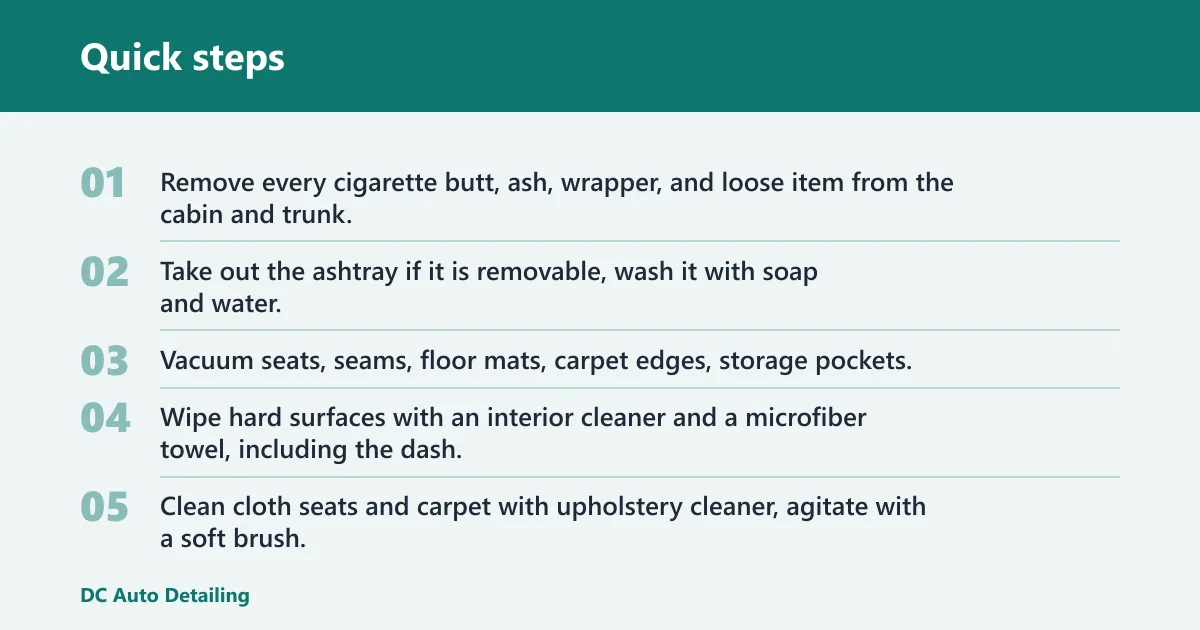
- Remove every cigarette butt, ash, wrapper, and loose item from the cabin and trunk.
- Take out the ashtray if it is removable, wash it with soap and water, and dry it completely.
- Vacuum seats, seams, floor mats, carpet edges, storage pockets, and trunk lining with a crevice tool.
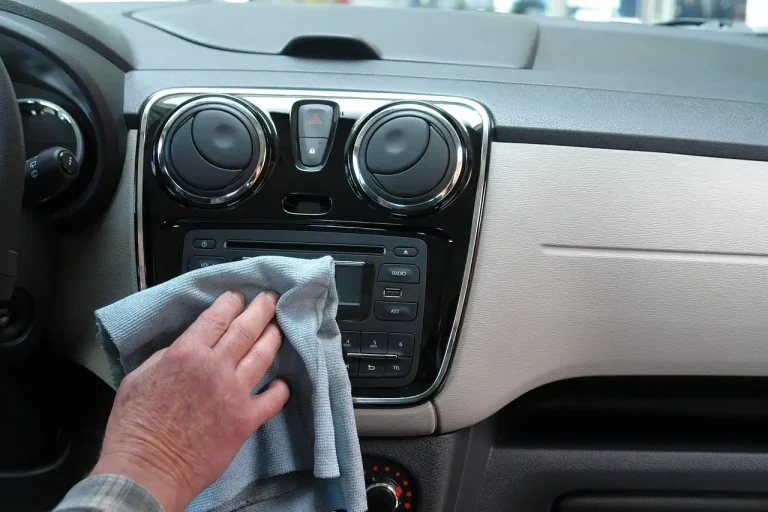
- Wipe hard surfaces with an interior cleaner and a microfiber towel, including the dash, door panels, and console.
- Clean cloth seats and carpet with upholstery cleaner, agitate with a soft brush, and pull out loosened residue with a wet-dry vacuum or carpet extractor.
- Dry the cabin fully before the next step. Leave doors open, run airflow, and avoid reassembling damp trim or mats.
- If odor still lingers, treat the HVAC path and cabin air filter instead of adding more fragrance.
Suppose a sedan smells fine after vacuuming, but the odor returns only when the heat runs. That usually means the surface work helped, while the HVAC path still needs attention. In that case, the next pass should target vents, the intake, and the cabin air filter.
Surface odor: what to clean first
Surface odor usually lives on plastic, glass, the ashtray, and visible dust on carpet. Start with vacuuming, then wipe hard surfaces with a trim-safe interior cleaner. If the smell fades after the cabin airs out and does not return when the fan runs, the odor was likely surface-level and the remaining work is drying, not heavy treatment.
Open every door and the trunk for at least an hour before you begin. This gives the cabin time to air out and clears loose smoke before you start cleaning, so you are not sealing odor back inside. The EPA recommends ventilation and source control as part of smoke cleanup, especially in enclosed areas where residue lingers. https://www.epa.gov/indoor-air-quality-iaq/indoor-air-quality-iaq-smoking
Embedded odor: what to clean in fabric, foam, and carpet
Cloth seats and carpet respond best to cleaning plus agitation and extraction. The headliner is different: it is fabric-covered and lightly padded, so it should be cleaned gently to avoid sagging or adhesive damage. Seat belts, trim, and plastic need a lighter touch but still need source removal.
Use a fabric-safe upholstery cleaner and work one small section at a time. Agitate with a soft brush so the cleaner reaches the fibers, then pull the loosened residue out with a wet-dry vacuum or extractor. Do not soak the material. Too much moisture can push odor deeper and slow drying.
One of the biggest risks is over-wetting the headliner or padding behind upholstery. Consumer-facing detailing and restoration guidance consistently warns that excess liquid can loosen adhesive, warp backing, or create slow-drying areas that hold odor longer. Keep moisture controlled and use extraction after cleaning whenever possible. https://www.autogeek.net/ https://www.detailingwiki.org/
A common first-timer mistake is soaking the fabric seats with cleaner, which can leave the car damp and the smoke odor lingering longer. That often leaves a ring, not a cleaner cabin. Gentle passes are safer and usually more effective.
If the cabin still smells after cleaning, use the diagnostic list below before repeating the same work. The most commonly missed odor sources are foam padding, seat belts, trunk liner, under mats, the headliner adhesive layer, the cabin filter, and the evaporator or HVAC path. Humid days can also reactivate residue trapped in fabric or foam, making the smell seem like it “came back.”
For a deeper troubleshooting flow on persistent smoke odor, see why a car still smells like cigarettes after cleaning. That matters because the fix changes depending on whether the odor is in the surface layer, deep in textiles, or recirculating through the vents.
HVAC odor: what to check when the smell comes back with the fan
If the smell returns when the fan runs, the HVAC path needs attention. Smoke odor can move into the ventilation system through heating or AC, and untreated vents can recycle it back into the cabin. Start with fresh-air intake, then check the cabin air filter location in the owner’s manual before replacing anything.
Cabin air filters are maintenance parts, not lifetime parts. Many automakers recommend periodic replacement, and smoke contamination is a common reason to change one sooner than the normal interval. A dirty filter can trap odor and then reintroduce it whenever air moves through the system. For a general maintenance reference, see Bosch’s cabin filter guidance and your vehicle’s owner’s manual. https://www.boschautoparts.com/auto/parts/filters/cabin-air-filters
Escalation: when extraction or ozone treatment makes sense
Baking soda and activated charcoal help with lighter odor, especially after the main cleaning is done. Heavy cigar smell, smoke that returns on humid days, or odor that survives extraction points to deeper contamination. That is where steam cleaning or ozone treatment may be worth considering.
Use extractor or steam work only as directed for the surface material, because excess heat or moisture can damage trim, swell backing, or leave the cabin too wet to dry well. Professional detailing guidance generally treats steam as a targeted tool, not a soak-the-interior solution, and extraction works best after the loosened residue has already been agitated out of the fibers. https://www.detailingwiki.org/ https://www.autogeek.net/
Ozone treatment is a deeper solution for embedded odor, but it is a professional-level option. People, pets, and plants should be kept out of the vehicle during treatment, and the car should be aired out thoroughly afterward. Use it only after source removal, not before, and follow the machine instructions exactly. NIOSH cautions that ozone is a respiratory irritant and should not be inhaled during or immediately after use. https://www.cdc.gov/niosh/topics/ozone/
Ozone also needs adequate air-out time after treatment before anyone rides in the car. The EPA notes that ozone generators should not be used as routine air cleaners, and any intentional use requires strict ventilation and safety precautions afterward. If you choose this route, the cabin must be fully aired out before it is occupied again. https://www.epa.gov/indoor-air-quality-iaq/ozone-generators-are-sold-air-cleaners
Picture a pickup with smoke in the seats, a stale headliner, and a filter that still smells after replacement. That is the kind of case where a full interior clean, HVAC treatment, and then ozone may be reasonable. If the odor only shows up after rain or humidity, recheck the source before jumping straight to ozone.
Cigarette smell out car checklist
| Symptom | Likely odor source | Next action |
|---|---|---|
| Ashtray still smells after emptying | Residue inside the ashtray and lid | Remove it if possible, wash with soap and water, and dry fully |
| Seats smell strongest when you sit down | Cloth fibers and foam padding | Vacuum, clean with upholstery cleaner, agitate, then extract |
| Smell hangs above your head | Headliner fabric and light padding | Clean gently; do not soak the panel |
| Carpet smells after vacuuming | Deep residue in carpet backing and underlay | Use cleaner, agitation, and a wet-dry vacuum or extractor |
| Odor returns when the fan turns on | Vents and HVAC ducts | Clean the intake and vents; check the cabin air filter |
| Smell gets worse on humid days | Embedded residue in fabric and foam | Do a deeper cleaning pass and dry the cabin completely |
| Smoke comes back with AC only | Cabin air filter or HVAC contamination | Check the owner’s manual for filter location and replace it if dirty |
| Heavy cigar smell stays after basic cleaning | Thicker tar and deeper residue | Move to steam cleaning or professional-level treatment |
| Odor is still obvious after two full cleaning rounds | Embedded smoke in multiple surfaces | Use extraction, then consider ozone treatment |
| Cabin smells clean, then stale smoke returns | Recontamination from vents, seats, or ashtray residue | Recheck the source areas before adding more fragrance |
| Smell is strongest near the dash and console | Plastic surfaces and HVAC intake area | Wipe the area, then treat the intake path |
Why the car still smells like cigarettes after cleaning
If the smell is still there after cleaning, the most common cause is a missed source rather than a failed product. Check foam padding, seat belts, trunk liner, under mats, the headliner adhesive layer, the cabin air filter, and the evaporator or HVAC path. On humid days, moisture can reactivate tar trapped in those materials and make the odor seem new again.
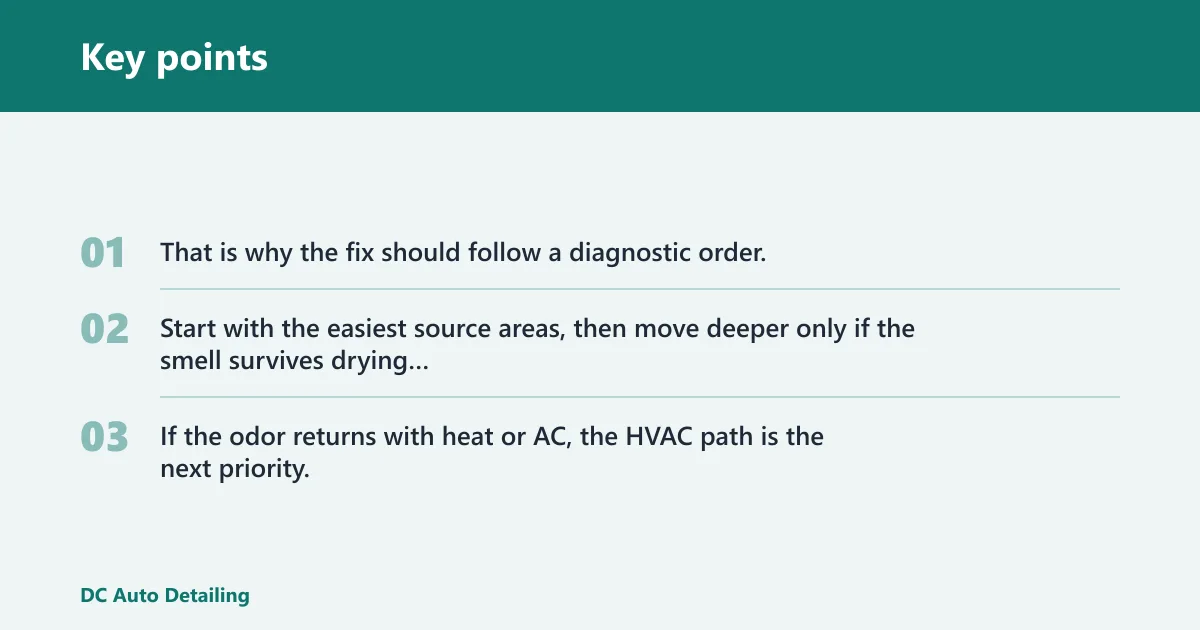
That is why the fix should follow a diagnostic order. Start with the easiest source areas, then move deeper only if the smell survives drying and airflow. If the odor returns with heat or AC, the HVAC path is the next priority; if it returns only when the cabin gets humid, embedded textiles or foam are usually still contaminated.
Common mistakes
Over-wetting fabric and headliner is the most common error. It can leave streaks, sagging, or slow-drying areas that hold odor longer. Keep moisture controlled and use extraction after cleaning whenever possible.
Masking the smell is another mistake. Air fresheners only hide the odor for a short time. If the smoke source stays in fabric, foam, or vents, it will come back.
Skipping the cabin air filter or HVAC intake can waste a full cleaning session. If smoke returns when the fan runs, check those parts before you repeat the same surface cleaning.
Prevention: after the odor is gone, keep ashtrays empty, avoid smoking inside, and replace the cabin air filter on schedule so residue does not build back up in the HVAC path.
Frequently asked questions
What takes cigarette smell out of a car?
The fastest reliable fix is source removal: trash out the cabin, clean ashtray residue, vacuum fabric and carpet, clean hard surfaces, and replace the cabin air filter if the smell comes back with AC. Baking soda and activated charcoal can help after that, but they should not replace cleaning.
How do I remove cigarette odor from a car step by step?
Start with a full cleanup, then move from hard surfaces to fabric, then to vents. Remove debris, wash the ashtray, vacuum thoroughly, clean seats and carpet with extraction, dry the cabin, and check the cabin air filter if odor returns. That order keeps smoke from spreading deeper.
How do I eliminate cigarette odor from a car for good?
You need to remove residue from every place smoke settles, including fabric, foam, headliner, seat belts, carpets, plastics, and HVAC parts. If one area is left untreated, the smell can return when the car warms up or the fan runs. Severe cases may need steam cleaning or ozone.
What is the fastest way to remove smoking smell from a car?
The fastest noticeable improvement usually comes from trash removal, ashtray cleaning, vacuuming, and wiping hard surfaces, followed by fresh-air ventilation for at least an hour. That clears loose odor quickly. If the smell remains after that, it is embedded and needs deeper cleaning.
Should I replace the cabin air filter if my car still smells like smoke?
Yes, if the smell returns when the AC or heat runs. Check the owner’s manual for filter location and access, then replace the filter with one that matches your vehicle. A smoke-loaded filter can keep putting odor back into the cabin even after the interior looks clean.
When is ozone treatment worth it for cigarette smell?
It is worth considering when odor remains after full cleaning, extraction, and HVAC treatment, especially in heavy cigar cases or severe embedded odor. People, pets, and plants must be out of the car during treatment, and the vehicle must be aired out thoroughly afterward before anyone rides in it.