What is a rinseless wash and how does it work?
A rinseless wash is a low-water car-washing method that uses a lubricated cleaning solution to lift and trap light dirt, as long as the surface is not caked with mud, sand, or heavy grit. On a dirty panel, it can drag abrasive soil across the paint and create swirls. This guide explains how rinseless wash chemistry works, how the technique reduces marring, and how to judge when your car is clean enough for it.
What is a rinseless wash?
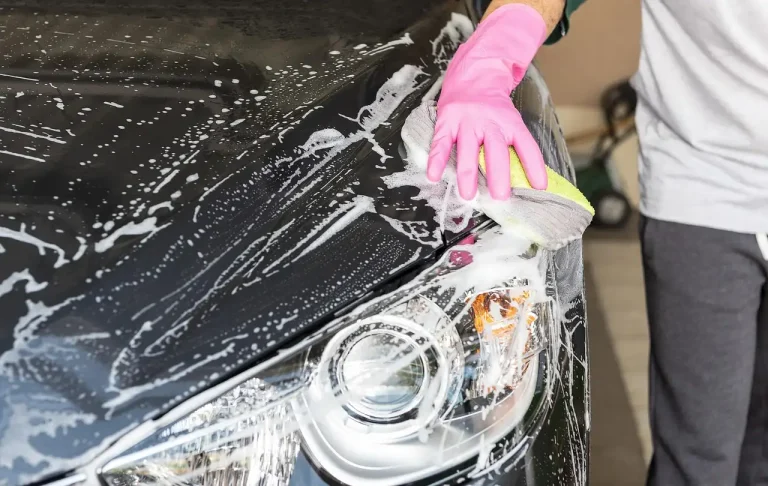
A rinseless wash is a low-water contact wash with no final hose rinse. You mix a rinseless wash concentrate with water, then wipe the surface with a saturated microfiber towel or soft sponge, lifting loose dirt into the solution instead of blasting it away with a hose.
That makes it useful for light dust through moderate road film, especially when you cannot use a hose. Manufacturer guidance for rinseless products such as Optimum No Rinse Wash & Shine and Meguiar’s rinseless-style wash products frames the method as a controlled, low-water wash rather than a spray-and-forget wipe.
The key idea is control. You are not trying to flood the panel. You are trying to give dirt enough lubrication to release, then remove that soil before it is rubbed back into the paint.
How does a rinseless wash work?
A rinseless wash works by combining dilution, lubrication, and dirt encapsulation. The concentrate changes the water’s behavior so soil releases from the paint, stays suspended in the wash solution, and is less likely to grind across the finish during the wipe.
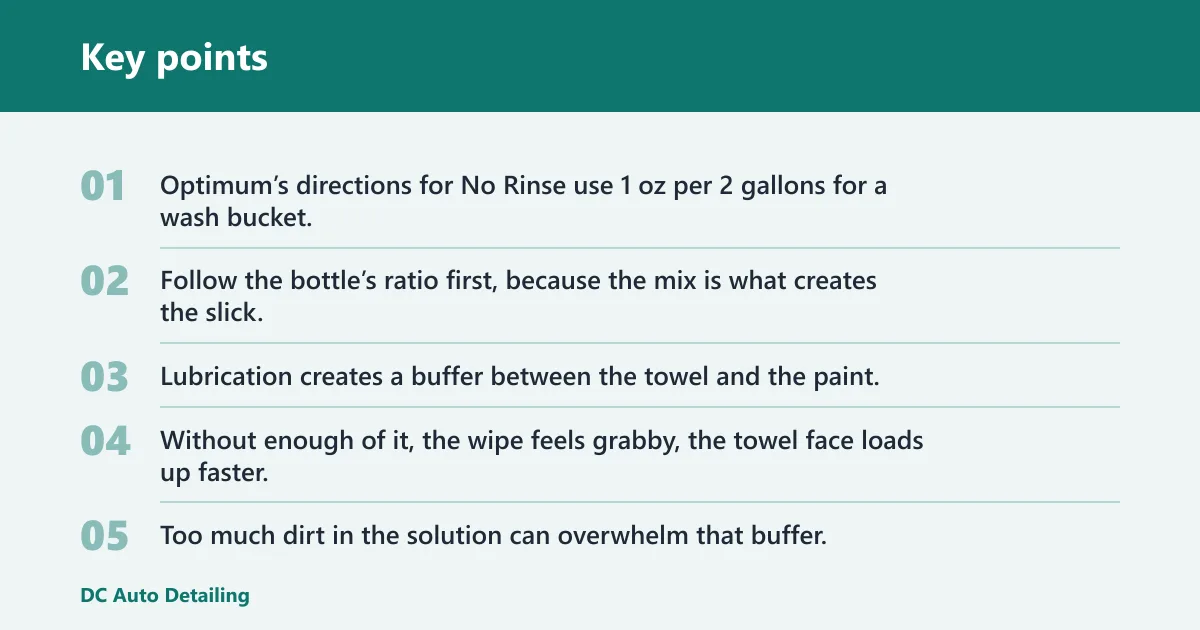
That is why dilution matters. Optimum’s directions for No Rinse use 1 oz per 2 gallons for a wash bucket, and other manufacturer instructions for rinseless-style mixes commonly stay within a similar low-concentration range. Follow the bottle’s ratio first, because the mix is what creates the slick, soil-carrying film.
Why lubrication matters
Lubrication creates a buffer between the towel and the paint. Without enough of it, the wipe feels grabby, the towel face loads up faster, and the odds of leaving faint marks go up. Too much dirt in the solution can overwhelm that buffer.
Picture a hood with a thin layer of pollen and road dust. If the towel glides smoothly, dirt is more likely to release. If it drags and squeaks, stop and switch to a clean towel face sooner.
Why dilution changes performance
The mix ratio affects how easily soil releases and how much residue is left behind. Too weak, and the solution can feel thin and dry too fast. Too strong, and you may leave more residue, especially on warm panels where the liquid flashes off quickly.
That is why the manufacturer ratio matters. As a practical range, many rinse-free wash instructions stay around 1 oz in 2 gallons, while bucket-based detailing guidance often lands in the 2 to 3 gallon fill range for the whole wash setup. Use the label, then stay inside the product’s stated range instead of improvising.
How do you decide if the panel is safe?
The safest way to decide is to judge the soil, not the calendar. Light dust and pollen are usually fine. Heavy grit, caked mud, and stuck-on debris are not. When the panel feels gritty before you start, a pre-rinse is the better first step.
| Contamination level | Safe to use rinseless? | Panel feel / visible grit check | Recommended next step |
|---|---|---|---|
| Dust, pollen | Yes | Smooth to the touch; no visible grit | Use a saturated towel or mitt and wipe gently in straight lines. |
| Light road film | Yes | Film is visible, but the panel does not feel sandy | Clean one panel at a time and keep clean towel faces ready. |
| Bug splatter | Usually no | Raised spots or sticky residue are visible on the surface | Pre-treat or pre-rinse first, because stuck residue can need dwell time and extra agitation. |
| Bird droppings | Usually no | Localized crust or dried contamination is visible | Soften and remove that spot before any full-panel wipe. |
| Caked mud | No | Rough, gritty texture is obvious before contact | Use a hose or pressure rinse first so heavy grit does not scratch the paint. |
A common first-timer mistake is using rinseless wash on a lower door covered with dried mud spray after rain. That panel may look manageable from a few feet away, but the gritty layer can cut across the paint during the first pass. A pre-rinse is safer.
What tools do you need?
You need a rinseless wash concentrate, a bucket, clean microfiber towels, and a soft wash sponge or mitt. A grit guard placed in a 5-gallon bucket helps trap settled grime so you are less likely to reload the towel with debris from the bottom.
High-pile or plush microfiber towels are preferred because they hold more solution and give you more usable towel face before the fabric loads up. Cross-cut or soft microfiber sponge designs also work, as long as they stay saturated and lubricated.
- Measure the rinseless wash concentrate according to the bottle label.
- Add water to the bucket or sprayer first, then mix in the concentrate.
- Place a grit guard in the bucket if you are using one.
- Set out several clean microfiber towels so you can rotate them often.
- Soak the mitt or sponge fully before touching the paint.
How much water should you use?
Most rinseless systems use only a small bucket fill, not a full soap bucket. Manufacturer directions commonly call for about 2 gallons for the wash mix, and many detailing references stay in the 2 to 3 gallon range for a complete bucket setup. The goal is enough liquid to keep the media wet and the soil suspended without wasting water.
How should you choose towels and wash media?
Use one towel face for a small section, then flip to a clean face or switch towels. Clean towel faces reduce marring because they do not keep grinding the same dirt back into the clear coat. A single dirty towel should not be used across the whole car.
How do you wash safely?
Clean one panel at a time, use straight-line passes, and dry immediately after wiping. The process is controlled, not rushed. Gentle pressure and a well-lubricated surface matter more than speed, because speed without lubrication increases drag and residue.
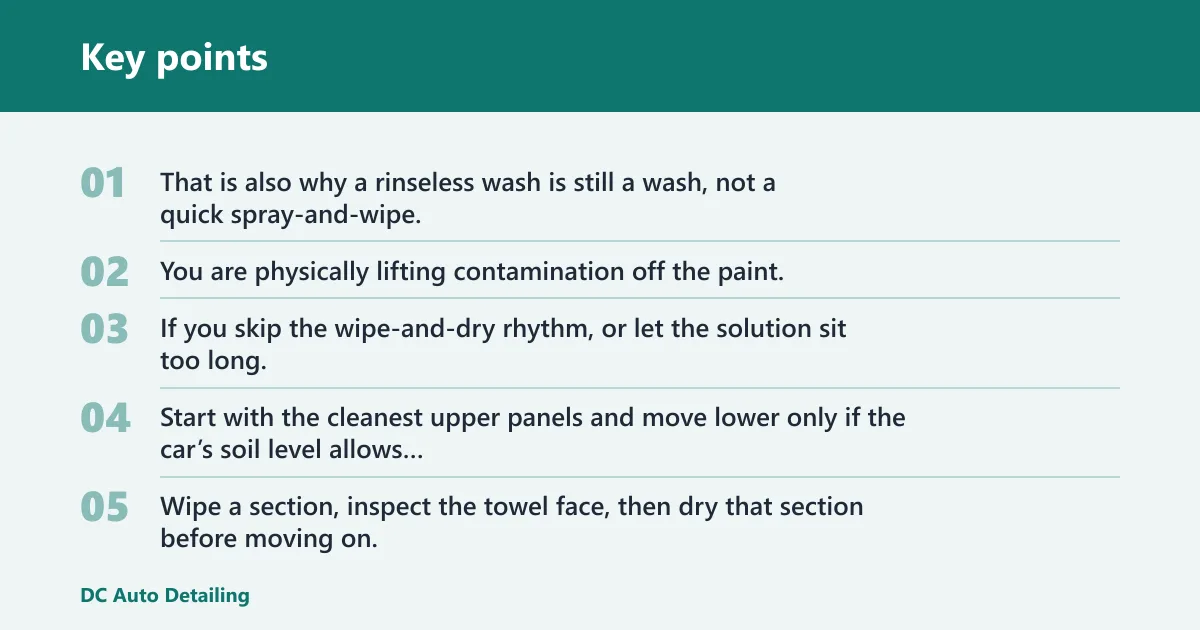
That is also why a rinseless wash is still a wash, not a quick spray-and-wipe. You are physically lifting contamination off the paint. If you skip the wipe-and-dry rhythm, or let the solution sit too long, the surface can streak.
What is the panel-by-panel sequence?
Start with the cleanest upper panels and move lower only if the car’s soil level allows it. Wipe a section, inspect the towel face, then dry that section before moving on. If the towel starts to feel gritty, change to a fresh face immediately.
Why use straight-line passes?
Straight-line motion matters because it keeps the contact path predictable. Circular wiping does not remove dirt more safely. If any mark does appear, straight lines also make it easier to inspect and correct without spreading the problem across the panel.
Suppose a compact sedan has a thin layer of road film after a dry commute, but the front bumper carries heavier bug remains. The side doors may be fine for rinseless washing, while the bumper should get pre-cleaning first. The safe answer can change by panel, not by car.
How fast should you dry?
Drying right after the wipe helps prevent spotting and haze. This matters more in warm weather, because heat speeds flash-off. Product guidance from detailing manufacturers commonly places better working conditions in the cooler part of the day and away from hot panels, because quick evaporation raises streak risk.
Cold can cause a different problem. The solution may thicken and move less freely, which reduces performance and makes the wipe feel less slick. Keep that in mind if you are working outside on a cold morning or in a drafty space.
When should you avoid rinseless wash?
Rinseless wash is the wrong choice when the paint carries heavy soil, embedded grit, or debris that cannot be lifted safely with a wipe. Caked mud is the clearest no. Heavy bug remains, bird droppings, and thick grime also call for pre-cleaning first.
Temperature and surface condition matter too. Hot panels can make the solution flash off before you finish the wipe, which raises streaking risk. Very cold conditions can slow the product down and reduce its lubricating feel. Both can make the wash less forgiving.
What if the soil is heavy or gritty?
Do not use rinseless wash as the first step when you can feel gritty contamination with your fingertips. Heavy deposits can behave like sandpaper under a towel. If the surface feels abrasive or you can see dried chunks, treat that as a pre-rinse or pre-soak situation instead.
What if the panels are hot?
Heat shortens your working time. If the panel dries too quickly, the solution may leave residue before you can remove it. Work in shade when possible, and avoid starting on a hood or roof that is hot to the touch.
What if the weather is cold?
Cold air can make the mixture feel sluggish and less uniform. That does not make rinseless wash unsafe by itself, but it can make lubrication less consistent. If the towel starts to drag, stop and rewet the surface instead of forcing the pass.
Can you use a rinseless wash on coated paint?
Yes, ceramic coated paint can be washed with rinseless wash, but the coating does not change the soil limit. A coating may make dirt release more easily, yet you still need the same decision rule: light dust and moderate road film are fine; caked mud and gritty contamination are not.
The same technique still applies. Use a lubricated solution, saturated media, straight-line passes, and immediate drying. The coating may help with cleanup, but it does not make heavy contamination safe to wipe across the panel.
Frequently asked questions
How does rinseless car wash work?
It works by suspending loosened dirt in a lubricated solution so the soil is carried away during the wipe instead of rubbed back into the finish. The wash only works as intended when the mix is diluted correctly and the towel or mitt stays saturated and clean.
Is a rinseless wash safe for light dirt only?
Yes, that is the safest way to think about it. Light dust, pollen, and moderate road film are the normal use case. Once the vehicle carries caked mud, heavy grit, or thick bug remains, a pre-rinse or spot cleaning is the better choice.
How much water does a rinseless wash use?
Manufacturer directions and established detailing references usually keep the bucket fill low, often around 2 gallons for the wash solution and commonly within a 2 to 3 gallon setup. The exact amount depends on the product label and how much wash media you are keeping wet.
What makes rinseless wash different from waterless wash?
Rinseless wash uses a diluted solution, a bucket or sprayer, and wet wash media to clean a panel with controlled wiping. Waterless wash is usually a spray-and-wipe method with less solution and less dwell. Rinseless is generally the better fit when the car has more than a light dusting.
Do rinseless washes scratch paint if used wrong?
Yes. A rinseless wash can scratch or mar paint if the panel is too dirty, the solution is too weak, the towel face is contaminated, or the user presses too hard. The method reduces risk when used correctly, but it is not scratch-free or risk-free.
What tools do I need for a rinseless wash?
You need a rinseless wash concentrate, a bucket, water, a grit guard, plush microfiber towels, and a soft sponge or mitt. The important part is having the tools ready, then keeping them saturated, clean, and ready to rotate as soon as they load up.
Can you use a rinseless wash on ceramic coated paint?
Yes. A ceramic coating does not remove the soil threshold or make heavy grit safe to wipe away. Use the same rule set you would on uncoated paint: light contamination is fine, while caked mud, gritty buildup, and stuck-on debris call for pre-cleaning first.