Can you wash a car without soap, and what should you use?
Yes. If the car is only dusty, rinse it with plenty of water and use a pH-neutral car wash substitute such as baby shampoo in a pinch. If it has grit, use proper car soap or wait. Wrong substitutes can grind dirt into the clear coat and leave scratches. This guide tells you what to use by dirt level, what to avoid, and the safest no-soap wash method for paint.
Can you wash a car without soap?
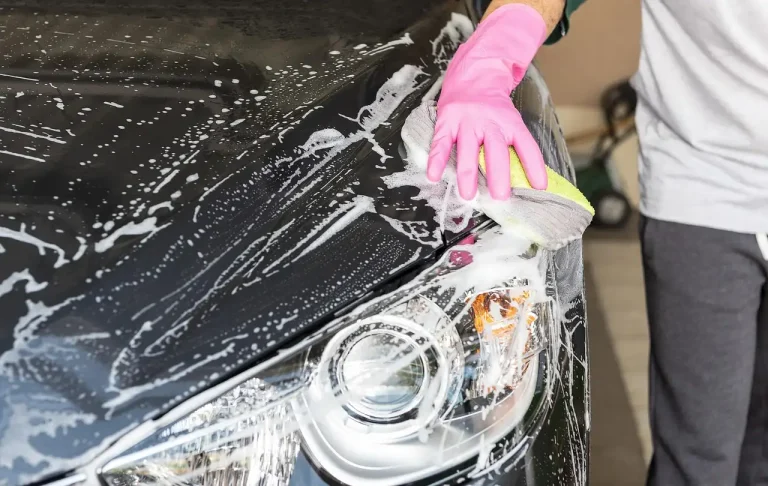
You can rinse a lightly dusty car without soap, but that is not the same as a true wash. Water alone can remove loose dust and pollen from the surface, while bonded dirt, oils, and road film often remain behind. Once you start touching the paint, the lack of lubrication raises scratch risk fast.
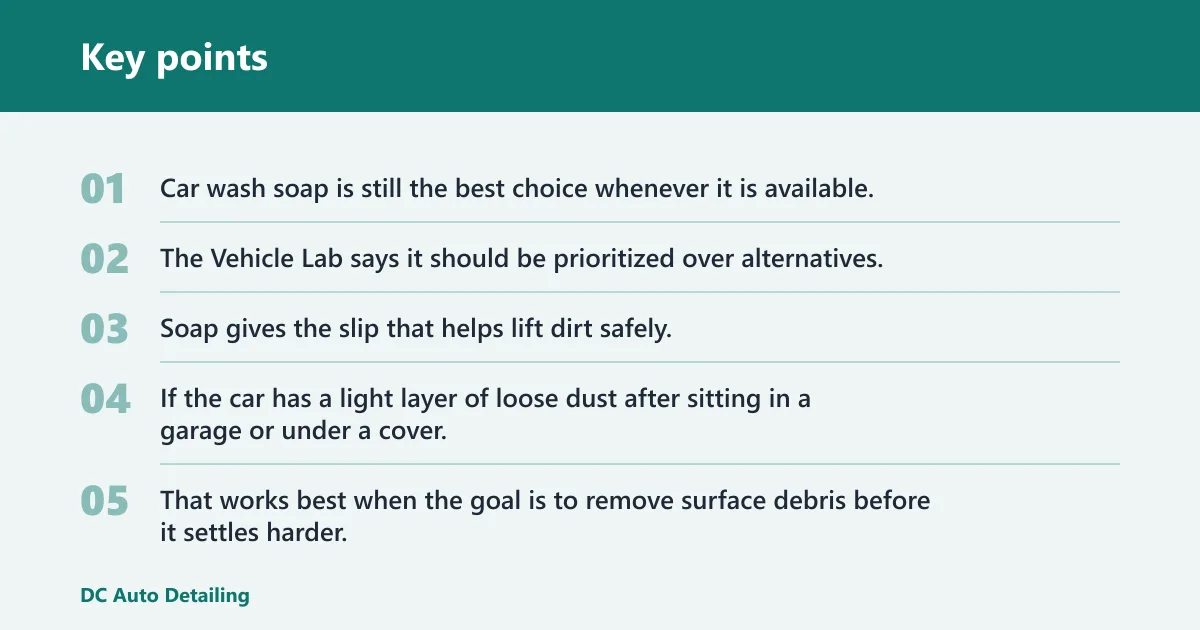
Car wash soap is still the best choice whenever it is available. The Vehicle Lab says it should be prioritized over alternatives, and that is the right default when the panel has more than a light surface layer. Soap gives the slip that helps lift dirt safely, which is why a proper wash beats a guesswork substitute.
When a rinse is enough
If the car has a light layer of loose dust after sitting in a garage or under a cover, a careful rinse may be enough to avoid rubbing the paint at all. That works best when the goal is to remove surface debris before it settles harder.
When a contact wash is too risky
If you see road film, caked bug debris, or gritty grime at the lower panels, skip a bare water wipe. Touching that contamination without enough lubrication can drag abrasive particles across the finish, and the risk rises on dark paint where marks are easier to spot.
What car wash soap still does better
Proper car soap is made to suspend dirt, reduce friction, and rinse clean with less residue. It is the safer choice for waxed, sealed, and ceramic-coated paint because you are less likely to strip protection or leave film behind than with household cleaners.
What can I use instead?
A safer substitute is an automotive product made for low-friction cleaning, especially a waterless wash spray or spray detailer. If only household options are available, baby shampoo is a gentler backup than dish soap or laundry detergent, but it still needs dilution and works best on light soil.
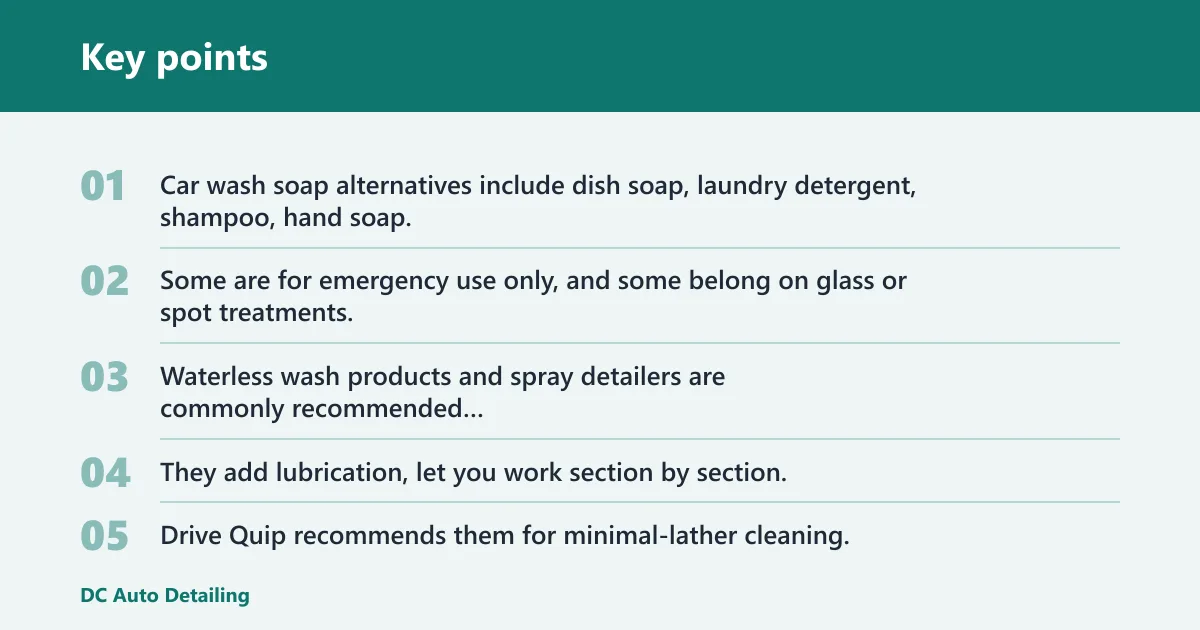
Car wash soap alternatives include dish soap, laundry detergent, shampoo, hand soap, hair conditioner, and baking soda. That list does not mean they are equal. Some are for emergency use only, and some belong on glass or spot treatments, not full exterior paint.
Waterless wash spray or spray detailer
Waterless wash products and spray detailers are commonly recommended automotive-formulated fallback options when you need a minimal-lather clean. They add lubrication, let you work section by section, and pair with clean microfiber towels to cut friction. Drive Quip recommends them for minimal-lather cleaning.
Baby shampoo as a gentler backup
Baby shampoo is one of the better household alternatives. It is closer to car soap than dish soap, but it still needs dilution with water and is not strong on heavy grime. Use it only when the car is lightly soiled and a proper car shampoo is unavailable.
Dish soap, laundry detergent, and other household options
Dish soap is the most common emergency substitute, but it can strip wax and sealants, so keep it to rare use. AutomotiveGearz notes that dish soap can strip wax and sealants, and dish soap may be used once or twice in an emergency, not as a long-term replacement.
Laundry detergent is backup-only. It may be diluted with water because it can be harsh, and AutomotiveGearz lists high pH, typically 9–11. It can leave residue or affect finishes over time, so do not make it your normal wash product.
Is water alone enough?
Water alone is enough only for loose dust and pollen. It does not remove bonded contaminants or road film, so it is a rinse, not a real wash. If the paint is dirty enough to need wiping, you need lubrication from soap or a dedicated detail spray to lower friction.
Loose dust and pollen versus bonded film
A touchless rinse can knock off the material sitting on top of the paint. It will not remove greasy traffic film, bug residue, or mineral deposits. That distinction matters because a panel can look cleaner after a rinse while still holding contamination that scratches when touched.
Why dry wiping creates scratch risk
Dry dusting turns loose grit into a mild abrasive. Without lubrication, a towel, rag, or sponge can drag particles across the clear coat. That is where micro-marring starts, especially on black paint and on finishes that already show swirl marks easily.
How finish type changes the risk
Waxed paint can lose protection faster if you use dish soap or harsh cleaners. Ceramic-coated paint is more tolerant of light contact, but it still needs lubrication because the coating does not make grit disappear. Matte paint and vinyl wrap need extra caution, since rubbing can leave shiny spots or dull patches.
Soapless wash decision table
This table ranks soapless choices by contamination level and paint risk. It is a paint-safety guide, not a convenience chart. When the dirt level goes up, the acceptable substitute gets narrower, and the safest answer often becomes “do not wash until you have car soap.”
| Surface condition | Acceptable backup | Dilution/use notes | Tools needed | Red-flag warnings |
|---|---|---|---|---|
| Light dust | Water-only rinse, or waterless wash spray | Rinse first; if touching paint, use a lubricated spray and wipe one small section at a time | Gentle hose stream, clean microfiber towels, or microfiber wash mitt | Do not dry wipe; highest scratch risk comes from touching dry dust without slip |
| Pollen or road film | Baby shampoo mix or waterless wash spray | Dilute baby shampoo with water; use plenty of rinse water and frequent towel changes | Microfiber wash mitt, two buckets, grit guard if available | Water alone leaves film behind; stop if the panel still feels greasy or gritty |
| Bug splatter | Automotive spray detailer or proper car soap | Pre-soak and soften first; do not rub dry residue | Microfiber mitt, clean towels, rinse bucket, wash bucket | Do not attack with a dry rag, brush, or baking soda paste |
| Heavy grime | Proper car soap only; wait if unavailable | Household substitutes are too risky here, especially dish soap or laundry detergent | Foam cannon or pump sprayer, microfiber wash mitt, two buckets | Do not wash with plain water and a towel; the grit load is too high |
What should you avoid on paint?
Avoid laundry detergent as a routine wash product, avoid harsh cleaners, and avoid abrasive tools. Vinegar and baking soda also have limits: vinegar is mainly for glass or mineral deposits, and baking soda belongs in spot treatments or DIY mixes only. None of those is a general substitute for car soap on paint.
Laundry detergent and harsh cleaners
Laundry detergent can be harsher than car soap and may contain bleach, enzymes, or fabric softeners. Even when diluted, it can leave residue or affect finishes over time. That makes it a last-ditch option, not a regular cleaning method.
Vinegar and baking soda on exterior paint
White vinegar solution is mainly for glass or mineral deposits, commonly mixed 50/50 with distilled water. It is not a good general exterior wash, and it should not be treated as a paint wash. Baking soda is basic and high-pH, needs water to be used, and can damage paint if mixed incorrectly or rubbed aggressively.
Suppose a sedan has water spots on the side glass and light dust on the hood. Vinegar belongs on the glass only, while the hood needs a proper wash solution or a safe rinse. One product can be right for one surface and wrong for another.
Abrasive tools, towels, and dry dusting
Skip kitchen sponges, old T-shirts, stiff brushes, and any dry rag that has seen other jobs. The same source recommends soft microfiber wash mitts instead of abrasive fabrics, and it is good advice. A soft mitt is still only safe when you rinse it often and keep grit out of the fibers.
How to wash with the least risk
The safest soapless method is a touchless rinse first, then a carefully lubricated contact wash only if the dirt level is low enough. Jimbo’s Detailing says soap provides lubrication to lift dirt safely, and that is the principle to preserve when you substitute anything else. If the car is heavily soiled, stop and wait for proper soap.
Pre-rinse and loosen debris first
Start with a hose rinse or a foam-style pre-soak if you have one. The same source recommends a foam cannon or pump sprayer with a 2–3 minute dwell as a safer quick-clean method. That soak step helps loosen film before any mitt touches the paint.
Use a microfiber wash mitt and the two-bucket method
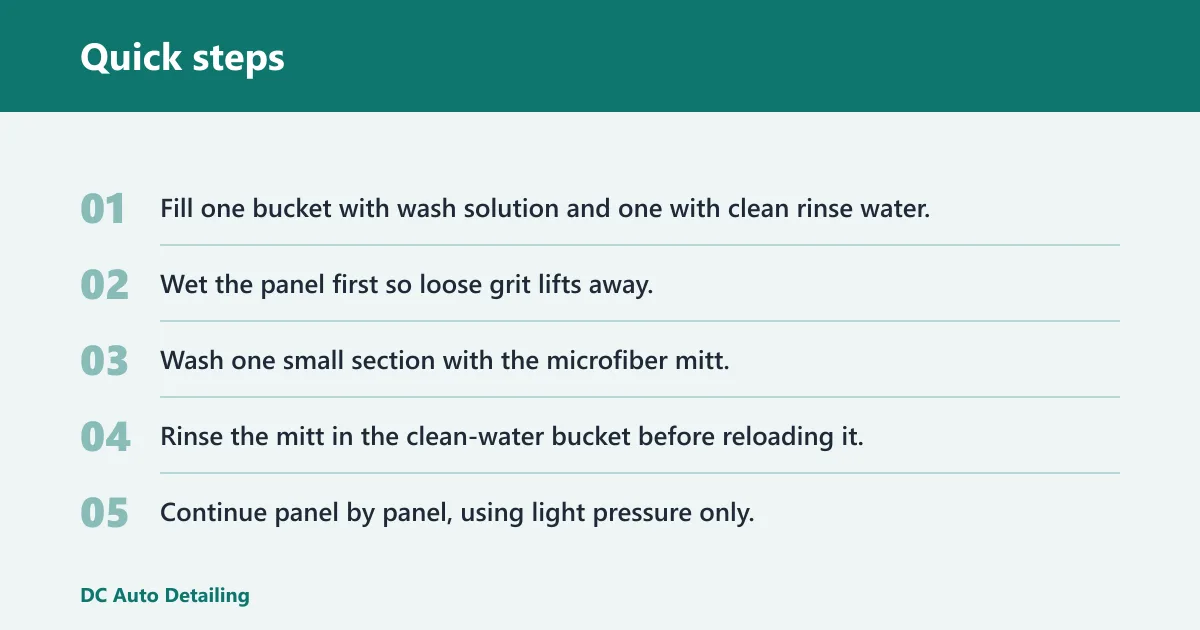
Use a microfiber wash mitt, not a sponge. The same source recommends a two-bucket approach when washing with water and a mitt, and it reduces grit retransfer. One bucket holds the wash solution, the other is for rinsing the mitt before it goes back into the soap.
- Fill one bucket with wash solution and one with clean rinse water.
- Wet the panel first so loose grit lifts away.
- Wash one small section with the microfiber mitt.
- Rinse the mitt in the clean-water bucket before reloading it.
- Continue panel by panel, using light pressure only.
Work in sections and rinse often
Do not clean the whole car in one pass with a single loaded towel. Work from the top down, rinse the mitt often, and swap towels when they pick up dirt. A common first-timer mistake is trying to save time by using one towel on the entire car, which only spreads grime around.
Picture a white crossover with yellow bug marks on the bumper and a dusty roof. The roof might tolerate a gentle rinse and detail spray, but the bumper needs more lubrication and more careful passes. The dirt type, not convenience, should decide the method.
Dry carefully to avoid water spots
Rinse thoroughly and dry before the water leaves mineral spots. Clean microfiber drying towels are the safer choice. On darker paint, blotting or light dragging with a plush towel reduces the chance of visible marks compared with an old bath towel or air-drying in direct sun.
Frequently asked questions
What can I use to wash my car if I don’t have car soap?
The safest fallback is an automotive waterless wash spray or spray detailer. Baby shampoo is a better household backup than dish soap, but it still needs dilution. Dish soap is common in emergencies, while laundry detergent is harsher and should stay out of regular wash routines.
Is it safe to wash a car with just water?
It is safe only for a touchless rinse of loose dust or pollen. It is not enough for film, grease, or bug residue. If you wipe with water alone, the risk comes from dragging grit across the paint without enough slip, which can leave scratches or swirls.
Can I use dish soap to wash my car in a pinch?
Yes, but only as an emergency move. Dish soap can strip wax and sealants, so use it sparingly and do not make it your long-term wash product. If it is the only option, dilute it, rinse well, and dry the car right away to limit residue.
What household products are safe to clean car paint?
Baby shampoo is the gentlest household option named here, and even that needs dilution and careful use. White vinegar belongs mainly on glass or mineral deposits, not on painted panels. Baking soda is for spot treatments only and can harm paint if rubbed hard or mixed poorly.
What is the safest way to wash a car without car shampoo?
Use a pre-rinse, then a lubricated backup such as waterless wash spray or diluted baby shampoo if the dirt is light. Wash with a microfiber mitt, the two-bucket method, and frequent rinsing. If the car has heavy grime, do not force a no-soap wash; wait for proper car soap.