Pet odor enzyme cleaner for cars: when should you use it?
Use a pet odor enzyme cleaner for cars only when the smell is organic, source-based, and has soaked into carpet, seat foam, or trim from urine, vomit, drool, or feces; choose an oxidizer or extractor when the odor is fresh, airborne, or on a hard surface. If you ignore that rule, residue can move deeper, product gets wasted, or the smell comes back a day later. This guide explains when enzyme cleaner fits, when another method works better, and how to tell the difference in a car cabin.
Pet odor decision matrix
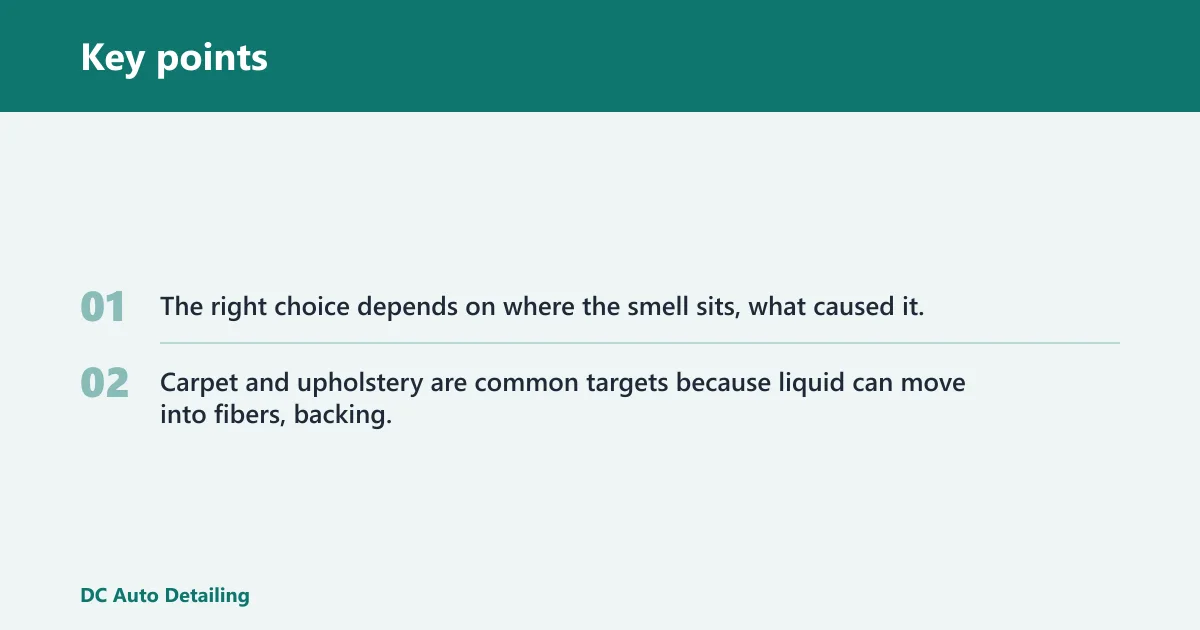
The right choice depends on where the smell sits, what caused it, and how long the material can stay wet for treatment. Carpet and upholstery are common targets because liquid can move into fibers, backing, and padding, while a hard trim panel or an electronic area needs a different approach.
| Scenario | Trigger signs | Best surface type | Recommended action | Expected dwell time | Common mistakes |
|---|---|---|---|---|---|
| Fresh spill on carpet | Wet spot, new pet smell, visible moisture, no prior cleaning | Car carpet | Pre-clean then enzyme | 12 to 24 hours | Rubbing hard, using too little product, letting the spot dry too soon |
| Hidden urine in padding | Odor persists after the stain looks gone, smell rises stronger with heat | Carpet over padding | Use enzyme cleaner now | 24 to 72 hours or longer if deep set | Spraying only the surface, skipping repeat treatment, ignoring under-seat backing |
| Wet dog smell after a ride | Musty pet odor with no clear stain, smell is strongest on seat fabric | Car upholstery | Use enzyme cleaner now | 12 to 24 hours | Using a masking spray first, over-wetting delicate trim, closing the car before dry |
| Old odor after prior cleaning | Odor returns after shampooing, previous product may have left residue | Carpet and fabric seats | Use oxidizer instead | Follows product label; usually shorter than enzyme dwell | Adding more enzyme over old residue, mixing chemistry, skipping a rinse step |
| Unknown source in seats or floor | Smell is present, but the spot is not visible | Seat cushions, carpet, floor area | Inspect with UV | Inspection first, then treatment | Guessing the wrong panel, treating the whole cabin blindly, missing hidden edges |
| Deep contamination and repeat failure | Odor returns after two treatments, smell lingers under seats or in floor padding | Padding, backing, foam | Escalate to professional extraction | Professional process, not a quick home dwell | Repeated light spraying, stopping before the source is reached, ignoring trapped moisture |
When should you use an enzyme cleaner?
Use an enzyme cleaner when the odor comes from organic residue that is still present in the car, especially urine, saliva, vomit, or feces. It works best on carpet and upholstery because the cleaner has time to sit in fibers and break down the source instead of only freshening the air.
Organic odor sources it can break down
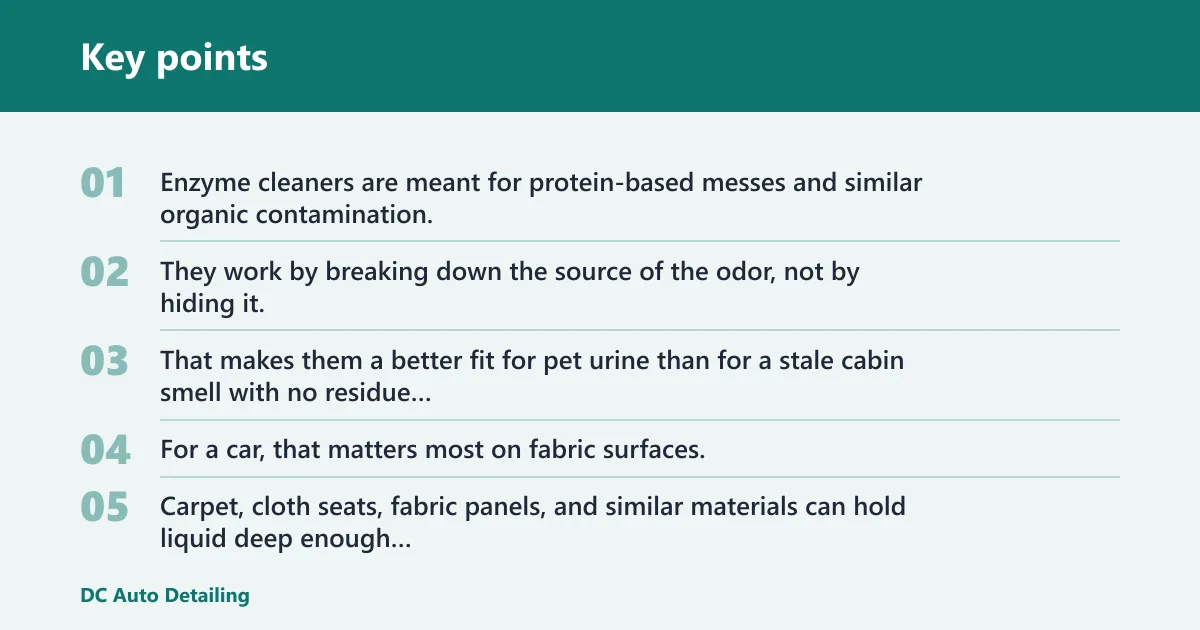
Enzyme cleaners are meant for protein-based messes and similar organic contamination. They work by breaking down the source of the odor, not by hiding it. That makes them a better fit for pet urine than for a stale cabin smell with no residue left behind.
For a car, that matters most on fabric surfaces. Carpet, cloth seats, fabric panels, and similar materials can hold liquid deep enough for the odor to keep coming back after the top layer looks clean.
Carpet and upholstery spots it fits best
Car carpet holds liquid deep in the fibers and can trap odor under the surface. Car upholstery can do the same, especially when the spill reaches seat foam or lower trim. Enzyme cleaner makes sense when the material is water-safe and can stay wet long enough to work.
That is different from a hard plastic panel or a dry airborne odor. Those cases usually need source tracing, surface-safe cleaning, or a different product choice.
Signs the smell is source-based, not just stale air
If the odor gets stronger in heat, returns after the windows close, or seems to come from one seat or floor area, assume the source is still there. Good Housekeeping says the odor can draw pets back, so leaving residue behind can keep the cycle going.
A common first-timer mistake is treating the whole cabin with fragrance when one hidden patch is still active. That wastes product and can make the real source harder to find.
Does enzyme cleaner work on old pet urine in car carpet?
It can, but only if the urine is still in the carpet, backing, or padding where the cleaner can reach it. Old urine odor can remain after the visible stain is gone, and the deeper the contamination goes, the more likely repeat treatment or extraction becomes necessary.
Why odor can stay after the stain is gone
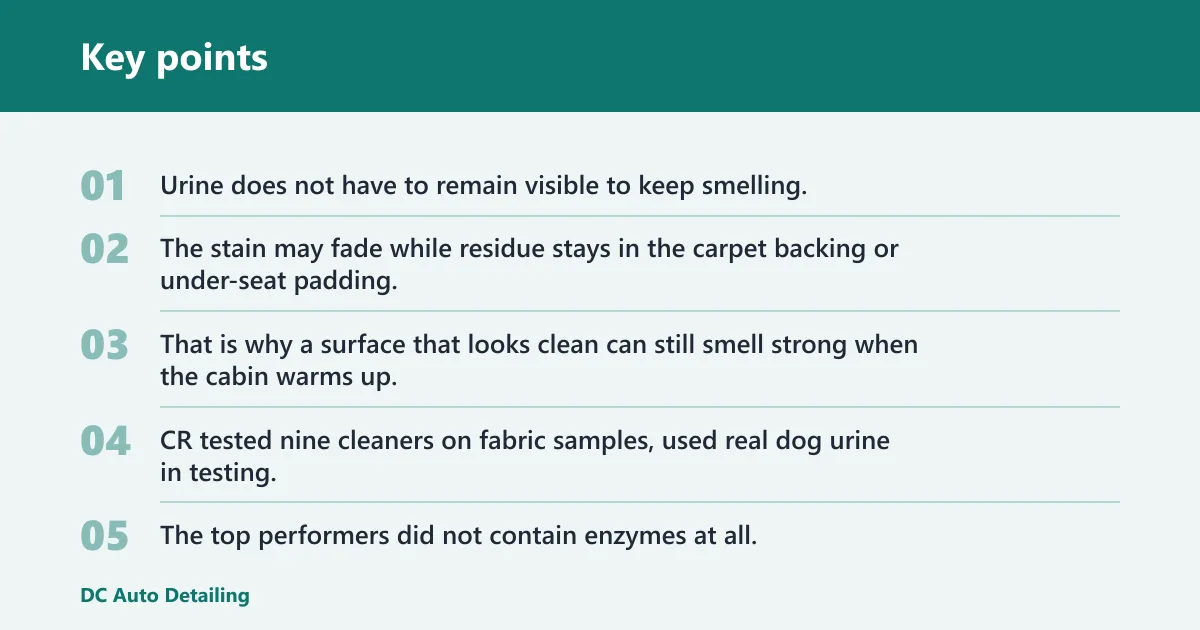
Urine does not have to remain visible to keep smelling. The stain may fade while residue stays in the carpet backing or under-seat padding. That is why a surface that looks clean can still smell strong when the cabin warms up.
CR tested nine cleaners on fabric samples, used real dog urine in testing, and also tested pungent onion juice odors. The top performers did not contain enzymes at all, which is a reminder that the right chemistry depends on the job, not the label alone. (Consumerreports)
How saturation and repeat treatment matter
With set-in urine, a light mist usually is not enough. The area may need saturation so the cleaner reaches the same depth as the contamination. Bissell works on carpets, upholstery, and mattresses, and its odor removal can take up to 72 hours.
If the spot is large or the odor keeps returning, repeat treatment may be needed. Nature’s Miracle is listed for set-in stains, which fits the basic rule: old contamination often needs more contact time than a fresh accident.
When carpet backing and padding become the problem
When odor comes from padding, the carpet face is no longer the main issue. The source may be below it. At that point, surface cleaning alone can miss the deepest layer, and professional extraction becomes the safer recommendation.
Suppose a dog urinates on the rear floor mat and the smell remains after cleaning the visible carpet. If the odor gets stronger after the car sits in the sun, that points to liquid in the backing or padding rather than a surface stain.
How long should it sit?
Many enzyme cleaners are commonly reported to need about 12 to 72 hours of dwell time. Many products need about 12 to 72 hours, and deep set odors may need even longer contact. If the area dries too soon, the enzymes stop working before they finish breaking down the source.
Why premature drying weakens results
Enzyme cleaners require a longer dwelling time to work. If the surface dries early, the product cannot stay active in the fibers. That is the main reason a quick spray-and-wipe approach often fails on pet odor.
Keep the treated area damp for the full recommended window, but do not flood nearby electronics, switches, or delicate trim. Water-safe fabric is one thing. An instrument panel seam or a seat sensor is another.
How to keep the area wet long enough
Use enough product to reach the contaminated depth, then cover the spot if the label allows it and the material is safe. Do not place heat on it. Do not close up the cabin before the area can dry under normal airflow.
- Blot fresh liquid first.
- Apply the cleaner to the source area, not only the smell zone.
- Let it sit for the full label time.
- Recheck after drying.
- Repeat if the odor returns.
When is an oxidizer better?
An oxidizing cleaner is the better tool when faster stain action matters more than source digestion. Products that contain hydrogen peroxide or bleach work faster on stains, but they can be unsafe for some surfaces, so they need a tighter compatibility check than an enzyme cleaner.
Hydrogen peroxide cleaners versus enzyme cleaners
Hydrogen peroxide is a common oxidizer ingredient. It can break down stain appearance faster than an enzyme cleaner, which makes it useful when you need visible stain action and the source has already been handled or is less important than the mark.
That does not make it the better choice for every pet odor. Oxidizers can be harsher on some fabrics, dyes, and trim pieces, so use them only when the material is known to be safe.
Faster stain action and when that matters
Choose an oxidizer when the stain itself is the urgent problem and the surface is compatible. CR says the winner is fast-acting. That speed can matter on a visible spot, while enzyme cleaner is the slower tool that targets the organic source.
Faster is not always better. If the odor has sunk into padding, speed on the surface will not solve the source underneath.
Surface risks that can rule out an oxidizer
Do not guess on leather, suede-like trim, or delicate seat materials. Bleach and peroxide-based products can affect color or finish. Nearby electronics, switches, and sensors also need caution because overspray can cause avoidable damage.
Use the product only where the label and material allow it. If the surface is unclear, test a hidden section first or choose a different path.
Source checks before treatment
Before you choose any chemistry, find the source. A UV stain detector or blacklight can reveal hidden pet spots, especially on fabric, carpet edges, and under-seat areas where the eye misses dried residue.
Use a UV stain detector or blacklight
Blacklight helps identify contaminated areas and supports full-area treatment. It is especially useful for set-in stains and old urine that no longer looks obvious. That gives you a target before you pick between enzyme cleaner, oxidizer, or extraction.
Trace moisture into carpet and padding
Run the inspection across seat rails, floor edges, and the rear footwell. If the odor is strongest near a seam or from the edge of the carpet, the contamination may have traveled under the visible layer.
Picture a sedan with a faint dog smell near the rear seat. The fabric looks clean, but a UV check shows a hidden spot along the lower cushion seam. That is a good case for source-directed treatment instead of a whole-cabin deodorizer.
Check hidden spots before choosing a product
If you cannot find the spot, do not pick a cleaner at random. Inspect first, then match the product to the material and source. That is the fastest way to avoid treating the wrong area or missing the actual contamination altogether.
What works after cleaning
After source removal, odor control can help with any faint remaining smell, but it does not replace source removal. Activated charcoal can absorb lingering odor in the cabin after the wet cleaning step is done, especially when the vehicle needs a little extra help during drying.
When to use activated charcoal
Activated charcoal is useful after cleaning, not instead of it. Place it where airflow can move through the cabin, then let it work as a passive odor absorber. It can support odor control after cleanup, but it cannot remove urine, saliva, or other residue from the material.
Why deodorizing is not source removal
Masking sprays and air fresheners can make the car smell better for a while, but they do not remove the contamination. If the source remains in carpet backing or foam, the odor often returns. That is why odor control should come after cleaning, not before it.
When to escalate to professional extraction
If the odor keeps returning after repeat treatment, if the area is too deep to saturate safely, or if the contamination has reached padding you cannot access, stop and get help with enzyme cleaner pet urine. Professional extraction is the practical move when home treatment cannot reach the source.
Should you use an enzyme cleaner before or after shampooing car upholstery?
Use enzyme cleaner before shampooing if the stain is still source-based and you need digestion of organic residue. Shampooing can help remove soil, but it may also move residue around if the source has not been broken down first. For old odor, source treatment should come first.
After the enzyme step, shampooing can help clear loosened residue from fabric surfaces, as long as the upholstery is water-safe. If the product label says the area needs long dwell time, do not rush the shampoo step before that window ends.
Can you use enzyme cleaner on car seats and carpet?
Yes, if the material is water-safe and the odor source is organic. Seats and carpet are the main surfaces where enzyme cleaner makes sense because they can hold residue in fibers and foam. The product is much less suitable for hard surfaces, leather, or delicate trim.
Check the label before use on fabric panels, headliners, and anything near electronics. A seat cushion may tolerate the treatment, while a stitched leather panel or a sensor area may not.
What kind of pet odor needs enzyme treatment instead of air freshener?
Use enzyme treatment when the smell comes from a living source that left residue: urine, vomit, drool, or feces. Air freshener can cover stale cabin odor, but it does not remove the material causing the smell. If the odor returns after the fragrance fades, the source is still there.
Wet dog smell can also qualify when it is tied to organic residue in upholstery or carpet. In that case, an enzyme cleaner is a source treatment, not a scent cover-up.
Frequently asked questions
When should I use an enzyme cleaner for pet odor in my car?
Use it when the odor is organic and still in the material, especially on carpet, upholstery, seat foam, or trim that can hold moisture. It is the right tool for source-based pet messes, not for a hard surface smell or an airborne odor with no residue.
How long should enzyme cleaner sit in a car interior?
Many enzyme cleaners need 12 to 72 hours, and deep set odors may need longer. Keep the area damp for the full label time. If it dries too soon, the treatment can stop before it finishes breaking down the odor source.
When is an oxidizing cleaner better than an enzyme cleaner for car odor?
Use an oxidizer when faster stain action matters more than source digestion, or when a visible stain needs quicker cleanup. Hydrogen peroxide-based products work faster on stains, but they can be unsafe for some surfaces, so check compatibility before use.