How to remove baked-on brake dust from rims safely
Start with a strong rinse, then use a pH-balanced wheel cleaner and a soft wheel brush. If the brown deposit still does not lift after about two careful passes, stop and inspect the finish before using any stronger chemical or mechanical method. Ignoring that limit can etch clear coat, stain bare aluminum, and turn cleanup into refinishing. This guide lays out a safe step-up process for baked-on brake dust, from rinse and decontamination to finish testing and the point where you should stop.
This guide is part of our Brake dust: causes, removal and prevention series.
What you’ll need
- pH-balanced wheel cleaner
- Iron remover
- Soft wheel brush for the face
- Barrel brush for the inner barrel
- Dedicated microfiber drying towel for wheels
- Two buckets or a rinse source with clean water
- Wheel-safe wash mitt or sponge for the tire sidewall, if needed
- Nitrile gloves and eye protection
- Bright inspection light or flashlight
- Wheel sealant or ceramic coating maintenance product, if the finish already has protection
Brake dust escalation checklist
| Finish type | Safest first product | Second-step product | Red-flag symptoms | When to stop DIY |
|---|---|---|---|---|
| Painted or clear-coated | pH-balanced wheel cleaner | Iron remover after rinse | Rough feel after two passes, dull spots, brown shadow that does not release | Stop if the surface looks cloudy, feels gritty after cleaning, or shows edge lifting. |
| Powder-coated | pH-balanced wheel cleaner | Iron remover with short dwell time | Patchy gloss, staining in corners, cleaner drying too fast | Stop if the coating looks burned, chalky, or unevenly matte |
| Polished bare aluminum | pH-balanced wheel cleaner labeled safe for bare metal | Iron remover only if the label allows bare aluminum | Dark gray oxidation, smear marks, dulling after wipe-down | Stop if the metal pits, dulls permanently, or stains will not lift without polishing |
| Chrome | pH-balanced wheel cleaner | Iron remover with caution | Frosting, haze, tiny orange specks that stay after rinsing | Stop if the chrome clouds, flakes, or shows lift at edges |
| Machined or diamond-cut | pH-balanced wheel cleaner | Iron remover only after a rinse test | Fine brown lines in cut grooves, white haze near exposed edges | Stop if the cut face looks stained below the clear layer or the edges pit |
| Ceramic-coated | pH-balanced wheel cleaner | Iron remover if bonded dust remains | Water no longer sheets evenly, bonded dots survive two passes | Stop if the coating looks patchy, rough, or chemically stripped |
| Likely etched | None; inspect first | Light polish only if the finish still exists | Brown shadow stays after decontamination, surface feels rough or cratered | Stop if the mark does not change with chemical cleaning and light polishing |
| Needs refinishing | None | None | Clear coat lifting, peeling, pitting through the finish, exposed metal corrosion | Stop DIY and plan repair or refinishing |
How do you remove baked on brake dust safely?
Use the mildest chemistry first, on a cool wheel, and work in short passes. A pH-balanced wheel cleaner is the safest starting point for nearly every finish, especially painted and clear-coated wheels, and a non-acid wheel cleaner or iron remover should be used only after the wheel cools.
Rinse the wheel first. Flush loose grit from the face, spokes, lug holes, and barrel before any cleaner touches the finish. That cuts scratching and lets you tell whether the deposit is loose dust, rust bloom, or a bonded stain.
Apply a pH-balanced cleaner. Spray evenly and keep the wheel wet. Do not let it dry on the surface, especially on hot brake hardware or a warm wheel, because heat can flash-dry cleaner and raise the risk of staining.
Agitate with soft tools. Use a dedicated soft wheel brush on the face and a barrel brush behind the spokes. Keep these tools separate from paint wash tools so embedded grit does not move to body panels.
Rinse and inspect. If brown residue remains after one pass, repeat it once more. If the finish still feels rough after the second pass, stop and test with iron remover instead of pressing harder with the brush.
Dry and reassess. Use a microfiber drying towel kept just for wheels. Drying makes it easier to spot orange specks, dull patches, or a rough texture that can point to embedded iron or finish damage.
Say your front wheels have a dark brown ring near the spoke bases after a highway drive. A cool-wheel rinse plus two passes of pH-balanced cleaner may reduce the loose film, but a rough spot that remains in the same area points toward bonded metal, not ordinary road film.
Match the cleaner to the wheel finish
Brake dust behaves the same, but the finish does not. Front wheels get the worst of it because the front brakes do most of the stopping, and the wrong cleaner can turn a removable stain into a permanent finish problem.
Painted and clear-coated wheels
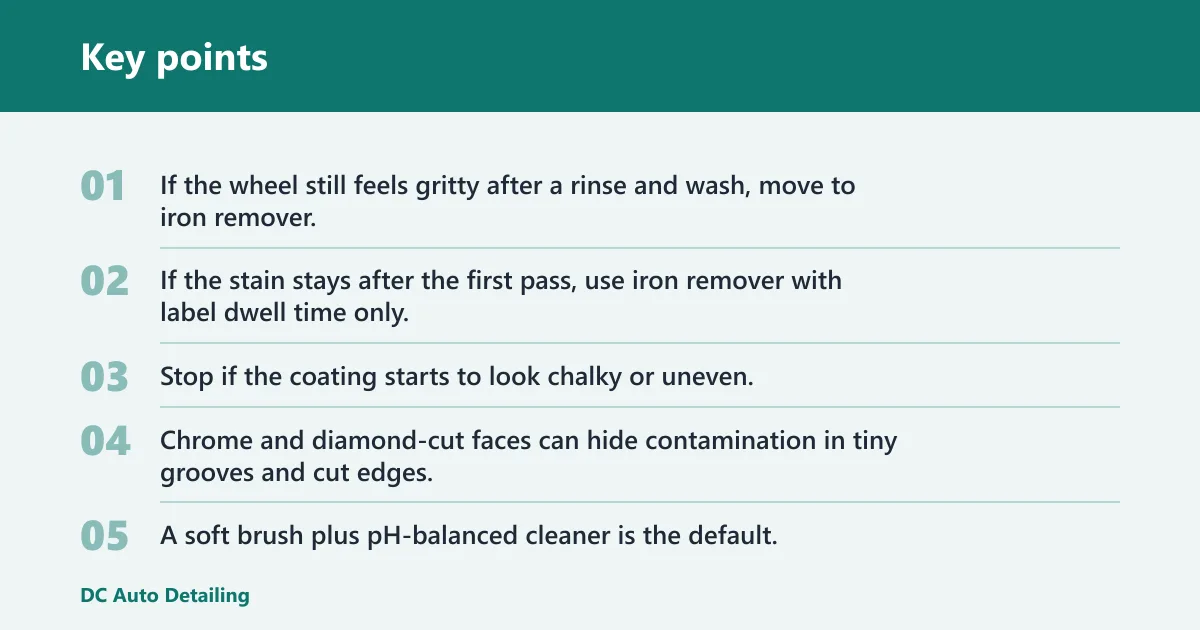
Use a pH-balanced wheel cleaner first. If the wheel still feels gritty after a rinse and wash, move to iron remover. Brake dust can etch into the clear coat if left long enough, so do not keep scrubbing a stain that refuses to move.
Powder-coated wheels
These usually tolerate standard pH-balanced cleaners well, but finish edges and spoke corners can still trap dust. If the stain stays after the first pass, use iron remover with label dwell time only. Stop if the coating starts to look chalky or uneven.
Polished bare aluminum
Be careful here. Strong acid-based cleaners can damage polished aluminum, and one guide specifically warns never to use wheel acid on chrome or bare aluminum. Start with a gentle, non-acid cleaner and check for gray oxidation or dark smears instead of relying on heavier chemistry.
Chrome and machined wheels
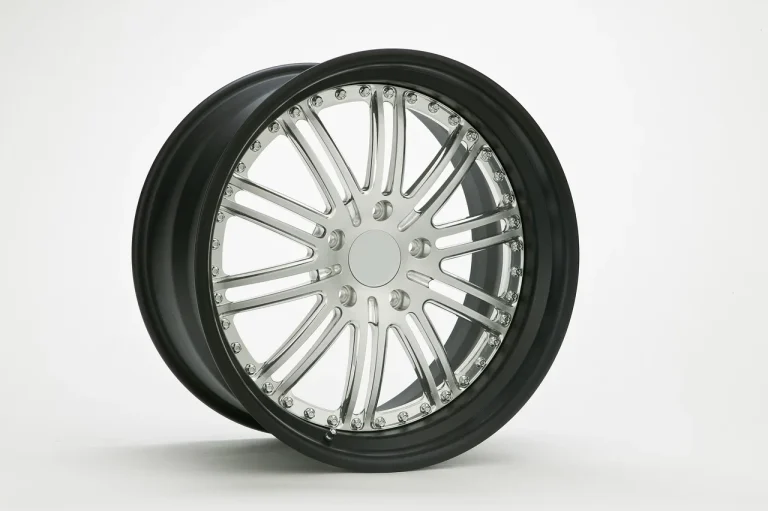
Chrome and diamond-cut faces can hide contamination in tiny grooves and cut edges. A soft brush plus pH-balanced cleaner is the default. If iron remover changes color and the brown residue still remains, stop at the first sign of haze, frosting, or edge lift.
Ceramic-coated wheels
These should still be cleaned with a pH-balanced wheel cleaner first. If bonded contamination remains, iron remover is the next step for stubborn contamination that ordinary soap leaves behind. Do not assume the coating prevents etching; it only gives you more margin when the finish is intact.
When is brake dust too baked on to clean?
Brake dust is a mix of pad material and rotor iron. It oxidizes when exposed to moisture, bonds more strongly after heat cycles, and can sit inside clear coat or paint rather than on top of it. Once that happens, cleaning alone may no longer be enough.
Look for a rough feel. If the wheel still feels bumpy after rinse, wash, and iron remover, the contamination may be embedded in the finish instead of resting on it. Embedded iron can survive the first wash pass and feel rough to the touch.
Check for color change. Iron remover may change color as it reacts with contamination. If the product colors up but the stain stays, you are likely dealing with staining, etching, or a failed clear layer, not loose dust.
Inspect the edge detail. Wheel lips, spoke edges, and machined cuts show failure first. Orange freckles that remain in the same line after decontamination often point to rust bloom or exposed metal, not cleanable surface grime.
Stop at finish failure. If the clear coat is cloudy, peeling, or visibly cratered, further scrubbing is unlikely to fix it. That is the point for polishing, touch-up, or professional refinishing, depending on the finish type.
Suppose a wheel lip stays brown after cleaner, iron remover, and a microfiber wipe. If the spot also feels like fine sand under a fingertip, the issue is probably no longer loose brake dust. At that point, more brushing usually adds marks without removing the stain.
Common mistakes
Most damage comes from speed, heat, or the wrong chemistry. The safest routine is simple: rinse, clean, inspect, then step up only if the finish still looks sound.
- Cleaning hot wheels. Let the wheel cool to the touch first. Hot surfaces can flash-dry cleaner and leave uneven residue.
- Using acid as the default. Acid-based wheel cleaner is faster, but it can damage clear coat, polished aluminum, and chrome.
- Scrubbing with abrasive pads. Use soft wheel brushes instead. Abrasive pads can turn staining into visible scratches.
- Letting cleaner sit too long. One competitor guide gives a dwell time of two to three minutes, and another advises 3–5 minutes on cool rims. In either case, do not exceed the label, and rinse immediately if the product starts drying.
- Using paint tools on wheels. Keep wheel brushes and microfiber drying towels separate from paint-care gear to avoid cross-contamination.
- Expecting chemistry to fix etching. Iron remover can pull embedded contamination, but it will not restore clear coat that has already failed.
Frequently asked questions
How do you remove baked on brake dust from rims without scratching them?
Rinse first, then use a pH-balanced wheel cleaner on a cool wheel and agitate with a soft wheel brush. If residue remains after two careful passes, switch to iron remover instead of harder scrubbing. Finish with a dedicated microfiber towel so trapped grit does not drag across the surface.
What cleaner is safest for baked-on brake dust on alloy rims?
A pH-balanced wheel cleaner is the safe starting point for nearly every finish, including most alloy wheels. Use it on a cool wheel and do not let it dry. If bonded metallic contamination remains after the rinse and wash, move to iron remover rather than an acid cleaner.
Can iron remover get off brake dust that soap won’t touch?
Yes, when the problem is embedded iron rather than loose grime. Iron remover is the next step for stubborn contamination that ordinary soap leaves behind, and it may change color as it reacts. If the finish still feels rough afterward, the stain may be etched into the clear coat.
When is brake dust too baked on to clean at home?
It is too far gone when the wheel stays rough, cloudy, or stained after rinse, pH-balanced cleaner, and iron remover. If the clear coat is peeling, the metal is pitted, or the mark does not change at all, stop DIY and consider polishing or refinishing.
Should you use acid wheel cleaner on stubborn brake dust?
Not as the first choice. Strong acid-based cleaners can damage clear coat, polished aluminum, and chrome, so they are risky on delicate finishes. Use them only when the label specifically allows the wheel material and the stain is still within a cleanable surface layer.
How long should wheel cleaner dwell on cool rims?
Follow the product label, but a common range from competitor guides is two to three minutes, with another advising 3–5 minutes on cool rims. Rinse sooner if the cleaner starts drying, and shorten dwell time on delicate or heavily detailed finishes.