Wheel cleaner: How to choose and use it safely
Choose wheel cleaner by finish first: pH-neutral for unknown, matte, polished, anodized, or damaged wheels; non-acid iron remover for heavy brake dust on painted or coated wheels; acid only for neglected factory clear-coated wheels with confirmed compatibility. Wrong chemistry can stain bare metal, etch sensitive finishes, strip protection, or leave white residue in lug recesses. This guide matches cleaner type to wheel finish, contamination level, and risk, then explains safe dwell time, agitation, rinsing, and drying.
Start with the wheel finish, not the cleaner
Why finish type changes chemical risk
Brake dust is only half the call. The finish sets how much chemical strength the wheel can handle, how easily residue rinses out, and how visible any mistake will be.
Factory clear-coated wheels usually give the biggest margin for routine cleaning. Bare, polished, matte, repaired, chipped, or specialist finishes do not. Those surfaces can stain faster, trap residue longer, and react badly to strong acids or aggressive brushing.
Factory clear-coated wheels versus bare or specialist finishes
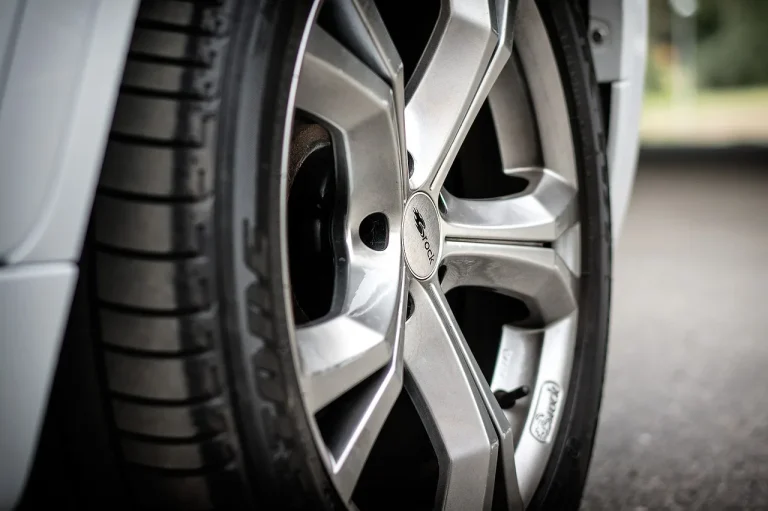
Most everyday OEM alloy wheels are painted or powder coated, then covered by a clear layer. That makes them good candidates for routine pH-neutral cleaning and, when contamination builds, an alkaline cleaner with careful rinsing.
Unlacquered aluminum, polished lips, matte coatings, diamond-cut faces, and some aftermarket finishes need more care. Autoglym states that its Advanced All Wheel Cleaner is suitable for most common lacquered or painted finishes, but not for unlacquered wheels or motorcycles. That gives you a useful dividing line: if the finish is bare or unclear, step down in chemical strength first.
A quick finish ID guide for common wheel types
Lacquered or painted: smooth gloss finish, common on factory wheels. Routine pH-neutral cleaning is the baseline.
Powder coated: even coated appearance, often aftermarket. Usually compatible with neutral and many alkaline cleaners.
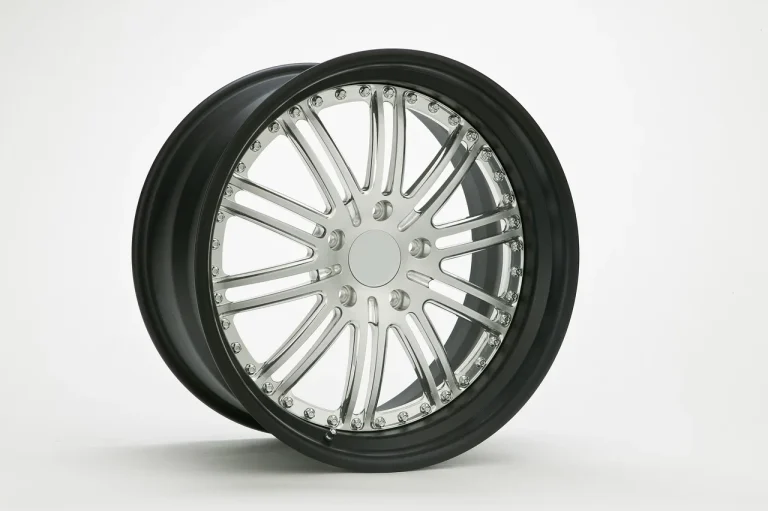
Diamond cut or machined face: bright cut metal under clear coat, often with painted pockets. Safe method matters because edge corrosion and staining show quickly.
Polished aluminum: reflective metal look without clear coat in many cases. Avoid acid; use gentle chemistry and light agitation.
Chrome: bright plated surface. Avoid acid unless the product explicitly allows it, because plating defects and edge lifting can worsen.
Matte: flat, non-gloss coating. Strong chemistry and heavy rubbing can leave patchy marks.
Plastic wheel trims: lighter molded covers. A neutral cleaner is usually enough.
Unlacquered or specialist wheels: when in doubt, assume they are high risk and start with the safest chemistry.
What to do when the finish is unknown
Unknown finish means unknown risk. Autoglym identifies its Custom Wheel Cleaner as the safest choice when the wheel finish is unknown or specialist, which fits the broader rule: default to the mildest compatible cleaner, shortest dwell, softest tools, and a small test area first.
Suppose a used car comes with multi-spoke wheels and no paperwork. The face looks glossy, but the inner barrel is dull and the lug recesses show old touch-up. That is not the time for acid. Start with a pH-neutral or mild alkaline cleaner and reassess after rinsing.
What type of wheel cleaner should you use on your wheels?
Picks should follow a simple order: pH-neutral for routine washing on coated wheels, mild alkaline for heavier road film or when finish details are unclear, iron remover for bonded ferrous dust, and acid only for severely dirty standard wheels with confirmed compatibility. Stronger chemistry should fix a defined problem, such as bonded iron, winter road film, or long-neglected brake dust, not take the place of safer maintenance cleaning.
pH-neutral wheel cleaner for routine cleaning
A pH-neutral wheel cleaner is the regular-use baseline for lacquered and painted wheels. Drive Freshly recommends a pH balanced wheel cleaner as part of the basic setup, and also says neutral pH cleaners are safe for most finishes.
The same source describes Advanced All Wheel Cleaner as pH neutral and safe for regular use on lacquered, painted, diamond cut, anodised, and plastic wheel trims. That makes this category the safest starting point for maintained daily drivers. It is often marketed as acid-free or non-acid, but mild chemistry usually needs time on the surface and light agitation to finish the job.
Alkaline wheel cleaner for heavier grime and unknown finishes
Alkaline cleaners sit in the middle. They are stronger than neutral products against road film, winter grime, and oily traffic residue, but usually less risky than acid on common coated wheels.
They are often the safer choice when the finish is unknown, especially if the alternative is jumping straight to acid. Use extra care on split rims, deep bolt pockets, or dense multi-spoke designs that trap cleaner and slow rinse-out. If rinse-out looks difficult, reduce dwell time and work one wheel at a time.
Acidic wheel cleaner for severe buildup on standard wheels only
Acid is the strongest option in this group, and it needs tight boundaries. The same source says Clean Wheels is the strongest option for very dirty standard wheels, and lists Clean Wheels as acidic.
That makes acid a tool for neglected factory clear-coated wheels with severe buildup, not a default for weekly washing. Avoid it on painted custom finishes, chrome, polished aluminum, diamond-cut wheels, matte coatings, damaged clear coat, and any finish that is unknown. A faster reaction is not worth the finish risk.
Iron remover for bonded ferrous brake dust
Iron remover targets what regular wheel cleaner often leaves behind: baked-on ferrous particles from brake dust. The same source recommends an iron remover for professional setup and heavy contamination.
Use it when the wheel feels gritty after a normal clean, when dark specks remain on a coated wheel, or when track-day dust has bonded to the surface. The color-changing reaction is useful as visual confirmation that the product is finding iron, but it is not a weekly-wash requirement. Follow the label dwell time exactly and rinse thoroughly.
Which wheel finishes need special care?
Diamond-cut, polished, chrome, matte, repaired, and unlacquered wheels need the gentlest plan because damage shows sooner and recovery is harder. For these finishes, the safe default is cool wheels, mild chemistry, shorter dwell, soft tools, and immediate rinsing if the product starts drying, streaking, or grabbing on the surface.
Diamond cut and machined faces
These wheels usually have a clear coat over a machined face. Once that coating is damaged, water spotting, corrosion, and staining become much more visible around edges and spoke transitions.
Use pH-neutral cleaner first. If brake dust is bonded, add an iron remover occasionally rather than moving straight to acid. Keep agitation light with a microfiber towel or soft wheel brush, especially near the cut edges.
Polished aluminum and unlacquered metal
These are high-risk surfaces. Bare or polished metal can stain or dull quickly, and Autoglym specifically says not to use Advanced All Wheel Cleaner on unlacquered wheels.
That warning is enough to avoid assumptions. Use the safest finish-appropriate product available, test a small hidden spot, and keep dwell short. If the surface oxidizes easily or leaves black residue on a towel, treat it as delicate metal, not as a standard painted wheel.
Chrome, matte, and plastic wheel trims
Chrome can fail at edges, stone chips, or previous repairs, so acid is a poor bet unless the label clearly approves it. Matte finishes dislike both strong chemistry and aggressive rubbing because patchiness is hard to correct without refinishing.
Plastic trims respond well to pH-neutral cleaning. Autoglym includes plastic wheel trims in the safe-for-regular-use claim for its pH-neutral cleaner, which is where routine maintenance should stay.
Damaged, chipped, or previously repaired finishes
Any break in the coating changes the risk. Chips let cleaner reach raw metal. Smart repairs may react differently from the surrounding finish. Faded lacquer can hold residue and dry unevenly.
A common first-timer mistake is treating one flaking wheel the same as the other three. If one spoke shows lifting clear coat or curb-rash touch-up, cut dwell time, soften agitation, and rinse sooner on that wheel than on the rest.
When is soap enough, and when do you need stronger chemistry?
Soap and gentle agitation are enough for lightly dusty, regularly protected wheels. Dedicated wheel cleaner makes sense when brake dust, winter film, or oily grime survives a normal wash. Iron remover is the right extra step when contamination is bonded and ferrous, not merely dirty. Stronger chemistry should match a clear contamination type.
Light dust on regularly maintained wheels
If the wheels were cleaned recently and still wear protection, car shampoo plus soft agitation may be enough. This is common on daily drivers washed often, especially with low-dust pads or mild commuting use.
Use wheel cleaner only when shampoo leaves visible residue behind. That saves product, lowers finish risk, and often cuts total labor.
Winter film, road salt, and traffic grime
Winter contamination is different from brake dust alone. Salt film, oily road spray, and dirty slush tend to respond better to a stronger neutral formula or a mild alkaline cleaner than to iron remover by itself.
For these conditions, extra chemical strength can reduce brushing, but only if the product can still rinse cleanly from spoke backs, bolt pockets, and valve areas.
Track-day dust and baked-on deposits
Some wheel-care guidance advises never washing hot wheels and says wheels should cool first after hard driving or track use. That matters because heavy brake heat makes cleaners dry faster and raises staining risk.
Picture a dark gray wheel after a short track session: the face looks dusty, but the barrel holds bonded black specks. Wait until the wheel is cool to the touch, wash normally, then use iron remover only if bonded ferrous deposits remain.
Neglected wheels with old residue and brown staining
Neglected wheels usually have layers: brake dust, old dressing sling, traffic film, and residue from previous products. Start with the least aggressive chemistry that can identify what the contamination actually is.
Brown staining on tires is separate from wheel contamination. A stiff brush belongs on tire sidewalls only, and Drive Freshly says to scrub the foam on tires until it turns from brown to white. Keep that brush off the wheel finish.
How long should wheel cleaner dwell before rinsing?
Dwell time should come from the label first, then be shortened by heat, direct sun, dark wheel color, and finish sensitivity. Some wheel-cleaner labels instruct users to let the product dwell for about 2-5 minutes. No product should be allowed to dry on the wheel.
Reading the label first: 2-4 minute and 3-5 minute ranges
Autoglym advises applying the cleaner to cool wheels because working on hot wheels may result in damage, and instructs users to let the product dwell for 2-4 minutes. That is a useful real-world benchmark for common wheel cleaners.
Other labels in this category specify 3-5 minutes. Treat those ranges as ceilings under ideal conditions, not targets to exceed. If the wheel is delicate, the weather is warm, or the product is stronger, use the lower end.
How heat, sun, and wheel color shorten safe dwell time
Dark wheels absorb more heat. Black barrels and gloss black faces can warm up quickly even in mild sun. Warm metal speeds evaporation, which concentrates the cleaner and raises streaking risk.
The same source says to use its cleaner on a dry wheel for optimal performance. That can improve cleaning, but it also means the product is not being diluted by rinse water on the surface. On a warm day, work faster and reduce dwell.
How contamination level changes dwell and agitation
Heavier grime does not always mean longer dwell. Sometimes it means a second application after rinsing the first away, or a switch from neutral to alkaline chemistry, or an iron-remover step for bonded dust.
Let dwell do the early work, then use light agitation. If the product still needs aggressive scrubbing to move contamination, the chemistry may be wrong for the problem.
Why no cleaner should be allowed to dry on the wheel
Dried product can leave white residue in lug recesses, chalky staining on matte finishes, and patchy marks around valve stems or behind spokes. Once drying starts, rinse immediately rather than trying to brush the residue across the wheel.
How do you use wheel cleaner safely?
Safe use comes down to temperature, order of work, tool choice, and stopping before a product dries. Check that the wheel is cool to the touch, work one wheel at a time, use soft tools on the finish, keep stiff brushes for tires only, and rinse immediately if you see streaking or fast evaporation.
Cool-wheel checks before you spray
- Park out of direct sun if possible.
- Touch the wheel face and a spoke near the hub. If it feels warm, wait.
- After hard driving or track use, give the wheels extra cooling time before any chemical touches them.
- Inspect for chips, bare metal, peeling clear coat, or unknown repairs.
A safe order of work: face, barrel, lug areas, tires
Apply cleaner to a dry, cool wheel if the label calls for it. Start on the face, then the barrel, then lug recesses and spoke backs, where residue tends to stay. Clean the tire last with its own brush.
One wheel at a time is the safer method because it keeps dwell under control. It also reduces missed rinse-out in small recesses.
Brush and towel choices by wheel surface
Use microfiber towels and soft wheel brushes for faces and broad spokes. Use a small detailing brush for lug areas, valve stems, badges, and narrow spoke junctions. Reserve stiff brushes for tire sidewalls only.
Do not use abrasive pads, household degreasers, dish soap, or commercial wheel acid intended for other settings. Those shortcuts cause most avoidable finish damage in DIY wheel cleaning.
When to stop and rinse immediately
Rinse at once if the product starts drying, if the surface looks patchy, if a repaired area darkens unexpectedly, or if the cleaner becomes hard to spread with a brush. Delaying the rinse rarely improves cleaning and often makes recovery harder.
Wheel cleaner decision matrix
Finish-by-finish chemistry matches
| Wheel finish | Contamination level | Safe chemistry | Do-not-use warnings | Required tools | Estimated dwell time range |
|---|---|---|---|---|---|
| Lacquered or painted | Light to moderate dust | pH-neutral wheel cleaner | Avoid acid for routine washes | Microfiber towel, soft wheel brush, small detailing brush | 2-4 minutes |
| Lacquered or painted | Heavy bonded brake dust | Iron remover after normal clean | Do not replace every wash with iron remover | Soft wheel brush, detailing brush | Follow label; many products list 3-5 minutes |
| Powder coated | Moderate winter grime | Mild alkaline or stronger neutral cleaner | Avoid acid unless compatibility is confirmed | Soft wheel brush, microfiber towel | 2-4 minutes |
| Diamond cut or machined face | Light to moderate dust | pH-neutral cleaner | No acid; no stiff brushes | Microfiber towel, very soft brush | 2-4 minutes, shorten in warm conditions |
| Polished aluminum | Any level | Delicate-finish cleaner or mild soap first | No acid; no blanket “safe for all wheels” assumptions | Microfiber towel, soft brush | Shortest label-safe dwell |
| Chrome | Light to moderate dust | pH-neutral cleaner | No acid on unknown or failing chrome | Microfiber towel, soft brush | 2-4 minutes |
| Matte finish | Light to moderate dust | pH-neutral cleaner | No acid; avoid strong alkaline dwell and heavy rubbing | Microfiber towel, soft brush | 2-4 minutes, keep product wet |
| Plastic wheel trims | Light to moderate grime | pH-neutral cleaner | Avoid over-concentrated strong cleaners | Microfiber towel, soft brush | 2-4 minutes |
| Unknown, specialist, repaired, or damaged finish | Any level | Mild alkaline or safest specialist-safe cleaner; test first | No acid; avoid long dwell | Microfiber towel, small detailing brush | Lower end of label range |
| Neglected standard factory clear-coated wheel | Severe buildup | Acidic wheel cleaner only with confirmed compatibility | Not for chrome, specialist, unknown, polished, matte, or damaged finishes | Soft brush, detailing brush, strong rinse | Use label minimum; never let dry |
A quick cost-per-wash comparison
True value depends less on bottle price than on three variables: ready-to-use versus concentrate, dilution rate, and how much product the wheel design consumes. A 20-spoke wheel with a deep barrel will always use more cleaner than a simple five-spoke wheel.
Stronger chemistry can cut agitation time, but it can also raise rinse time and finish risk. For maintained daily drivers, a neutral cleaner used regularly often costs less per wash overall because it avoids repeat corrective cleaning. Concentrates usually favor high-frequency washing; ready-to-use sprays favor convenience and consistent dilution.
How do you fix streaks, staining, and residue?
Most wheel-cleaning defects come from heat, over-dwell, trapped product, or the wrong chemistry for the finish. The repeat-safe recovery plan is simple: cool the wheel, re-wet the area, use the mildest cleaner that fits the finish, agitate lightly, and rinse thoroughly. Do not jump straight to stronger chemistry to correct a chemical mark.
Troubleshooting checklist
| Symptom | Likely cause | Repeat-safe fix | Do next time |
|---|---|---|---|
| White residue in lug recesses | Cleaner dried or was not rinsed from tight areas | Re-wet, use pH-neutral cleaner, agitate with a small detailing brush, rinse hard | One wheel at a time; shorten dwell |
| Streaks after drying | Warm wheel, uneven dwell, incomplete rinse | Clean again on a cool wheel with shorter dwell, then dry fully | Avoid sun and hot dark wheels |
| Brown staining on tire edge | Tire browning, not wheel damage | Use tire cleaner and stiff sidewall brush only on rubber | Keep tire tools off the wheel face |
| Purple residue after iron remover | Product not fully rinsed from crevices | Re-rinse, brush recesses, dry and inspect | Use iron remover occasionally, not every wash |
| Chalky or patchy matte finish | Strong cleaner or heavy rubbing on matte coating | Wash gently with pH-neutral cleaner and soft microfiber only | Use shorter dwell and no aggressive brushing |
| Random dark spots on repaired area | Touch-up or smart repair reacting differently | Stop chemical use there, rinse, dry, and reassess | Test repaired areas first |
What repeat-safe recovery steps look like
If the first corrective wash improves the mark, repeat the same mild process once more rather than changing to a stronger cleaner. If it does not improve, stop. Further chemistry may deepen the defect rather than remove it.
How should you protect wheels after cleaning?
Protection should match wheel heat and wash frequency. A wheel sealant or ceramic spray reduces future buildup and can let you stay with milder cleaners more often. For higher heat use, choose a wheel-rated coating because heat resistance matters around brakes and repeated hard driving.
Sealant versus ceramic spray for wheels
Sealants are usually simpler and faster to apply. Ceramic sprays can last longer and shed contamination better when the wheel is cleaned often and exposed to heavy dust. Either way, the point is the same: less adhesion, easier maintenance.
Why wheel-rated heat resistance matters
Forged.ee recommends wheel-rated ceramic coating that is heat resistant. That matters more on front wheels, performance cars, and any car that sees steep descents, towing, or track sessions.
How protection changes future cleaner choice and wash frequency
Protected wheels usually need less chemistry and less agitation. That can shift many washes from alkaline or iron-remover territory back to soap or a mild pH-neutral cleaner, which lowers finish risk over time.
Frequently asked questions
Is pH neutral wheel cleaner safe for all wheels?
No. Neutral formulas are safe for most finishes, and some are approved for regular use on lacquered, painted, diamond cut, anodised, and plastic trims, but damaged, unlacquered, repaired, or unknown finishes still need caution. Test first, shorten dwell, and avoid blanket “safe for all wheels” claims.
Can I use acid wheel cleaner on painted wheels?
It is better to avoid acid on painted wheels unless the product explicitly confirms compatibility and the wheel is a standard factory clear-coated type with severe contamination. Acid is the strongest option here, but it carries higher risk on painted custom, damaged, chrome, matte, polished, or unknown finishes.
Do I need to scrub after using wheel cleaner?
Usually, yes, but only lightly and with the right tools. Neutral cleaners often need soft agitation to finish loosening brake dust and road film. Use microfiber towels, soft wheel brushes, and a small detailing brush for lug areas. Save stiff brushes for tire sidewalls only.
What should I avoid cleaning hot wheels with?
Avoid using any wheel cleaner on hot wheels, especially right after hard driving or track use. Heat speeds drying, increases staining risk, and can make even a suitable cleaner behave too aggressively. Wait until the wheels are cool to the touch before spraying any chemical.
When should I use iron remover instead of wheel cleaner?
Use iron remover when normal washing leaves bonded ferrous brake dust behind, especially on painted or coated wheels. It is an occasional decontamination step, not an every-wash habit. The color change helps confirm reaction, but dwell time should follow the label and never continue into drying.