Pet odor in cars: How to remove and prevent it
Remove pet odor by matching the smell source to its depth: surface dander needs cleaning, wet-dog odor needs drying and fabric washing, and any urine that reached foam or padding needs extraction plus an enzymatic treatment. Cover it with fragrance and the smell usually comes back, because urine salts, damp padding, and HVAC growth keep cycling odor through the cabin. This guide separates wet dog, urine, oily-coat dander, stale bedding, and vent-related smells, then shows the minimum effective fix and a prevention routine for each.
What you’ll need
- Vacuum with crevice and brush tools
- Microfiber towels
- Rubber gloves
- Enzyme-based cleaner for pet urine
- Spray bottle with plain water
- Hot water extractor or access to one
- Soft interior brush
- Mild fabric-safe upholstery cleaner
- Baking soda for light fabric odors
- Removable seat covers or cargo liner for prevention
- Clean pet blankets or bedding
- Replacement cabin air filter if vent odor persists
- AC evaporator foam cleaner if odor clearly starts at the vents
Pet odor source problem
Pet smells stay in cars because upholstery, carpets, vents, and trunk areas trap odor. Hard plastic wipes clean fast. Carpet, foam seat cushions, headliner, mats, and cargo liners do not. Those porous materials hold moisture and odor-causing residue, then release it again when humidity rises or the cabin heats up.
That is why air fresheners rarely solve anything. They briefly add a stronger scent, but they do not remove urine residue, skin oils, bacteria, or mildew sitting in the material. Pet odor in cars is linked to urine breaking down by bacteria, and dried urine can smell again when uric acid is rehydrated.
Location changes the fix. A smell strongest near the floor usually points to carpet, mats, or padding. A smell that starts within the first few seconds of turning on the fan often points to the cabin air filter or the HVAC evaporator core, a common place for mold growth.
Odor diagnosis matrix
| Odor type | Likely source | Affected materials | Best first treatment | When DIY fails | Prevention step |
|---|---|---|---|---|---|
| Wet dog smell | Moisture, skin oils, and damp hair left in fabric after travel | Seat fabric, carpet, mats, cargo liner, blankets, sometimes headliner near rear hatch | Remove damp items, dry the coat, wash bedding, vacuum hair, clean fabric surfaces, then use baking soda overnight for light residual odor | Smell returns after rain or humidity, or moisture reached seat foam or padding | Dry the dog before loading, use washable covers, and air out the cargo area after each ride |
| Pet urine | Urine residue and bacteria; uric acid crystals can reactivate when damp | Carpet, carpet padding, mats, seat fabric, foam seat cushions | Apply enzyme cleaner with full penetration, allow about 20-30 minutes dwell time, then hot water extract thoroughly | Padding or foam is saturated, odor returns in humid weather, or extraction never reaches full depth | Blot immediately, remove contaminated bedding, and treat accidents before they dry into padding |
| Dander or oily coat smell | Hair, dander, skin oil film, and residue on fabrics | Seat fabric, belts, door cards, cargo trim, headliner edges, vents near pet position | Vacuum hair, brush fabric, clean contact surfaces with fabric-safe cleaner, replace cabin filter if vent odor persists | Oil film remains in foam or odor is coming from HVAC instead of upholstery | Brush the coat before trips, rotate covers, and vacuum pet zones weekly |
| Musty bedding odor | Damp blanket, crate pad, or cargo mat left in the vehicle | Blankets, removable liners, cargo carpet, under-seat fabric, trunk side panels | Remove and wash bedding, dry the area fully, vacuum debris, then spot-clean any transferred odor | Moisture seeped into cargo carpet or underlayment and odor remains after bedding is removed | Rotate bedding often and never store damp pet gear in the car overnight |
Where is the smell actually coming from?
The fastest way to fix pet odor is to map where it is strongest before spraying anything. Floor-level odor usually means carpet, mats, or padding. Seat-level odor points to fabric and foam. A smell that appears only when air starts moving usually means the vents, cabin air filter, or evaporator core.
Carpet, mats, and padding
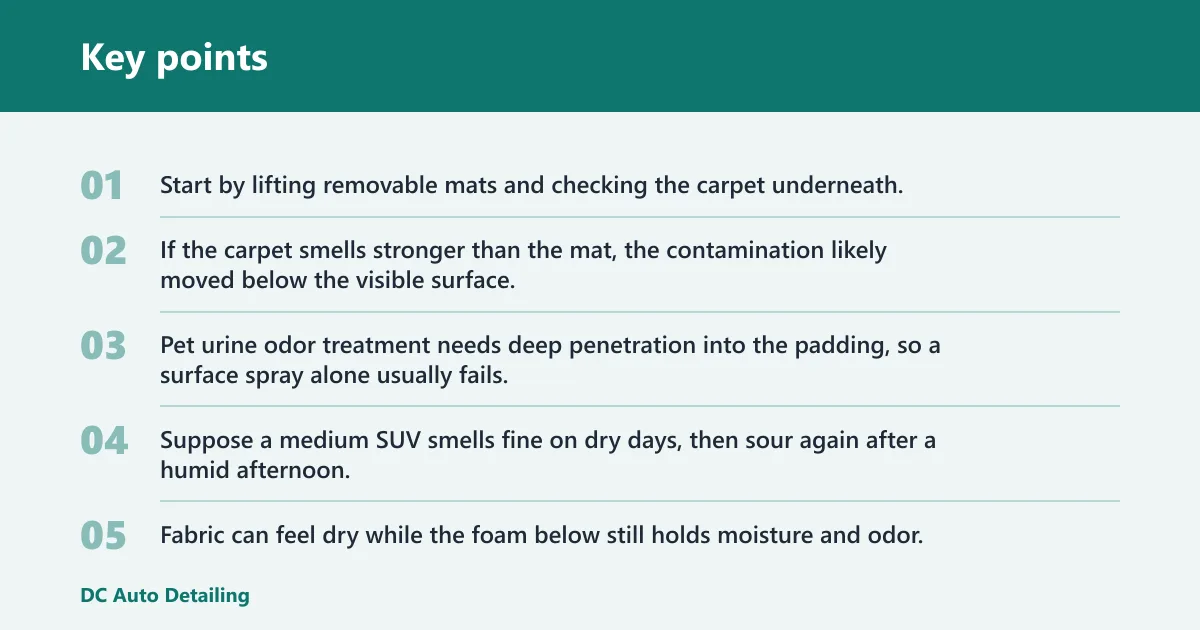
Start by lifting removable mats and checking the carpet underneath. If the carpet smells stronger than the mat, the contamination likely moved below the visible surface. Pet urine odor treatment needs deep penetration into the padding, so a surface spray alone usually fails.
Suppose a medium SUV smells fine on dry days, then sour again after a humid afternoon. That pattern strongly suggests dried urine or damp residue in the carpet pad, because moisture in the air can reactivate the odor.
Seat fabric and foam cushions
Seats are harder than they look. Fabric can feel dry while the foam below still holds moisture and odor. If the smell is strongest when pressing on a cushion or after the cabin heats up in the sun, the foam may be contaminated.
Urine and wet-dog odor both move downward. That is why seat-top cleaning can leave the smell behind if the liquid reached the cushion.
Headliner, cargo area, and pet bedding
The headliner rarely causes the first odor event, but it can absorb repeated wet-dog vapor in wagons, hatchbacks, and SUVs. Cargo carpets and side panels also collect damp bedding smell because they trap fur and moisture in corners that are easy to miss.
Picture a hatchback with a folded crate pad left damp in the rear overnight. The next morning the cargo floor smells musty, but the front seats do not. In that case, washing the bedding and drying the cargo carpet may solve it without touching the rest of the cabin.
Vents, cabin air filter, and evaporator core
If the smell appears in the first few seconds after turning on the fan, treat the HVAC system as a separate source. The cabin air filter can trap moisture, dust, and pollen, and replacing it is often part of odor repair. In many vehicles it sits behind the glove box.
If replacing the filter does not stop the smell, the evaporator core becomes the next suspect. That core is a common mold and mildew growth point, especially when odor shows up with A/C or heat and fades when the fan is off.
How do you remove pet odor for good?
Remove pet odor for good by using the lightest method that still reaches the full contamination depth. Light dander and bedding smell may need only washing, vacuuming, and fabric cleaning. Urine that reached carpet padding or seat foam needs enzyme treatment, dwell time, and then extraction.
- Strip out loose sources. Remove pet blankets, crate pads, seat covers, toys, and any damp cargo liner. Wash or replace anything that still smells when taken out of the car, because putting it back will contaminate the interior again.
- Vacuum the holding zones. Vacuum mats, seat seams, carpet edges, under seats, and cargo corners with a crevice tool. Hair and dander hold oils and moisture, so leaving them in place makes every later treatment less effective.
- Match the cleaner to the odor. Use fabric cleaner for oily-coat residue, baking soda for light fabric odor, and an enzyme-based cleaner for urine. Air fresheners only mask odor and do not remove the source.
- Apply enzyme cleaner deeply. For urine, wet the affected carpet or seat area enough to reach the same depth as the accident. Enzyme treatment should stay on the surface for about 20-30 minutes, and it must penetrate to the contamination depth to break down organic residue.
- Extract after dwell time. Use a hot water extractor after enzyme treatment. Complete urine treatment includes extraction, and it works best with thorough saturation and extraction so residue is pulled from carpet and padding rather than pushed deeper.
- Use baking soda for light odor. On dry carpets, cloth seats, or mats with mild wet-dog smell, sprinkle enough baking soda to cover the odor zone and leave it overnight for at least 8-12 hours. Vacuum it out fully the next day.
- Clean contact surfaces. Brush and wipe fabric seat sides, door inserts, cargo trim, and plastic around the pet area. Dander and coat oils spread farther than the main smell, especially where a dog leans during turns.
- Dry the cabin completely. Leave doors open in a safe, dry place or run ventilation until all treated fabric feels dry. Moisture left in carpet, foam, or bedding can restart the odor cycle.
- Recheck after a humidity change. Smell the treated area again the next warm or humid day, or after running the heater for several minutes. If odor remains, repeat the same treatment path only if the first pass did not reach full depth.
- Top up only where needed. If one edge still smells, add enzyme cleaner in about 2-inch bands past the last smelly edge, then recheck after drying. Expanding the treated zone beats soaking the whole interior without evidence.
If that didn’t work
- Re-map the odor path. Check whether the smell is now stronger in the seat base, under the mat, or from the vents. The first treatment often reveals the deeper source instead of failing completely.
- Escalate to deeper extraction. If the padding or seat foam was likely saturated, a second enzyme pass plus more complete extraction may still work. DIY usually falls short when the liquid spread wider underneath than on top.
- Shift to HVAC treatment. If the odor appears only with airflow, replace the cabin air filter and consider evaporator foam cleaning. Upholstery products will not fix a moldy evaporator core.
- Book professional treatment. Repeated odor return, hidden saturation, or severe contamination may call for professional extraction or ozone-based odor work. Ozone is an advanced odor method for severe cases and is best performed by professional detailers.
Why does pet smell keep coming back in my car after cleaning?
Pet smell comes back when the original contamination stayed below the cleaned surface or moved into a different zone. The usual culprits are urine in carpet padding, moisture in seat foam, damp bedding in the cargo area, or mildew in the HVAC system. Humidity and heat then make the leftover residue noticeable again.
Uric acid crystals and reactivated urine odor
Urine is the main repeat offender. Pet odor in cars is linked to urine breaking down by bacteria, and uric acid in dried urine can smell again when rehydrated. That is why a carpet can seem fixed for days, then smell again after rain or a muggy morning.
Enzyme cleaner fails when it never reaches the same depth as the urine, when the padding stayed saturated, or when extraction was incomplete. Shampooing the surface may improve the smell for a short time, but it does not address the crystals and residue lower down.
Moisture trapped in foam, padding, or bedding
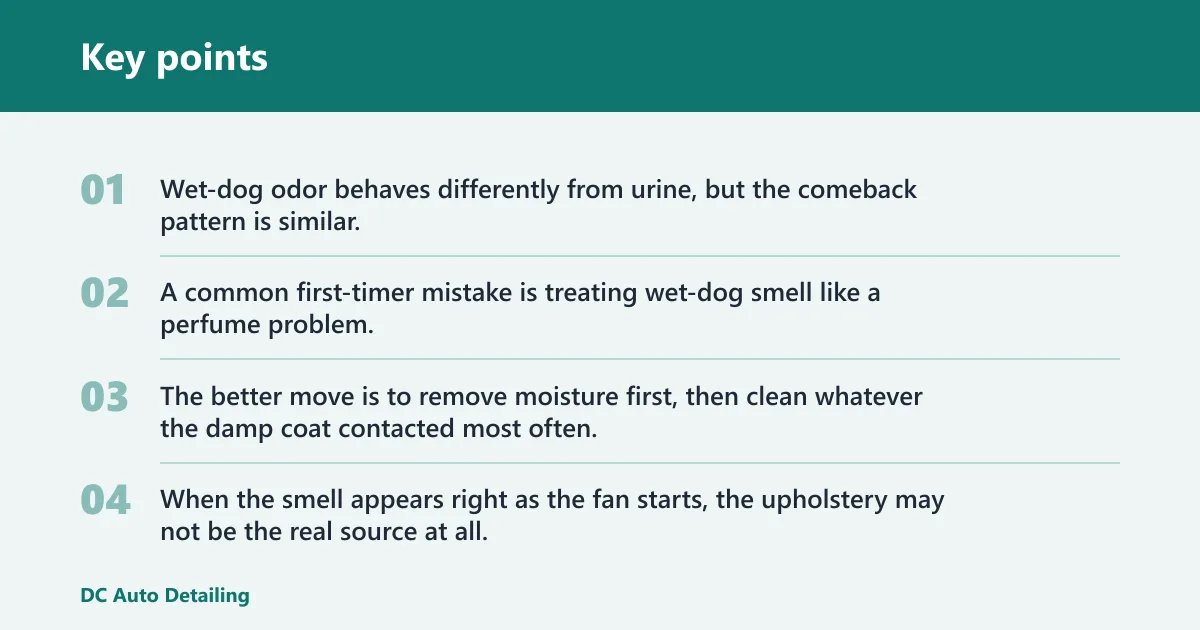
Wet-dog odor behaves differently from urine, but the comeback pattern is similar. If damp hair, blankets, or crate pads touched cloth seats or cargo carpet, moisture can remain in the material even after the top feels dry.
A common first-timer mistake is treating wet-dog smell like a perfume problem. The better move is to remove moisture first, then clean whatever the damp coat contacted most often.
Vent odors mistaken for upholstery odor
When the smell appears right as the fan starts, the upholstery may not be the real source at all. The cabin air filter can hold odor-causing buildup, and the evaporator core can release a moldy smell through the vents each time condensation forms and dries.
When should you replace the cabin air filter or treat the AC system?
Replace the cabin air filter or treat the AC system when odor shows up mainly through the vents, especially in the first burst of airflow. A dirty filter can hold moisture, dust, and pollen, and persistent HVAC odor often points deeper to the evaporator core.
Signs the cabin air filter is part of the problem
Check the filter early if the smell is weak with the fan off and obvious with the fan on. In many vehicles, the cabin air filter is behind the glove box. Replacement is often warranted when the filter looks dusty, damp, or loaded with pet hair and outdoor debris.
Filter replacement is also a sensible reset after carrying pets often, because the filter can trap moisture, dust, pollen, and odor-causing buildup.
When evaporator core foam cleaning makes sense
If a new filter does not change the smell, the evaporator core becomes more likely. This component is a chronic mold and mildew growth location. A dedicated AC foam cleaner is meant to coat the evaporator area and remove growth that normal vent sprays cannot reach.
Use this path when the odor is strongest with A/C or heat, fades after a few minutes, and does not track to one carpet or seat area.
When persistent HVAC odor needs professional service
Move past DIY if the odor returns within days, if drain issues keep the system damp, or if access to the evaporator is poor. In that case the problem is less about fragrance and more about cleaning the actual HVAC moisture zone.
When is professional odor treatment worth it?
Professional odor treatment is worth it when contamination is deep, repeated, or hidden below surfaces you cannot extract fully. The strongest candidates are urine in carpet padding, accidents in seat foam, cargo-area soak-through, and severe odors that return after correct DIY cleaning.
Cases that usually beat DIY cleaning
DIY reaches its limit when the wet spot spread under the carpet farther than it looked on top, or when seat foam absorbed enough liquid to smell again under pressure. Multi-pet vehicles and rideshare cars also build odor in more zones at once, which makes source-mapping harder.
Say your rideshare crossover carries two dogs most weekends, and now the rear vents smell musty while the cargo carpet smells oily. That is already two different problems, and treating only one rarely holds.
Detailing extraction versus ozone treatment
Professional extraction is the first escalation for deep fabric contamination. It targets the material directly and is the better fit when urine or damp residue is still in carpet, padding, or foam. Ozone treatment is different: it is an advanced odor method for severe cases in a sealed vehicle cabin, and it is best handled professionally.
As a rough planning guide, DIY costs the least but takes the most trial and repeat work; professional extraction costs more but addresses depth better; ozone usually belongs at the far end of the ladder when severe odor remains after source removal.
What ozone can and cannot fix
Ozone can reduce stubborn leftover odor molecules after the source has been cleaned. It cannot pull urine out of padding, wash a blanket, or dry a wet foam cushion. If the contamination is still physically present, ozone is a finishing step, not the first step.
Prevention matters most after professional work. Use washable covers, rotate bedding, dry wet coats before loading, and inspect the cargo area after every long trip so moisture never gets a second day inside the vehicle.
Common mistakes
- Treating every pet smell the same. Wet dog, urine, dander, bedding mildew, and HVAC mildew need different first moves.
- Spraying fragrance first. Masking products can make source-mapping harder and do not remove contamination.
- Using enzyme cleaner too lightly. Urine treatment needs full-depth penetration and about 20-30 minutes of dwell time.
- Skipping extraction after enzyme treatment. Hot water extraction is the part that pulls contamination from carpet and padding.
- Ignoring the cabin filter. If the smell comes through vents, upholstery cleaning may be solving the wrong problem.
- Leaving baking soda too little time. For light odors it should sit overnight, at least 8-12 hours, before vacuuming out.
- Cleaning the top and missing the edge. Odor often extends past the visible spot, especially under mats and around seat rails.
- Reloading dirty bedding. A clean car will smell bad again fast if the blanket or crate pad still carries odor.
Frequently asked questions
How do you get pet odor out of a car interior for good?
Find the source first, then use the least aggressive method that still reaches full depth. Wash or remove bedding, vacuum pet zones, treat light fabric odor with baking soda overnight for 8-12 hours, and treat urine with an enzyme cleaner plus hot water extraction if padding or foam may be involved.
What is the best way to remove pet urine odor from car carpet?
The best method is an enzyme-based cleaner followed by hot water extraction. Let the enzyme dwell for about 20-30 minutes, make sure it reaches the same depth as the urine, then extract thoroughly so residue is removed from carpet and padding instead of left underneath.
Do enzyme cleaners work better than air fresheners for pet odor?
Yes, for urine and other organic residue. Enzyme cleaners break down odor-causing material, while air fresheners only cover the smell. If the contamination is still in carpet padding or seat foam, fragrance fades and the odor returns, especially when humidity or heat rises.
Can baking soda remove wet dog smell from a car?
Baking soda can help with light wet-dog odor in dry carpets, mats, and cloth seats. It is best used after removing damp bedding and drying the area. Leave it overnight for at least 8-12 hours, then vacuum it out completely. It is not enough for soaked foam or urine.
Should I replace the cabin air filter for pet odor in my car?
Replace it if the smell shows up mainly when the fan, A/C, or heat turns on. The cabin air filter can trap moisture, dust, pollen, and odor-causing buildup, and many vehicles place it behind the glove box. If odor continues after replacement, inspect the evaporator core next.
When is ozone treatment worth it for pet odor in a car?
Ozone is worth considering after source removal when severe odor still lingers in a sealed cabin. It is an advanced option, not the first fix, and it is best handled professionally. It cannot replace extraction when urine or moisture is still sitting in carpet padding or seat foam.