Tire shine vs tire dressing: What’s the difference?
“Tire shine” and “tire dressing” often point to the same shelf category. The real difference is the finish you want, the base formula, and how much upkeep you will accept. Pick the wrong type, and you can end up with sling, uneven gloss, or a finish that fades faster than you expected. This guide explains gloss levels, water-based versus solvent-based formulas, and which option fits daily driving, wet roads, and low-maintenance use. UV exposure, washing, and road spray also matter because rubber and dressing films weather differently depending on sun, heat, and detergent exposure (see tire care guidance from major detailing brands and manufacturers such as Meguiar’s, 303, and Chemical Guys).
Gloss level and product categories
The core tradeoff is simple: tire shine is usually the label shoppers see when they want a darker, glossier sidewall, while tire dressing is the broader product category that may aim for satin, matte, or adjustable gloss. Many modern products do both jobs, so the bottle name tells you less than the finish target and formula base.
| Decision factor | Tire shine | tire dressing | Winner |
|---|---|---|---|
| Finish target | Usually glossy or wet-look | Often satin, matte, natural-looking, or adjustable gloss | tire dressing |
| Label clarity | Often describes the look you want | Often describes the product category and a wider set of finishes | tire dressing |
| Cleanup and sling control | Can be slick if over-applied | Often less prone to streak or rub off | tire dressing |
| Best match for showy appearance | Strong gloss and a dark sidewall | Can do gloss, but often aimed at a calmer finish | Tire shine |
| Use-case flexibility | Good when you want a specific glossy look | Better for choosing between matte, satin, and gloss | tire dressing |
Finish target
Tire shine usually describes the look, while tire dressing is the product category. Tire shine creates a dark, glossy finish on the tire’s sidewall, while tire dressing can leave a natural satin finish or a more dramatic gloss. That is why one bottle may feel like “shine” and another like “conditioning,” even if both improve appearance.
Label clarity
The bottle label is not a reliable separator. Some tire shines are actually water-based dressings with protection built in, and many modern products do both jobs. Read the finish claim and the product type before you buy, because the name on the front may not match the result on the tire.
Cleanup and sling control
Glossy formulas need more care because excess product has somewhere to go. Tire shine can sling if over-applied, especially when the sidewall is left wet or heavy. Tire dressing is often less prone to streak or rub off, which gives you more room to control the final look.
Best match for appearance
If you want a visibly dark, wet sidewall, tire shine is the more direct label to shop for. If you want a cleaner factory-style look, tire dressing is the broader category and the better starting point. The finish still depends on the specific formula and how much product you leave on the tire.
Use-case flexibility
tire dressing gives you more room to choose between matte, satin, and gloss. That matters when you want one product line to fit a daily driver one week and a cleaner show look the next. The same bottle can also look different depending on the applicator and the thickness of the final coat.
What finish do you want?
Choose the finish first, not the label. Glossy and wet-look products are for a darker, freshly dressed sidewall, while satin and matte products are better when you want the tire to look clean rather than shiny. Adjustable-gloss formulas sit in the middle and let application method do part of the work.
Glossy and wet-look products
A gloss-heavy product makes the sidewall stand out, especially on clean black tires and lower-profile fitments. That is the territory most shoppers mean when they say tire shine. These formulas are a poor match if you are sensitive to sling or want a subtle result.
Satin, matte, and natural-looking products
Satin and matte finishes read as cleaner and less reflective. Some tire dressings are designed to provide a clean, conditioned look without an intense shine. That makes them useful on newer cars, work vehicles, and any setup where the tire should disappear into the wheel well instead of stand out.
How adjustable gloss actually works
Adjustable gloss is not a mystery setting on the bottle. It usually comes from formula strength, how much product you apply, and whether you wipe off the excess. A light coat can look satin, while a heavier coat from the same product can move closer to gloss. Manufacturer application guides consistently stress thin, even coats for the most controlled result and the lowest sling risk.
Is tire shine the same as tire dressing?
They overlap heavily, but they are not always identical in intent. Tire shine usually signals a glossier, showier result, while tire dressing is the broader category that includes satin, matte, and adjustable-gloss options. The most useful clues are the finish claim, the carrier system, and the application directions on the label.
What do the formulas contain?
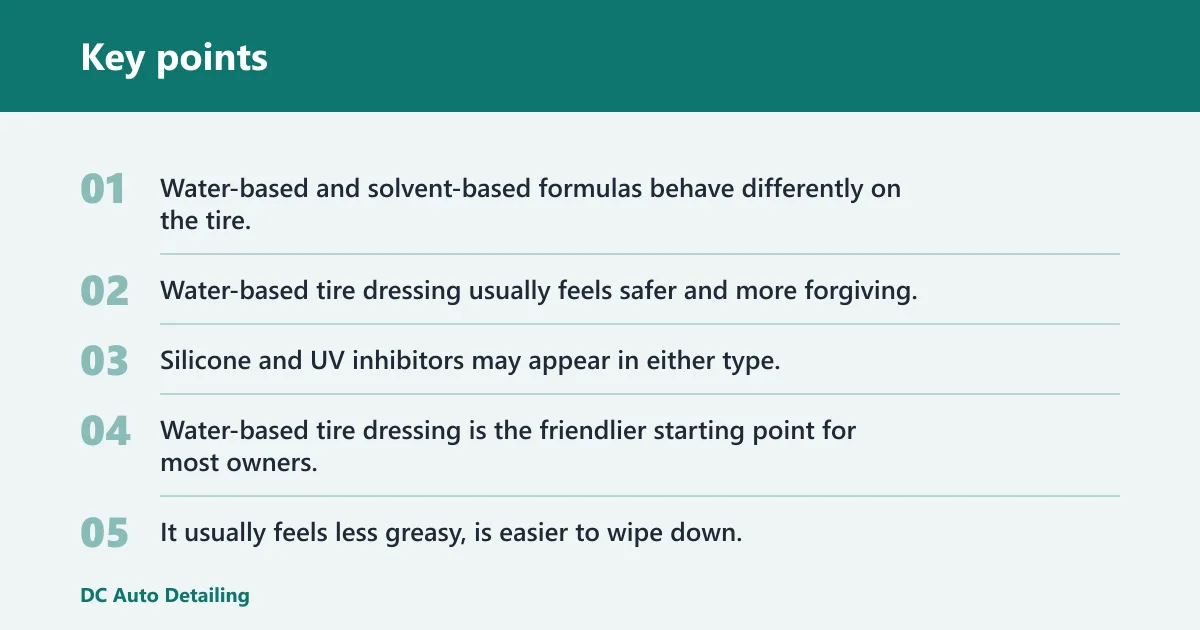
Water-based and solvent-based formulas behave differently on the tire, even when the marketing language sounds similar. Water-based tire dressing usually feels safer and more forgiving, while solvent-based tire dressing often gives a richer look and may last longer, though the real-world effect depends on the product package and how thickly it is applied. Silicone and UV inhibitors may appear in either type.
| Formula type | Finish | Typical durability | Sling risk | Cleanup | Best use |
|---|---|---|---|---|---|
| Water-based | Satin to light gloss | Short to moderate | Low to moderate when applied thinly | Easy | Daily drivers, easy maintenance, cleaner look |
| Solvent-based | Richer gloss, darker look | Moderate to longer-lasting, depending on product | Moderate if applied heavily | Moderate | Showier finishes, longer intervals between touch-ups |
| Silicone-heavy | Glossy or wet-look | Variable | Can be higher if over-applied | Moderate | Maximum shine where appearance matters most |
Water-based tire dressing
Water-based tire dressing is the friendlier starting point for most owners. It usually feels less greasy, is easier to wipe down, and tends to leave a more natural finish. If you want low drama and a cleaner cleanup routine, this is the type to look for first.
Solvent-based tire dressing
Solvent-based tire dressing often reads darker and can hold up longer, especially when the product is built for a richer finish. The tradeoff is a more aggressive carrier system on paper, which is why some owners avoid it for long-term routine use. It is a better fit when appearance is the priority and upkeep is acceptable.
Silicone and UV inhibitors
Silicone is common in tire shine products, and some formulas are silicone-containing solvent-based solutions. UV inhibitors may be included to help reduce fading and cracking. Do not assume every shiny product has the same protection level; check the formula family, not only the finish claim. UV and weathering claims are best read cautiously unless the maker provides technical data or application guidance from a major detailing brand or tire manufacturer.
Which lasts longer?
Neither product wins every time, because durability depends on formula, weather, and how the tire is used. In general, solvent-based dressings often hold up longer than light, water-based options, but rain, washing, and daily driving shorten the life of any finish. A product that looks bold on day one may fade quickly if the car sees regular commuting. That said, claims about longer life should be tied to the specific product and its directions, not the category name alone.
How rain and washing shorten durability
Water, detergent, and road spray strip away dressing over time. Frequent washing usually shortens the finish life over time. If you want the look to survive repeated washes, look for a formula marketed for higher durability rather than assuming gloss alone means staying power. Detailing brands commonly recommend applying to a clean, dry tire for best bonding and even finish retention.
Why daily driving changes the answer
Daily driving exposes the sidewall to heat, splash, dust, and brake grime. That means a strong-looking product on a garage-kept car may disappear much faster on a commuter. This is where the real-world maintenance tradeoff matters more than the name printed on the front label.
What formula type tends to hold up better
Solvent-based dressings often last longer, but they are not automatically the right choice. A water-based formula with better adhesion can outlast a cheap glossy product that leaves too much residue on the tire. Durability is a formula question first and a finish question second.
Can tire shine cause sling?
Yes, tire shine can cause sling on your paint, especially when it is applied too heavily or left wet on the sidewall. Slicker, glossier formulas are more likely to fling excess onto fenders and doors if the tire is driven too soon. Thin, even application reduces that risk more than the product name does. Major brands’ application instructions typically emphasize wiping off excess before driving for exactly this reason.
Why over-application matters
Over-application leaves excess product on the tire instead of on the tire surface. As the wheel spins, that extra material can transfer to nearby body panels. The same product may behave very differently depending on whether you apply one light coat or multiple heavy passes.
How to reduce fling onto paint
Start with a clean, dry sidewall. Apply a small amount, spread it evenly, and wipe off any visible excess after a short wait. If the tire still looks wet, it probably has more product than it needs. That is the simplest way to cut sling without changing products.
Why glossy products need more cleanup
A glossy finish looks dramatic because it leaves more product visible on the surface. That same wet look can mean more residue if the formula is heavy or the coat is thick. A satin finish usually asks for less cleanup and gives you more margin for error.
Which is better for a daily driver?
The right choice changes with how the car is used. Daily drivers need a lower-maintenance finish, show cars can tolerate more gloss, and dusty or wet environments push you toward products that wipe cleaner and sling less. For most commuters, a tire dressing with a satin or light-gloss finish is the most practical balance of appearance and upkeep.
| Use case | Finish | Durability | Application difficulty | Best label to shop for |
|---|---|---|---|---|
| Daily driver | Satin to light gloss | Moderate, with regular wash loss | Easy to moderate | tire dressing |
| Show car | Glossy or wet-look | Variable, but appearance-focused | Moderate | Tire shine |
| Wet climate | Satin or adjustable gloss | Better with durable formulas | Moderate | tire dressing |
| Dusty roads | Natural to satin | Moderate | Easy | tire dressing |
| Low-sling priority | Matte to satin | Moderate | Easy | tire dressing |
| Quick wash routine | Light gloss or satin | Short to moderate | Easy | tire dressing |
Daily driver
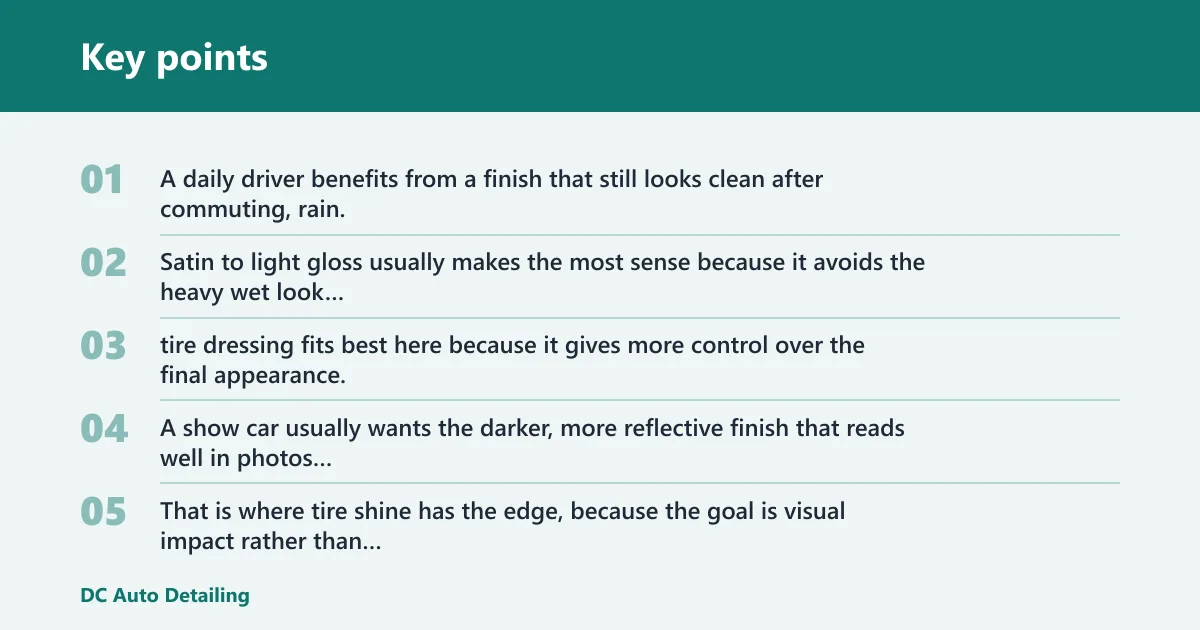
A daily driver benefits from a finish that still looks clean after commuting, rain, and parking lot grime. Satin to light gloss usually makes the most sense because it avoids the heavy wet look that needs constant touch-up. tire dressing fits best here because it gives more control over the final appearance.
Show car
A show car usually wants the darker, more reflective finish that reads well in photos and under lights. That is where tire shine has the edge, because the goal is visual impact rather than quiet restraint. Just remember that the more gloss you chase, the more important proper wipe-down becomes.
Wet climate
Wet roads shorten the life of most finishes and raise the risk of residue being moved around the tire. A more controlled tire dressing, especially one with decent water resistance, is usually the safer pick. You want a formula that stays on the sidewall without looking greasy after the first storm.
Dusty roads
Dust sticks to heavy, glossy residue more easily than to a restrained finish. A natural or satin tire dressing keeps the tire looking cleaner between washes and is less likely to collect road film. That matters when the car is constantly seeing dirt before the product has time to settle.
Low-sling priority
If sling control matters most, avoid thick wet-looking applications. A matte or satin tire dressing is usually the better match because it is easier to apply thinly and wipe down cleanly. The label matters less than the amount you leave behind on the tire.
Quick wash routine
If your wash routine is short, choose the product that is fast to apply and easy to correct. A wipe-on tire dressing with moderate gloss is easier to live with than a high-shine formula that needs careful cleanup. The goal is a finish you can repeat without spending extra time correcting overspray.
Which should you choose?
Choose Tire shine if you want a glossy or wet-look finish, the car is a showpiece, and you are willing to spend a little more time controlling sling and residue. Choose tire dressing if you want satin, matte, or adjustable gloss, cleaner upkeep, and a better fit for daily driving or wet conditions.
- Choose Tire shine if you want the darkest, glossiest sidewall.
- Choose Tire shine if the car is a show car or weekend car.
- Choose tire dressing if you want a natural or satin look.
- Choose tire dressing if you care more about low sling and easier cleanup.
- Choose tire dressing if you want a better match for commuting, rain, or frequent washing.
- Check the finish claim first: glossy, wet-look, satin, matte, or adjustable gloss.
- Look for the formula base: water-based for a safer, easier wipe-down feel; solvent-based for a richer look and often more staying power.
- Look for UV inhibitors if the tire sees strong sun and parking outdoors.
- Apply a thin coat, then wipe off visible excess before driving.
- If you want less sling, avoid heavy coats and lean toward satin rather than wet-look finishes.
Say your sedan gets a weekly wash, sits outdoors, and sees a 20-mile commute each day. A satin tire dressing is the better fit because it keeps the sidewalls clean-looking without leaving a heavy wet film that can fling onto the paint after the first drive.
Suppose a lifted truck spends weekends at a car meet and the owner wants the tires to stand out under bright lights. A glossy tire shine makes more sense there, because the finish target is visual impact, not low-maintenance restraint.
Frequently asked questions
What is the difference between tire shine and tire dressing?
Tire shine usually means the look you want, while tire dressing is the broader product category. Tire shine often points to a glossy or wet-look finish, while tire dressing can be satin, matte, or glossy depending on the formula. The bottle name alone is not enough to separate them cleanly.
Which lasts longer, tire shine or tire dressing?
Durability depends more on formula than on the name. Solvent-based dressings often last longer, but rain, washing, and daily driving shorten the finish on any product. A stronger formula with good wipe-down usually outlasts a heavy glossy coat that was not applied cleanly.
Which gives a more glossy finish: tire shine or tire dressing?
Tire shine usually gives the more glossy finish because that is the effect most buyers want from it. Tire dressing can also be glossy, but it is more often sold for satin or natural-looking results. Finish level still depends on the specific formula and how much you apply.
Is tire dressing better for UV protection than tire shine?
Not automatically. Some tire dressings include UV inhibitors, and some tire shine products do as well. Protection varies by formula, so you need to check the label instead of assuming one category always offers more UV help than the other.
Can tire shine cause sling on my paint?
Yes. A glossy or wet-looking product can sling if it is over-applied or driven on before the excess is wiped off. The fix is usually better application, not a different brand name: use less product, spread it evenly, and remove visible residue before driving.
Should I choose water-based or silicone-based tire product?
Choose water-based if you want a more forgiving feel, easier cleanup, and a more natural finish. Choose silicone-containing formulas if you want a darker, richer look and are comfortable with a product that may feel slicker. Read the finish claim and the cleanup notes together.
Which is better for a daily driver: tire shine or tire dressing?
For most daily drivers, tire dressing is the better fit because it is easier to tune toward satin or light gloss and usually easier to keep clean. Tire shine can work if you want a glossier result, but it needs more care to avoid sling and heavy residue.