Ceramic coating maintenance spray: Do you need It?
No. Use a ceramic coating maintenance spray after every wash only if the wash leaves the coating less slick, the water is hard, or the product is made as a topper. Used blindly, it can leave residue, mute hydrophobic behavior, and waste money. This guide explains when spray helps, when it is redundant, and how wash method and chemistry change the answer.
What maintenance spray does
Ceramic coating maintenance spray is a light post-wash product made to add slickness, gloss, and short-term water-beading support. Most formulas are applied to clean paint as a drying aid or final topper, then wiped or buffed off. It is not a substitute for proper washing, and it does not replace a cured ceramic coating.
Adds slickness and short-term gloss
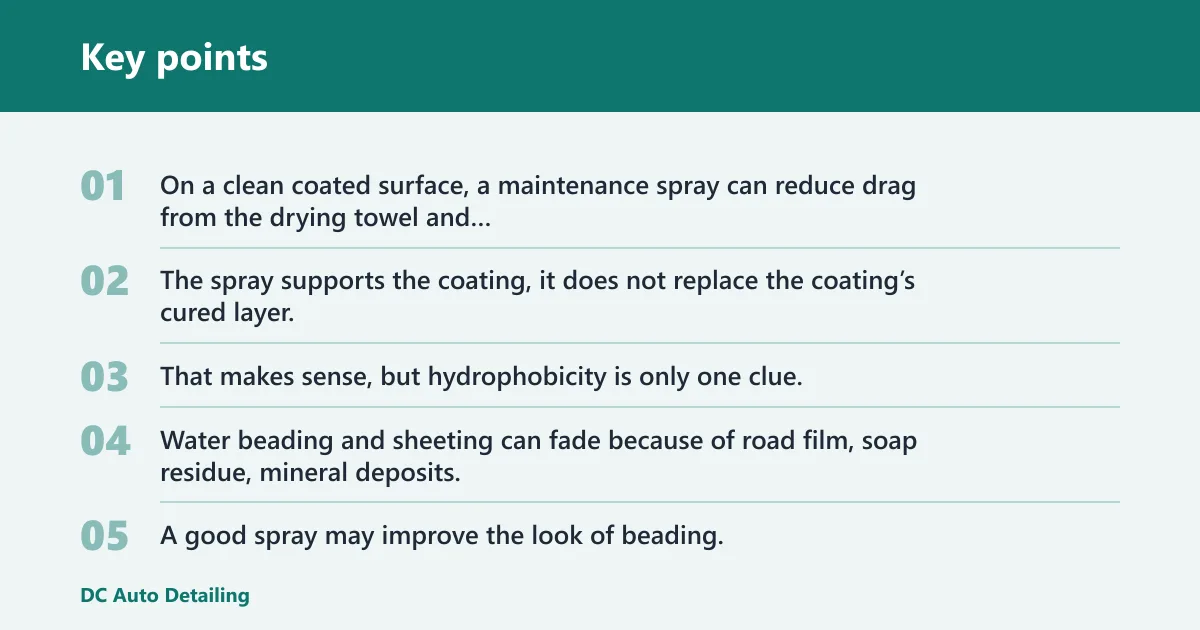
On a clean coated surface, a maintenance spray can reduce drag from the drying towel and leave the paint feeling smoother. It may also add a modest gloss bump. That effect is temporary. The spray supports the coating, it does not replace the coating’s cured layer.
Supports water beading and sheeting
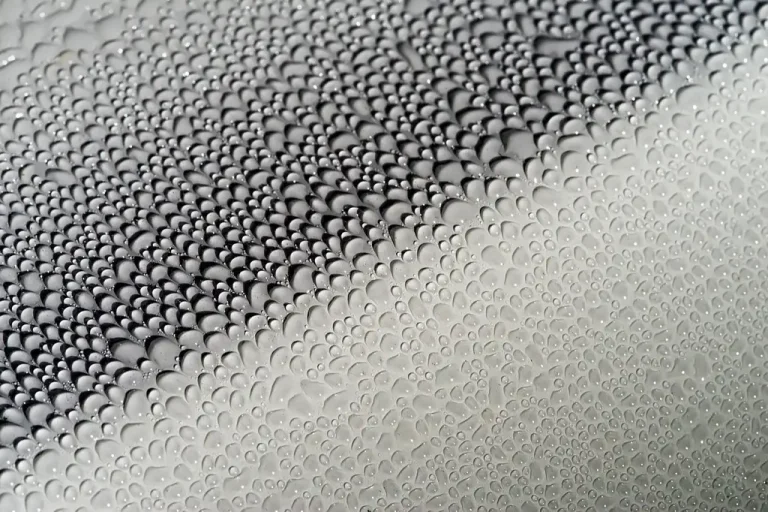
Many owners check water behavior first. That makes sense, but hydrophobicity is only one clue. Water beading and sheeting can fade because of road film, soap residue, mineral deposits, or wash technique. A good spray may improve the look of beading, but it cannot fix every loss of water behavior.
Can act as a drying aid or post-wash topper?
Some products are built to be misted onto wet panels during drying. Others are meant for dry paint after the wash. The label matters here. A product sold as a drying aid may not behave the same way as a true ceramic coating maintenance spray, and a spray sealant may not support coating chemistry in the same way either.
Do you need to use a ceramic coating maintenance spray after every wash?
No, you do not need it after every wash on every coated car. Use it after a wash only when the surface needs extra slickness, the water quality leaves spots, or the product line expects regular top-up use. If the panel dries cleanly and the coating still performs well, skipping it is reasonable.
When every wash benefits from it
After a bucket wash or rinseless wash, a maintenance spray can help if drying friction is noticeable or the coating has lost some slick feel. Touchless wash users may also see more value because those washes can leave film behind. In those cases, the spray can be a useful finishing step.
When skipping it makes sense
If your car is garage-kept, washed gently, and dries without spotting or drag, spraying after every wash is usually unnecessary. The coating is already doing the main job. Repeated application without a clear need can build residue and make future drying less clean.
Why product directions still matter
Formulas differ. Some are true coating maintenance sprays; others are spray sealants that add temporary protection but are not made to maintain a specific coating chemistry. Follow the label for dilution, panel type, cure time, and wipe-off method. That is the safest way to avoid streaks and bonding problems.
Coating spray decision table
| Wash condition | Recommended action | Reason |
|---|---|---|
| Clean garage-kept car | Skip spray on most washes; use only when slickness drops or drying feels grabby | Low contamination and low exposure mean the coating often needs less top-up support |
| Daily driver in dusty or rainy climates | Use after washes as needed, often every few washes rather than every time | Dust, road film, and repeat wetting can dull gloss and reduce water behavior faster |
| Winter salt exposure | Use more often if the wash removes a lot of grime; inspect for residue and spotting | Salt, slush, and harsh wash chemistry can leave more film and can strip weak toppers faster |
| Touchless-wash user | Consider a maintenance spray after the wash or during drying if the surface feels less slick | Touchless detergents can leave more leftover film than a careful contact wash |
| Beading drop from contamination versus coating wear | Clean or decontaminate first; spray only after the surface is truly clean | Loss of beading often comes from film, minerals, or soap residue, not coating failure |
How often should you use it?
There is no universal schedule. For some cars, after every wash is fine. For others, every few washes is enough. The right interval depends on product chemistry, mileage, climate, and how aggressive your wash process is. If the coating looks and feels right, there is no rule that forces a spray every time.
After every wash versus every few washes
Use it after every wash if the product is made as a regular topper and the car loses slickness quickly. Use it every few washes if the coating is still behaving well between washes. The goal is support, not stacking product for its own sake.
How climate and mileage change the interval
Daily drivers that face traffic film, rain, dust, or winter slush usually need more upkeep than weekend cars. Higher mileage means more contamination, more drying cycles, and more opportunity for mineral residue. A garage-kept car in mild weather may go longer between applications without any downside.
How product chemistry changes the interval
Some maintenance sprays are made to bond lightly with the coating’s surface and stay effective longer. Others are lighter toppers that wash away sooner. Harsh soaps can remove weak toppers faster. That is why one product may work best every wash while another is fine every third or fourth wash.
Is it the same as a drying aid or sealant?
No. A maintenance spray can overlap with a drying aid, but it is not always the same product, and a spray sealant is a different category again. A drying aid is used to reduce towel friction and spotting during drying. A maintenance spray is aimed more at top-up gloss and water behavior after the wash.
Maintenance spray versus drying aid
A drying aid is usually applied while the paint is still wet. Its main job is to help the towel glide and reduce water spots. A maintenance spray may be used dry or wet, depending on the label, and may be made to support a ceramic-coated surface more directly.
Maintenance spray versus spray sealant
A spray sealant can add temporary protection and gloss, but it may not be made to maintain a ceramic coating’s chemistry. Some lines sell products that do both jobs. Others do not. Read the directions carefully so you know whether you are topping the coating, drying the car, or laying down a separate layer.
What to use on PPF with ceramic coating
On a paint protection film surface that also has ceramic coating, use only products that are labeled safe for both PPF and coated surfaces. A light, compatible maintenance spray is usually fine. Avoid heavy application, because film edges, texture, and gloss level can make residue more visible.
Why beading can fade
Loss of beading does not automatically mean the coating has failed. Hydrophobicity can decline because the surface is dirty, contaminated, or covered with wash residue. Water spots can also make a coating look weaker than it is. Before adding more spray, check whether the surface actually needs cleaning or decontamination.
Road film and soap residue
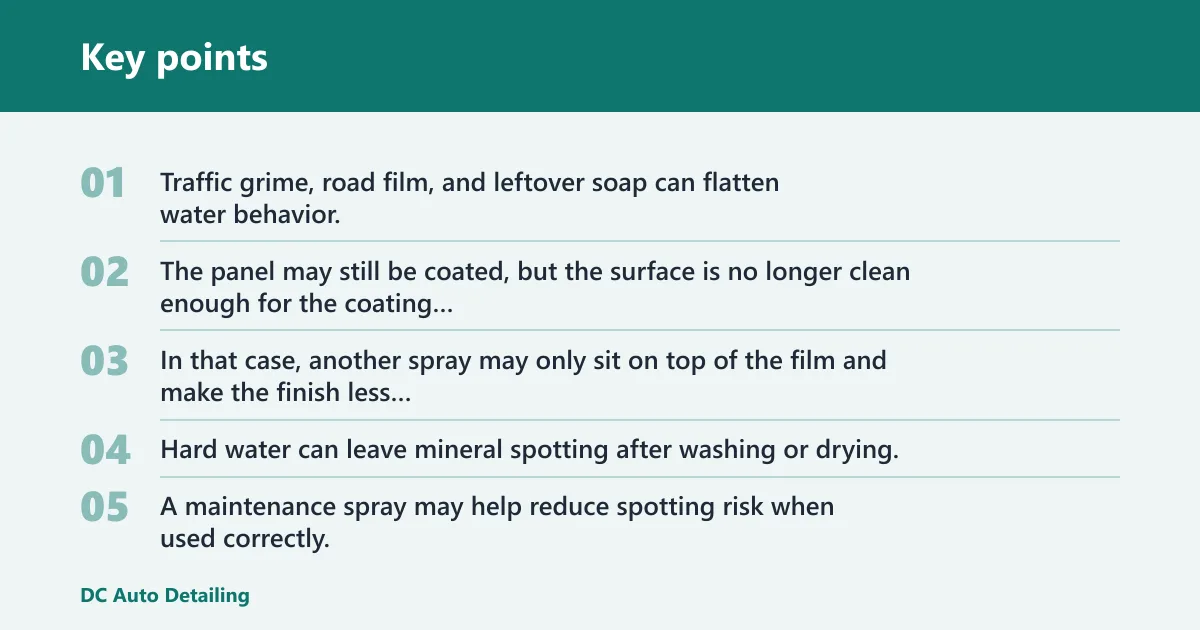
Traffic grime, road film, and leftover soap can flatten water behavior. The panel may still be coated, but the surface is no longer clean enough for the coating to work well. In that case, another spray may only sit on top of the film and make the finish less consistent.
Mineral deposits and water spots
Hard water can leave mineral spotting after washing or drying. A maintenance spray may help reduce spotting risk when used correctly, especially as a drying aid. But severe spots usually need safe removal methods, not more product layered on top of the stain.
When decontamination beats more spray
If the paint feels rough, the water behavior is patchy, or the gloss looks hazy, deeper cleaning may be the real fix. That can mean iron removal, tar removal, or a clay-based decontamination step when appropriate. Add spray only after the surface is clean enough for it to work as intended.
Say your sedan lives outside, sees winter slush, and is washed at a touchless tunnel every ten days. If beading fades and the paint feels less slick after drying, a maintenance spray is worth trying on the next clean wash. The wash process is leaving more residue, so a topper can help.
Suppose your coupe stays in a garage and gets a careful bucket wash once a month. If the water still sheets cleanly and the towel glides without drag, skipping maintenance spray after that wash is reasonable. In that case, the coating still has enough function without another layer.
How to apply it without streaks
Apply it on a clean, cool panel. Use a light mist, then wipe and buff. Heavy application is the fastest way to create streaks, especially on dark paint. If the surface is hot or dirty, the product can flash unevenly and leave visible residue.
Work on a clean, cool panel
Do not spray onto hot paint or direct sun if you can avoid it. Heat speeds drying and makes wipe-off harder. A cool surface gives you more working time and lowers the chance of smearing or high spots.
Use a light mist, then wipe and buff
One or two light sprays per panel is often enough for a small section. Spread the product with a plush microfiber towel, then buff with a second clean towel if needed. Start small. If the panel looks slick and even, adding more is usually unnecessary.
Avoid heavy buildup and residue
Repeated heavy use can leave a film that dulls gloss or makes the paint feel greasy. That is especially true if the car was not fully clean before application. If streaks appear, stop layering product and switch back to a proper wash or decontamination step.
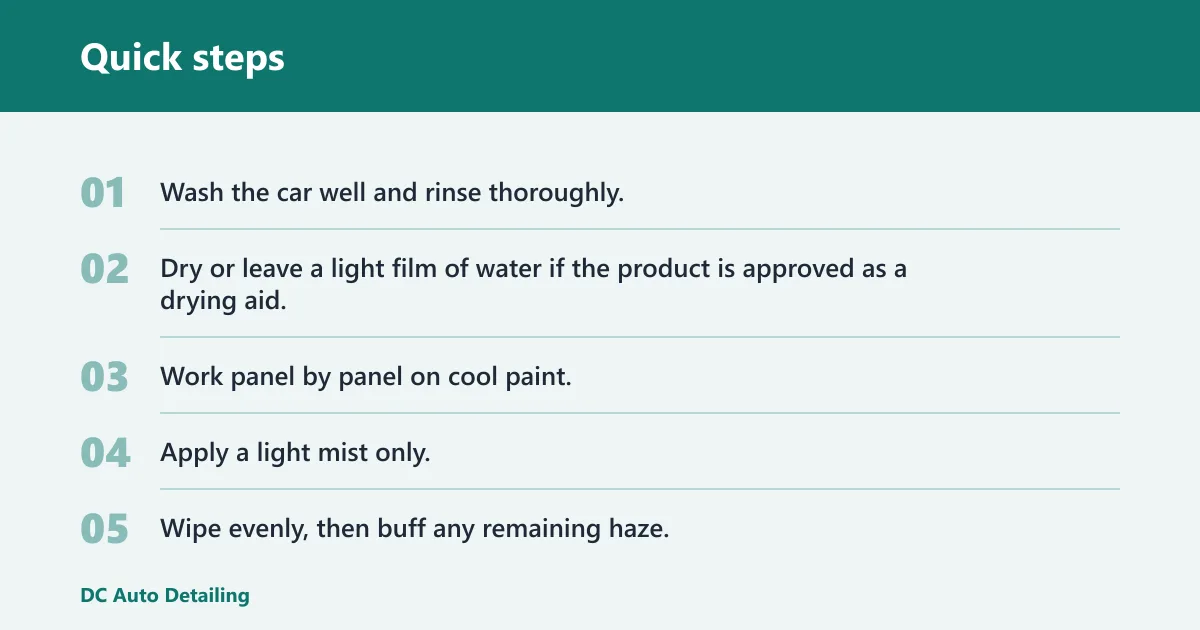
- Wash the car well and rinse thoroughly.
- Dry or leave a light film of water if the product is approved as a drying aid.
- Work panel by panel on cool paint.
- Apply a light mist only.
- Wipe evenly, then buff any remaining haze.
Frequently asked questions
Can you skip maintenance spray if the coating still beads water?
Yes. Strong beading usually means the coating still has useful hydrophobic behavior. If the surface is clean, slick, and free of residue, you can skip the spray. Beading alone is not the only sign that matters, so also check gloss, slickness, and spotting.
How often should you apply a coating maintenance spray on a ceramic-coated car?
Most owners land somewhere between every wash and every few washes. The right interval depends on climate, driving distance, product chemistry, and wash method. Garage-kept cars usually need less frequent use than daily drivers exposed to dust, rain, salt, or hard water.
Is maintenance spray the same as a drying aid or spray sealant?
Not always. A drying aid is meant to reduce towel friction and spotting during drying. A spray sealant may add temporary protection but may not be made to maintain a ceramic coating’s chemistry. Some products overlap, so read the label before using them interchangeably.
Will using too much maintenance spray weaken a ceramic coating?
It usually will not chemically weaken a cured coating, but too much product can leave residue, smearing, or muted water behavior. The practical problem is buildup, not damage. Light application on clean paint is the safer approach, and more product is rarely better.
What happens if you wash a ceramic coated car without using a maintenance spray?
Usually nothing bad. A proper wash still removes contamination and keeps the coating working. You may lose some slickness or gloss over time, but that does not mean the coating has failed. Add spray only when it actually improves the finish or drying process.
Do ceramic coating maintenance sprays work on all coating brands?
Many work across brands, but not all formulas are equally compatible. Some are made for specific coating systems, while others act more like general toppers. Check the product instructions, especially if the coating brand warns against certain toppers or wash chemicals.
Can you use maintenance spray on a PPF-covered car with ceramic coating?
Usually yes, if the product is safe for both paint protection film and ceramic-coated surfaces. Use a light mist and avoid flooding edges or seams. If the film has texture or satin finish, test carefully in a small area first to avoid visible residue.
Is maintenance spray necessary in winter or after touchless washes?
It is more likely to help in those cases, but it is still not mandatory. Winter salt and touchless detergents can leave more film, so a maintenance spray may restore slickness and water behavior. If the wash leaves the surface clean and dry, you can still skip it.