Is consumer ceramic coating worth it for a daily driver?
Consumer ceramic coating is worth it for a daily driver only if you want longer wash intervals and are willing to spend time on prep. Otherwise, a quality spray sealant is the better value. Done poorly, it can leave high spots, trapped residue, and weak protection that still costs more than simpler options. This guide compares DIY coating, wax, sealant, spray protection, and doing nothing for real-world daily use.
Consumer ceramic coating basics
Consumer ceramic coating is a DIY or consumer-applied exterior paint protection product. It is sold for stain resistance, easier cleaning, and gloss retention, but it only works well on properly prepared paint. It differs from a professionally installed coating in both application quality and typical durability.
What consumer ceramic coating
For a daily driver, the product matters less than the process. A coating is generally applied after cleaning, decontamination, and careful application so it can bond to the paint surface. It is meant to leave a harder-feeling, more water-repellent layer than wax or a basic sealant, while still needing regular washing.
How it differs from professional coating
Consumer coating is limited by the installer’s prep and technique. Professional coating usually includes more correction, better surface prep, and tighter control over high spots and missed sections. Consumer products can still perform well, but they do not fix bad paint prep or careless application.
What buyers usually expect from it
Most buyers want easier washing, better water behavior, less sticking road film, and a cleaner look between washes. The realistic goal is maintenance help, not a perfect shield. It should make the car easier to keep presentable, especially when the car sits outside and gets used often.
Is consumer ceramic coating worth it?
It can be worth it for a daily driver when easier wash days matter, the car is likely to be kept for a while, and the upfront prep work is acceptable. It is usually not the best spend if you want the lowest cost, the fastest install, or a one-step fix for neglected paint.
When it makes sense for a daily driver
It makes sense when the car sees regular rain, summer sun, road grime, and frequent washing. If the paint is already in decent condition and you want better cleanability for the next year or more, the time investment can pay off in reduced washing effort.
When it is not the best spend
It is a weak buy for faded paint, heavy swirl marks that need correction, or cars that already get minimal hand care. If the vehicle is older, parked outside, and likely to be repainted or replaced soon, a lower-cost sealant often gives a better return.
What value should mean over 12 months
Value over 12 months should be measured in time saved, easier rinse-off, and how well the finish holds up between washes. If coating the car does not reduce your maintenance burden or help the paint stay cleaner longer, the upfront cost is hard to justify.
What a daily driver actually gets
A daily driver gets practical maintenance help, not invincibility. The main benefits are faster rinsing, less bonded dirt, better beading or sheeting, and limited scratch resistance along with help against stains and sun exposure. The coating still needs washing, and the paint still needs sensible care.
Wash-time savings and easier rinsing
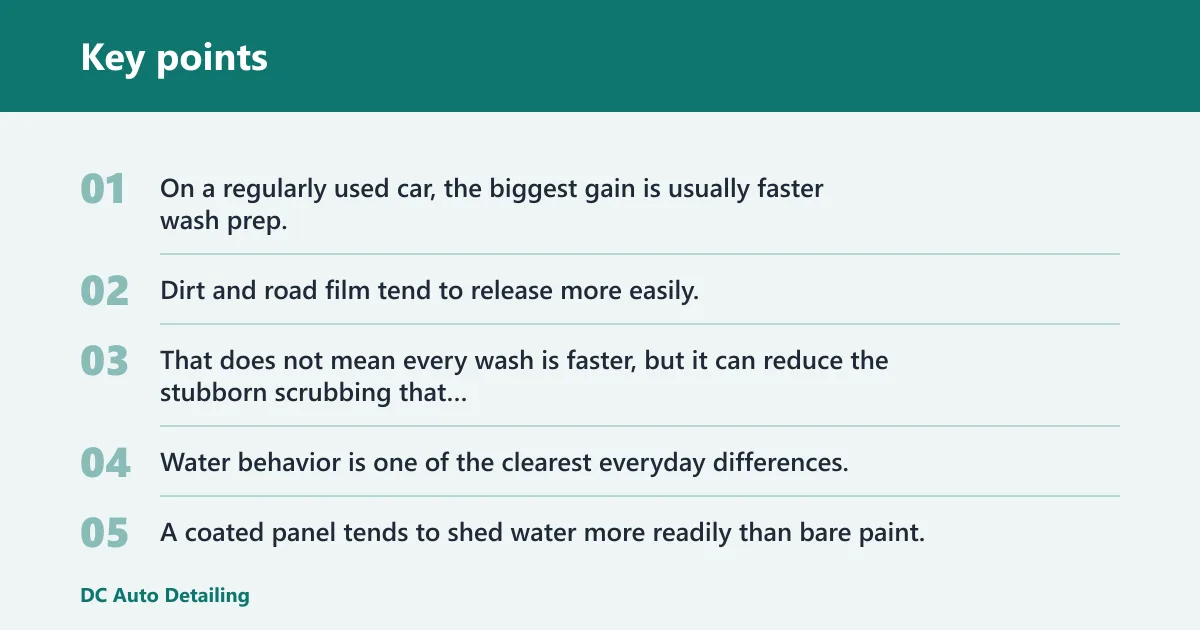
On a regularly used car, the biggest gain is usually faster wash prep. Dirt and road film tend to release more easily, so rinsing and drying can take less effort. That does not mean every wash is faster, but it can reduce the stubborn scrubbing that older protection often needs.
Water behavior and dirt release
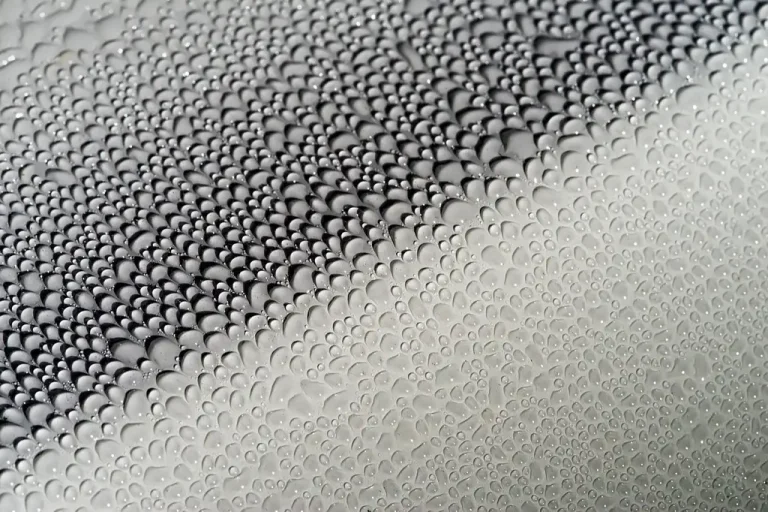
Water behavior is one of the clearest everyday differences. A coated panel tends to shed water more readily than bare paint, which can make drying simpler and reduce the chance of water spots if you dry the car promptly. The effect fades as the coating wears or gets neglected.
Stain resistance and UV exposure limits
Ceramic coating can help against stains and UV radiation, but it does not stop all contamination or all sun damage. Bird droppings, tree sap, and winter grime still need prompt removal. It can slow surface degradation and color fading, not eliminate them.
Say your sedan lives outside in July, gets parked under open sky, and collects dust, pollen, and tree sap. A coating may make wash day easier and keep the paint from looking tired as quickly, but it still needs regular cleanup when contamination lands on the finish.
Ceramic coating decision table
This table compares four common choices for a daily driver. The scores are practical, not absolute. A higher score means more benefit on that row. For 12-month value, the best score goes to the option that returns the most useful benefit for the least money and effort.
| Option | Wash-time saved | Water behavior | Chemical resistance | Prep effort | 12-month break-even value |
|---|---|---|---|---|---|
| Consumer ceramic coating | High | High | High | High | Medium to high |
| Wax | Low | Low | Low | Low | Low |
| Sealant | Medium | Medium | Medium | Low | High |
| No coating | None | None | None | None | Low |
How to read the 12-month break-even score
Break-even value should include product cost, prep supplies, and the value of your time. If a coating saves little wash time on a car that is already easy to clean, the math weakens fast. If the car lives outdoors and gets washed often, the time savings can justify more cost.
How long does consumer ceramic coating last?
Durability varies by product quality, paint prep, climate, wash method, and upkeep. Marketing may claim long life, but real daily-driver results depend on care, not the label alone.
What affects durability on a daily driver
Bad prep shortens life quickly. If the surface still has old wax, embedded iron, tar, or polishing residue, the coating may bond poorly. Soft paint, harsh detergents, automatic brushes, and repeated winter salt exposure also reduce how long the coating performs well.
Why wash method and climate matter
Hand washing with proper soap is easier on the coating than harsh brushes or strong cleaners. Hot summers, heavy UV exposure, and salty winter roads add stress. A car that sees weekly touchless washes and careful drying will usually hold up better than one that gets rough maintenance.
Why marketing claims and real upkeep differ
Product claims often describe ideal conditions, not neglected use. A coating that sounds long-lasting can still fade in performance if it is never washed, dried poorly, or hit with aggressive chemicals. The finish can still look good for a while, but the easy-clean effect weakens as the layer wears.
Does ceramic coating really protect paint?
It helps protect paint, but only within limits. Consumer ceramic coating can add stain resistance, limited scratch resistance, and better UV defense, yet it is not scratch-proof and it does not stop rock chips. Think of it as surface-level protection that still needs sensible use.
Scratch resistance limits
It can reduce light marring from casual contact, but careless washing, dirty towels, and dry wiping can still leave marks. The coating is not a shield against branches, keys, door dings, or abrasive wash tools. Good technique still matters more than the product alone.
UV protection and color fade
UV radiation can dull paint over time, especially on cars parked outside. Ceramic coating helps slow that damage, which can support color preservation and reduce oxidation risk. It does not stop fading completely, and it does not protect trim, glass, or rubber the same way.
What it does and does not protect against
It helps with stains, dirt release, and some environmental wear. It does not replace paint correction, does not prevent chips, and does not excuse poor wash habits. If a driver expects perfect resistance to winter salt, bird droppings, and road film, disappointment usually follows.
What prep and maintenance are required?
Prep is the part that makes or breaks consumer ceramic coating. You need a thorough wash, decontamination, and sometimes paint correction before application. Afterward, regular washing and careful drying matter because the coating wears faster when the car is neglected.
Wash and decontamination before coating
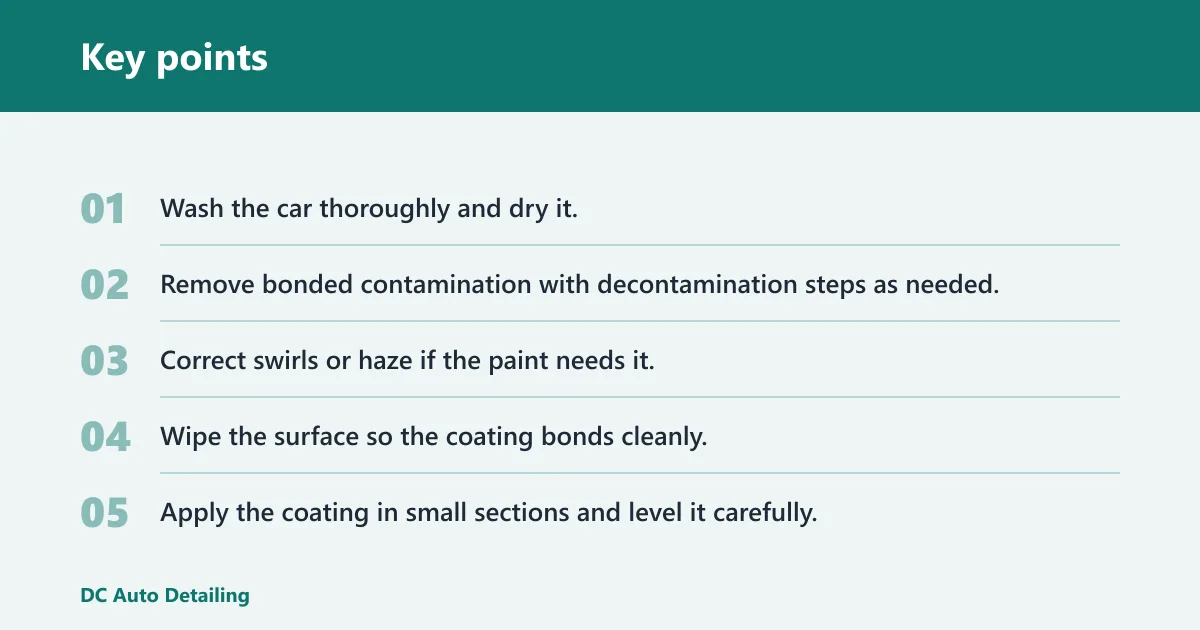
Before coating, the paint should be washed, decontaminated, and fully dry. Iron remover, clay, and panel wipe are common prep steps when the surface needs them. Skipping prep can trap contamination under the coating and leave dull spots or weak bonding.
- Wash the car thoroughly and dry it.
- Remove bonded contamination with decontamination steps as needed.
- Correct swirls or haze if the paint needs it.
- Wipe the surface so the coating bonds cleanly.
- Apply the coating in small sections and level it carefully.
When paint correction is worth it
Paint correction is worth it when the car has swirls, haze, or water spotting that will be locked under the coating. If the finish already looks dull, a coating can seal in that condition. Correcting the paint first usually gives better appearance and better value.
Suppose a compact SUV has light swirl marks from a soft brush wash, and the owner wants a coating. If correction is skipped, the coating can preserve that dull look. If the paint is polished first, the same coating usually looks cleaner and more consistent.
Ongoing washing, toppers, and care after application
After application, the car still needs routine washing with gentle soap and clean towels. Some owners add a compatible topper or spray booster to refresh water behavior. Strong cleaners, repeated brush washes, and skipped drying steps can shorten useful life.
How much does ceramic car coating cost?
The price picture is wide because consumer kits, prep supplies, and professional installation are not the same purchase. Consumer kits usually cost far less than installed work, but the full spend is larger once you add prep items. Prep and time can add real cost.
DIY product cost
Consumer coating kits often cost less than an installed service, but the full spend is larger once you add prep items. A daily driver owner may need wash soap, iron remover, clay, towels, panel wipe, applicators, and possibly polish. A realistic DIY cart for coating can also look a lot like the cart for a good spray sealant, except the coating usually asks more from prep and technique while the spray product asks less from both.
Prep supplies and hidden costs
Hidden costs usually come from paint correction, replacement towels, and extra cleaners. If the paint is not already ready, prep can take longer than the coating step. That time matters, especially when the driver is deciding between a coating and a simpler protection product.
DIY value versus installed pricing
DIY value is strongest when the paint is already in good shape and the owner is comfortable with careful prep. Installed pricing may make sense when the car needs correction and the owner wants lower application risk. Either way, value should be judged against how long the finish will stay easy to maintain.
Should I spend money on ceramic coating or other car accessories first?
For most daily drivers, exterior protection should come before cosmetic accessories if the paint is exposed to weather, salt, and sun. A coating or sealant usually makes more sense than spending on trim pieces, interior extras, or appearance add-ons that do not lower maintenance effort.
That said, a lower-cost sealant can be the smarter first buy if the budget is tight. The guide recommends reducing spending on several accessories to fund exterior care, and that tradeoff is often sensible when the goal is practical maintenance rather than show-car presentation.
Frequently asked questions
Is consumer ceramic coating worth it for a daily driver?
Yes, but only when you value easier cleaning, better water behavior, and some stain resistance enough to justify prep time and higher cost. If your main goal is simple, low-cost protection, a good spray sealant usually gives better value for an everyday car.
How long does consumer ceramic coating last on a daily driver?
It varies widely with product quality, climate, wash method, and care. Some coatings can perform well for a long stretch, while neglected paint may lose benefits much sooner. Daily drivers that face sun, salt, and harsh washing usually need more upkeep to keep the coating useful.
Does ceramic coating really protect against scratches and UV damage?
It helps with limited scratch resistance and UV exposure, but it does not make paint scratch-proof or chip-proof. It can slow fading and surface wear, yet careless washing, road debris, and winter grit still damage paint. Think of it as added defense, not complete protection.
Do you still need to wash and maintain a ceramic-coated car?
Yes. Ceramic coating reduces the effort of washing, but it does not replace washing. Road grime, bird droppings, pollen, and salt still need removal. Gentle soap, clean wash media, and prompt drying help the coating last longer and keep the finish looking clean.