How to clean cloth car seats at home step by step
Vacuum first, then choose one of three methods: light soil gets a damp microfiber wipe, spot stains get a diluted cleaner and blotting, and heavy grime gets a wet extract-and-dry cycle. Use the wrong method and you can leave rings, set stains, or trap moisture that leads to mildew. This shows how to clean cloth car seats at home step by step, matched to stain type, soil level, and the tools you have.
What you’ll need before you start
- Vacuum with an upholstery or crevice tool
- Soft interior brush with soft to medium bristles
- Upholstery cleaner labeled for automotive fabric
- Microfiber cloths
- Portable carpet and upholstery cleaning machine, if you have one
- Fabric protectant for after cleaning, if desired
- Clean water in a spray bottle for light dilution when the label allows it
What cloth seats need before cleaning
Cloth car seats have a fabric fiber structure that traps dirt, oils, food residue, and bacteria between the fibers. That is why vacuuming comes before any liquid cleaner. If you add moisture first, loose grit can turn into slurry and sink deeper into the weave.
Use a vacuum with an upholstery or crevice tool to remove loose debris from the seat face, seams, and gaps. That keeps grit from being ground deeper when you brush or blot later.
Cloth seat decision table
| Problem | Safest method | Recommended tool | Dwell time | Agitation style | Extraction or blotting step | Drying check | Mistake to avoid |
|---|---|---|---|---|---|---|---|
| Fresh spill | Blot first, then treat the damp spot | Microfiber cloth, upholstery cleaner | About 1 minute if the label allows it | Light, straight passes with a soft brush | Blot with a dry microfiber cloth until transfer slows | Press a dry towel into the seat; it should pick up little moisture | Rubbing the spill outward |
| Set-in stain | Vacuum, pretreat, then clean again | Upholstery cleaner, soft brush, microfiber cloth | Per label directions; repeat only if the stain lifts | Short back-and-forth strokes | Blot after each pass; extract if you have a machine | Check the padding edge and seam for lingering dampness | Leaving cleaner to dry on the surface |
| Grease | Use a fabric-safe cleaner, then extract residue | Upholstery cleaner, portable extractor | Per label directions | Gentle brushing only | Extract the dirty liquid instead of chasing it around | Inspect for a dark halo after drying | Flooding the spot with water |
| Odor | Clean the source, then use an enzyme-based cleaner if needed | Enzyme-based cleaner, microfiber cloth | Per label directions | Light agitation at the source area | Blot or extract until the seat no longer releases dirty liquid | Smell the seat after full drying, not while damp | Masking odor without removing residue |
| Over-wet seat | Pull moisture out right away | Dry microfiber cloth, portable extractor if available | Immediate action | No scrubbing | Press and lift, then extract if possible | Check foam and padding depth before using the seat | Driving before the cushion is dry |
How do you clean cloth car seats step by step?
Vacuum first, then treat one seat or one small section at a time. Use an upholstery cleaner on the fabric after vacuuming, agitate with a soft brush, and blot or extract the dirty liquid. If the stain stays, repeat only after the first pass dries enough to judge the result.
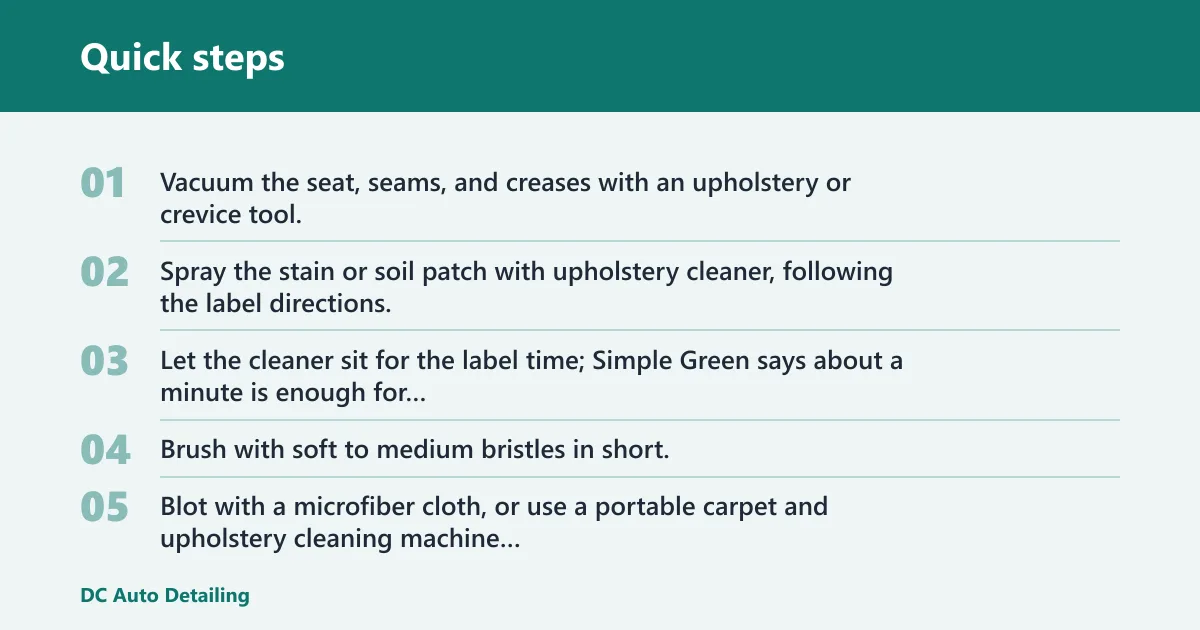
- Vacuum the seat, seams, and creases with an upholstery or crevice tool.
- Spray the stain or soil patch with upholstery cleaner, following the label directions.
- Let the cleaner sit for the label time; Simple Green says about a minute is enough for many products.
- Brush with soft to medium bristles in short, straight strokes so the cleaner reaches the fibers without roughing them up.
- Blot with a microfiber cloth, or use a portable carpet and upholstery cleaning machine to pull the dirty liquid back out.
- Recheck the spot after it starts drying; repeat only if residue or discoloration remains.
- Dry the seat fully before use. Open windows or doors for airflow, and do not sit on the treated area until it is completely dry.
Good Housekeeping names the Bissell Little Green as an example of a portable carpet and upholstery cleaning machine, and it notes that a soft brush is the right choice for cloth seats. A spray-and-extract machine helps remove the dirty liquid instead of leaving it behind.
Say your passenger seat has a coffee splash about 4 inches across. One light pass may lift the color at the edges but leave a pale ring in the middle. In that case, a second light application and extraction usually work better than one heavy soak.
Can you clean cloth seats without a machine?
Yes, but only for light soil, fresh spills, and small spots that respond to blotting. A microfiber cloth and a fabric-safe cleaner can handle simple jobs. A portable extractor makes the bigger difference when the seat is heavily soiled, greasy, or already holding too much moisture.
When blotting and brushing are enough
Use this route for dust, a small drink spill, or a food smear that has not set. Spray lightly, brush gently, then blot until the cloth stops picking up contamination. If the stain keeps returning to the surface after drying, the seat needs deeper extraction.
Where a portable extractor helps more
Choose extraction when the seat feels damp after cleaning, the stain is large, or dirty liquid keeps reappearing in the weave. The machine’s spray-and-extract method can pull residue from the fabric and the upper foam layer instead of leaving it to dry in place.
How do you avoid rings and mildew?
Rings often form when too much liquid is left in the fabric or padding and the edges dry faster than the center. Mildew risk tends to rise when the cushion stays damp after cleaning. The fix is controlled moisture, prompt extraction, and a real drying check before anyone sits on the seat.
How to tell the seat is actually dry
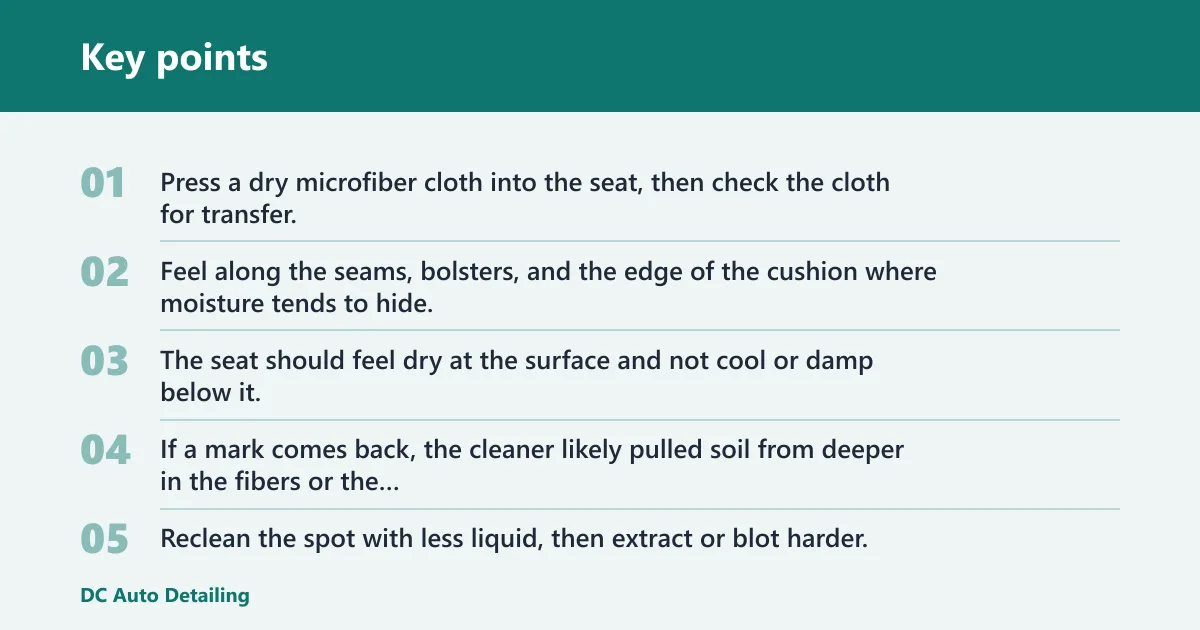
Press a dry microfiber cloth into the seat, then check the cloth for transfer. Feel along the seams, bolsters, and the edge of the cushion where moisture tends to hide. The seat should feel dry at the surface and not cool or damp below it.
What to do when stains reappear after drying
If a mark comes back, the cleaner likely pulled soil from deeper in the fibers or the foam and left it to rise as the seat dried. Reclean the spot with less liquid, then extract or blot harder. For odor, an enzyme-based cleaner may be the better next step.
Suppose a rear bench gets cleaned after a muddy soccer pickup. The visible dirt may disappear, then a brown outline returns once the seat dries. That usually means the first pass moved soil, but did not pull it all the way out of the padding.
Can you steam clean cloth car seats safely?
Steam can be useful on some cloth seats, but it is not a universal answer. Heat and moisture can sometimes drive stains deeper, soften adhesives, or leave the padding too wet. Use steam only if the seat material and the cleaner’s directions allow it, and keep the pass light.
For most home jobs, an upholstery cleaner plus blotting or a portable extractor is the safer first choice. If a stain is set in, pretreat it first rather than relying on steam to do all the work.
What household products are safe for cloth car seats?
Use household products cautiously. A fabric-safe upholstery cleaner is the first choice. Plain water can work for a fresh spill if you blot immediately. Bleach, strong solvents, and harsh all-purpose cleaners are generally best avoided unless the label specifically says they are safe for automotive upholstery.
Keep the safety hierarchy simple: use the least aggressive cleaner that can handle the stain, then move up only if the seat allows it. If a product has no fabric directions, skip it.
How do you clean very dirty cloth car seats at home?
Start with a full vacuum, then work in sections and expect repeat passes. Very dirty cloth seats usually need pretreatment before the main clean, and stubborn stains may need repeated application. Odor control often improves only after the source residue is removed with an enzyme-based cleaner.
- Vacuum every seam, crease, and seat edge.
- Pretreat the worst spots with upholstery cleaner or an enzyme-based cleaner if odor is present.
- Agitate with a soft brush, then extract the dirty liquid with a portable machine if you have one.
- Repeat on the next section only after the first area is no longer dripping or overly damp.
- Leave airflow on the cabin until the fabric, foam, and padding are dry.
A monthly deep-cleaning is a good idea for cloth seats that see regular use, especially if kids, pets, or frequent meals are part of the routine.
Common mistakes
- Scrubbing too hard: stiff or metallic brushes can damage fibers. Use soft to medium bristles and short strokes.
- Using too much cleaner: excess liquid drives dirt into the foam and raises ring risk. Apply enough to wet the spot, not soak it.
- Skipping vacuuming: loose grit gets ground deeper once moisture hits the seat.
- Driving before the seat is dry: trapped moisture can lead to mildew and reappear as odor later.
- Using the wrong household product: harsh cleaners can leave residue or discolor the fabric.
- Rubbing instead of blotting: rubbing spreads the stain and can set it into the weave.
Apply a fabric protectant after cleaning if you want a hydrophobic barrier that helps future spills bead up on the surface. Let the seat dry first, then apply it according to the label directions.
Frequently asked questions
How do I clean car cloth seats at home step by step?
Vacuum the seat, treat one section at a time, spray an upholstery cleaner, brush lightly, and blot or extract the dirty liquid. Recheck after drying. If the stain is still there, repeat the process with less liquid rather than soaking the cushion.
What should I vacuum first before cleaning cloth car seats?
Vacuum the seat surface, seams, creases, and the gap where the seat meets the backrest. Use an upholstery or crevice tool so loose debris comes out before any liquid cleaner touches the fabric. That keeps grit from grinding deeper into the fibers.
Can I use an upholstery cleaner on cloth car seats?
Yes, if the label says it is safe for automotive fabric. Spray the cleaner after vacuuming, let it sit for the listed dwell time, then agitate with a soft brush and blot or extract. Follow the product directions closely on dwell time and rinsing.
How do I get stains out of cloth car seats without making rings?
Work from the outside in, use only enough cleaner to wet the spot, and remove the dirty liquid right away with a microfiber cloth or extractor. Rings usually come from excess moisture and residue, so lighter applications and better extraction matter more than heavy scrubbing.
How long should cloth car seats dry after cleaning?
They should dry completely before use. Open windows or doors for airflow, and check the seams and cushion edges, not just the visible top. If the seat still feels cool or damp under pressure, give it more time before anyone sits down.