How to remove coffee stains from car carpet
Blot fresh coffee right away, then flush the spot with a small amount of water and dry it with towels or a wet/dry vac until the carpet is only slightly damp. If the stain returns after drying, repeat extraction. Leave the carpet wet, and dissolved coffee can rise back up as it dries, leaving a darker edge. Coffee discoloration comes from tannins, the compounds that can bind into fibers as a spill sits, so quick blotting matters from the start. This guide shows how to remove the spill, pull moisture back out, and stop wick-back in both fresh and dried coffee stains. For an internal walkthrough of the area you are treating, start with car carpet.
Coffee stain basics
Coffee leaves brown discoloration mainly because of tannins. Fresh spills come out more easily than old ones because the liquid has not had as much time to bind and dry into the fibers. In car carpet, the bigger problem is often not the first stain you see. It is the liquid that sinks into the backing and comes back up while drying.
That is why wick-back matters. If you wet the carpet and leave residue behind, the dissolved coffee can move upward as the surface dries. The edge of the spot may look clean for an hour, then reappear later as a ring.
What makes car carpet harder
Auto carpet sits over padding, insulation, and seams. Those layers hold moisture longer than a flat household rug. Thick carpet can hide residue below the visible fibers, so a towel-only cleanup may remove the top layer and still leave coffee in the backing.
Coffee with milk, cream, or sugar is more likely to leave residue and odor than black coffee alone. The stain may also feel tacky. That calls for more careful flushing and extraction, not more soap and water poured into the spot.
What you’ll need
- Paper towels or a clean absorbent cloth
- A clean white cloth for applying cleaner
- Dish soap
- White vinegar
- Cold water
- Warm water, if the label allows it
- Hydrogen peroxide, 3% only, for spot testing and stubborn staining
- Wet vac or portable carpet cleaner
- Soft sponge
- Stain guard or upholstery cleaning code labeled W, SW, or WS
How do you clean fresh coffee from car carpet?
Start by blotting the spill right away, then use a mild dish soap solution and extract the liquid before it sinks deeper. For fresh black coffee, the safest first pass is usually blotting, light cleaning, and drying. The goal is to remove the coffee, not flood the carpet and create a second stain later.
- Blot the spill. Press paper towels or an absorbent cloth straight down on the coffee. Work from the outside of the spill toward the center so you do not spread the edges.
- Mix a light cleaner. Combine one tablespoon of dish soap with water in a small bowl. Wet the clean white cloth, then wring it out so it is damp, not dripping.
- Treat the spot. Dab the stain with the cloth or a sponge. For most fresh coffee spots, a little dish soap mixed with water is enough; more liquid only drives the stain deeper.
- Lift and repeat. Alternate brief soaking and blotting with the sponge or cloth. Stop once the coffee lightens and the carpet is only slightly damp.
- Extract the moisture. Use a wet vac or portable carpet cleaner to pull out the remaining cleaner and coffee. Keep extracting until the carpet no longer feels wet to the touch.
Say your cup tipped over and left a 3-inch black coffee spot on the floor mat. If the fibers are still glossy with liquid, blot first and skip the scrub brush. That keeps the stain from spreading before the cleaner can reach the coffee tannins.
Should you use warm water or cold water?
Cold water is often the safer first choice for flushing and rinsing car carpet because it helps control spreading while you blot. Warm water can help loosen coffee residue, but it can also drive moisture deeper if you overdo it. Use the least water that gets the cleaner moving.
When cold water is the safer first choice
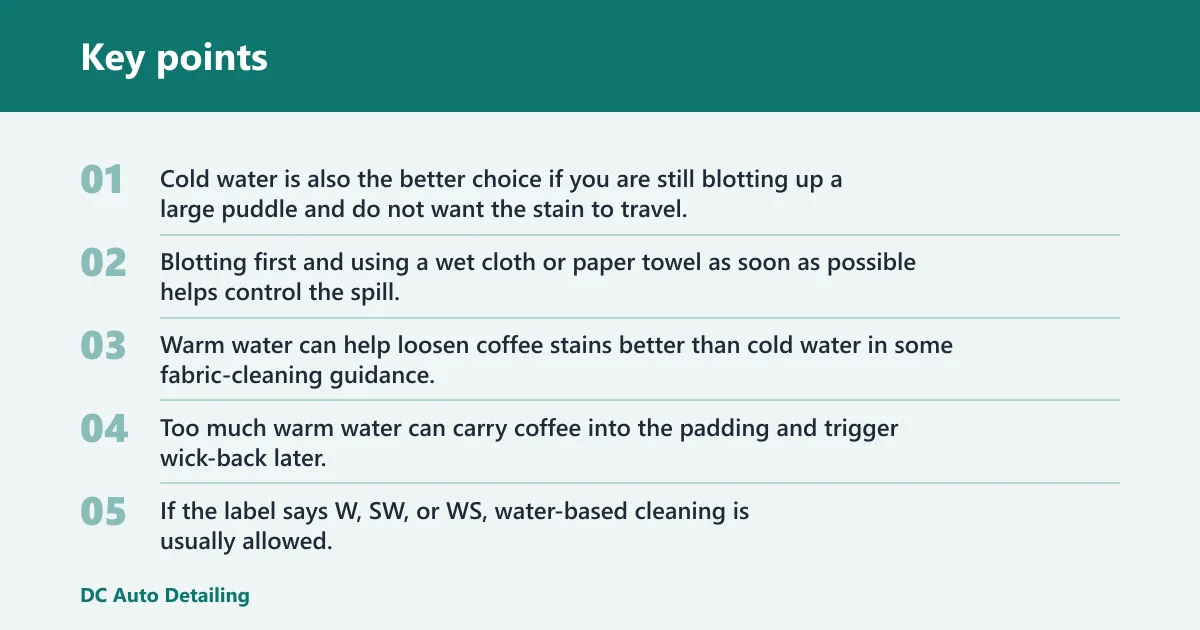
Choose cold water when the spill is fresh, when the carpet is thin, or when the stain sits near seat tracks and edges where runoff is hard to dry. Cold water is also the better choice if you are still blotting up a large puddle and do not want the stain to travel.
Blotting first and using a wet cloth or paper towel as soon as possible helps control the spill. That is the point of cold water here: keep the coffee mobile enough to lift, but not so warm that it sinks and spreads faster.
When warm water can help, and when it can backfire
Warm water can help loosen coffee stains better than cold water in some fabric-cleaning guidance. It is more useful after the initial blotting, when you are treating a stubborn residue rather than chasing a fresh puddle. Keep it modest. Too much warm water can carry coffee into the padding and trigger wick-back later.
If the label says W, SW, or WS, water-based cleaning is usually allowed. Those codes often appear on upholstery or removable mats, but they are not always available on installed carpet, so treat them as a guide rather than a guarantee. If the code is missing or the material is sensitive, test a hidden area first and keep the first pass very light.
How do you clean dried coffee without soaking the carpet?
For dried coffee, work in small passes and remove moisture as you go. Do not flood the spot to re-soften it. Use a light cleaner, blot in short cycles, and extract between passes so the coffee does not reappear after drying. Dried stains often need about two or more rounds.
Coffee with milk, cream, or sugar
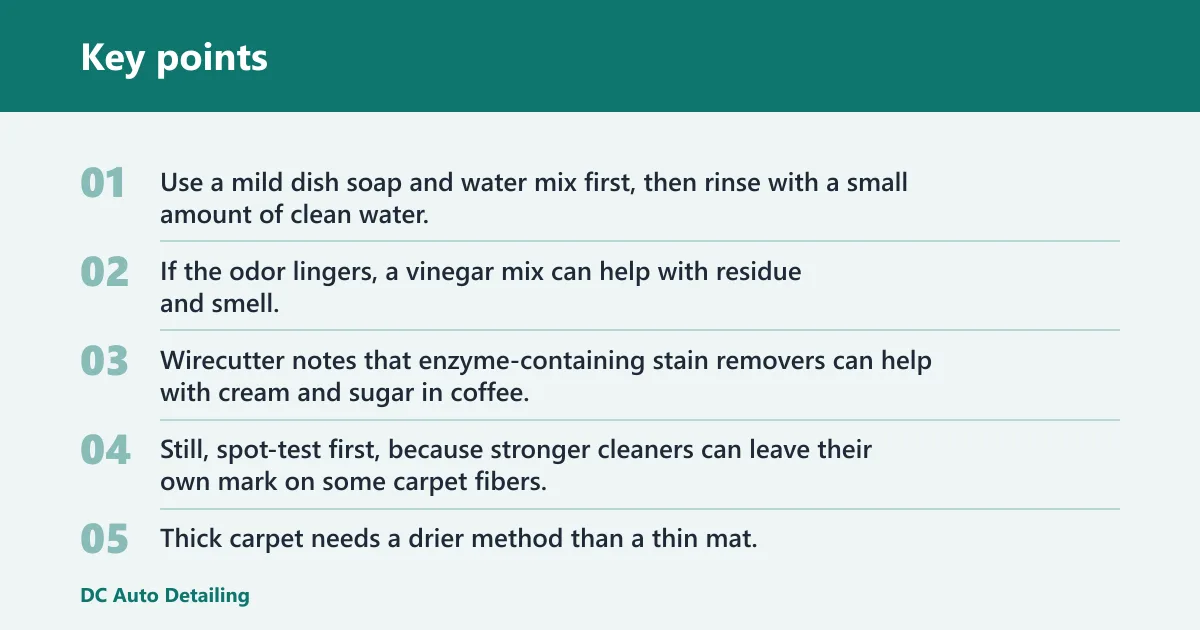
Milk, cream, and sugar change the cleanup. They can leave residue that feels sticky and can smell if it stays in the padding. Use a mild dish soap and water mix first, then rinse with a small amount of clean water. If the odor lingers, a vinegar mix can help with residue and smell.
Wirecutter notes that enzyme-containing stain removers can help with cream and sugar in coffee. That makes sense when the spill is more than plain black coffee. Still, spot-test first, because stronger cleaners can leave their own mark on some carpet fibers.
Thick carpet and padding
Thick carpet needs a drier method than a thin mat. Apply cleaner to the cloth first, not straight onto the floor. If you see the spot darkening around the edges after drying, that is a sign the backing stayed wet. Go back with a wet vac or portable carpet cleaner rather than adding more liquid by hand.
Suppose the stain is three days old and the carpet feels springy and thick under your fingers. A towel-only approach may clean the top, but the backing can still hold coffee. In that case, use a portable extractor and stop when the extracted liquid begins to look clear.
Can vinegar help remove coffee stains from car carpet?
Yes, white vinegar can help in homemade coffee-stain mixes, especially when the spill left residue or odor behind. It is often paired with dish soap and water. Use it as a follow-up cleaner, not the first thing you dump onto the carpet, and keep the application light.
A practical mix is vinegar, water, and a small amount of dish soap. Dab it on with a clean cloth, then blot and extract. If the stain is on thick carpet or near padding, use even less liquid than you would on a removable floor mat.
How to remove old coffee stains from car carpet
Old coffee stains need a slower approach than fresh spills because the tannins have had time to set. Start with blotting any loose residue, then use a light cleaner and extraction. If the stain sits deep or has dried for days, repeat short cleaning passes instead of making the carpet wetter.
- Vacuum loose debris. Clear grit and crumbs first so you do not grind them into the fibers while cleaning.
- Apply a test spot. Check the cleaner in an inconspicuous place, especially if you plan to use vinegar or hydrogen peroxide.
- Work the surface lightly. Use a damp cloth with dish soap and water, or a vinegar mix if residue remains. Do not soak the area.
- Extract between passes. Use a wet vac or portable carpet cleaner after each round. This matters more on old stains because the backing can hold hidden liquid.
- Escalate only if needed. If the stain is still visible after about two careful rounds, move to hydrogen peroxide or a commercial cleaner after another spot test.
Coffee stain decision matrix
| Coffee-spill type | First action | Cleaner choice | Maximum safe wetting | Extraction method | Ring/wick-back risk | Stop and escalate when |
|---|---|---|---|---|---|---|
| Fresh black coffee | Blot with paper towels or an absorbent cloth | Dish soap and water | Keep the carpet just damp | Wet vac or portable carpet cleaner | Low if you dry it promptly | The stain reappears after drying |
| Coffee with milk or sugar | Blot, then lift residue quickly | Dish soap and water first, then vinegar mix if odor or residue remains | Use the least liquid that loosens the residue | Wet vac, then a second dry pass | Moderate if residue stays in the backing | The spot stays sticky or smells after drying |
| Dried stain | Vacuum loose debris and test a hidden area | Dish soap and water, then hydrogen peroxide if spot-tested safe | Light surface dampening only | Portable extractor in short passes | Moderate to high if the backing was not fully dried | The edges ring back up after the carpet dries |
| Stain on thick carpet padding | Blot, then avoid pouring cleaner directly on the spot | Mild soap solution, followed by extraction | Very low wetting; do not saturate the backing | Portable carpet cleaner or pro extraction | High if the pad stays damp or the stain comes back | Liquid has reached the pad or the stain returns twice |
Common mistakes
Rubbing is the fastest way to push coffee deeper into the fibers. So is using too much cleaner at once. The other common mistake is stopping after the surface looks better, then leaving the backing wet long enough for wick-back to bring the stain back.
A clean white cloth is better than a colored rag because you can see what you are lifting. Another mistake is ignoring the code on the upholstery label. W, SW, and WS mean water-based cleaning is generally allowed, but the code still matters when you choose between a damp cloth and a stronger product. If your carpet is wool or another natural fiber, or if the color looks unstable in a hidden spot, skip hydrogen peroxide and stick to the mildest cleaner that works.
If that didn’t work, try this next
If blotting and a mild soap mix do not finish the job, move to a wet vac or portable carpet cleaner before adding more chemicals. Use short extraction passes and let the area dry between rounds. If the stain still returns after drying, a spot-tested hydrogen peroxide treatment or professional detailing is the next step.
Frequently asked questions
What is the fastest way to get coffee out of car carpet?
Blot right away with paper towels, then use a damp cloth with one tablespoon of dish soap in water and extract the area with a wet vac. The fastest result comes from pulling liquid out first and keeping the carpet only slightly damp, so the stain does not wick back later.
Should I use warm water or cold water on coffee stains in car carpet?
Cold water is the safer first choice for blotting and rinsing because it helps limit spreading. Warm water can loosen residue better on some stains, but use it carefully and in small amounts. If the carpet is thick or the stain is old, extraction matters more than temperature.
How do I clean a dried coffee stain without soaking the carpet?
Use a light cleaner on a cloth, not directly on the carpet, and work in short passes. Blot, extract, and let the area dry between rounds. If the carpet is thick or the stain has reached the padding, a portable extractor is safer than adding more liquid by hand.
When should I use a carpet cleaner instead of a DIY mix?
Use a portable carpet cleaner when towels leave the carpet wet, when the stain is still visible after two careful passes, or when the spill included milk or sugar. Extraction removes more liquid than towels alone and lowers the chance of a ring mark after drying.
How do I stop the coffee stain from spreading while I blot it?
Press straight down with paper towels or an absorbent cloth and lift, do not rub. Work from the outside of the spill toward the center so the edge does not expand. Keep each pass light and replace the towel as soon as it starts to transfer coffee back onto the carpet.