Is tire shine bad for tires? What to Know Before Applying
Is tire shine bad for tires? Not if the formula is rubber-safe, the tire is clean and healthy, and you apply a thin coat to the sidewall only. Keep it off the tread. Avoid greasy over-application and products that sling. Done badly, it leaves residue, pulls in dust, and can make the tire slippery. This guide shows how to judge a product, when to skip it, and how to apply it without sling.
What tire shine actually does
Tire shine is a cosmetic sidewall dressing. It darkens the visible sidewall, adds gloss or a satin finish, and sometimes provides UV protection. It is not a repair for cracks, bulges, tread wear, or dry rot. USTMA-style tire maintenance guidance also makes the basic point that appearance products do not change structural tire condition.
Why drivers use it
Drivers want a darker, newer look. Some products leave a matte to satin finish, while others create a wet gloss. The Tire Reviews says tire shine can give a glossy, well-maintained look, and that is the main job for most buyers. That cosmetic effect is the primary reason the product exists.
Modern dressings may offer UV protection. That can help slow fading and weathering, especially on parked cars or vehicles that sit in direct sun. It does not reverse existing damage, and manufacturer care guides for tires still prioritize inspection, inflation, and regular cleaning over any dressing product.
Is tire shine bad for tires?
No, not by default. Tire shine becomes a problem when the formula is too harsh, the tire is already damaged, or the product is applied too heavily. The real question is whether the dressing is rubber-safe, used on a healthy sidewall, and wiped down before driving.
When the answer is no
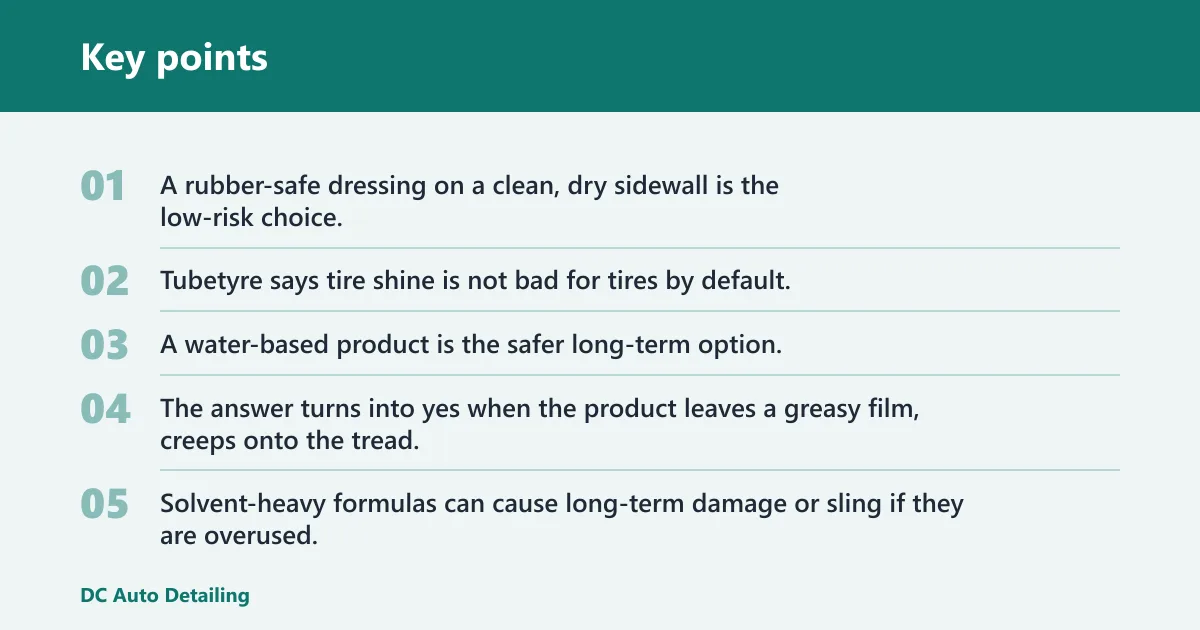
A rubber-safe dressing on a clean, dry sidewall is the low-risk choice. Tubetyre says tire shine is not bad for tires by default, and Jimbo’s Detailing says the bad reputation came from older solvent-heavy dressings. A water-based product is the safer long-term option, especially when the label and SDS emphasize low-residue, sidewall-safe use.
When the answer turns into yes
The answer turns into yes when the product leaves a greasy film, creeps onto the tread, or sits on a cracked tire that should be inspected or replaced. Solvent-heavy formulas can cause long-term damage or sling if they are overused. Over time, residue also pulls in dust and can stain white lettering, which is why application control matters.
A common first-timer mistake is dressing a tire that already has dry sidewalls and visible checking, then assuming the shine made the rubber look better. It only hid the problem for a short time. The damage was still there, and USTMA-style inspection guidance would treat that as a condition check first, cosmetics second.
What makes the difference over time
Three things matter most: formula chemistry, tire condition, and application control. A water-based dressing used sparingly on a healthy tire is different from a solvent-heavy spray used on an old, sun-baked sidewall. The same product can be fine or risky depending on how it is used, which is why label directions and SDS warnings matter.
Water-based vs. solvent-based tire shine
These are not the same product family. Water-based tire dressing is the safer long-term choice and usually leaves a matte to satin finish. Solvent-based tire shine often creates a high-gloss wet look, but product labels and SDS sheets commonly list hydrotreated petroleum distillates or similar solvents, which increase residue, odor, and sling risk.
Water-based tire dressing
Water-based dressings are generally labeled for rubber or tire sidewalls. Jimbo’s Detailing says water-based dressings are safe and non-greasy. They are a better fit for daily drivers, older tires in decent shape, and anyone who wants less sling and less dust pickup. Detailing manufacturers often position these as the lower-build, easier-control option.
Solvent-based tire shine
Solvent-based tire shine is chosen for a strong gloss. That look can be appealing, but the tradeoff is higher risk if the product is overapplied or allowed to sit on the rubber. The same source says solvent-based dressings can cause long-term damage or sling. Manufacturer SDS documents for solvent-heavy dressings typically confirm volatile hydrocarbon content, which explains the stronger wet look and faster evaporation.
What the label should say
Look for wording that says safe for rubber or tire sidewalls. Avoid products that do not clearly identify the intended surface. A rubber-safe dressing should be applied only to the sidewall and should dry to the touch before the car moves. Manufacturer directions are the cleanest proof point here: if the label says apply to a cool, clean tire and wipe away excess, follow that first.
Tire shine decision table
| Factor | Decision | Daily driver | Garage-kept weekend car | Winter salt exposure | Faded but healthy tires | Cracked sidewalls | Tire replacement week |
|---|---|---|---|---|---|---|---|
| Tire age/condition | Go | Healthy, used often | Healthy, lightly used | Healthy but exposed to salt and slush | Dry-looking but no visible cracking | Visible cracking or checking | Near end of service life |
| Formula type | Conditional go | Water-based preferred | Water-based or light hybrid | Water-based only if used | Rubber-safe water-based dressing | Skip dressing | Skip dressing |
| Climate exposure | Conditional go | Rain, heat, street dust | Low exposure, stored indoors | High moisture, road salt, freeze-thaw | Sun exposure is the main issue | Weathered enough to need inspection | Replacement is already planned |
| Intended finish | Go | Matte to satin | Satin or moderate gloss | Low-sheen, easy-clean finish | Restored black sidewall | No cosmetic goal outweighs risk | No cosmetic goal outweighs risk |
| Application method | Go | Foam applicator, thin coat | Foam applicator, thin coat | Foam applicator, wipe excess | Foam applicator, even coat | Do not apply | Do not apply |
| Go/no-go recommendation | Decision | Go, if kept off tread | Go, with light application | Conditional go, but keep it light | Go, if the tire passes inspection | No-go | No-go |
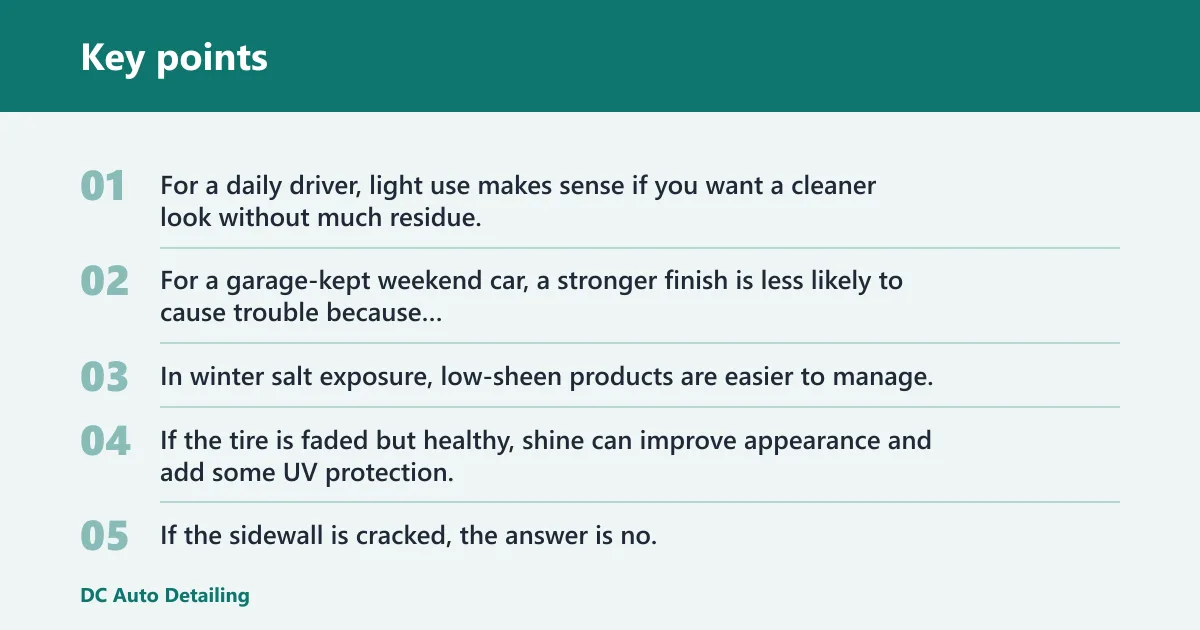
For a daily driver, light use makes sense if you want a cleaner look without much residue. For a garage-kept weekend car, a stronger finish is less likely to cause trouble because the tire sees less weather and less road film. In winter salt exposure, low-sheen products are easier to manage, and you should be stricter about cleaning the sidewall first.
If the tire is faded but healthy, shine can improve appearance and add some UV protection. If the sidewall is cracked, the answer is no. If replacement is already scheduled, skip the dressing and put the effort into cleaning only. That is the clearest sidewall-only decision framework.
Should I use water-based or solvent-based tire dressing?
Use water-based tire dressing in most cases. It is the better default for daily drivers, older but healthy tires, and anyone who wants less sling, less residue, and a more natural finish. Choose solvent-based only when you specifically want a high-gloss look and can control application very carefully.
Best choice by finish
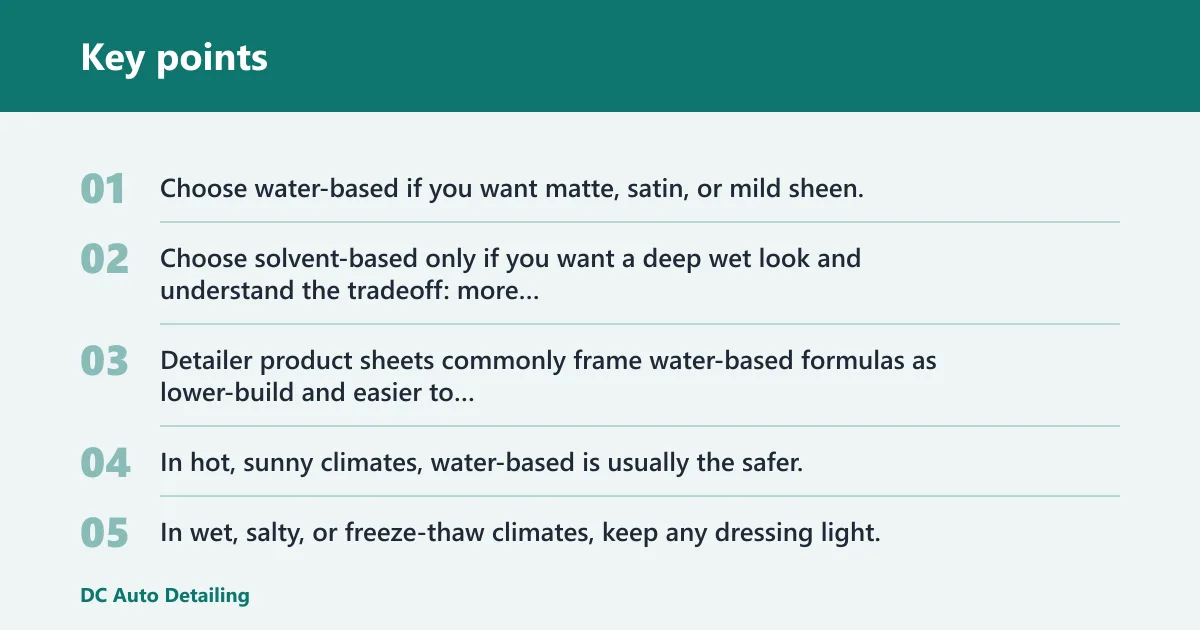
Choose water-based if you want matte, satin, or mild sheen. Choose solvent-based only if you want a deep wet look and understand the tradeoff: more gloss usually means more residue potential. Detailer product sheets commonly frame water-based formulas as lower-build and easier to manage.
Best choice by climate
In hot, sunny climates, water-based is usually the safer, cleaner choice because it is easier to apply thinly and evenly. In wet, salty, or freeze-thaw climates, keep any dressing light. A heavy glossy layer collects more road film and can look dirty faster than a modest finish.
Best choice by tire condition
If the tire is healthy and flexible, either type can work, but water-based still wins for control. If the sidewall is dry, chalky, or beginning to check, do not use dressing to cover it up. The correct move is inspection, cleaning, and replacement planning if needed.
Quick chooser
If you want low sling, choose water-based. If you want the least residue, choose water-based. If you want maximum gloss, solvent-based may deliver it, but only on a healthy tire and only with careful wipe-down. If the tire is cracked or near replacement, skip dressing entirely.
Can tire shine protect rubber?
Yes, some modern dressings can help protect rubber from UV exposure and surface weathering. That can reduce fading and may help slow the dry, chalky look that sunlight creates. It is a limited benefit, though, and it does not fix structural problems or stop a tire from aging. Manufacturer care guidance still treats cleaning and inspection as the real maintenance basics.
UV protection and weathering resistance
UV protection is useful because sun exposure is one of the main reasons sidewalls fade. A protective dressing can slow that surface wear, especially on vehicles parked outside. It is a maintenance aid, not a cure, and it should be viewed as appearance care rather than a replacement for tire care guidance from the manufacturer.
What protection can and cannot do
Tire shine can help reduce the look of weathering, but it cannot repair cracks, bulges, or worn tread. It cannot restore rubber thickness. It cannot make an unsafe tire safe. If the tire already has visible damage, inspect or replace it first, then consider appearance products only if the tire passes that check.
Why healthy tires matter first
Healthy rubber accepts dressing better and is less likely to show harmful side effects. On a tired sidewall with cracking, dressing can hide the condition long enough for a bad decision. That is why tire condition comes before appearance, and why USTMA-style tire care guidance consistently starts with inspection rather than cosmetic treatment.
Start with a clean, dry sidewall. Use a foam applicator pad, not a heavy spray, so you can control the product and keep it off the tread. TireAdvise recommends a foam applicator instead of a spray, a thin, even coat, and not driving immediately after application. That matches most manufacturer instructions for controlled use.
- Wash the tire sidewall and let it dry fully.
- Check the sidewall for cracks, bulges, or cuts.
- Put a small amount of dressing on a foam applicator pad.
- Spread a thin, even coat on the sidewall only.
- Wipe away excess product before it has a chance to sling.
- Let the dressing dry to the touch before driving.
If overspray reaches the tread, clean it off before the car moves. That matters because the tread is traction-critical. The same is true for brake parts, wheel faces, and painted panels near the tire. Residue on those surfaces can look bad and create cleanup work.
Say your compact sedan has 205/55R16 tires and you want a low-gloss finish for a weekly wash routine. A thin coat of water-based dressing on the sidewall gives the look you want without flooding the tread or leaving a slick film. The difference is control, not volume.
The same source suggests applying dressing every 2–4 weeks. That is a reasonable starting point for many drivers. In dusty or rainy conditions, or with a higher-gloss product, you may need less frequent application because buildup and sling become more likely.
When should you skip tire shine?
Skip tire shine when the tire is damaged, when the tread has been contaminated, or when the tire is close to replacement. A cosmetic product should never distract from a safety issue. If the tire is unsafe, the correct move is inspection or replacement, not dressing.
Cracked or damaged sidewalls
Do not dress a sidewall with visible cracking, cuts, bulges, or deep dry rot. Tire shine cannot repair those problems. It can hide them for a short time, which is worse because it delays action. If the rubber is compromised, tire maintenance guidance points to replacement, not shine.
Tread contamination or overspray
Never apply dressing to the tread. If product lands there, clean it off. The same applies to brake parts and wheel hardware. The tire sidewall is the proper target, and the tread must stay free of dressings and oily residue.
Replacement week and winter salt exposure
Skip tire shine if the tires are being replaced soon. That is usually a wasted step. In heavy winter salt exposure, keep the finish modest and the application light. Extra gloss is not worth extra residue in slush, grit, and road film, especially when manufacturer care guidance already emphasizes cleaning and inspection.
The same source lists a time estimate of 10-20 minutes for tire shine use. That is enough time to clean, apply, and wipe down carefully if you are using a controlled method. If you rush the process, sling and uneven finish become more likely.
Frequently asked questions
Is tire shine bad for tires over time?
Not necessarily. A rubber-safe water-based dressing used lightly on a clean sidewall is fine. Problems show up over time when the product is solvent-heavy, applied too often, or left on a damaged tire. Repeated overapplication can also leave residue that pulls in dust, so the key is light, controlled use.
Can tire shine cause tires to crack or dry rot?
It can contribute to those problems if the wrong formula is used or if an already damaged tire is dressed and ignored. Older solvent-heavy dressings had a worse reputation for this reason. A modern water-based product is the safer choice, but it still cannot protect a neglected tire forever. Inspection and storage conditions matter more.
What type of tire shine is safest for rubber?
Water-based tire dressing is the safest default. Look for a product labeled safe for rubber or tire sidewalls, and prefer one that leaves a matte to satin finish if you want less residue. That choice is easier to control and less likely to sling, which is why many detailing manufacturers steer buyers that way.
Does tire shine make tires slippery or unsafe to drive on?
It can, if you overapply it or let it get onto the tread. The sidewall should be dry to the touch before driving. A thin coat on the sidewall is different from wet overspray, greasy runoff, or dressing that reaches braking or traction surfaces. Follow the label, then wipe excess before moving the car.
How often should I apply tire shine without damaging the tires?
A common rule of thumb is every 2–4 weeks, with less frequent use if the product is glossy or the car sees heavy rain, salt, or dust. If the tire already looks oily or collects dust quickly, wait longer and use less product next time. The right interval is the one that avoids buildup.
How do I apply tire shine so it does not sling?
Clean and dry the sidewall, use a foam applicator pad, and apply a thin, even coat. Wipe off excess before driving. Avoid spraying directly onto the tire if you want more control. Let it dry to the touch first, then check for runoff before you move the car.
What should I avoid getting tire shine on?
Avoid the tread, brake parts, wheel faces, and painted body panels near the tire. If the product reaches the tread, clean it off right away. White-letter tires also deserve care, because some dressings can stain the raised lettering or leave dark streaks in the grooves. The safest practice is sidewall-only application.