How to remove carpet stains in a car step by step
Remove car carpet stains by matching the stain type first, then blotting, using the least-wet cleaner that still works, and drying the area quickly so the stain does not wick back up. Done badly, carpet can ring, smell, or keep reappearing after it seems gone. This guide gives a stain-by-stain decision path for coffee, mud, grease, salt, food, and dye marks, with steps to avoid over-wetting and repeat stains.
What you’ll need
- Vacuum with a brush attachment, or a handheld, wet-dry, or shop vac emptied before use
- Soft-bristle brush
- Microfiber towels or clean cloths
- Upholstery-safe carpet cleaner labeled for car carpet or fabric
- White vinegar
- Baking soda
- Hydrogen peroxide
- Clean water
- Spray bottle
- Optional: wet-dry vacuum for extraction
Which stain do you have?
Start by matching the stain to its residue type. Sugar-based spills like soda behave differently from oily grease, mineral salt, or protein stains such as blood, and the wrong cleaner can spread the mark or leave a ring. If you are unsure, treat it like a mystery stain and begin with the least-wet method first.
Coffee or soda
These are usually sugary or tannin-based. A mild upholstery-safe cleaner or diluted white vinegar mix is often a better first move than a strong degreaser.
Mud or road grime
Let heavy grit dry first, then vacuum it away. Wetting mud too early can drive soil deeper into the fibers.
Grease or oily residue
Start with an absorbent step. Baking soda can help lift oil before any liquid cleaner goes on.
Blood or other protein stain
Cold water and a protein-safe cleaner are the safest starting point. Hydrogen peroxide is commonly used for blood stains in home carpet guides, but only after a spot test on hidden carpet.
Salt or winter residue
These are mineral-based. Light moisture and blotting matter more than scrubbing, because dried salt can crust inside the fibers.
Mystery stain
Begin with vacuuming and a barely damp towel. If it resists, move to a mild carpet cleaner before trying vinegar, peroxide, or ammonia-based methods.
Car carpet stain response table
| Stain type | Safest first move | Cleaner type | Dwell time range | When to blot, extract, or dry |
|---|---|---|---|---|
| Coffee | Blot with a dry microfiber towel | Upholstery-safe carpet cleaner or diluted white vinegar mix | 3 to 5 minutes | Stop when the transfer to the towel slows, then blot and dry |
| Soda | Blot sticky liquid before it sets | Upholstery-safe carpet cleaner or mild soap solution | 2 to 4 minutes | Blot as soon as the surface lift stops; do not flood the pad |
| Mud | Let dry, then vacuum loose soil | Carpet cleaner after dry soil is removed | 3 to 5 minutes | Extract once the remaining haze loosens; dry fully before a second pass |
| Grease | Cover with baking soda first | Baking soda, then upholstery-safe cleaner | 10 to 15 minutes for absorbent stage | Stop when powder no longer darkens; vacuum, then lightly blot |
| Blood | Blot with cold water only | Hydrogen peroxide on hidden-test area first | 10 to 15 minutes | Blot, then rinse with clean water and blot again |
| Salt | Dry brush or vacuum crust first | Light water or cleaner made for upholstery | 2 to 5 minutes | Blot before the backing gets wet; repeat only after drying |
| Mystery stain | Vacuum first, then test a small hidden spot | Mild upholstery-safe cleaner | 3 to 5 minutes | Stop at first sign of transfer improvement; extract instead of re-wetting |
Work from dry cleanup to spot treatment, then extract and dry. Car carpet is a fiber-backed automotive floor covering, so the foam backing can hold moisture after the surface looks clean. That is why the safest method uses the least liquid that still lifts the stain.
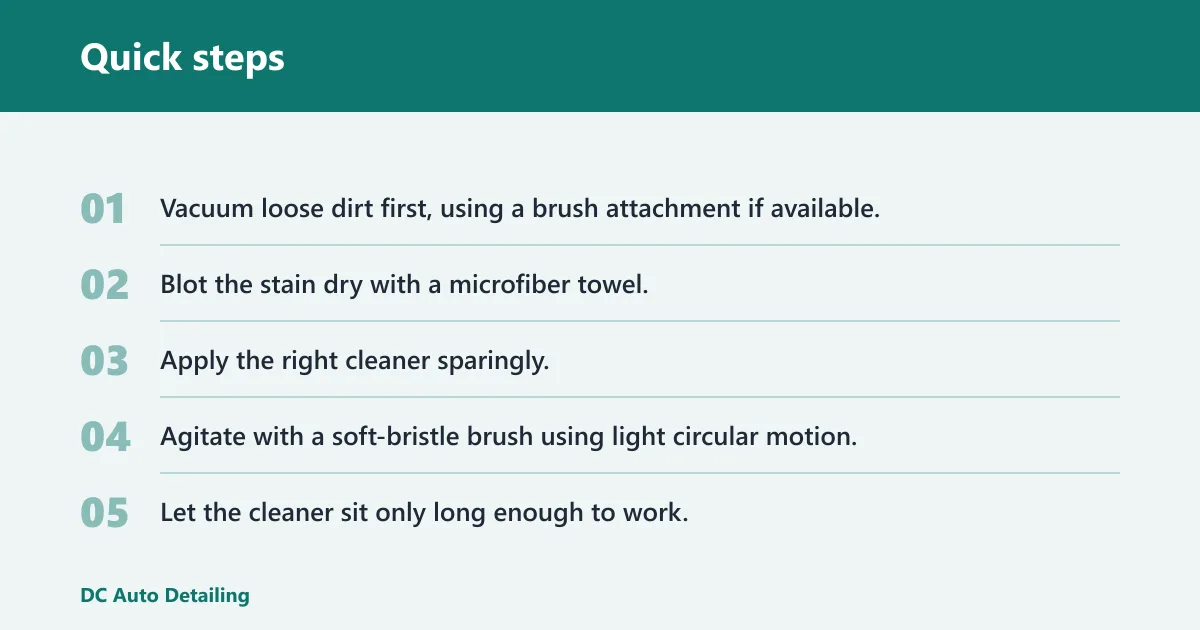
- Vacuum loose dirt first, using a brush attachment if available. Empty the vacuum before use so suction stays strong.
- Blot the stain dry with a microfiber towel. Press straight down and lift; do not scrub yet.
- Apply the right cleaner sparingly. Use an upholstery-safe carpet cleaner, or the DIY option that fits the stain type.
- Agitate with a soft-bristle brush using light circular motion. Family Handyman recommends a soft bristle brush or cloth rag, and wikiHow advises not to scrub the stain. (Wikihow)
- Let the cleaner sit only long enough to work. Family Handyman says to let carpet cleaner sit for a few minutes, and wikiHow says to allow solution to soak for 10 minutes or follow the label directions.
- Blot or extract the residue. Stop when the towel picks up very little color, then move to drying instead of adding more liquid.
Say your muddy footprint stain is about the size of a shoe and still fresh. One light application of cleaner and a few passes with a towel may be enough. If the carpet turns darker after drying, that is a clue the pad is still wet and the stain may wick back up.
How do you treat old or set-in stains?
Old stains need a slower approach because the residue has usually bonded to the fibers or moved into the backing. Start by removing dry soil, then use a lighter cleaner first. If the mark is still visible after drying, repeat only the spot treatment, not a full soak.
Start with dry soil removal
Vacuum thoroughly, then brush loose grit out of the fibers before any liquid touches the carpet. Mud, road salt, and dried food all respond better once the loose layer is gone.
Use the least wet method first
For old coffee, soda, or food marks, apply a small amount of cleaner and wait the label time. If you need a DIY mix, white vinegar with water is a common option for some stains, while baking soda is better for oily residue or odor-related cleanup.
Repeat only after drying
If the stain fades but a shadow remains, let the area dry fully before a second pass. A common first-timer mistake is adding more liquid too soon, which pushes residue deeper into the backing and makes the ring return.
Escalate to extraction if residue remains
If the towel keeps pulling up dirt after two light rounds, use a wet-dry vacuum or another extraction method instead of adding more spray. That is especially useful on deep carpet pile, where surface blotting can leave residue behind.
Suppose an older soda stain looks gone while wet but returns as a pale ring the next day. That usually means the spill moved upward while drying. The next move should be a light extraction pass, not a stronger cleaner.
Can I use vinegar or baking soda on car carpet stains?
Yes, but only when the stain type fits the method. White vinegar can help with some food and drink residue when mixed with water, and baking soda can help with oily stains or odor control. Neither one should be used as a flood treatment, because excess liquid can soak the foam backing and create a new ring.
Use vinegar for drink or food residue
Mix white vinegar with water in a spray bottle and apply lightly to the stained area. Some DIY recipes also pair vinegar with a little dish soap or club soda, but the goal stays the same: dampen the fibers, not the backing.
Use baking soda for grease or odor
Cover greasy spots with baking soda, let it sit, then vacuum it away before any liquid cleaner goes on. Baking soda can also be used with vinegar in odor-related DIY methods, but that combination should stay controlled and brief.
Leave both out when the stain is protein-based
Blood and similar stains respond better to cold water and hydrogen peroxide than to vinegar or baking soda. Jillee’s guide gives hydrogen peroxide a ten to 15 minute dwell time for blood stains, followed by blotting and a water rinse.
Why do car carpet stains come back after cleaning?
They come back when moisture carries residue upward as the carpet dries. That wicking effect is common in car carpet because the visible fibers sit on top of a foam or padded backing. Over-wetting, leftover cleaner, and aggressive scrubbing can all make the stain reappear.
Wicking from the backing
When liquid reaches the pad, it can bring dissolved dirt back to the top. The stain then shows up again as the carpet dries, often lighter than before but still visible.
Too much liquid in the pad
Flooding the area seems effective at first, but it extends drying time and raises the risk of mold and mildew growth. Family Handyman warns that over-saturating can cause mold and mildew growth.
Residue left behind after wiping
If cleaner is left in the fibers, dust and soil stick to it later. That creates a fresh-looking spot even when the original stain is mostly gone.
Stain spread during scrubbing
Hard scrubbing spreads the edges and can push the stain wider. Use a soft-bristle brush and light pressure only, then blot clean before the area dries.
What’s the safest way to dry car carpet after stain removal?
Drying is part of stain removal, not an afterthought. Car carpet can trap moisture in the foam backing, so you need enough airflow and blotting to remove hidden dampness before mats go back in. Warm, dry weather helps, but the area still needs physical drying first.
Blot before airflow
Press clean towels into the spot until they stop pulling up moisture. Change towels as soon as they become damp.
Open the area to moving air
Leave doors open in dry weather, or use fans to move air across the carpet. If the floor is still cool or damp to the touch, do not reinstall mats yet.
Check the backing before stopping
Press a dry towel into the carpet and feel for hidden dampness below the surface. If the towel picks up moisture after a few minutes, keep drying instead of adding more cleaner.
Prevent recurrence
If possible, do the cleaning when the weather is warm and dry. That shortens the drying window and lowers the chance of mold, mildew, or repeat staining.
Common mistakes
The main failure points are simple: too much liquid, too much force, and too little drying. Avoid those three and most car carpet stains become manageable without creating a second problem.
- Over-wetting the carpet: Use spray, not soaking. Stop once the stain lifts enough for blotting or extraction.
- Scrubbing too hard: Use a soft-bristle brush and light circular motion. Hard scrubbing spreads residue and frays fibers.
- Skipping drying time: Let the carpet dry fully before use. Hidden moisture in the backing is what drives wicking.
- Using the wrong cleaner: Match the stain chemistry when possible. Oil, sugar, protein, and minerals do not all respond the same way.
- Re-wetting too soon: If a spot still looks dark after cleaning, dry it first. Then decide whether a second round is needed.
Picture a winter floor mat with white salt crust along the heel area. Vacuuming and a light wipe may remove the top layer, but if you immediately soak the area, the dissolved salt can move into the pad and leave a larger pale ring after drying.
Frequently asked questions
How do I remove carpet stains in a car step by step?
Vacuum first, blot the stain dry, apply the right cleaner sparingly, agitate with a soft brush, then blot or extract the residue. Finish by drying the carpet fully before reinstalling mats. The order matters because it reduces wicking and keeps moisture out of the backing.
What should I use to clean car carpet stains without soaking it?
Use an upholstery-safe carpet cleaner in a light spray, or a carefully diluted DIY mix for the right stain type. Apply only enough to dampen the fibers, then blot with a microfiber towel. A wet-dry vacuum helps if the stain is already deep in the pile.
How do I get old stains out of car carpet?
Start with dry soil removal, then use a light cleaner and give it time to work. If the stain is still visible after drying, repeat the spot treatment once before moving to extraction. Old stains often need two gentle passes rather than one heavy soak.
How long should carpet cleaner sit on car carpet stains?
Family Handyman says to let carpet cleaner sit for a few minutes, while wikiHow says to allow solution to soak for 10 minutes or follow the label directions. Use the shorter end for fresh stains and the label time for tougher spots, then blot or extract.