What is brake dust and why does it stick to wheels?
Brake dust is pad material, rotor wear, and tiny metal particles made by braking heat. It sticks because wheel surfaces hold static, oil, and rough texture. Heavy buildup, or one wheel dusting far more than the others, can point to a brake issue. Ignoring it can etch clear coat, stain wheels, and hide a worn pad or dragging caliper. This guide explains what brake dust is, why it bonds to wheels, and when it points to trouble.
What brake dust
Brake dust is fine particulate from brake wear. It often shows up first on front wheels because the front brakes do more work during stopping, so they may shed more material into the air stream and onto the wheel face, spokes, and barrel. That black film is usually a mix of pad residue, rotor wear, and road grime.
How pad wear creates fine particulate
Every stop removes a little material from the brake pad. Harder stops and higher brake temperatures make more debris. Pad compound matters here. Low-dust ceramic formulations are commonly chosen when reduced residue matters, while other compounds may leave more visible black dust.
Why rotors add to the residue
Rotors do not stay clean during braking. Heat and friction can shed tiny particles from the rotor surface and add them to the dust layer already coming from the pad. More frequent or aggressive braking raises the amount of debris that reaches the wheel.
Why front wheels collect more than rear wheels
Front wheels typically collect brake dust faster than rear wheels because front brakes handle a larger share of stopping force on most cars. That does not make rear dust impossible, but a heavily soiled front pair with cleaner rear wheels is often considered normal. Dust concentrated on one wheel, however, is a different pattern that can point to a brake issue.
Why does brake dust stick to wheels?
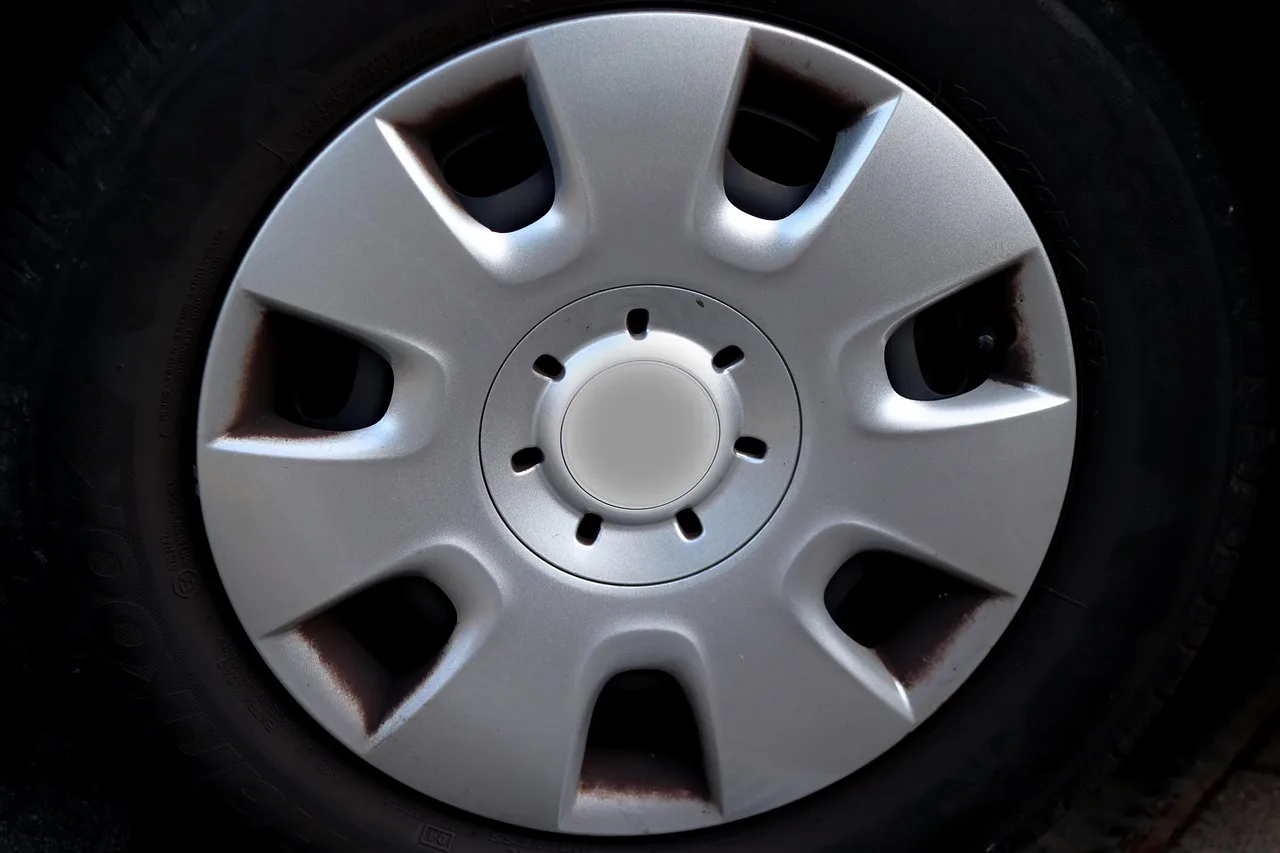
Brake dust sticks because the particles are hot, fine, and abrasive when they land. They can embed in wheel clear coat, settle into pores or texture, and mix with road film. Once that happens, a simple rinse often leaves behind a dull gray or black stain instead of clean metal or paint.
Heat softens the residue and helps it bond
Fresh brake dust is easier to move. After repeated braking, heat can bake the residue onto the wheel surface. That is why a wheel that looks dusty after a commute can turn into a stained wheel after a long drive, wet weather, or a few days of neglect.
How clear coat and wheel texture trap particles
Wheel clear coat protects painted or coated wheels, but it is still a surface that can hold grime. If dust is left in place, it can stain or damage the finish and change what cleaners are safe to use. Textured finishes, spoke edges, lug recesses, and the barrel also trap particles where a rinse cannot reach well.
Why black dust can become a brown or gray film
Brake dust often looks black, sticky, and oily because it mixes with road film and moisture. On some wheels, the color shifts to brown or gray as the residue ages or is partially cleaned. That change is common, but a hard, baked-on layer that returns fast deserves a closer look.
What causes brake dust on wheels?
Pad compound, brake heat, and rotor wear are the main drivers. Some vehicles make much more dust because the pad material sheds more visible residue, the brakes run hotter, or the rotor transfer layer is unstable. Driving style changes the result too, because repeated hard stops generate more particulate than gentle braking.
Pad compound and dust output
Brake pad material affects dust output. A softer or more aggressive compound can stop well and still leave more residue on the wheels. Low-dust ceramic pads are often chosen when keeping wheels cleaner matters, but pad choice should still match the vehicle and braking demands.
Driving style and braking heat
Frequent hard braking, steep downhill driving, towing, and stop-and-go traffic all increase brake heat. More heat means more material shed from the pad and rotor, which means more visible dust. A calm driving style will not eliminate dust, but it can reduce how fast it builds up.
Rotor wear and transfer layer buildup
Rotors contribute to dust when they wear, but they can also make dust worse if the transfer layer becomes uneven. That can create more noise, more vibration, and more debris. If the wheel dust pattern changes at the same time as pulse or shudder under braking, the rotor deserves attention.
Say your compact sedan leaves dark dust on the front wheels after a week of short trips, while the rear wheels stay much cleaner. That pattern fits normal brake use. If the left front wheel is the only one that turns black in two days, the pattern is not normal and should point toward hardware on that corner.
Brake dust diagnostic table
This table separates common buildup from patterns that point to a brake problem. The inspection trigger column helps you decide what to check first.
| Symptom | Likely cause | Inspection trigger | Next step |
|---|---|---|---|
| Normal front-wheel dust | Front brakes do more work, so they shed more pad and rotor residue | None if dust is even on both front wheels and braking feels normal | Clean routinely and consider lower-dust pads at the next brake service |
| Dust on one wheel only | Uneven brake drag, sticking hardware, or a caliper problem on that corner | Seized caliper or sticking slide pins | Inspect that brake assembly before more driving |
| Baked-on brown or black film | Heat has baked dust into clear coat or wheel texture | Rotor issue if the wheel also shows brake pulsation, noise, or uneven wear | Use a cleaner that matches the wheel finish and a brush, then inspect brake parts if the film returns |
| Dust that returns within days | Excessive pad wear, dragging pads, or heat from a brake that is not releasing fully | Worn pads, sticking slide pins, or seized caliper | Check pad thickness, hardware movement, and wheel temperature after a short drive |
What brake dust can tell you about brake health
Brake dust can be cosmetic, but it can also be a warning sign. Even dust on both front wheels is often normal. Dust that appears on one wheel only, returns in a few days, or shows up with heat, smell, or pull under braking can point to a sticking caliper, dragging pads, or rotor trouble.
Seized caliper warning signs
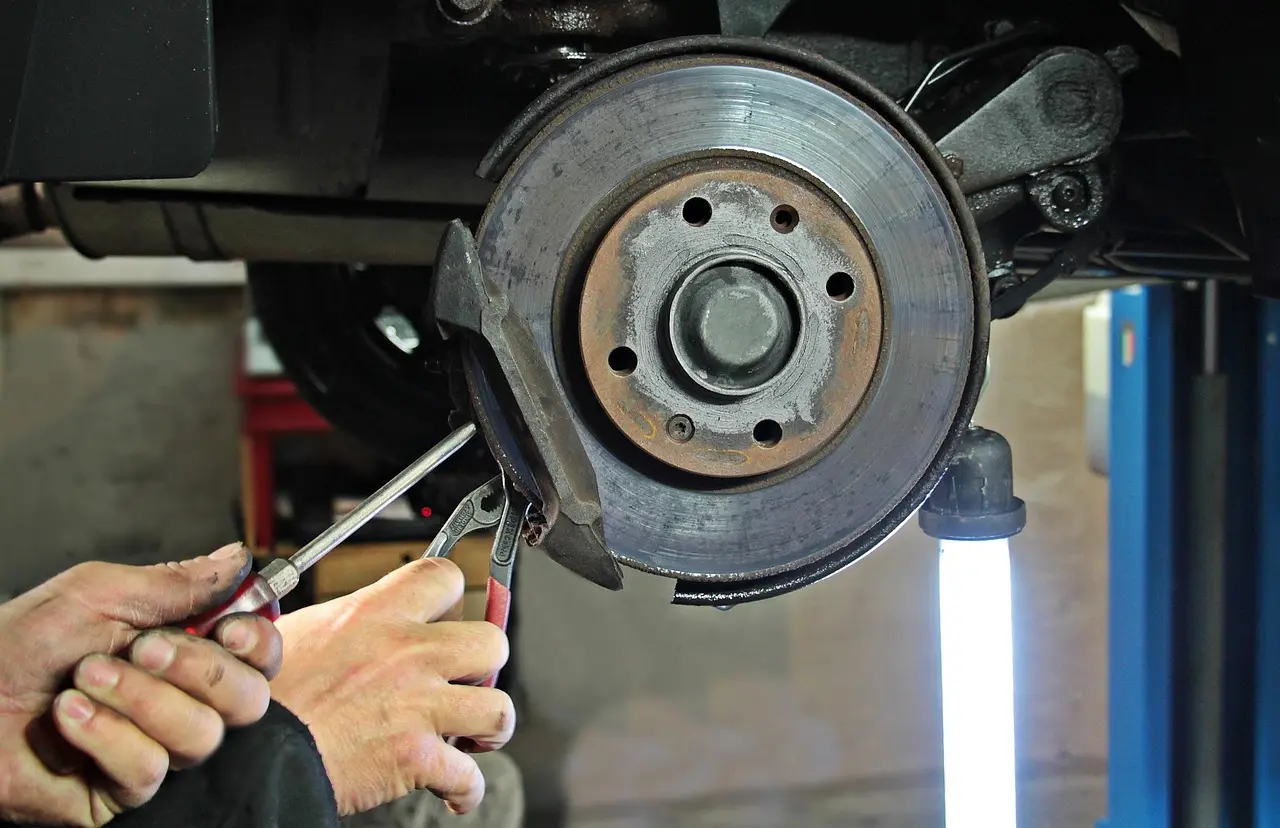
A seized caliper can keep a pad pressing against the rotor after you release the pedal. That creates extra heat and a heavy dust pattern on one wheel. Other signs can include a hot wheel, burning smell, reduced fuel economy, or a car that pulls to one side.
Sticking slide pins and dragging pads
Slide pins let the caliper move evenly. If they stick, one pad can drag more than the other, which adds dust and heat on that corner. Dust that keeps building on one wheel after a good cleaning is a clue that the hardware may not be moving freely.
Rotor issues that add abnormal dust
Rotor problems can make the brake system shed more debris. Uneven rotor wear, heavy rust on the friction surface, or transfer layer problems can all increase particulate output. If dust is paired with vibration, noise, or a changed pedal feel, the rotor system needs inspection, not just a cleaner.
Wheel cleaning products are useful against brake dust and other grime, but they are not all the same. Match the wheel cleaner to the wheel material and finish. A common workflow is spray, scrub, and rinse. Stubborn buildup usually needs scrubbing, not only spraying.
Match wheel cleaner to the finish
Some wheel cleaners work best only on certain wheel materials, so read compatibility guidance before spraying. That matters even more on aftermarket wheels, which may have finishes that react differently. CNET lists Sonax Wheel Cleaner Plus as its best wheel cleaner overall, Chemical Guys Diablo Gel Wheel Cleaner as its best cleaner for aftermarket wheels, Car Guys Wheel Cleaner as its best wheel cleaner for Plasti-Dip, and Turtle Wax All Wheel and Tire Cleaner as its best cheap wheel cleaner.
Use a wheel brush for spokes and barrel
A wheel brush helps agitate stubborn grime and reach spokes, lug areas, and the barrel where loosened dust stays behind. The HMPLL Car Wheel Brush Set is CNET’s bonus wheel cleaning kit. A brush matters because a spray alone often lifts only the surface film.
Rinse thoroughly and use a pressure washer with care
Rinsing thoroughly matters after cleaning. The same source recommends separating wheel cleaning water from car-wash water, and it notes that high-pressure water can blast brake dust and dirt off wheels. A pressure washer can help after the cleaner has loosened debris, but delicate finishes and aftermarket wheels need care.
Suppose a five-spoke aftermarket wheel has a matte black finish and heavy dust in the barrel. Start with a cleaner that matches the wheel finish, agitate with a soft wheel brush, then rinse. Do not rely on pressure alone, because the residue can stay bonded in spoke corners and can be harder to remove after drying.
The best way to reduce brake dust is to cut the source, protect the surface, and clean before buildup hardens. Low-dust brake pads can help when replacement is due. Wheel coatings and intact clear coat also make cleaning easier because dust has less chance to bond and stain.
Choose low-dust brake pads when replacement is due
Pad choice affects residue. If your priority is cleaner wheels, low-dust ceramic pads are commonly recommended when they fit the vehicle and driving needs. That change will not remove all dust, but it can reduce the amount that lands on the wheel surface in the first place.
Keep wheel coatings and clear coat protected
Wheel clear coat is the wheel’s first barrier against staining. Once dust sits too long, it can damage that finish and make future cleaning harder. Regular washing, prompt drying, and a compatible protective product can help the wheel release dust more easily later.
Check aftermarket wheel compatibility before choosing cleaners
Aftermarket wheels may need cleaner compatibility checks because finishes vary. A product that is fine on one coated wheel can dull or discolor another. The same source notes that some wheel cleaners work best only on certain wheel materials, so the label matters as much as the cleaner name.
- Inspect the dust pattern first. Even front-wheel buildup is usually normal; one-wheel buildup is not.
- Choose a wheel cleaner matched to the wheel finish.
- Spray the cleaner and let it work within the label directions.
- Agitate with a wheel brush, especially around spokes, lug holes, and the barrel.
- Rinse thoroughly, then use pressure carefully only after the residue has loosened.
- If dust returns quickly on the same wheel, inspect the brake hardware.
Frequently asked questions
What causes brake dust on tire rims?
Brake dust lands on the rim because the wheel sits close to the brake assembly, and air movement carries hot particles outward. The dust can cling to clear coat, texture, and pores in the finish. If it is left too long, it can become a stained film that needs scrubbing.
What causes excessive brake dust?
Excessive brake dust often comes from aggressive pad compounds, frequent hard braking, or extra heat from rotors that are wearing unevenly. It can also point to a brake that is dragging. If one wheel dusts much faster than the others, inspect that corner for a hardware problem.
What causes brakes to stick?
Brakes can stick when slide pins seize, a caliper piston does not retract normally, or pad hardware binds in its brackets. That leaves the pad in contact with the rotor after braking, which creates heat and heavy dust on one wheel. A hot wheel or burning smell makes the issue more likely.