Cigarette smell in car: How to remove it for good
Cigarette smell in a car comes out for good only when you clean every smoke-contact surface, replace the cabin air filter, and treat the HVAC. If the odor returns within about 48 hours with the windows closed, residue likely still remains. Miss one reservoir and the smell keeps coming back, hurting resale value and making the cabin unpleasant for passengers. This guide shows where smoke odor hides, what to clean first, and when DIY methods stop working.
Where cigarette smell hides in a car
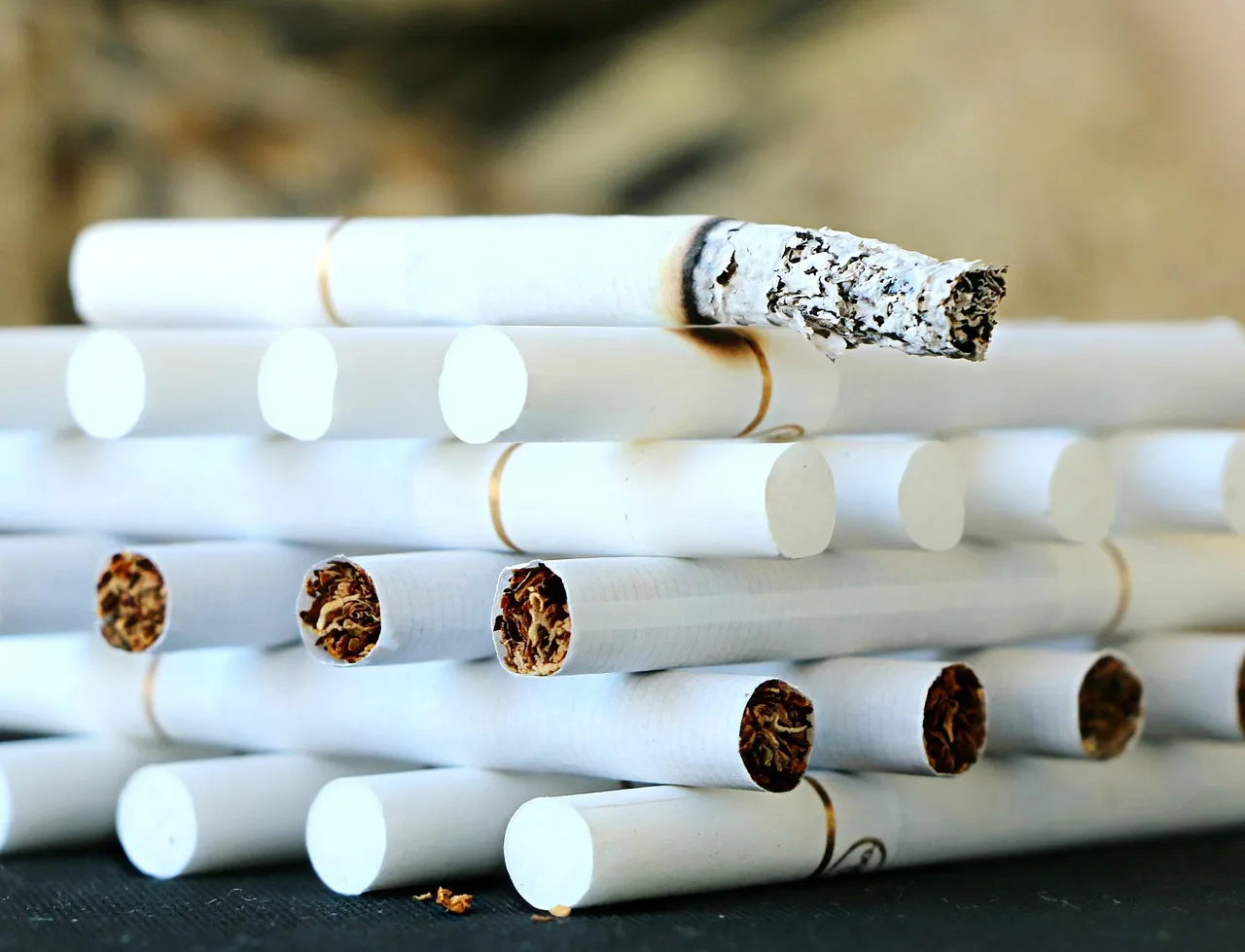
Cigarette odor is residue, not just stale air. It can include tar, nicotine, ash, and fine particles that cling to fabric, foam, plastic, glass, and HVAC surfaces. Research on thirdhand smoke shows that smoke pollutants settle onto indoor surfaces and dust rather than disappearing once the visible smoke clears, which is why a closed car can keep smelling long after smoking stops.
Smoke residue on glass, plastic, and trim
Interior glass often carries a thin smoke film. Dash panels, door panels, the steering column, center console, and hard trim also collect residue. Thirdhand-smoke research has documented nicotine and related residues on indoor surfaces, and those same deposition patterns apply to enclosed vehicle interiors where smoke repeatedly contacts glass and plastic.
These surfaces may smell weaker than cloth at first, but they still release odor into the cabin. Glass matters more than many owners expect because the film is easy to miss, and visible haze on the inside of the windshield is a strong sign that smoke residue remains.
Odor trapped in fabric, foam, carpet, and mats
Soft materials usually hold the longest-lasting contamination. Smoke particles settle into fabric fibers, seat-belt webbing, carpet pile, floor mats, and the foam beneath seat upholstery. The visible seat fabric may look clean while the deeper foam still releases odor after the car sits closed.
Floor mats, under-seat carpet, trunk carpeting, and seat tracks are often missed. Vacuuming cloth seats and floor mats first is a sound starting point because ash and loose debris keep feeding odor back into the cabin if they stay in place.
Why headliners and seat padding keep smell longer
Headliners are common smoke reservoirs because warm smoke rises and contacts the roof first. Their fabric is thin, lightly bonded, and easy to damage. Seat padding also holds odor longer because smoke contamination can move past the visible upholstery into absorbent foam, where a quick surface wipe does very little.
That is why a car can smell fine right after cleaning but smell smoky again the next morning with the doors closed. The surface odor dropped, while the deeper source stayed put.
How the cabin filter and ducts recirculate odor
HVAC contamination follows a different pattern. A cabin air filter is designed to capture incoming particles from outside air and recirculated cabin air, so a smoky filter can hold odor and release it again when air moves through the system. That said, a bad-smelling filter is only one possible source; if odor remains after replacement, the evaporator area, ducts, or interior materials may still be contaminated.
Start diagnosis by comparing four conditions: a cold cabin after sitting closed, the cabin with the blower off, the cabin with the blower on fresh air, and the cabin with recirculation on. If odor gets stronger at the vents when the fan starts, the air path likely needs attention. If it is stronger at the seats, carpet, or headliner with the blower off, the problem sits more in the upholstery.
Why does the smell come back after cleaning?
The smell comes back when cleaning stops at the visible surfaces. Smoke odor often remains in seat foam, carpet backing, trunk carpet, the headliner, the cabin filter, or the ductwork, so the car smells better briefly and then worsens again once the cabin closes up or the HVAC recirculates air.
Surface cleaning versus embedded contamination
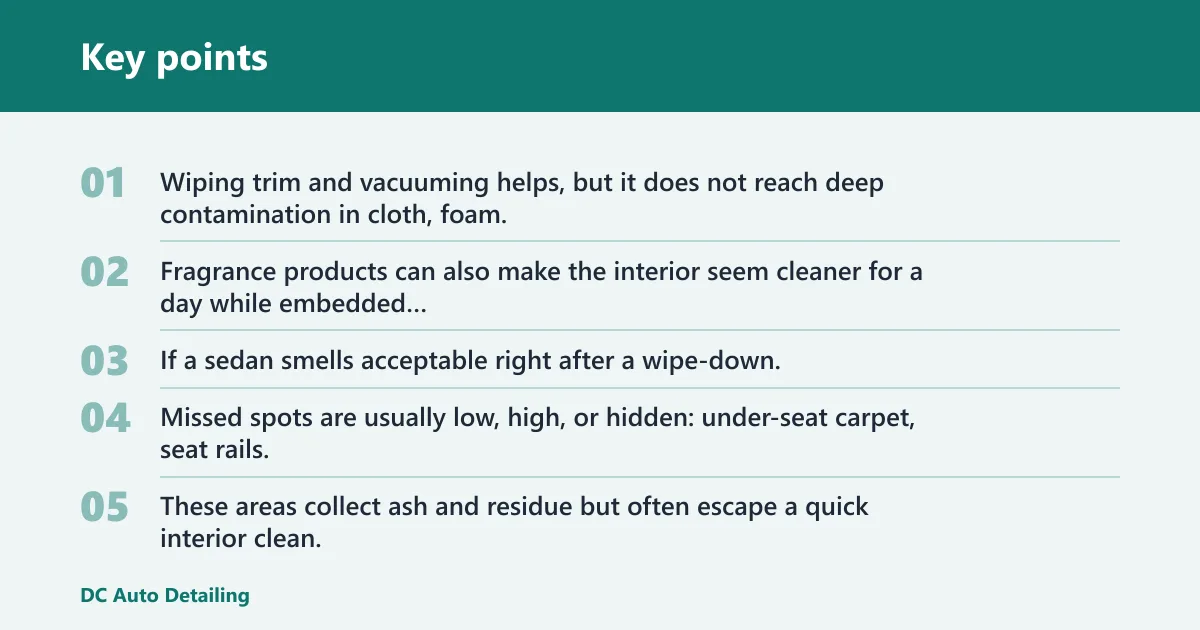
Wiping trim and vacuuming helps, but it does not reach deep contamination in cloth, foam, or backing layers. Fragrance products can also make the interior seem cleaner for a day while embedded residue stays in place.
If a sedan smells acceptable right after a wipe-down, then turns smoky again after one night with the windows up, that pattern points away from simple surface dust and toward retained residue in soft materials or the HVAC path.
Missed reservoirs that keep feeding odor
Missed spots are usually low, high, or hidden: under-seat carpet, seat rails, spare-tire well trim, trunk carpeting, seat-belt webbing, map pockets, and the upper headliner near the visor area. These areas collect ash and residue but often escape a quick interior clean.
Glass is another repeat offender. If the inside of the windshield still shows haze after cleaning, smoke film is still present somewhere in the cabin.
HVAC recirculation and old filters
If the smell is weakest with the car parked and strongest within seconds of turning on the fan, the HVAC is likely involved. Replacing the cabin air filter can cut odor that keeps cycling through the system, especially if the old filter smells smoky or shows ash buildup, but by itself it does not clean upholstery or ducts. Treat the filter as one step in a larger process, not the whole fix.
When fragrance products only hide the problem
Air fresheners add scent to the cabin, but they do not remove tar, nicotine film, or smoke particles from glass, fabric, foam, or ducts. They mask the smell, and sometimes the combined scent is worse than smoke alone. If the cabin smells like perfume at first and stale smoke later, the source was never removed.
What should you clean first in a smoker’s car?
Clean in this order: remove ash and debris, vacuum all soft surfaces, clean interior glass, wipe hard trim with a compatible interior cleaner, then treat seats, carpet, mats, headliner, and finally the cabin filter and HVAC path. This order removes loose contamination before you push moisture or cleaner into it.
Initial prep and ventilation
Open every door and the trunk fully for several minutes so outside air can flush the cabin, including the footwells and trunk area where stale smoke tends to sit. Remove ashtrays, cigarette butts, loose trash, floor mats, and personal items first. If any fan-based step requires the engine running, do not idle in an enclosed garage.
Vacuum before wet cleaning
Vacuum the seats, carpet, mats, seams, seat tracks, under-seat areas, and trunk carpet before applying any liquid cleaner. That sequence matters because loose ash turns into dirty slurry if it gets wet.
Clean glass before fabrics
Interior glass should come early, not late. Smoke film transfers to towels quickly, so use fresh towel sections and keep wiping until the haze is gone. If the towel still turns yellow or brown, residue is still coming off.
Wipe hard surfaces with the right cleaner
Use an interior cleaner that matches the material and follow the owner’s manual where it gives material-specific care. A small-area test is smart before broad use, especially on soft-touch trim, painted interior pieces, and coated leather. Spray the towel, not the electronics, and work panel by panel.
A common mistake is soaking a door-panel switch area or center stack with cleaner. The surface gets wet fast, residue streaks into seams, and the odor remains because the product was spread around instead of lifted off.
- Open the doors and trunk.
- Remove ash, butts, trash, and floor mats.
- Vacuum seats, seams, carpet, seat tracks, under seats, and trunk carpet.
- Clean the inside glass thoroughly.
- Wipe dash, console, door panels, plastic trim, and other hard surfaces.
- Treat fabric, carpet, leather, or synthetic upholstery by material type.
- Clean the headliner gently with low moisture.
- Inspect or replace the cabin air filter.
- Run and assess the HVAC on fresh air and recirculation.
How do you clean each interior material safely?
Each material needs a different method. Fabric and carpet can absorb smoke deep into fibers and foam, leather needs leather-safe cleaning, synthetic trim needs a compatible interior cleaner, and headliners need very light, low-moisture treatment. Over-saturating soft surfaces can extend drying time and increase the risk of mildew, mold, staining, or adhesive failure.
Fabric seats and carpet
Fabric and carpet are the main odor sponges in most smoker cars. Use a low-moisture upholstery or interior fabric cleaner with dwell time so residue can loosen before blotting or extraction. Work in sections, and avoid flooding seams, bolsters, and cushion edges where foam sits directly underneath.
Baking soda can help as a support step. Sprinkle it over dry fabric seats, carpet, and mats, let it sit for hours or overnight, then vacuum it up. It can reduce leftover odor on lightly affected fabric, but it will not remove heavy residue buried in foam.
If a fabric cleaner leaves the material wet enough to stay damp for a long period, back off. Excess moisture inside upholstery and carpet can support microbial growth if materials do not dry fully, which is why low-moisture cleaning is safer than soaking.
Leather and synthetic upholstery
Leather should be cleaned with leather-safe products and a controlled wipe-down, not treated like cloth. The goal is to remove smoke film from the surface and seams without pushing liquid into perforations or stitch holes. Synthetic upholstery also needs a compatible cleaner, because some all-purpose products can leave residue or change the finish.
Test in a small area first where possible. Clean, wipe dry, then reassess after the cabin sits closed.
Headliner cleaning without damage
Headliners need the lightest touch in the car. Use low moisture, light pressure, no scrubbing, and no soaking. Spray product onto a towel, not onto the roof panel, and blot or wipe gently in small sections.
Headliners often retain smoke odor because smoke rises and collects there, but aggressive cleaning can loosen adhesive or distort the fabric. If the headliner still smells after a gentle pass, that does not mean it should be saturated. It means the contamination may be beyond safe DIY treatment.
When steam helps and when it does not
A steam cleaner is useful when odor is embedded in fabric and carpet but the material can still be cleaned with controlled moisture. Heat can help lift particles from fibers, and light follow-up extraction or towel blotting can remove what was loosened.
Steam is a poor choice for a delicate headliner, heavily perforated leather, or any seat and carpet that is already close to saturation. If thick floor carpet still feels damp from a previous shampoo, more steam can drive odor deeper and raise mildew risk instead of fixing the source.
A practical step-by-step cleanup plan
If the odor is lingering after a quick wipe-down, the supporting guide shows the full sequence for removing cigarette smell from a car: clear out debris, vacuum thoroughly, clean hard surfaces, replace the cabin air filter, and escalate to upholstery and HVAC treatment if the smell remains. This matters because cigarette odor often lives in more than one place, so surface cleaning alone can leave the smell coming back when the car heats up or the fan runs.
For the full process and the order that helps prevent repeat odor, see cigarette smell removal steps.
How do you get cigarette smell out of vents and AC?
Smoke odor in vents and AC is best handled by diagnosis first, then filter service, then careful HVAC treatment. If the smell jumps when the fan starts or changes with recirculation, the air path is involved. Do not pour liquid cleaners into vent openings, because that can create additional problems.
How to tell if the odor is in the air path
Use the fan pattern as a clue. With the cabin closed, smell near the seats and carpet before starting the blower. Then switch the fan on low, then medium, first on fresh air and then on recirculation. A strong increase at the vents points to the filter, ducts, or evaporator area.
If the odor remains strongest at the headliner, cushions, or trunk regardless of fan setting, the cabin materials are still the bigger source.
Cabin air filter inspection and replacement
The cabin air filter can trap smoke particles and ash, and replacing it may cut a recirculated smell. Automakers and filter manufacturers consistently describe cabin filters as particle-trapping components rather than odor cures, so replacement can help but is rarely a complete fix if smoke has coated ducts or interior materials.
Safe vent and evaporator-area treatment
Use products intended for automotive HVAC odor treatment and follow label directions. A clear diagnostic sequence helps:
- Check odor in a cold cabin before starting the blower.
- Start the fan on low with fresh-air mode.
- Switch to recirculation and compare the strength and character of the smell.
- Replace the cabin air filter if it smells smoky or shows heavy debris.
- Run the HVAC as directed by the odor-treatment product, then let the interior dry and air out fully.
- Recheck the cabin after it sits closed for several hours.
The goal is to treat the system safely, not flood the ductwork. If the smell shows up only when the blower runs, HVAC treatment moves higher on the list. If it is strong even with the blower off, interior materials still need more attention.
What not to spray or pour into vents
Do not pour household cleaners, diluted soaps, bleach solutions, or excess liquid into vent openings. Do not fog the cabin with random fragrance sprays and assume the ducts are clean. Do not keep repeating wet vent treatments if the carpet, headliner, or seats are still obvious sources. Extra liquid can collect where it should not, leave residue, or create a musty smell that joins the smoke smell.
When should you use steam, charcoal, or ozone?
Use steam for deeper fabric and carpet cleaning when surface cleaning is not enough, use activated charcoal or odor bags only after source cleaning as ongoing support, and reserve ozone for later-stage professional treatment. These methods are not interchangeable because they target different problems.
Steam cleaner
Steam fits moderate soft-surface contamination: cloth seats, carpet, mats, and some fabric door inserts. It works best after vacuuming and wiping hard surfaces, because trapped ash and film should be removed first.
Steam fails when the odor source is mainly in the HVAC, in delicate headliner material, or deep in seat foam that remains contaminated after repeated low-moisture passes.
Activated charcoal and odor bags
Activated charcoal and odor bags absorb odors over time. Use them after source removal, not instead of it. They are helpful as secondary odor control while the cabin finishes drying and airing out, but they cannot pull tar and nicotine out of foam, carpet backing, or vent residue.
Ozone as a later-stage option
Ozone is better treated as a controlled professional odor-treatment step, not a casual first move. It can help when the remaining odor is widespread and persistent after proper cleaning, especially in heavily smoked vehicles.
Ozone also has limits. The U.S. Environmental Protection Agency has warned that ozone does not remove particles or clean soiled surfaces, and that concentrations high enough to affect indoor contaminants can exceed public-health standards for occupied spaces. In practical terms, ozone may reduce odor for a while, but it does not replace cleaning ash, glass film, sticky residue, upholstery, or HVAC components if those still hold the source.
Cigarette smell decision table
Use the table with a few practical signals in mind. Light contamination often means faint odor only after the car sits closed, slight haze on the inside glass, or a smell that is strongest near mats and trim. Moderate contamination usually means obvious odor in cloth seats, smoke smell mainly when the blower turns on, or smell that returns after drying. Severe contamination often means visible haze on glass even after one cleaning pass, odor embedded in the cabin after 48 hours closed, and smoke smell both before startup and from the vents once the HVAC runs.
| Contamination level | Likely odor reservoirs | Best first-step cleaning method | Expected limitations | Exact trigger for professional detailing or ozone treatment |
|---|---|---|---|---|
| Light | Glass film, dash and door trim, floor mats, light residue on fabric surfaces, cabin filter beginning to smell | Ventilate the cabin, remove ash and debris, vacuum seats and mats, clean interior glass, wipe hard surfaces with a compatible interior cleaner, replace cabin air filter if contaminated | May leave faint odor in cloth seams, trunk carpet, or vents; baking soda and charcoal can only support after cleaning | Move to professional help if odor returns within 48 hours with the windows closed after one full cleaning cycle and a filter change |
| Moderate | Fabric seats, carpet, under-seat areas, trunk carpeting, seat-belt webbing, headliner edges, cabin filter, vent path | Complete all light-level steps, then low-moisture fabric cleaning or controlled steam on seats, carpet, and mats; gentle headliner cleaning; HVAC assessment with fan on and off | Steam can miss deep foam contamination; headliner cannot be scrubbed or soaked; filter replacement does not clean ducts by itself | Move to professional detailing if the odor is still obvious from the seats or headliner after the interior dries, or if the fan still blows a clear smoke smell after filter replacement and safe vent treatment |
| Severe | Seat foam, carpet backing, full headliner, trunk liner, heavily contaminated vents and ducts, repeated recirculation odor throughout the cabin | Do basic debris removal and surface cleaning first, then stop short of soaking materials; have the vehicle evaluated for advanced interior detailing and controlled ozone treatment after physical cleaning | DIY wiping, baking soda, and filter replacement will not reach embedded contamination; over-wetting raises mildew, mold, and adhesive-failure risk | Move to professional detailing or controlled ozone treatment immediately if the car smells smoky in a cold closed cabin before the fan is turned on and also intensifies at the vents when HVAC runs |
Why a surface clean rarely solves cigarette odor
If the smell keeps returning after cleaning, the issue is usually embedded smoke residue, not visible dirt. The supporting article explains how cigarette odor gets trapped in upholstery, seams, and the HVAC system, which is why wiping panels or vacuuming alone often leaves the smell behind. It also clarifies which areas are most likely to re-release odor after you park, turn on the fan, or warm up the cabin.
That matters because it helps you focus on the real source instead of repeating the same basic clean. For a deeper breakdown of the causes and the spots that need extra attention, see cigarette smell causes.
How long does it take and when should you stop DIY?
Light smoke odor may improve after one thorough cleaning cycle, while moderate and severe contamination often need repeated passes or professional treatment. Stop DIY when the smell keeps returning after the cabin dries and sits closed, or when the odor pattern points to foam, headliner, or HVAC contamination you cannot safely reach.
What improvement to expect after one full cleaning cycle
After one proper cycle, a lightly affected car should smell cleaner on hard surfaces, glass, and near the floor mats. Moderate cases may still have noticeable odor in cloth cushions, trunk carpet, or when the fan starts. Severe smoker cars often improve, but do not reach acceptable results without escalation.
Signs the odor is beyond basic interior cleaning
DIY has usually reached its limit when the smell returns after the windows stay closed, when the headliner remains smoky after gentle cleaning, when the seat base smells stronger than the surface fabric, or when recirculation pushes smoke odor back into the cabin right away.
When controlled professional treatment makes sense
Professional detailing is warranted when embedded contamination remains in foam, carpet backing, or the HVAC path, or when safe DIY cleaning would require too much moisture for the materials involved. Controlled ozone treatment makes the most sense after physical cleaning has removed as much residue as possible and odor still lingers across the cabin.
Frequently asked questions
How do I remove cigarette smell from my car for good?
Remove ash and debris, vacuum every soft surface, clean interior glass, wipe hard trim, treat fabric or leather by material type, clean the headliner gently, replace the cabin air filter, and assess the HVAC with the blower on and off. If odor returns within 48 hours, residue is still present.
What is the fastest way to get cigarette smell out of a car?
The fastest realistic path is ventilation, debris removal, vacuuming, glass cleaning, hard-surface cleaning, fabric treatment, then cabin air filter replacement and HVAC reassessment. An air freshener works faster in the moment, but it only masks the odor and often leaves a mixed scent instead of solving the source.
Does baking soda actually remove cigarette smell from a car?
Baking soda can reduce lingering odor on dry fabric surfaces and carpet when sprinkled on, left for hours or overnight, and vacuumed up. It works best as a support step after proper cleaning. It does not remove heavy smoke residue embedded in seat foam, headliners, or HVAC components.
How do I get cigarette smell out of car vents and AC?
First confirm the vents are the source by comparing odor with the blower off, then on fresh air and recirculation. Inspect or replace the cabin air filter, use an automotive HVAC odor-treatment product as directed, and never pour liquid cleaners into vent openings. If vent odor persists, professional service is the next step.
Should I use steam cleaning or ozone for cigarette smell in a car?
Use steam for moderate contamination in fabric seats, carpet, and mats when surface cleaning is not enough and the materials can stay only lightly damp. Use ozone later, after physical cleaning, when smoke odor remains widespread or returns from deeper reservoirs such as foam or HVAC contamination.
When is professional detailing necessary for smoke odor removal?
Professional detailing is necessary when the smell remains obvious after a full DIY cycle, returns after the cabin sits closed, stays strongest in the headliner or seat foam, or spikes from the vents after filter replacement and safe HVAC treatment. Those patterns point to contamination deeper than routine wiping and vacuuming can fix.
Sources
- U.S. Environmental Protection Agency (EPA), guidance on ozone generators and indoor air cleaning limitations.
- Centers for Disease Control and Prevention (CDC), information on thirdhand smoke and smoke residue remaining on surfaces.
- California Air Resources Board and related thirdhand-smoke research describing nicotine and smoke pollutants deposited on indoor surfaces and dust.
- Automaker owner’s manuals and cabin-air-filter service guidance describing the cabin filter’s role in trapping particles rather than fully eliminating odor sources.
- EPA and public-health guidance on moisture control and mold risk after over-wetting porous materials.