Rinseless wash vs traditional wash: When is each better?
Rinseless wash is the better fit for lightly dirty, well-kept cars and tight water limits. Traditional washing is safer when the paint carries heavy grime, sand, or salt, and a pre-rinse plus rinseless step is the strongest hybrid for medium soil. Pick the wrong method and you can drag grit across the paint, leaving swirls or missed contamination. This guide shows when to use each method and how to decide fast.
- Visible grit: choose traditional wash if the panels feel sandy or the lower areas carry loose contamination; use rinseless only when the surface is in maintenance range.
- Caked lower panels: choose a hybrid pre-rinse plus rinseless step or full traditional wash when rocker panels, wheel-arch edges, or rear bumpers are loaded.
- Salt crust: choose traditional wash when winter salt is visible or crunchy on the surface.
- Stuck bugs: choose traditional wash when bug splatter is bonded or widespread, especially on the front fascia.
- Hot panels: choose traditional wash or delay the job when direct sun or heat shortens working time.
- Hard water: choose rinseless when hose rinse spotting is a concern, but only if drying can stay controlled.
- Finish compatibility: choose the method only if the product directions allow the finish, including clear coat, ceramic coating, PPF, matte paint, trim, or glass.
| Decision factor | Rinseless wash | traditional wash | Winner |
|---|---|---|---|
| Soil level | Best for light dust through moderate road film. | Safer for heavy dirt, caked mud, salt, and rescue washes. | traditional wash |
| Water use | Uses far less water and can complete a vehicle with 2–3 gallons of mixed solution. | Uses a hose rinse and much more water. | Rinseless wash |
| Risk on dirty panels | Works best when contamination is light enough for lubrication to carry debris away. | More forgiving when panels carry heavier grit. | traditional wash |
| Apartment, HOA, drought, garage use | Fits tight water rules, garage washing, and mobile work. | Often harder to do where hose use is limited. | Rinseless wash |
| Hard-water spotting risk | Lower exposure because there is no hose rinse, though poor mix or drying can still spot. | Higher exposure because hose water can leave minerals on the surface. | Rinseless wash |
| Rescue wash after long interval | Not the right first move if contamination is heavy. | Better starting point for a neglected car. | traditional wash |
How to choose the right wash method
Rinseless wash is a low-water contact wash that cleans without a rinse and depends on diluted concentrate for lubrication. Traditional wash uses a hose rinse and generally gives more margin when the car carries heavier contamination. The split is simple: light to moderate soil favors rinseless; heavy grit, mud, and salt favor traditional.
Soil level decides the method
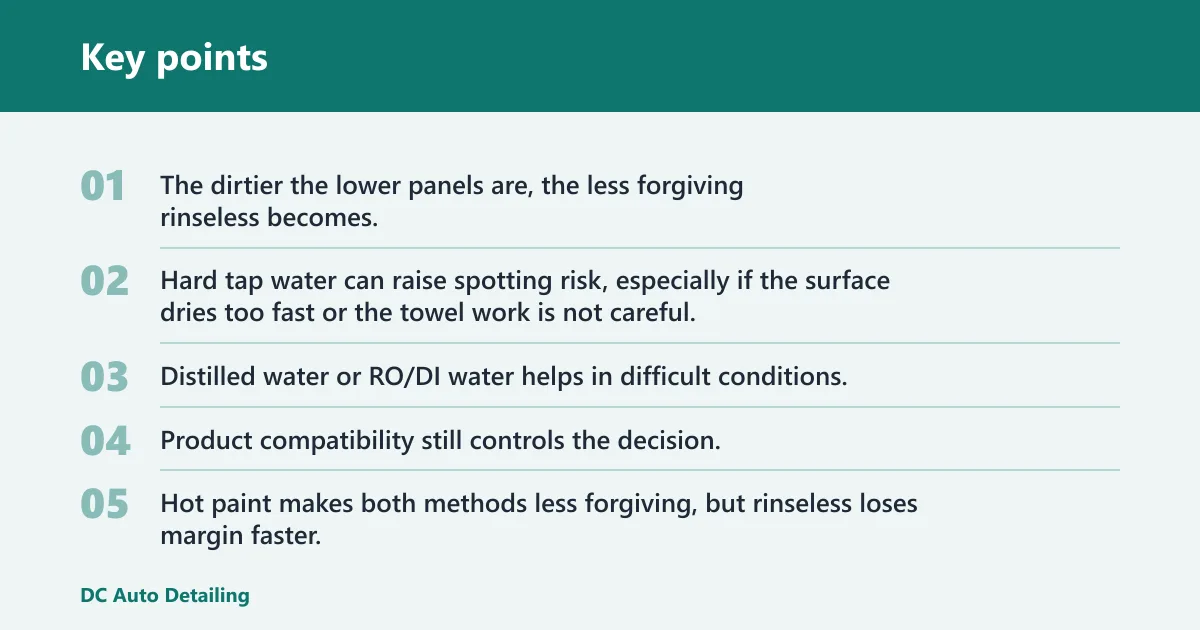
Soil level is the main filter. Rinseless wash usually fits light dust and moderate road film, while caked mud, bug buildup, bird droppings, and winter salt often push the job toward a hose rinse or a full traditional wash. The dirtier the lower panels are, the less forgiving rinseless becomes.
Water quality changes the risk
Hard tap water can raise spotting risk, especially if the surface dries too fast or the towel work is not careful. Rinseless still uses less water than a hose wash, but it does not erase mineral issues if the mix quality or drying is poor. Distilled water or RO/DI water helps in difficult conditions.
Finish type affects the choice
Factory clear coat, ceramic coatings, and PPF can all be cleaned with rinseless products when the product directions allow it. That does not mean every formula is safe for every finish, wrap, matte panel, trim, or glass surface. Product compatibility still controls the decision.
Temperature and sunlight matter
Cool panels and shade are preferred. Direct sun is only a fallback when each panel is finished before it dries, because premature drying increases spotting and leaves less working time. Hot paint makes both methods less forgiving, but rinseless loses margin faster.
Wash decision table
| Vehicle condition | Recommended wash method | Reason | Rinseless go/no-go threshold |
|---|---|---|---|
| Weekly dust on a garage-kept sedan | Rinseless wash | Light dust is within the normal comfort zone for a low-water contact wash. | Go if panels feel only dusty, not gritty. |
| Rain film after two days of commuting | Rinseless wash | Moderate road film is a typical use case when the surface is not loaded with grit. | Go if the lower doors are film-coated, not caked. |
| Winter salt haze on a daily driver | traditional wash | Salt and road grime are safer with a hose rinse before any contact wash. | No-go if salt crystals or crust are visible. |
| Bug splatter on the front fascia | traditional wash | Bug impact marks need more loosening than a straight rinseless pass should handle. | No-go if the residue is stuck hard enough to resist gentle lift. |
| Caked mud on wheel arches and lower doors | traditional wash | Heavy contamination needs a pre-rinse or stronger wash sequence first. | No-go when mud is thick or flaky. |
| Ceramic-coated garage-kept coupe | Rinseless wash | A well-kept coated finish is a strong match for maintenance washing. | Go if the car only carries light dust or light film. |
| Apartment parking with no hose access | Rinseless wash | Apartment rules and no-hose conditions are exactly where the method fits best. | Go if the dirt level stays in maintenance range. |
| Hard-water driveway washing | Rinseless wash | No hose rinse means less mineral exposure, though careful drying still matters. | Go if you can dry panel by panel before spotting starts. |
| Long-neglected car with sand on the lower panels | traditional wash | Rescue washes need more removal power before any contact step. | No-go if loose grit is present. |
| PPF front end after a mild highway week | Rinseless wash | PPF can be maintenance washed when the product is approved and soil is moderate or light. | Go if film is thin and the film edge is not packed with debris. |
| Matte paint with light dust | Rinseless wash | Only if the product directions allow matte use and the finish is in maintenance condition. | Go only with a matte-safe formula and light soil. |
| Hot black paint in direct sun | traditional wash or delay | Heat shortens working time and raises drying risk, so rinseless becomes less forgiving. | No-go unless each panel can be completed immediately. |
When is rinseless wash the better choice?
Rinseless wash is the better choice when the car is in maintenance condition: light dust, light road film, or a clean finish that only needs routine care. It also wins when water access is limited, when the car lives in an apartment or under HOA rules, and when the goal is to clean safely with less water use.
Light dust and weekly maintenance
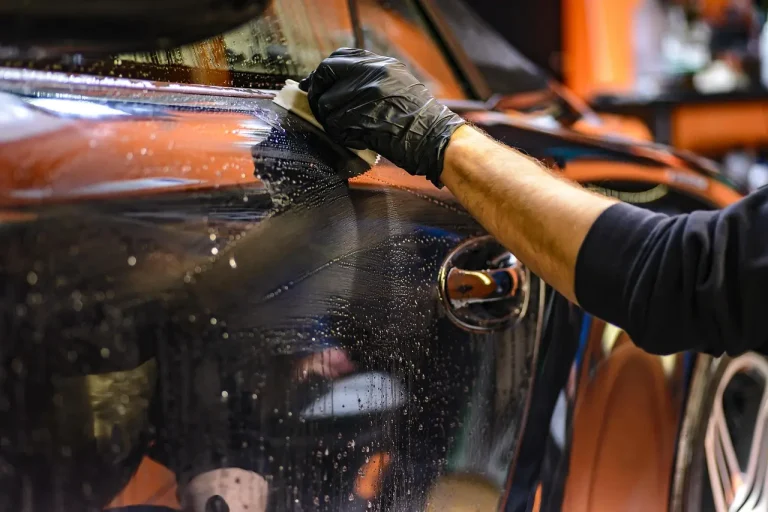
Weekly maintenance is the sweet spot. A clean car that picks up dust, light rain film, or a thin layer of road residue is exactly where rinseless wash has enough lubrication to move debris away without forcing a hose rinse first. The safer the panel feels at the start, the better the fit.
Say your sedan is garage-kept and only has a fine layer of dust after five days. That is a maintenance wash, not a rescue wash, and rinseless is usually the cleaner match.
Apartment, HOA, and water-restriction use
Rinseless wash fits places where hose use is restricted or impractical. Apartment parking, drought restrictions, garage washing, and mobile use are common reasons to choose it, especially when a full traditional setup is not realistic. It is a practical answer when water access is the limiting factor.
Ceramic-coated or garage-kept cars
Coated and well-kept cars often stay in the light-soil zone longer, which makes rinseless a strong maintenance option. The finish type matters less than the soil level here, but product compatibility still matters for clear coat, ceramic coatings, PPF, matte paint, trim, and glass. Follow the label, not assumptions.
- Check the soil first. If the paint is dusty or carrying light road film, rinseless is on the table. If you see caked mud, heavy salt crust, or gritty buildup on lower panels, move to traditional washing or add a pre-rinse.
- Use fresh microfiber media. High-pile towels or a clean mitt reduce cross-contamination when used panel by panel. Keep a dedicated towel system and switch to clean faces often so lifted dirt does not get dragged back across the paint.
- Keep the panels cool. Shade helps, and a cool surface gives more time before drying. If sun is unavoidable, finish one panel at a time so the solution does not dry early and leave spotting behind.
When is traditional washing safer?
Traditional washing is safer when the car carries heavy dirt, bug splatter, winter salt, or any contamination that feels abrasive before a towel even touches it. It is the better rescue method after long intervals and the better starting point when the surface needs a pre-rinse or touch-less step first.
Heavy grime, mud, and salt
Heavy soil changes the risk. A hose rinse removes loose contamination before contact, which gives traditional washing an edge on sand, packed dirt, and salt film. That extra removal step matters when the lower body is loaded or when road grime has hardened.
Suppose a crossover returns from a slushy week with salt on the rocker panels and grit behind the wheels. That is a traditional wash job, because the surface is beyond light maintenance soil.
Bug splatter, bird droppings, and tree sap
Stuck organic contamination often needs more than a straight rinseless pass. Bug splatter and bird droppings can bond to the finish, and tree sap can resist quick lift, especially in heat. A pre-rinse or a traditional wash is the safer call when those spots are widespread.
Rescue washes after long intervals
The longer the interval, the less likely rinseless is the best first move. A neglected car often carries mixed contamination: dust, grit, water spots, and embedded debris in the lower panels. Traditional washing gives you more margin before the contact stage starts.
What conditions call for a pre-rinse first?
A pre-rinse first is the right call when the lower panels are loaded, the finish is hot, or the driveway setup makes drying difficult. It is also the safer bridge between a dirty car and a rinseless finish when the contamination is too much for a direct contact wash but not bad enough to require a full rescue detail.
Lower panels with caked contamination
Lower doors, rocker panels, rear bumpers, and wheel-arch edges carry the most road grit. If those areas are caked, a hose rinse or touch-less pre-wash should come first. That removes the loose abrasive layer before any towel or mitt touches the paint.
Hard-water driveways and spotting risk
Hard water raises the penalty for slow work. Rinseless can help reduce hose-related spotting, but it still needs disciplined drying and a clean mix. If the driveway setup makes drying slow or sloppy, distilled water or a different washing location is the better plan.
Hot panels and direct sun
Direct sun is not the default. A cool panel is safer because it gives the solution time to work before it dries. If you must wash in sun, keep the work panel by panel and do not let the surface sit wet long enough for mineral marks to set in.
Choose rinseless wash if… / Choose traditional wash if…
Choose rinseless wash if the car is lightly dusty, carries moderate road film, or needs maintenance cleaning where hose use is limited. Choose traditional wash if the paint has heavy dirt, sand, salt, bug buildup, or caked mud. That is the cleanest split.
Choose rinseless wash if…
- The car has light dust or moderate road film only.
- You are washing in an apartment, HOA, garage, or drought-restricted setting.
- The finish is a maintained factory clear coat, ceramic coating, or PPF and the product directions allow it.
- You can work on a cool panel with clean microfiber media and finish each section before it dries.
Choose traditional wash if…
- The car has heavy grime, winter salt, or loose sand.
- The front end is covered in bug splatter or the lower panels are caked.
- The vehicle needs a rescue wash after a long interval.
- You want the safer starting point for a hose rinse or touch-less pre-wash.
Frequently asked questions
When is a rinseless wash safe to use instead of a traditional wash?
Rinseless wash is safe when the car is in maintenance condition: light dust, light rain film, or moderate road film without loose grit or crusted contamination. It is also a good fit when water access is limited. If the paint feels sandy or visibly loaded, traditional washing is safer.
How dirty can a car be before rinseless washing becomes risky?
Risk rises once the soil moves beyond light-to-moderate film. Caked mud, heavy salt, gritty lower panels, and strong bug buildup are red flags because they increase the chance of dragging abrasive debris across the finish. At that point, a pre-rinse or traditional wash is the better choice.
Is rinseless wash okay on ceramic coatings and PPF?
Yes, if the product is approved for that finish and the car is only lightly to moderately dirty. Ceramic coatings and PPF can be maintenance washed with rinseless chemistry, but product directions still control compatibility. Matte paint, trim, and glass need the same check.
What soil level needs a pre-rinse or touch-less wash first?
Heavy contamination often calls for a pre-rinse first, especially caked mud, packed lower-panel grime, winter salt, or widespread bug splatter. A touch-less step is the safer bridge when loose dirt could scratch if you go straight to contact washing. The goal is to remove the abrasive layer first.
How much water does a rinseless wash typically use?
A complete vehicle can typically be washed with 2–3 gallons of mixed solution. That is far less than a hose wash, which is why the method is useful for apartment parking, garage work, and water-restricted areas. The exact amount still depends on panel count and towel management.
Can rinseless washing be done in direct sunlight or hot conditions?
It can, but only as a fallback. The safer setup is a cool surface in shade. Direct sun is acceptable only if each panel is completed before drying starts, because premature drying increases spotting and reduces the method’s margin for error.
What products or conditions make traditional washing the better choice?
Traditional washing is the better choice when the contamination is heavy, the car has salt or sand on it, or the panels need a rescue wash. It is also the safer answer when a pre-rinse, foam, or hose rinse is needed to remove loose grit before contact work begins.
Does rinseless washing help prevent water spots on hard water?
It can help, because there is no hose rinse to leave minerals behind on the panel. But it does not guarantee spot-free results. Hard tap water can still spot if the mix is poor, the paint is hot, or the drying step is slow. Distilled or RO/DI water improves the odds.