Is the smell of mildew harmful inside a car?
A mildew smell in a car is not normal; if it lingers, gets stronger after rain, or changes when the HVAC runs, treat it as a sign of moisture or mold that needs inspection. Leaving it alone can mean hidden dampness, stained trim, clogged drains, and irritation of the nose, throat, or lungs. This guide shows how to tell a nuisance odor from active mold, water intrusion, or an HVAC problem, and what to check first.
When mildew odor is a warning sign
Mildew odor can be unpleasant and can irritate the nose, throat, or lungs, especially for people with allergies or asthma. The smell itself is not the same thing as a confirmed dangerous exposure, but it can signal moisture, biological contamination, or a hidden HVAC problem that needs attention.
When the odor is mostly a nuisance
If the smell is faint, appears only after a damp umbrella, wet shoes, or a short rain event, and fades after drying and ventilation, the immediate risk is often low. Even then, mildew spores are biological particles that can circulate through the cabin and HVAC, so the smell should not be ignored if it returns.
When the odor points to active moisture or contamination
A stronger odor after rain, a smell that comes from the vents, or a musty cabin that returns within hours usually points to a source, not just a stale odor. Trapped water, weak airflow, a moldy HVAC case, and spills are all listed causes. Hidden damp padding or a clogged drain can keep feeding the smell.
Who is more likely to react to it?
People with allergies, asthma, or other respiratory sensitivity may be more likely to notice irritation from mildew odor. Kids and immunocompromised passengers deserve extra caution because even low-level biological particles can trigger symptoms sooner in sensitive people. If the smell is strong enough to bother one passenger, treat that as a useful warning sign.
What causes a musty cabin smell?
A musty cabin odor usually comes from trapped moisture, biological growth, or dust that has absorbed dampness. The common sources are wet carpet padding, the HVAC evaporator core, a clogged condensation drain tube, a dirty cabin air filter, or a leak around a sunroof or window seal.
Wet carpet padding and hidden underlayment
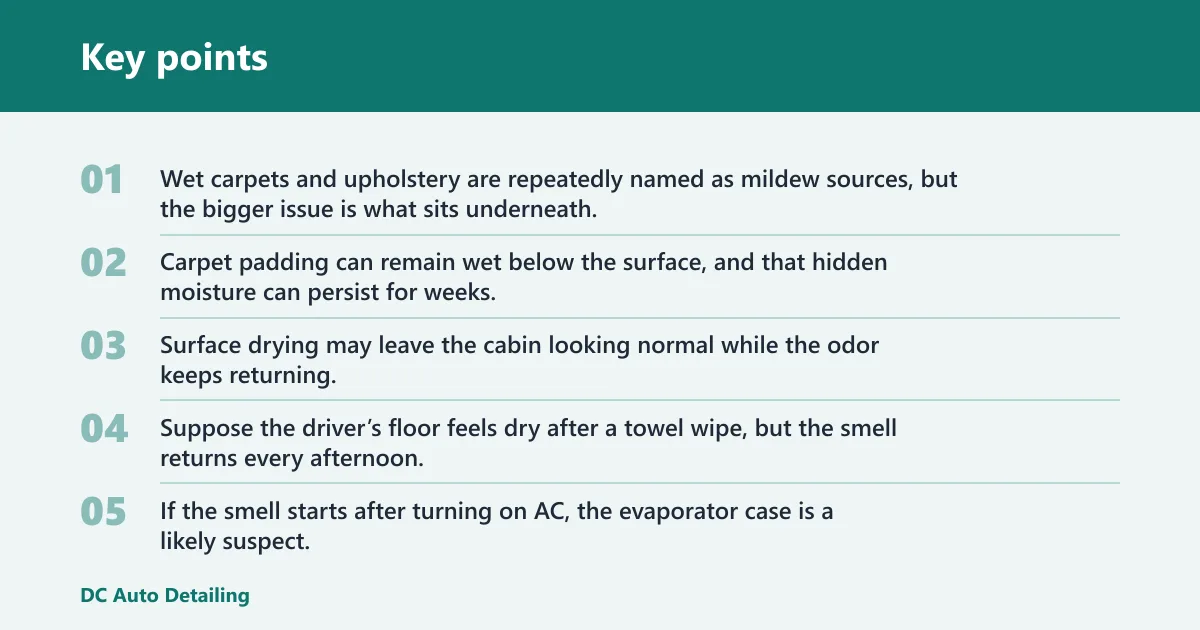
Wet carpets and upholstery are repeatedly named as mildew sources, but the bigger issue is what sits underneath. Carpet padding can remain wet below the surface, and that hidden moisture can persist for weeks. Surface drying may leave the cabin looking normal while the odor keeps returning.
Suppose the driver’s floor feels dry after a towel wipe, but the smell returns every afternoon. That pattern often means the underlayment still holds water and needs lift-up inspection, not another quick spray or vacuum pass.
HVAC evaporator core and clogged condensation drain tube
The vehicle HVAC evaporator core stays soaking wet while the engine is running, and bacteria and mold spores can multiply on the wet evaporator core. If the smell starts after turning on AC, the evaporator case is a likely suspect. Clogged evaporator drains can leave water sitting in the HVAC housing.
A clogged condensation drain can create stagnant pool conditions under the dashboard, and standing water in the evaporator case can worsen odor when the drain is blocked. This is one reason a musty smell that appears only with AC use often points to the HVAC housing, not the seat fabric.
Cabin air filter, vent dust, and trapped moisture
A contaminated cabin air filter can pick up a heavy musty scent, especially if it has been exposed to damp air or collected biological debris. If the vents smell stale when the fan turns on, the filter and nearby ductwork should be inspected first. A neglected filter can also hold odor after the source has dried.
Vent dust matters because it gives moisture something to cling to. Once that layer gets damp, the smell can linger even after the cabin floor looks clean.
Leaks from sunroof and window seals
Sunroof and window seals can allow slow leaks into the cabin and are a possible source of dampness after rain. Cracks, hardened rubber, or worn seals can let water track into trim, headliners, and carpet edges without leaving an obvious puddle. That makes a leak easy to miss.
Check the headliner edges, door sills, and lower carpet corners after a storm. If the odor rises after rain but not after AC use, the problem is more likely a leak path than an HVAC drain issue.
Can mildew smell in a car make you sick?
A mildew smell can make some people feel sick, mainly through irritation rather than a single dramatic exposure. Allergy and asthma symptoms are the main concern. If the odor comes with coughing, watery eyes, sneezing, or chest tightness, treat the cabin as a source of irritation until the cause is found.
Allergy and asthma irritation
Mildew odor can trigger respiratory irritation and mold exposure concerns, especially in people who already react to dust, pollen, or damp environments. Biological particles can circulate through the cabin and HVAC, so the passenger who seems fine in a dry car may react quickly in a musty one.
Symptoms that call for extra caution
Stop treating it as a cosmetic smell if anyone develops wheezing, shortness of breath, persistent coughing, headache, nausea, or eye irritation during the drive. Those symptoms do not prove a dangerous exposure, but they do mean the cabin should be checked before the next trip.
When to limit passenger exposure
If the odor is strong, if the source is unknown, or if the car carries passengers with asthma, allergies, or immune issues, avoid long rides until the wet source is inspected and dried. For a short trip, fresh air and windows down may reduce exposure, but that does not solve the underlying problem.
Mildew smell triage table
This table helps separate odor-only cases from moisture problems that need inspection. Use the smell location, trigger condition, and symptoms together, then check the first likely source before adding cleaners or odor treatments.
| Smell appears when | Likely source | Health concern | What to inspect first | When to stop driving | Best next action |
|---|---|---|---|---|---|
| Only after AC use | Vehicle HVAC evaporator core or cabin air filter | Low to moderate; higher for sensitive passengers | Cabin air filter, vent outlets, evaporator drain area | Stop if symptoms start or the odor is very strong | Inspect filter, confirm drain flow, clean HVAC source |
| After rain | Sunroof or window seals, wet carpet padding | Moderate if water is entering the cabin | Headliner edges, door sills, carpet corners | Stop if carpet is wet or visibility is affected by fogging | Find the leak, dry materials, repair seals |
| With visible damp carpet | Spill, leak, or trapped water in underlayment | Moderate; can rise if moisture persists | Lift carpet edges, inspect padding and floor pan | Stop if water is spreading or electrical areas are wet | Extract water, dry fully, inspect for hidden saturation |
| With allergies or asthma | Biological particles in cabin, filter, or HVAC | Higher risk for irritation and symptom flare-ups | Cabin filter, vents, damp fabrics, under-seat areas | Stop if breathing symptoms appear | Limit exposure, inspect source, clean thoroughly |
| After long storage | Stagnant moisture, stale filter, evaporator residue | Usually low at first, but can rise if dampness remains | Cabin air filter, floor mats, trunk, HVAC vents | Stop if the smell is sharp or accompanied by symptoms | Ventilate, dry, replace the filter, inspect for leaks |
What should you check first?
Start with the clue that changes the smell. If the odor follows AC use, inspect the HVAC first. If it follows rain, look for leaks. If it follows storage, check for stale moisture and a dirty filter. The first trigger often points to the source faster than a full-cabin search.
After AC use
Check the vent smell. Run the fan with AC on and note whether the odor appears only at startup or stays constant. If it is strongest right after the compressor starts, the evaporator case is a likely suspect.
Inspect drain flow. After the AC has run, look under the car for normal condensate dripping. A clogged condensation drain tube can trap standing water and worsen musty odors, so a dry underside with a strong vent smell is worth checking closely.
Pull the cabin filter. If it is dirty, damp, or smells musty, replace it and inspect the housing for debris. A contaminated cabin air filter can pick up a heavy musty scent and feed that smell back into the cabin.
After rain
Check the wettest points. Look at carpet edges, door sills, under-seat areas, and the trunk or cargo floor if the vehicle has one. Sunroof and window seals are common leak points after rain.
Lift the carpet edge. Press the padding under the surface, not just the visible carpet. Carpet padding can stay wet below the top layer, and hidden moisture can keep the odor active long after the surface feels dry.
Trace the water path. Check the headliner edges and trim for drip marks or damp seams. If the odor returns after every storm, the seal or drain path needs repair before any deodorizer has a chance to work.
After long storage
Air out the cabin. Open the doors and run the fan with outside air, not recirculation, for several minutes. This helps separate stale air from an active moisture source.
Inspect hidden fabrics. Check floor mats, the spare-tire area, and seat bases for dampness or dust that smells earthy. Wet shoes, wet clothes, and spills can introduce moisture and mold spores, then sit unnoticed in storage.
Replace the filter. A stored vehicle often traps odor in the cabin air filter first. If the smell changes when the fan runs, start there before moving to deeper HVAC cleaning.
How do you remove the smell?
Start with the source, not the scent. Dry wet materials, clean contaminated surfaces, and confirm that water is no longer entering the cabin or HVAC housing. Masking agents can hide the odor for a day, but they do not solve padding saturation, a blocked drain, or a dirty evaporator.
Drying and cleaning the source
Remove standing moisture. Use towels, a wet vacuum, or air movement to pull water out of carpets, mats, and low areas. The goal is to stop moisture from feeding mildew spores and odor again.
Clean hard surfaces first. Wipe plastic trim, door jambs, and floor edges with a cleaner suited to interior materials. This removes residue that can keep carrying the smell even after the water is gone.
Replace soaked parts. If the cabin air filter, floor mats, or porous inserts hold a strong musty smell after drying, replacement is often faster than trying to deodorize them. A filter that has absorbed odor can keep reintroducing it to the vents.
Steam cleaning and extraction for porous materials
Steam cleaning is useful when odor sits in upholstery, carpet, or other porous surfaces, especially if the smell returns after drying. It is often paired with extraction so loosened residue and moisture come back out instead of sinking deeper into padding. That matters when the problem lives below the surface.
For heavy contamination, a detailer may need to lift carpet sections, clean the underlayment, and dry the floor pan before reassembly. Surface shampoo alone is not enough when carpet padding is the reservoir.
When ozone treatment makes sense
Ozone treatment is an advanced odor-removal method for stubborn cases, but it should be reserved for after the source has been fixed and dried. It can help with persistent odor in air paths and surfaces, yet it should not replace leak repair, water extraction, or filter replacement.
A common first-timer mistake is to use ozone before checking for a wet evaporator case or soaked carpet. That can leave the odor problem untouched, because the moisture source is still active.
How do you keep it from coming back?
Prevention comes down to controlling water, keeping the HVAC dry, and replacing filters on schedule. If the source is fixed but the cabin still smells stale, the next return point is usually trapped moisture in the floor, the vents, or the filter housing.
Keep water out
Inspect sunroof drains, window seals, and door seals before rainy seasons. Keep floor mats dry, and clean spills quickly so they do not soak into carpet padding. If the cabin ever gets wet, dry it the same day when possible.
Keep the HVAC system dry
Run the blower after AC use for a short period to help the evaporator dry, and make sure the condensation drain is clear. Clogged evaporator drains can leave water sitting in the HVAC housing, which keeps odor coming back even after the cabin looks clean.
Replace filters on schedule
A dirty cabin air filter can absorb moisture and carry a musty scent into the vents. Replace it on the maintenance interval listed for the vehicle, or sooner if the car has had a leak, flood, or long damp storage period. A clean filter helps stop old odor from circulating again.
Frequently asked questions
Is the smell of mildew harmful inside a car?
It can be. The odor itself is not the same as a proven dangerous exposure, but it often signals moisture or biological contamination that can irritate sensitive passengers. If the smell is strong, persistent, or tied to rain or AC use, inspect the source rather than masking it.
Is mildew smell dangerous?
It is best treated as a warning sign, not a harmless odor and not proof of a severe exposure. The main concern is irritation, plus the chance that wet padding, a clogged drain, or HVAC contamination is still active. That source matters more than the smell alone.
What causes a mildew smell in a car after rain?
After rain, the most common causes are leaks from sunroof or window seals, damp carpet padding, or water trapped in trim. Hidden underlayment can stay wet long after the visible carpet feels dry, so the smell may linger even when the cabin looks normal.
Why does my car AC smell like mildew?
AC-related mildew smell usually points to the evaporator core, the condensation drain tube, or a cabin air filter that has absorbed moisture. The evaporator core stays soaking wet while the engine is running, so it can become a hidden odor source if drainage is poor or the filter is dirty.
Can a clogged AC drain cause mildew smell?
Yes. A clogged condensation drain can create stagnant pool conditions under the dashboard and leave water sitting in the HVAC housing. That standing water can worsen odor and keep the evaporator area damp long after the AC shuts off.