How to wash a ceramic coated car without weakening it
Wash a ceramic coated car with a rinseless or two-bucket method, a pH-neutral shampoo made for coated paint, clean microfiber mitts, and gentle drying. If water beads badly after washing, add a maintenance spray or decontaminate when the surface feels rough. Bad wash tools can scratch the coating’s top layer and shorten its water behavior. This guide covers the safest wash steps, when dirt is the problem, and when the coating needs decon or upkeep spray.
Why careful washing still matters?
Ceramic coating helps with slickness and water behavior, but it does not stop abrasion from dirt, grit, or dry towel drag. The main risk is mechanical wear during washing, not the coating “wearing out” on its own. If you limit friction, the coating keeps performing longer.
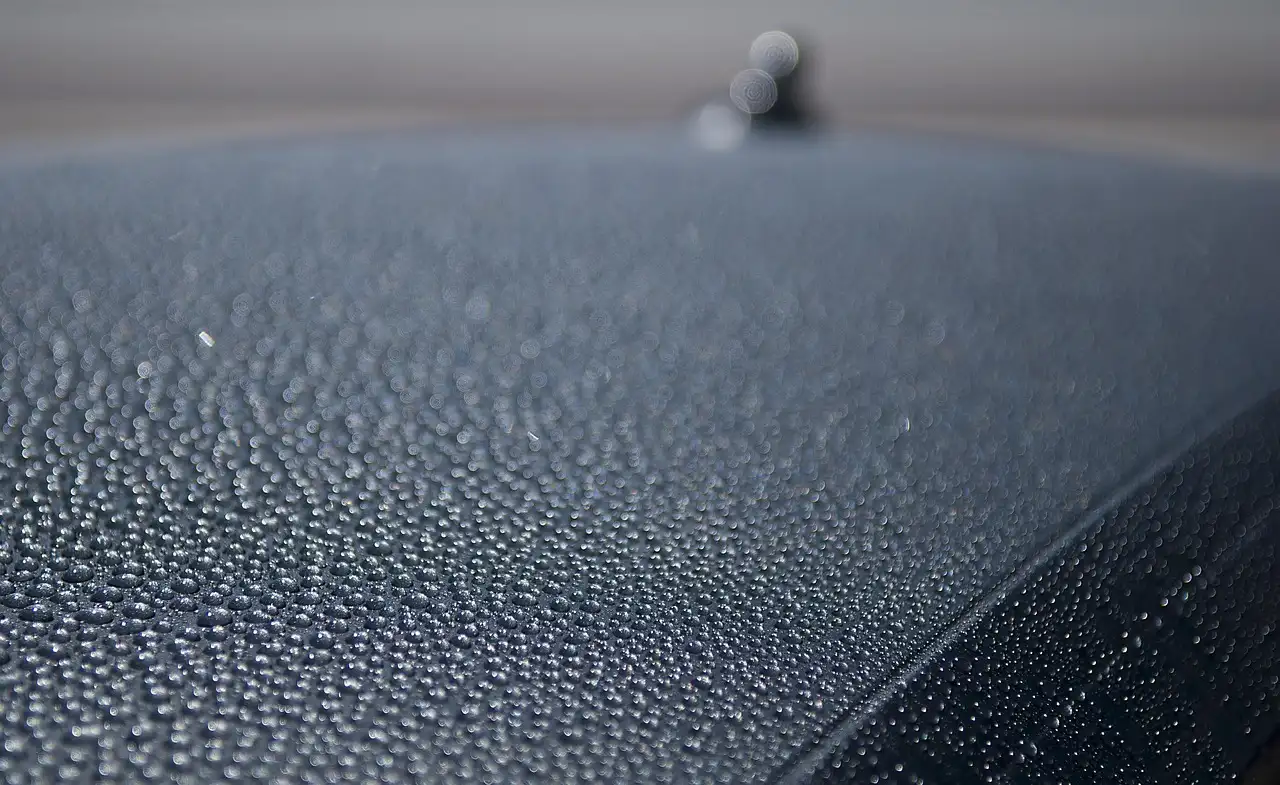
A coating can still look weak when the surface is loaded with film, road salt, or iron fallout. That contamination blocks beading and makes the paint feel rough, even when the coating is still present. The wash method should remove dirt first and touch the paint as little as possible.
What a coating can and cannot resist
Ceramic coating helps repel water and slows bonding, but it does not make the car scratch-proof. A dirty mitt, a dry towel, or a spinning brush can still leave fine marks. That is why the best wash is the one that removes loose dirt before contact.
Suppose a daily driver comes home coated in winter salt film. A normal hand wash may be enough if the surface still feels smooth after rinsing. If the paint feels gritty after washing, the problem is no longer just dirt on top.
What you’ll need
- pH-neutral car wash soap with no wax, gloss enhancers, or heavy degreasers
- Two wash buckets with grit guards, one for soap and one for rinsing
- Deep-pile microfiber wash mitt for paint only
- Pressure washer or hose with a fan spray nozzle
- Plush microfiber drying towel with a high GSM rating
- Ceramic booster spray or maintenance spray
- Iron remover for decontamination when buildup is bonded
- Clean wheel tools kept separate from paint tools
Ceramic wash decision checklist
Use this checklist before you touch the paint. Start with contamination level, then choose rinse strength, decide whether contact washing is appropriate, and select the drying method. If the surface still feels rough or the beading is muted after drying, move to decontamination or a booster spray rather than repeating the same wash.
| Contamination level | Rinse strength needed | Contact wash? | Drying method | Next action |
|---|---|---|---|---|
| Light dust | Hose or low-pressure pre-rinse | Yes | Plush microfiber towel | Normal wash; no decon needed |
| Bug and salt film | Stronger pre-rinse, then foam or shampoo wash | Yes, with frequent mitt rinsing | Blot dry, then gentle drag if needed | Maintenance spray after drying if beading looks muted |
| Bonded contamination | Thorough rinse first, then decontamination wash | Yes, but only after loose grit is removed | Dry only after the surface feels smooth | Decontaminate with iron remover; booster spray is secondary |
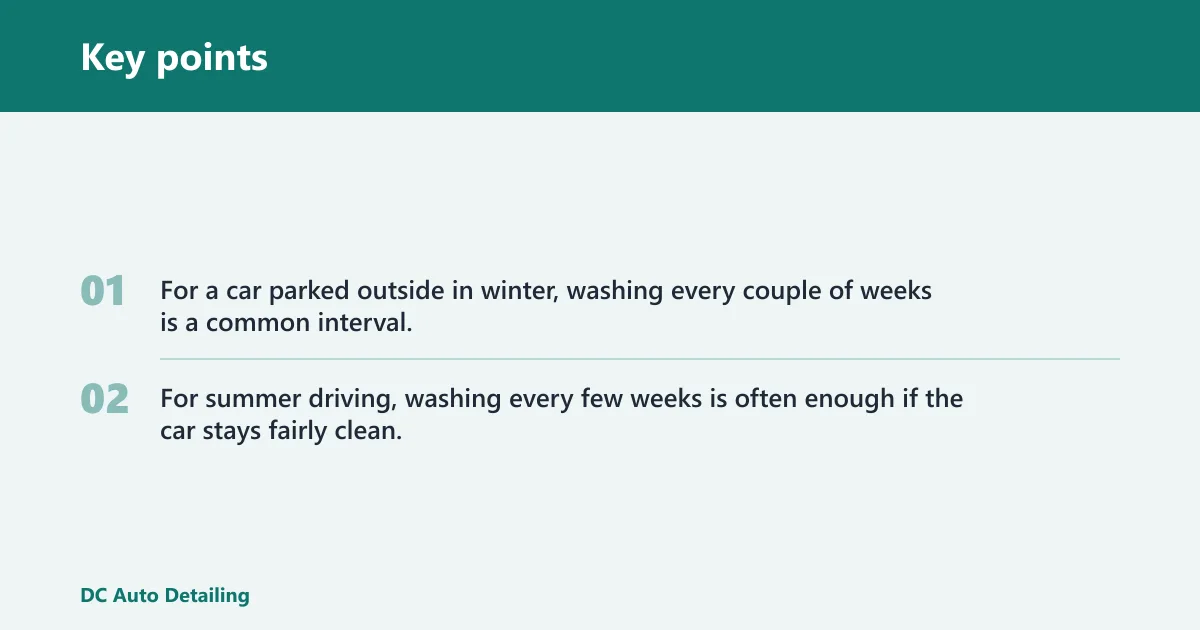
For a car parked outside in winter, washing every couple of weeks is a common interval. For summer driving, washing every few weeks is often enough if the car stays fairly clean. Daily drivers usually need more frequent washing than garage-kept cars, while a professional maintenance wash may be needed far less often for deeper upkeep.
Can you use a pressure washer on a ceramic coated car?
Yes, a pressure washer can help if you keep the tip moving and stay at a safe distance. Use moderate pressure with a fan pattern and do not hold it close to trim, badges, or soft edges. It is a pre-rinse tool, not a strip-cleaning tool.
Safe distance and spray pattern
Use a wide fan tip and keep the nozzle far enough away that the spray does not cut into the surface. Do not hold it close to the panel, especially on edges, emblems, or areas with softer paint work. The goal is to knock off loose grit before any mitt touches the car.
A foam dwell time should be short enough that the product does not dry on the paint. Longer dwell time does not make the wash safer. It just gives residue more time to sit on the surface.
When a hose rinse is enough
If the car has only light dust, a hose rinse can be enough before a contact wash. If the paint carries road salt, bugs, or winter grime, step up to a stronger rinse first. Either way, do not start rubbing the paint while grit is still visible.
How to wash a ceramic coated car without damaging it
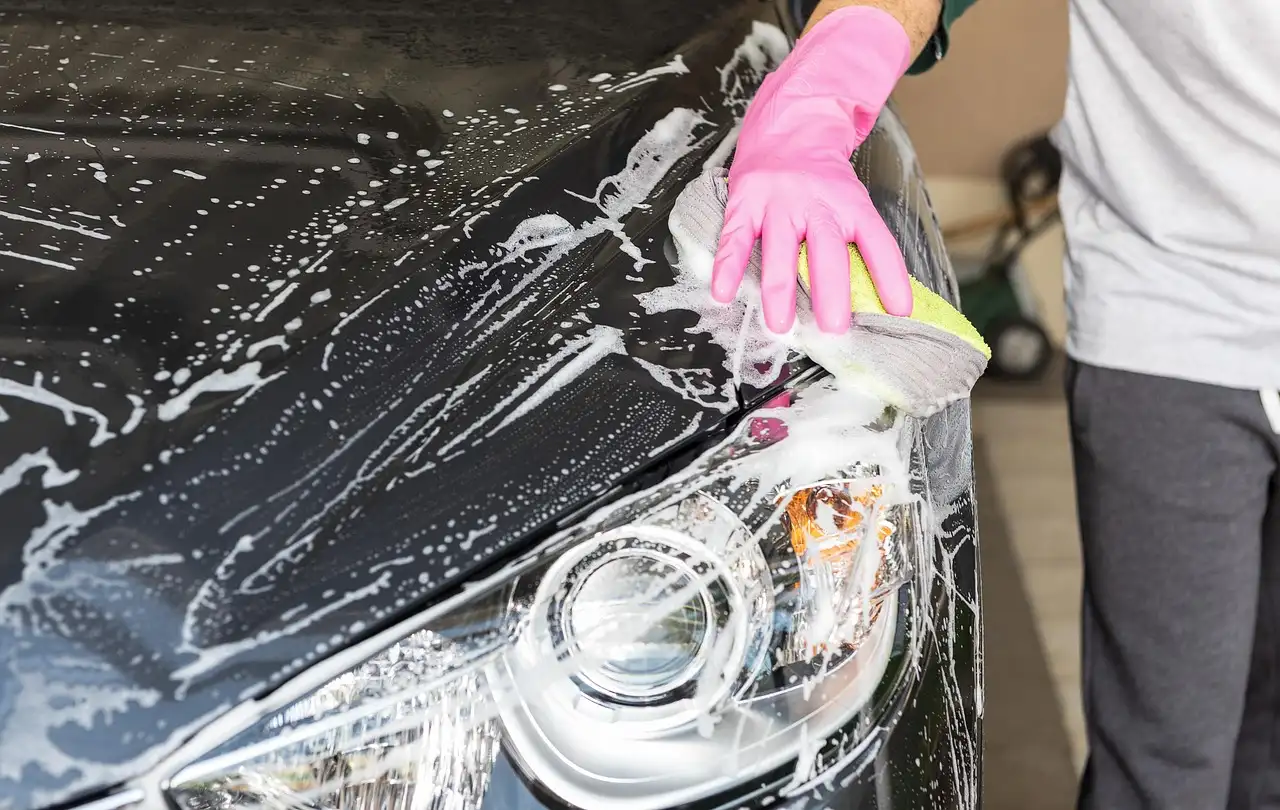
Start with a strong pre-rinse, then wash from the top down with a pH-neutral shampoo and a clean microfiber mitt. Rinse the mitt often, keep the buckets separate, and dry with a plush towel instead of rubbing hard. If the paint still feels rough, stop and decontaminate before more contact.
-
Rinse loose dirt off.
Use a hose or pressure washer to remove grit before touching the paint. Work from the roof down so debris falls away instead of being dragged across lower panels. -
Mix the shampoo properly.
Use a pH-neutral car wash soap made for coated paint. Avoid waxed soaps, gloss-boosting washes, and heavy degreasers, since they can leave residue that changes the coating’s surface behavior. -
Wash with two buckets.
Fill one bucket with soap solution and one with clean rinse water, and use grit guards in both. After each panel, rinse the mitt in the plain water bucket first, then reload with soap. -
Use the mitt gently.
Choose a deep-pile microfiber wash mitt and use it on paint only. Rinse it frequently during the wash so trapped grit does not get dragged back onto the surface. -
Clean in small sections.
Wash one panel at a time in straight, light passes. If the mitt starts to feel gritty, stop and rinse it before continuing. -
Dry with low friction.
Use a plush microfiber drying towel with a high GSM rating. Blot first, then drag gently only if needed. This reduces water spots and micro-marring. -
Finish with a quick check.
Look for dull water behavior, roughness, or leftover film. If the surface still beads poorly or feels sticky, move to decontamination or a maintenance spray instead of repeating the same wash.
Picture a white sedan with bug splatter on the bumper and a dusty roof. The roof may only need a rinse and normal mitt wash, while the bumper may need a longer soak and a second pass with fresh soap water. The difference is contamination level, not coating strength.
When washing is no longer enough?
If water beading drops sharply, the paint feels rough after drying, or traffic film stays behind after a normal wash, the coating likely has bonded contamination on top of it. That does not always mean the coating is gone. It often means the surface needs decontamination before the coating can act normally again.
Signs the paint needs decontamination
Use a decontamination wash when the surface feels gritty after washing, water sheets unevenly, or tar and iron fallout are stuck in place. That wash may include iron remover, used as directed, to break down bonded contamination. Do this before adding more booster spray.
When to use a booster spray instead
Use a ceramic booster spray when the paint is clean, smooth, and still protected, but the water behavior has faded a bit. A booster spray is maintenance, not a replacement for the coating. It can refresh hydrophobic performance, but it will not fix heavy buildup or neglected paint.
Do not assume a booster spray will rescue a surface that has gone rough. If the panel feels like sandpaper after washing, decontamination comes first. The spray goes on after the paint is clean enough to accept it.
Common mistakes
Most coating damage during washing comes from habits that seem harmless. The fix is usually simple: reduce friction, keep tools clean, and stop trying to force a dirty panel clean with more pressure.
- Using an automatic brush wash. Spinning brushes can create fine scratches and weaken coating performance over time. A touchless wash is safer in a pinch, but hand washing is still the better routine.
- Letting the mitt stay dirty. A loaded mitt drags grit across paint. Rinse it often and swap to clean water whenever it starts to feel abrasive.
- Drying with pressure. Hard wiping increases micro-marring and water spots. Use blotting first, then light dragging with a plush towel.
- Using the wrong soap. Dish soap and harsh detergents can strip residue that may help the coating behave as intended. Stick to pH-neutral car wash soap.
- Skipping decontamination. If beading falls off and the paint feels rough, another normal wash may not fix it. Treat the contamination first.
Keep wash tools separate for paint, wheels, and lower panels. That one habit cuts down cross-contamination and helps the coating hold its finish longer.
Frequently asked questions
How do you wash a ceramic coated car without damaging it?
Pre-rinse first, then use a pH-neutral shampoo, a two-bucket setup, and a deep-pile microfiber mitt. Wash from top to bottom, rinse the mitt often, and dry with a high-GSM microfiber towel. Keep friction low at every step.
What soap should you use on a ceramic coated car?
Use a pH-neutral car wash soap made for coated paint. Choose one without wax, gloss enhancers, or heavy degreasers, so you clean the surface without changing how the coating sheds water. Avoid dish soap and strong cleaners.
Should you use the two-bucket method on ceramic coating?
Yes. One bucket holds shampoo water and the other holds rinse water, and grit guards help keep debris at the bottom. That setup reduces grit reintroduction and wash marring, which matters even more on coated paint because the surface still scratches.
How often should you wash a ceramic coated car?
Wash as often as contamination requires rather than following a rigid schedule. Daily drivers usually need more frequent washing than weekend cars, and winter salt or heavy highway use calls for quicker attention. If buildup starts to cling, wash sooner instead of letting it harden.
Can you use automatic car washes on ceramic coated cars?
A brush wash should be avoided because it can leave fine scratches over time. A touchless wash is acceptable when needed, but it is less effective than a careful hand wash. Use it as a backup, not as your normal wash routine.
Do you need a booster spray after washing ceramic coating?
Not every time. Use a ceramic booster spray when the paint is clean, smooth, and the water behavior has faded a bit. Apply it to clean paint after washing, and treat it as maintenance rather than a repair.