Consumer ceramic coating: What it is and how to use it
Consumer ceramic coating is a DIY paint protectant, usually SiO2-based, that makes water bead and run off faster, helps wash dirt off with less scrubbing, and adds limited resistance to road grime, bug residue, bird waste, and UV exposure, but little scratch protection; for most first-timers, a spray ceramic is the safer starting point than a bottle coating. Skip proper washing, decontamination, or cure time and you can lock in defects, create streaks, and get weak durability for the money spent. This guide explains what consumer ceramic coating does, how spray and wipe-on products differ, what prep they actually need, how to apply them, and when pro installation makes more sense.
The main decision is not which bottle promises the biggest claim. It is whether the clear coat is ready, whether correction is needed, whether the coating type matches skill level, and whether the car’s parking and washing routine support the cure and upkeep that coating needs.
What it’s made of and how it bonds
Consumer ceramic coating is a DIY coating made to chemically bond to your vehicle’s clear coat, usually with SiO2 as the main chemistry, to change how water behaves on the surface, make routine washing easier, and add resistance to bonded contamination. It is a sacrificial layer over the clear coat, not a permanent shell, and the finish still depends on the paint underneath.
What it is made
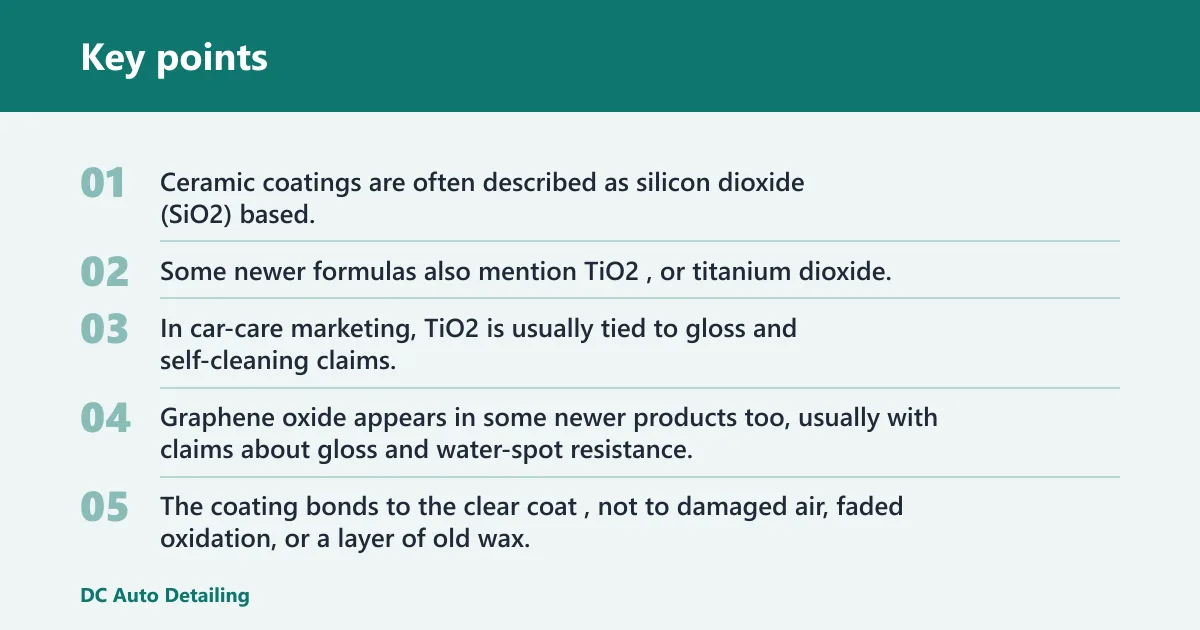
Ceramic coatings are often described as silicon dioxide (SiO2) based. That is the common chemistry in both consumer and professional formulas, and it forms the thin, glass-like layer people are buying when they choose a true coating rather than a wax or spray sealant.
Some newer formulas also mention TiO2, or titanium dioxide. In car-care marketing, TiO2 is usually tied to gloss and self-cleaning claims. Graphene oxide appears in some newer products too, usually with claims about gloss and water-spot resistance. It is far less established than SiO2 and TiO2 systems, so it makes more sense to judge those products by prep demands, application behavior, and label instructions than by the additive headline.
How it bonds to clear coat
The coating bonds to the clear coat, not to damaged air, faded oxidation, or a layer of old wax. That matters because the clear coat determines the final look. If the paint has haze, swirls, etched spots, or leftover sealant, the coating will not hide them. It will sit on top of them.
One competitor describes ceramic coating as a chemical polymer solution with SiO2 as the most common ingredient. That description is close enough for buying decisions, but the practical point is simpler: coatings work best on paint that is clean, stripped, and corrected when needed.
What hydrophobic behavior means
Hydrophobic behavior is the visible part most owners notice first. Water tends to bead or sheet off, which can make routine washing easier. Coatings create a hydrophobic finish where rain or water sheets off. That does not mean the car stays clean by itself or that water spots stop forming.
Hydrophobic behavior is also not proof of total protection. A coated car can still get mineral spots, wash marring, and bonded contamination. Beading is a performance sign, not a guarantee of long-term health.
How is consumer ceramic coating different from professional coating?
Consumer coatings are made to be installed by DIY users with less risk and easier wipe-off, while professional coatings usually demand tighter prep, tighter environment control, and less room for missed flash time. In exchange, pro systems often offer longer durability and less tolerance for sloppy work.
Consumer kits vs pro-only systems
Consumer coatings are sold alongside professional-grade coatings. The consumer-grade kits usually use friendlier solvents, more forgiving wipe windows, and simpler instructions. That makes them realistic for home use if the paint is properly prepared and the work area is controlled.
Professional coatings usually ask more from the installer. Paint correction has to be cleaner, panel wipe has to be thorough, and temperature and humidity swings matter more. If you miss the wipe window on a strong pro coating, high spots can become much harder to remove once the coating cures.
Where sprays and wipe-on products fit
Consumer-market ceramic products also include sprays and waxes. This is where buyers get tripped up. A spray ceramic is usually a maintenance sealant or short-term protectant. A wipe-on ceramic sealant sits in the middle. A true bottle coating comes in a small bottle, uses an applicator block or suede, and has a defined flash time and cure time.
- Spray ceramic: Easiest to use, lowest risk, shortest lifespan, best for beginners or maintenance.
- Wipe-on sealant: Moderate effort, moderate durability, often a sensible step up from sprays.
- True bottle coating: Highest prep demand, highest risk of streaks or high spots, longest potential durability in the consumer category.
Some coatings are marketed with a 9H hardness claim. Treat that as a limited marketing description, not a promise against rock chips, door dings, or real-world scratches.
What can consumer ceramic coating realistically do?
Consumer ceramic coating can make reflections look sharper, leave the paint feeling slicker, and cut wash effort if the paint is already in good shape, and it can help dirt and road film release more easily during maintenance. It will not fix neglected clear coat, stop stone chips, or make the surface scratch-proof, so expectations need to stay tied to paint condition.
Real gains
On a well-prepped car, the coating can sharpen reflections and make rinse water leave the panel faster. That often means less soap effort on weekly or biweekly washes. Chemical resistance also improves compared with bare clear coat, which helps against routine grime and some environmental fallout.
What it will not stop
Ceramic coating is thin and does not act like paint protection film. It does not act like paint protection film. It does not stop gravel impact, deep key scratches, or careless towel damage. If the car already has oxidation or deeper swirls, the coating can make the surface look glossier while still leaving the defects fully visible.
Picture a dark hood with visible circular wash marks in direct sun. A coating may increase reflectivity, but those marks will still show because the clear coat is still scratched. In that case, correction does more for appearance than the coating itself.
Why paint correction often matters more
Paint correction removes or reduces swirls, haze, and light defects before the coating goes on. For appearance, it is often more important than the coating. If the paint is already near-new and defect-free, correction may be optional. If there is oxidation, visible haze, or obvious wash marring, it is strongly recommended.
Is consumer ceramic coating worth the cost for daily driving?
For most daily drivers, consumer ceramic coating is only worth it if you want longer wash intervals and are willing to spend extra time on prep and application. If you mainly want easier upkeep at the lowest cost, a quality spray sealant usually gives better value. The tradeoff is simple: coating can last longer and resist grime better, but a rushed install can leave high spots, residue, and weak protection that still cost more than an easier product.
This consumer ceramic coating guide breaks down the real-world pros, limitations, cost, and maintenance needs so you can decide whether it fits your car, your time, and your budget.
Do you need to prep paint before applying ceramic coating?
Yes. A proper wash alone is often not enough because ceramic coating bonds best to bare, clean clear coat with no wax, sealant, polishing oils, or bonded contamination left behind. If you skip decontamination or final wipe-down, the coating may streak, smear, or fail early even if application looked fine at first.
When a wash is not enough
Normal washing removes loose dirt. It does not reliably remove iron fallout, tar, old protection, mineral residue, or polishing oils. If any of that remains, the coating bonds to contamination instead of paint.
You should not apply a coating over wax or sealant unless the product label specifically allows it. In most cases, the right path is wash, decontaminate, polish if needed, then use a panel wipe or another label-approved surface prep.
Full prep chain
- Wash thoroughly. Use a pH-appropriate car shampoo to remove loose dirt and road film. Rinse well and clean crevices, badges, and panel gaps because trapped grime can get onto the applicator later.
- Decontaminate chemically. Use an iron remover and, if needed, a tar remover according to the product label. This strips bonded contamination that washing leaves behind and lowers the chance of roughness under the coating.
- Clay if needed. If the paint still feels rough after chemical decontamination, use a clay bar or clay mitt with proper lubrication. Skip aggressive claying on soft paint unless correction is already planned, because claying can add marring.
- Dry completely. Blow water from mirrors, trim, emblems, and seams, then dry the paint with a clean towel. Hidden water can run onto a panel during coating and cause smears or weak bonding.
- Correct the paint. Polish if the clear coat has swirls, haze, oxidation, or light etching that you do not want locked under the coating. If the paint already looks the way you want in direct light, a correction step may be limited or skipped.
- Wipe the surface. Use a panel wipe or another label-approved prep product with clean microfiber towels until the paint is bare and streak-free. This removes polishing oils, old protectants, and residue that can interfere with bonding.
Say your car lives outside under trees and gets washed at a tunnel wash once a month. Even if it looks shiny after a hand wash, the paint often still carries fallout, old dressings, and machine-wash marring. That is a prep problem, not a coating problem.
Ceramic coating tables
Coating choice decision table
| Vehicle condition | Parking exposure | Washing habits | Skill level | Recommended consumer coating type |
|---|---|---|---|---|
| New or nearly defect-free clear coat | Garage kept most nights | Hand washed every 1 to 2 weeks | Beginner | Spray ceramic used as primary protection |
| Light swirls, no oxidation, willing to polish | Driveway parking, mild climate | Hand washed 2 to 4 times per month | Careful beginner | Wipe-on ceramic sealant or easy consumer bottle coating |
| Corrected paint with good lighting available | Mixed garage and outdoor use | Two-bucket or rinseless hand wash | Intermediate | True consumer bottle coating |
| Heavier swirls, haze, or oxidation still present | Full sun all day | Infrequent washing | Beginner | Delay bottle coating; correct paint first or stay with spray ceramic |
| Daily driver with hard-water spotting history | Outdoor parking near sprinklers or coastal air | Regular hand washing but inconsistent drying | Intermediate | Consumer bottle coating only if drying discipline is realistic; otherwise wipe-on sealant |
| Family SUV with frequent tunnel washes | Apartment lot, no covered cure space | Automatic wash use likely | Any | Spray ceramic or wipe-on sealant; avoid high-effort bottle coating |
Consumer ceramic coating table
| Failure sign | Likely cause | Fix |
|---|---|---|
| High spots or dark patchy spots | Missed leveling during flash time; too much product on panel | Re-level immediately if still fresh; if cured, polish affected area and recoat |
| Streaking after wipe-off | Humidity or temperature changed flash time; towel loaded up; panel too large | Work smaller sections, switch towels often, reapply lightly to reactivate only if label allows |
| Smearing that keeps returning | Surface not fully stripped; oils or hidden moisture in seams | Stop, dry the panel again, panel wipe, then reapply on a clean section |
| Patchy hydrophobic behavior | Uneven coverage, contamination left on paint, or early alkaline wash damage | Deep clean first; if behavior does not return, polish and recoat affected panels |
| Early water spotting | Rain or hard water during cure; minerals left to dry on fresh coating | Use a coating-safe water-spot remover if label allows; polish only if spotting etched in |
| Short durability | Poor prep, tunnel washes, harsh cleaners, topper buildup, or unrealistic product choice | Change wash method, decontaminate periodically, and choose a simpler product next time if upkeep is limited |
What should you buy before you start?
Before you open a coating, you need a complete prep and application setup: wash products, decontamination chemicals, enough clean towels, gloves, proper lighting, and a dry place to cure the car. Buying only the coating bottle is how first-timers end up fighting streaks, contamination, and rushed curing.
Basic kit
- Car shampoo and wash media
- Iron remover, and tar remover if needed
- Clay bar or clay mitt if the paint remains rough
- Polisher and polish if correction is planned
- Panel wipe or label-approved surface prep
- Nitrile gloves
- Multiple clean microfiber towels for wipe-off and backup
- Applicator block and suede or the applicator included in the kit
- Good lighting to catch flash and high spots
- Covered cure space if possible
At-home safety checklist
- Wear gloves first. Keep coating liquids, panel wipes, and decontamination chemicals off skin. Change gloves if they get wet with product to avoid transferring residue to trim, glass, or interior surfaces.
- Ventilate the area. Work with doors open or with active airflow that does not blow dust onto the paint. Ventilation matters for solvent-heavy products, but direct fan blast at the panel can change flash time.
- Protect eyes and skin. Avoid splashes when pouring onto an applicator and do not rub eyes with contaminated gloves. If product contacts skin or eyes, follow the label directions immediately.
- Control towel handling. Keep coating towels separate from wash towels and interior towels. A used leveling towel can harden as residue cures, so do not mix it back into normal microfiber laundry.
- Guard against contamination. Keep polish dust, leaf debris, pet hair, and sprinkler mist away from the work area. Fresh coatings attract trouble from tiny things you normally ignore.
How do you apply consumer ceramic coating at home?
Apply consumer ceramic coating at home by working on fully prepped paint in small sections, spreading a thin even film, watching the product’s flash, then leveling and buffing before it hardens into high spots. The safest home install uses moderate temperatures, stable lighting, clean towels, and a realistic pace.
Application procedure
- Set the environment. Move the vehicle into shade or a covered area with cool panels and stable airflow. Hot paint, direct sun, dust, and sudden humidity swings make flash time less predictable.
- Prime the applicator. Add product to the supplied suede or applicator according to the label, then spread a thin film over a small section such as part of a door or half a hood section. Thin and even beats heavy and wet.
- Watch for flash. Wait for the visual cue the product gives, which may look like slight rainbowing, sweating, or dulling depending on the formula. Flash time varies by product, temperature, humidity, panel size, and airflow, so the label matters more than habit.
- Level the residue. Wipe the section with a clean microfiber to remove excess coating before it cures into high spots. Follow with a second towel if needed to catch remaining smears and leave an even finish.
- Inspect under light. Check from multiple angles before moving on. If you find a dark spot or smear right away, correct it now; it becomes much harder after cure.
- Repeat panel by panel. Replace towels as they load up and use less product than beginners think they need. Rushing to cover the whole vehicle in one pass is how flash windows get missed.
- Let it cure. Once the full vehicle is coated, leave it undisturbed for the product-specific cure period before exposing it to water or washing. If the label allows a second layer, follow the exact interval listed there rather than guessing.
A common first-timer mistake is coating a full hood at once in warm, humid weather. By the time wipe-off starts, the center has already flashed harder than the edges, so the towel drags and leaves dark patches that need polishing later.
How long do flash time and cure time really take?
Flash time and cure time depend on the product first, then on temperature, humidity, airflow, and panel size, so there is no one universal number that fits every coating. For planning, assume the label rules the job, and assume outdoor conditions shorten your margin for error more than most beginners expect.
Flash time in real use
Flash time is the waiting window before leveling or wiping off. In cooler, drier air, some coatings stay workable longer. In warm or humid conditions, the same product may flash much faster. Smaller sections lower the risk.
Suppose a garage is mild in the morning but humid after rain by midday. The first door may wipe cleanly, while the rear quarter starts streaking with the same wait time. The variable changed, so the wipe window changed too.
Cure time, driving, rain, and first wash
Cure time is the period before the coating can safely face water, dirt, and normal driving. Follow the label exactly. As a planning benchmark only, one published guide says a DIY ceramic coating kit can take 2 to 3 days, which reflects the full process rather than wipe-on time alone.
If indoor curing is available, use it. Outdoor curing raises the chance of dew, rain, dust, bird droppings, and hard-water spotting. If rain is likely before the label’s safe-water window, delay the job. If you must drive before full cure, do it only after the label says driving is acceptable, and avoid rain, puddles, and unnecessary contamination.
For the first wash, wait until the product label says washing is safe. Early washes, especially with strong alkaline soap or tunnel equipment, can disrupt hydrophobic behavior and shorten service life.
What mistakes cause consumer ceramic coating to fail?
Most consumer coating failures start before the bottle touches paint: poor prep, leftover wax or oils, bad lighting, oversized work sections, missed flash time, or rushed curing. The coating itself is often blamed, but uneven bonding and early contamination are the usual reasons for streaks, weak beading, or short life.
Common failure points
- Applying over wax, sealant, or polishing residue
- Skipping chemical decontamination
- Using too much product
- Working on hot panels or in direct sun
- Waiting too long to level after flash
- Using damp or contaminated towels
- Exposing the car to rain or sprinklers too soon
- Assuming topper sprays can replace proper maintenance
Marketing mistakes
Another failure point is buying the wrong category. A buyer expecting multi-year performance from a spray ceramic is setting the job up for disappointment. Coatings can last from one year to 9+ years depending on claims, while another says ceramic coating can last between 2 and 5 years if maintained well. Those are broad claim ranges, not promises for every driveway install.
How do you maintain consumer ceramic coating?
Maintain a consumer ceramic coating with gentle, regular washing, prompt drying, periodic decontamination when needed, and restraint with topper products. Durability depends less on the original bottle claim than on wash method, chemical exposure, parking conditions, and whether the coating is kept clean enough to keep functioning.
Wash method and chemical choices
Hand washing is the safest maintenance routine. Tunnel washes can strip behavior faster through detergent strength, repeated brushing, or drying contact. Harsh alkaline cleaners can flatten hydrophobic behavior, especially on lighter consumer products.
Drying matters too. Letting hard water dry on the coating invites spots that can mask performance or etch if neglected. If the car parks outside, remove bird droppings and bug remains quickly.
Maintenance sprays and toppers
Maintenance sprays can help bring back slickness or improve drying behavior, but overuse can also hide what the base coating is actually doing. Use toppers sparingly and choose products labeled for coated paint. If every wash ends with a strong gloss spray, it becomes harder to tell whether the coating is healthy or simply being masked.
Realistic upkeep schedule
- Garage kept, mild climate, hand washed often: Wash every 1 to 2 weeks, inspect behavior monthly, decontaminate only when needed.
- Outdoor parked daily driver: Wash every 1 to 2 weeks, dry carefully, inspect for water spots after rain or sprinklers.
- Winter road salt or hot dusty climate: Wash as conditions require, use coating-safe chemistry, and decontaminate more often if bonded grime builds.
- Heavy tunnel-wash use: Expect shorter life and weaker behavior no matter what the bottle promised.
Frequently asked questions
What is consumer ceramic coating for cars?
It is a DIY paint protectant that usually uses SiO2 chemistry to bond to the clear coat and improve water behavior, washing ease, and some resistance to contamination. It does not replace paint correction, stop rock chips, or make paint immune to scratching, and the final look still depends on clear-coat condition.
How long does consumer ceramic coating last?
Service life varies by product type, prep quality, climate, parking, and wash method. Spray ceramics usually last less than true bottle coatings. Published claims range from one year to 9+ years, and another source says 2 and 5 years if maintained well, but home results depend heavily on prep and upkeep.
Can you use ceramic coating over wax or sealant?
Usually no, unless the product label explicitly says otherwise. Ceramic coatings bond best to bare, clean clear coat. Wax, sealant, or polishing oils can block contact with the paint and lead to uneven behavior, weak durability, or application problems that look like product failure but actually start with poor surface preparation.
How long should ceramic coating cure before driving?
Follow the product label, because cure rules vary widely by formula. Driving may be allowed before full cure on some products, but rain, road spray, and contamination are still risks. If the car cannot stay dry for the label’s early cure window, waiting for better conditions is the safer call.
Is consumer ceramic coating safe to use at home?
Yes, if the product is used exactly as labeled and basic handling rules are followed. Wear gloves, ventilate the space, avoid skin and eye contact, keep towels and applicators organized, and protect fresh coating from dust, water, and debris. The bigger home risk is usually contamination and rushed curing, not the concept itself.