Can you use baby wipes on a car dashboard?
Baby wipes are commonly used as a short-term fix on sealed vinyl, leather, or coated plastic dashboards; on matte, piano-black, or uncoated trim, they can leave film or alter the finish. Used often, they can build up sticky residue, attract dust, and make dashboards look hazy. This guide explains which wipe types are safer, which dashboard materials are most at risk, and how to remove leftover residue.
Dashboard wipe decision table
| Dashboard finish | Wipe type | Residue risk | Finish change risk | Recommended follow-up step |
|---|---|---|---|---|
| Glossy coated plastic | Fragrance-free, low-lotion baby wipe | Medium | Low to medium | Buff with a dry microfiber cloth |
| Matte plastic | Any baby wipe with lotions or conditioners | High | High | Skip if possible; use a low-residue interior detailer spray instead |
| Soft-touch dashboard surface | Fragrance-free baby wipe in a pinch | Medium to high | Medium to high | Follow with microfiber and a matte interior cleaner |
| Textured vinyl | Lightly moistened baby wipe | Medium | Low | Wipe seams with microfiber and a low-residue cleaner |
| Piano-black trim | Baby wipe | High | High | Avoid; use microfiber plus interior detailer spray |
| Sealed leather trim | Fragrance-free, low-lotion baby wipe | Medium | Medium | Dry buff immediately and avoid repeat use |
Dashboard finish types that change the answer
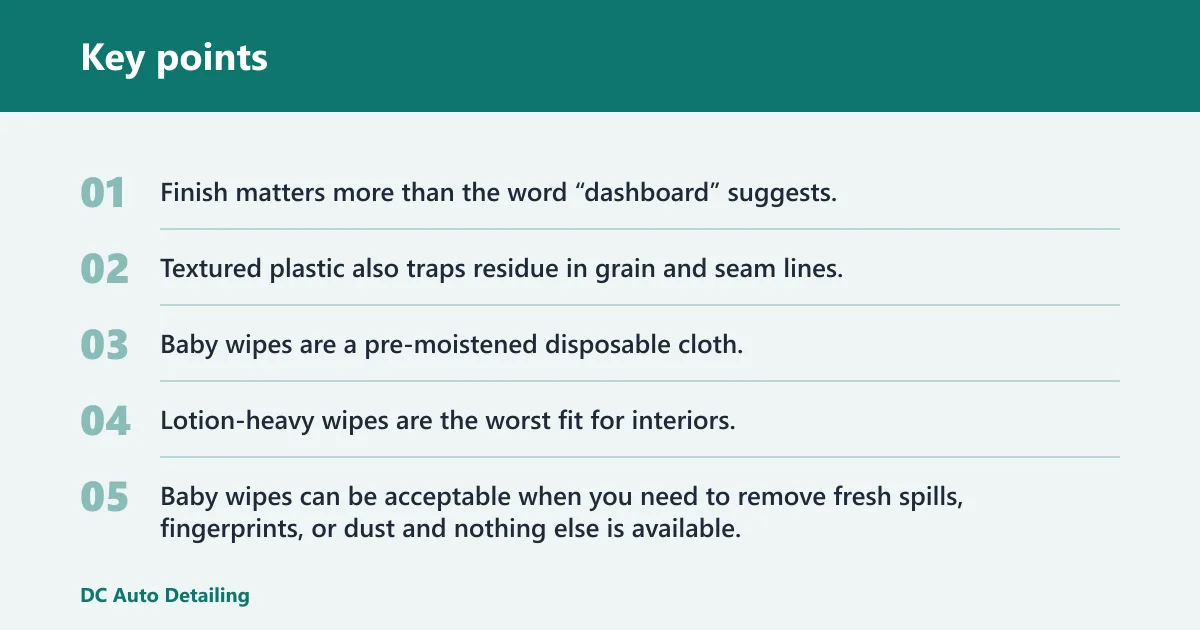
Finish matters more than the word “dashboard” suggests. A glossy coating can show haze and streaks fast, while matte and soft-touch surfaces can look dull or patchy if a wipe leaves conditioners behind. Textured plastic also traps residue in grain and seam lines.
Baby wipes are a pre-moistened disposable cloth. That moisture is the tradeoff. Some formulas are plain enough to lift light dust, while others include lotions, oils, or conditioning agents that can leave a temporary shine on surfaces. That shine is often residue, not protection.
What the wipe formulation does to residue risk
Fragrance-free baby wipes are usually the better pick when you have no other option, because they tend to have fewer added conditioners than heavily scented versions. Even then, they are still made for skin contact, not for a car dashboard plastic surface that you want to leave dry and low-gloss.
Lotion-heavy wipes are the worst fit for interiors. They can smear across vinyl dashboard surfaces, soften the look of matte trim, and leave a clean, shiny appearance only briefly. After that, dust often sticks more easily.
When an emergency wipe-down is the only practical option
Baby wipes can be acceptable when you need to remove fresh spills, fingerprints, or dust and nothing else is available. That is the exception, not the routine. For a quick emergency cleanup, use one wipe lightly, then dry the area with microfiber so the residue does not sit on the panel.
Suppose a drink splashes on a 6-inch patch of textured vinyl while you are away from your usual supplies. A single fragrance-free wipe can clear the wet spot quickly, but the panel should still get a dry microfiber follow-up before the film settles into the grain.
Can you use baby wipes on a car dashboard?
Yes, but only as a short-term fix on sealed vinyl, coated plastic, or some leather trim. They can remove light dust and surface dirt fast, which is why many people reach for them in a hurry. They are not the best routine cleaner for dashboards, especially if you want a steady matte or satin finish.
Short answer for plastic and vinyl dashboards
On plastic dashboard surfaces, baby wipes are a convenience tool, not a detailing tool. On vinyl dashboard surfaces, they can work for a one-time wipe if the wipe is low-lotion and the surface is wiped dry afterward. On uncoated, soft-touch, or delicate matte trim, the risk of shine change goes up.
Why matte and soft-touch surfaces need more caution
Matte and soft-touch finishes show residue more easily than glossy trim because the surface is meant to look dry and low-reflective. A small amount of conditioner can leave a cloudy film or a slightly slick feel. That change may be subtle at first, then more obvious after repeated use.
A common first-timer mistake is wiping the center of a matte dash with a fragrance-free baby wipe, then leaving the side vents and seam edges untouched. The main panel may look fine for a moment, while the seams catch leftover film and later collect dust in thin gray lines.
Where baby wipes fit in a cleaning routine
Use baby wipes only as a stopgap. A proper interior routine starts with dry dust removal, then a low-residue cleaner, then optional UV protection if the surface needs it. That order keeps residue from building up and gives you more control over the final sheen.
Baby wipes are often described as a pre-moistened disposable cloth for quick household cleanup and a fast way to wipe surfaces in a hurry. That general use case explains the appeal. It does not make them the right choice for every interior finish.
Do baby wipes leave residue behind?
Yes, they can. The residue risk depends on the wipe formula, the dashboard material, and how often they are used. Lotions, conditioners, and fragrance additives may leave a film that looks like haze, feels slightly slick, or changes the way light reflects off the dash.
How conditioners, lotions, and fragrance can leave film
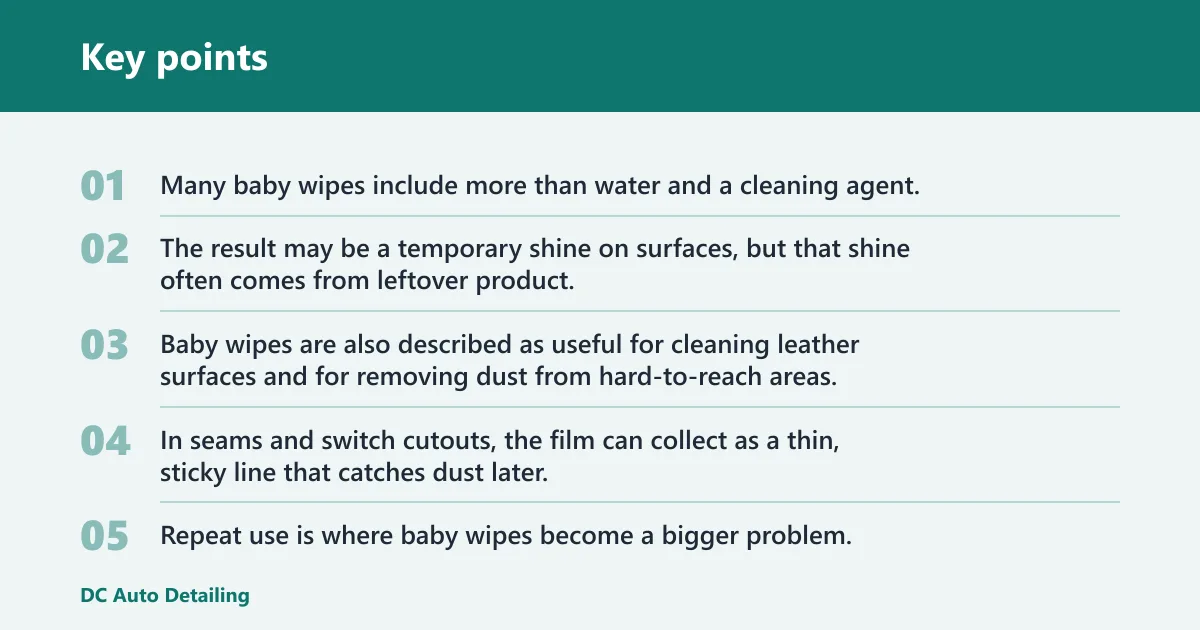
Many baby wipes include more than water and a cleaning agent. If the formula contains conditioners or oily additives, those can stay behind on plastic and vinyl after the water evaporates. The result may be a temporary shine on surfaces, but that shine often comes from leftover product.
Baby wipes are also described as useful for cleaning leather surfaces and for removing dust from hard-to-reach areas. Those claims help explain why they are used in cars. They do not remove the residue problem on textured dashboard plastics, where leftover product can sit in the grain.
What residue looks like on textured plastic
On textured plastic, residue often shows up as streaking along the raised pattern, a cloudy film near the top of the dash, or dull patches where the wipe started drying out. In seams and switch cutouts, the film can collect as a thin, sticky line that catches dust later.
Why repeat use raises buildup risk
Repeat use is where baby wipes become a bigger problem. One wipe-down may leave only a little film, but repeated wipe-downs can layer that film over time. The dash may start to look greasy, and dust can cling to it more quickly, especially around vents, speaker grilles, and textured edges.
Baby wipes are also marketed for quick cleaning of kitchen and bathroom surfaces and for use on car-like plastic items such as toys. Those uses point to their convenience, but a dashboard is a different target. Interior plastics are visible at eye level, so residue is much easier to notice.
How to remove wipe residue from a dashboard
Use microfiber cloths and a low-residue interior detailer spray. That combination removes the leftover film without adding another oily layer. If the dash already looks hazy, work in small sections and keep the panel dry as you go.
Dry the surface first. Wipe the area with a clean microfiber cloth to lift any loose residue from the baby wipe. Use light pressure so you do not push film deeper into texture or seam lines.
Apply a low-residue cleaner. Mist an interior detailer spray onto the microfiber, not directly onto delicate switches or openings. Choose a matte or satin finish product if the dashboard is meant to stay low-gloss.
Work the seams carefully. Fold the microfiber into a narrow edge and trace the texture, vents, and stitched or molded seams. This pulls residue out of the grain instead of smearing it across the panel.
Buff until dry. Finish with a second clean microfiber cloth to remove any remaining moisture. Stop when the surface looks even and feels dry to the touch, with no slick or cloudy spots left behind.
If the dashboard is heavily textured, use multiple clean sides of the microfiber cloth. Once a side loads up with residue, it starts spreading the same film back onto the panel.
What should you use instead?
For routine care, use a microfiber cloth plus an interior detailer spray. That pairing is better for dust, light grime, and finish control because it cleans with less leftover film. For UV protection and a controlled sheen, choose a dashboard protectant made for the finish you want.
Microfiber plus interior detailer spray
Microfiber cloths are lint-free wiping tools, and that matters on dashboards because loose fibers can cling to textured plastic and piano-black trim. A low-residue interior detailer spray is the better all-around choice for dust and light grime, especially in matte or satin finishes.
Baby wipes can clean surfaces fast, but interior detailers are made for interior plastics and vinyl. That difference shows up most clearly after drying. A proper detailer leaves less haze and less chance of a sticky feel.
Matte or satin interior cleaners
Choose a matte or satin interior cleaner when the dash has a factory low-gloss appearance. These products are made to clean without adding obvious shine, which helps preserve the look of soft-touch plastic and vinyl dashboard surfaces.
When to choose a dashboard protectant
Use a dashboard protectant when you want UV protection and a specific finish level after cleaning. Some protectants dry shiny, while others are made to stay matte. Apply them only after the panel is clean, because protectant over residue can lock in haze or streaks.
Dashboard protectant is for finishing, not for first-pass cleaning. If the surface already has baby wipe film on it, clean that off first. Otherwise, the panel can end up looking more glossy than intended.
Can baby wipes damage interior plastic or vinyl?
They can, indirectly. Baby wipes usually do not melt plastic, but the wrong formula can dull matte vinyl, leave a sticky feel on coated trim, or create buildup that changes the finish over time. The issue is more about residue and appearance than immediate physical damage.
Sealed plastic and vinyl are usually more tolerant than uncoated or soft-touch surfaces, but tolerance is not the same as suitability. If a wipe leaves a film, the panel becomes harder to keep clean later.
Failure cases to watch
- Cloudy film on top of the dash after drying.
- Streaks on glossy trim around the instrument cluster.
- Sticky dust buildup in vents, seams, and grain lines.
- A temporary shine that looks uneven across the panel.
These are common signs that the wipe formula is leaving something behind. The more often you repeat the process, the more obvious the change becomes.
Are baby wipes okay for leather or plastic car trim?
They can be acceptable on sealed leather or coated plastic trim in a pinch, but they should not be your default choice. On leather, especially coated leather, a low-lotion fragrance-free wipe may be tolerable for a quick cleanup. On plastic trim, the same wipe can still leave a sheen that you may not want.
Keep the use light and infrequent. If the trim is textured, patterned, or finished in matte black, residue may show up faster than on smooth coated pieces.
Frequently asked questions
Do baby wipes leave residue on plastic car dashboards?
They can leave residue, especially if the wipe contains lotions, conditioners, or added fragrance. On textured plastic, the residue may show up as haze, streaks, or a cloudy film in the grain. Repeat use raises the chance of buildup along seams and around vents.
Will baby wipes make my dashboard shiny or greasy?
They can, at least temporarily. That shine often comes from conditioners or other additives left on the surface after the water evaporates. If the dash looks greasy or too glossy afterward, wipe it again with a clean microfiber cloth and switch to a low-residue interior detailer spray.
Are baby wipes safe for matte dashboard surfaces?
They are the most likely to cause problems on matte surfaces. Even fragrance-free wipes can leave enough film to change the look from dry and even to patchy or slightly glossy. A matte interior cleaner and microfiber cloth are better choices if you want to preserve that finish.
What should I use instead of baby wipes on a dashboard?
Use a microfiber cloth with a low-residue interior detailer spray for regular cleaning. If you want UV protection or a controlled look afterward, add a dashboard protectant that matches the finish you want, such as matte or satin. That approach keeps the dash cleaner and drier.