How to keep leather seats from cracking
Keep leather seats from cracking by cleaning off grit regularly, limiting UV exposure, and avoiding harsh cleaners; use conditioner only on clean, dry leather every few months. Skip those steps and the clear topcoat dries out, abrades, and splits, which usually means more than a simple cleanup. This guide covers the main crack triggers, the right products, and a maintenance schedule that protects coated automotive leather.
Why leather seats crack first
On most modern cars, the visible seat surface is pigmented leather with a colour coat and a clear topcoat over the hide. That means prevention starts with protecting the coating first. Once the top layer loses flexibility or gets worn thin, cracking can follow even if the leather below is still intact.
UV exposure and cabin heat
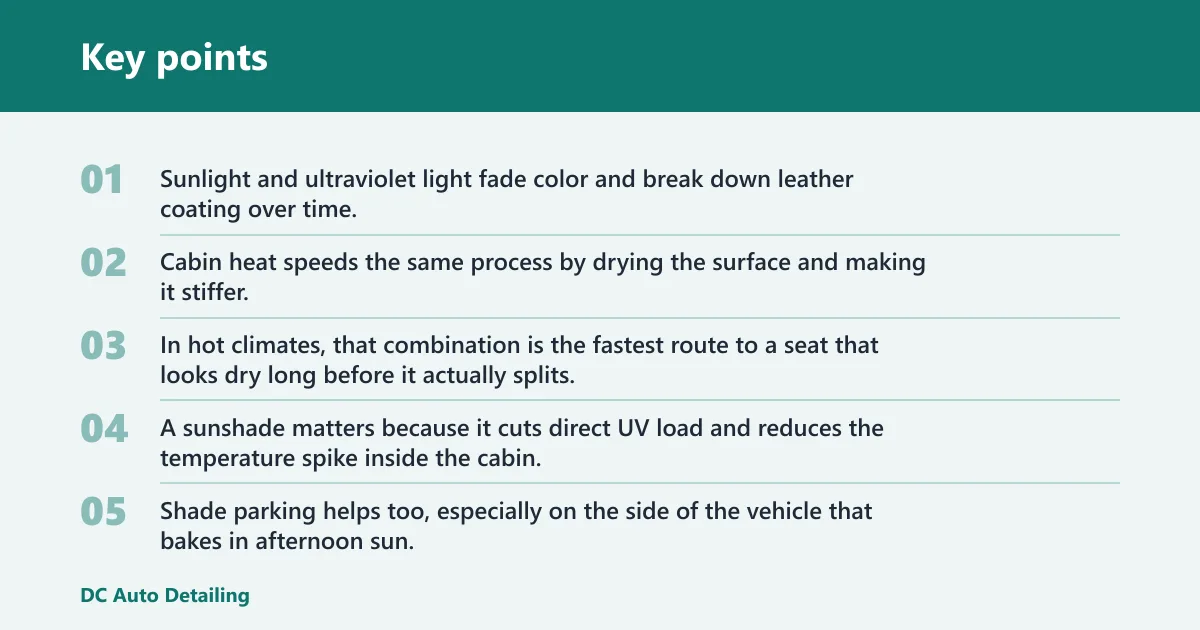
Sunlight and ultraviolet light fade color and break down leather coating over time. Cabin heat speeds the same process by drying the surface and making it stiffer. In hot climates, that combination is the fastest route to a seat that looks dry long before it actually splits.
A sunshade matters because it cuts direct UV load and reduces the temperature spike inside the cabin. Shade parking helps too, especially on the side of the vehicle that bakes in afternoon sun. If the car sits outside every day, those small habits add up.
Friction on driver bolsters
Friction from sliding in and out wears the outer driver bolster first. That edge takes repeated contact from clothing, belts, and body weight, so the coating polishes thin before the rest of the seat shows much damage. The first visible failure is often a shiny, flattened patch that later turns dry and cracked.
That wear pattern is not random. If the outer bolster is already dull and hard, it needs attention sooner than the seat cushion or backrest.
Dust, grit, and dirty seams
Abrasive dust acts like sandpaper during every journey. It collects in seams, bolsters, and stitched edges, then gets dragged across the finish every time you enter, exit, or shift in the seat. Vacuuming before any wipe is one of the simplest ways to slow that wear.
Dirty seams matter because loose grit stays trapped there longer than on open panels. If you wipe first and vacuum later, you are rubbing debris across the topcoat instead of removing it.
What coated automotive leather needs
Coated automotive leather needs surface care that protects the topcoat, not heavy treatment meant for unfinished hide. That difference matters because most cracking starts in the coating. If the coating is damaged by friction or chemicals, conditioner has less to work with.
Topcoat versus bare leather
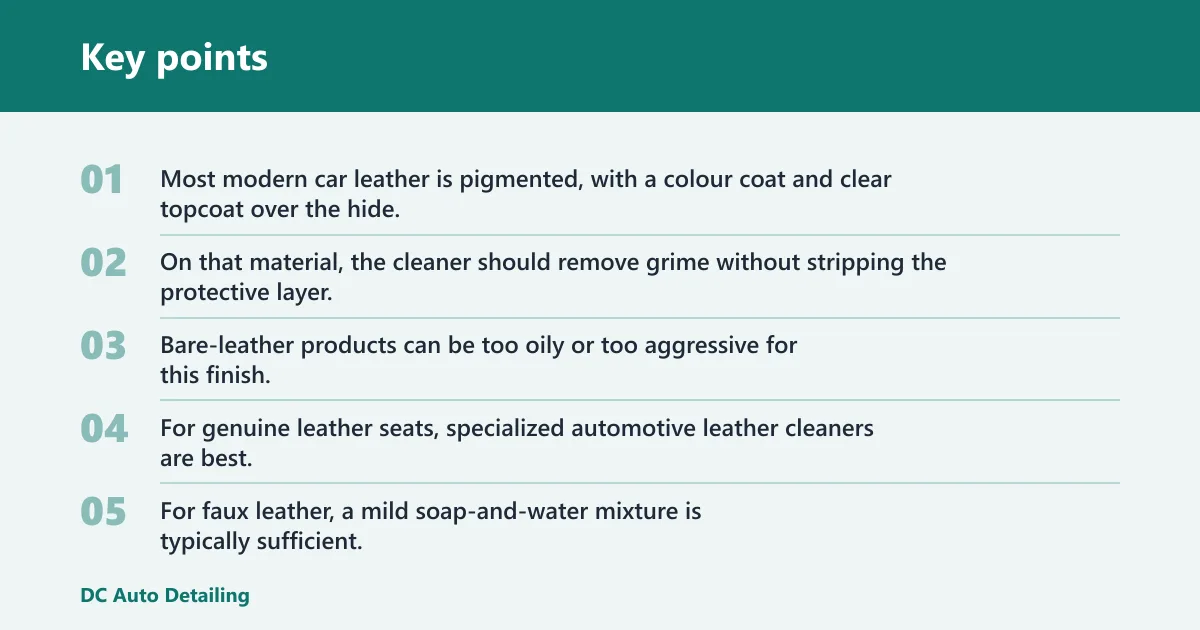
Most modern car leather is pigmented, with a colour coat and clear topcoat over the hide. On that material, the cleaner should remove grime without stripping the protective layer. Bare-leather products can be too oily or too aggressive for this finish.
For genuine leather seats, specialized automotive leather cleaners are best. For faux leather, a mild soap-and-water mixture is typically sufficient. Strong cleaners can break down the material.
Why cleaner matters more than heavy conditioner
Body oils and sunscreen slowly break down the clear topcoat, and ordinary dirt accelerates that process. A dedicated automotive leather cleaner removes those contaminants before they are worked deeper into the finish. That is more useful than loading on product after the surface is already dirty.
Conditioner can help a coated seat feel less dry, but it does not reverse cracking or soften leather already hardened. If the coating is worn thin, conditioning alone is just maintenance on a damaged surface.
What household products can strip
Household cleaners can strip the clear topcoat that protects car leather. That includes many all-purpose sprays, strong degreasers, ammonia-based products, bleach, and other harsh chemicals. They may make the seat look clean for a day, then leave it drier and more vulnerable.
Suppose a sedan’s seats have a chalky, dull shine after a kitchen cleaner is used on the driver bolster. The issue is often not the dirt alone. The cleaner may have dulled the coating that was already taking the wear.
How do you clean leather seats without causing damage?
Clean leather seats by removing grit first, then using a dedicated automotive leather cleaner on a microfiber cloth or soft brush, and drying the surface completely. The goal is to lift soil without grinding it into the finish or leaving residue behind. That routine protects the clear topcoat better than aggressive wiping.
Vacuum the seat first. Use a soft brush attachment and focus on seams, bolsters, and seat creases before any liquid cleaner touches the leather. That keeps abrasive dust from turning the wipe step into a sanding pass.
Apply a leather-safe cleaner. Use a dedicated automotive leather cleaner on a microfiber cloth or soft brush, then work one small section at a time. Light agitation is enough for coated leather; hard scrubbing can thin the finish.
Wipe and dry fully. Remove residue with a clean microfiber cloth and let the surface dry completely before anyone sits on it. A damp seat holds grime and can leave the topcoat sticky or uneven.
Inspect the high-wear zones. Check the outer driver bolster, seat entry edge, and stitching after cleaning. Those areas show coating loss first, so early attention matters more than polishing the entire seat.
How often should you clean leather car seats to prevent cracking? Routine cleaning should be monthly for everyday use, with deeper cleans every three months. Gentle monthly cleaning helps prevent most cracking in hot climates, especially when the car sees daily sun, dust, and repeated entry on the same side.
Does conditioner stop leather seats from cracking?
Conditioner can help a coated seat feel less dry, but it does not stop cracking on its own. It also will not reverse cracks or soften leather already hardened. Once the coating is worn through or polished thin, cleaning and protection matter more than extra conditioner.
What conditioner can do
On a seat that is still intact, conditioner may help the surface feel more supple and reduce that dry, tight look. It can be useful after cleaning if the leather is dry but not damaged. That is maintenance, not repair.
What conditioner cannot do
Conditioner will not restore missing coating, close visible splits, or undo friction wear on the driver bolster. It also cannot fix damage from harsh cleaners. If the leather already feels hard, sticky, or polished thin, the problem is usually beyond surface conditioning.
A common first-timer mistake is to keep adding conditioner to a seat that has already lost its top layer. The result is often a glossy, slick panel with no real improvement in crack resistance.
When to skip it and focus on cleaning
If the seat is dusty, grimy, or exposed to sunscreen and body oils, clean first. If the finish is healthy, a light conditioner or protectant can follow. If the finish is already failing, a cleaner and a protective routine are more valuable than product buildup.
How to protect seats from sun and heat
Protect seats from sun and heat by reducing direct UV exposure, lowering cabin temperature, and limiting heat soak after parking. UV and cabin heat dry and weaken the coating over time, so the best approach is to reduce the load before the leather has to absorb it.
Park smart and use a sunshade
Shade parking is the first line of defense. When shade is not available, a fitted windshield sunshade can reduce direct exposure and slow cabin temperature rise. That is especially useful for cars that sit outside for long stretches.
Parking with the driver side away from the strongest afternoon sun can also help. It does not remove the risk, but it reduces the worst exposure on the bolster that already wears first.
Reduce heat soak after parking
If the car has been sitting in full sun, let the cabin vent heat before rubbing the seats down or applying product. Hot leather is easier to mark, and any residue is more likely to spread unevenly. A cooler surface is simply easier to maintain.
Use breathable seat protection in hot climates
Seat covers can reduce friction and sunlight exposure in hot climates, but only if they are breathable and fit correctly. A poorly fitted cover can trap heat, rub the leather, or interfere with seat functions. The wrong cover can create a new wear pattern while trying to prevent one.
Leather crack prevention decision matrix

Use this matrix to match the routine to the car’s use pattern. The right plan depends on where the car sleeps, how often it is driven, and how much heat and friction the seats see.
| Scenario | Top 5 risks | Best preventive action | What to avoid | Monthly maintenance cadence |
|---|---|---|---|---|
| Daily driver | Driver bolster friction; dust and grit; body oils; short sun exposure; repeated in-and-out wear | Vacuum seams, clean with a dedicated automotive leather cleaner, and use a sunshade when parked | Household cleaners, aggressive scrubbing, skipping the outer bolster, leaving grit in creases | Vacuum weekly if dusty; clean monthly; condition only on clean, dry leather every 2–3 months |
| Garage-kept | Body oils; sunscreen transfer; occasional UV through glass; slow coating dulling; neglected seams | Light monthly wipe-down and periodic inspection of bolsters and stitching | Overcleaning, oily dressings, strong solvents, leaving residue on low-use seats | Clean monthly; deeper clean every three months; condition only when the surface feels dry, not as a default step |
| Hot-climate, high-mileage | Heat soak; UV load; friction; abrasive dust; coating breakdown from frequent use | Use shade parking, a windshield sunshade, and a breathable, correctly fitted cover if compatible | Dark heat-trapping covers, ammonia or bleach products, skipping vacuuming, heavy conditioner on dirty leather | Vacuum weekly; clean monthly at minimum; inspect bolsters every month; condition after cleaning only when the surface is not already worn thin |
For hot-climate daily driving, the routine should be stricter, not looser. Heat and UV break down leather coating and hide in vehicles, so a car that bakes outdoors needs more frequent inspection than a garage-kept weekend car.
Should you use seat covers on leather seats?
Seat covers can help when they reduce friction and sun exposure without creating new problems. They are not universally safe. Fit, breathability, and compatibility with airbags or seat functions decide whether a cover protects the leather or adds risk.
When a seat cover helps
A breathable, correctly fitted cover can reduce rubbing on the outer bolster and block some sunlight. That makes sense for high-mileage commuting, rideshare use, or vehicles that spend long hours in direct sun. It is most useful when the seats are otherwise wearing fast from entry, exit, and heat.
When a seat cover causes problems
A loose or non-breathable cover can trap heat, shift under the driver, or rub the leather harder than bare clothing would. Some covers also interfere with seat airbags, power controls, heaters, or occupancy sensors. If the fit is wrong, the cure can be worse than the wear.
Fit, breathability, and safety checks
Check that the cover is made for the specific seat layout and does not block airbags, seams, latches, or seat controls. Breathable materials matter in hot weather because trapped heat speeds drying. If the cover cannot be secured cleanly, it is usually better to skip it and focus on cleaning, shade, and careful entry habits.
What is the difference between preventing cracking and repairing it?
Preventing cracking means keeping the coating clean, cool, and low-friction so it does not fail early. Repairing cracking means dealing with a surface that is already damaged. Those are different jobs, and cleaning alone cannot move a cracked seat back into the prevention category.
If the leather only feels dry, a cleaner and light conditioner may still help the finish. If it is hard, sticky, or visibly split, the damage is already past simple maintenance. A full retrim replaces every panel and costs the most, while home repair kits often struggle with color matching because leather fades unevenly.
Picture a driver bolster that looks shiny and feels slick before any visible crack appears. That polished look usually means the topcoat is thinning from friction, not that the seat simply needs more conditioner. Catching it there is the difference between maintenance and repair work later.
Frequently asked questions
How do I keep leather seats from cracking?
Keep them clean, dry, and low-friction. Vacuum grit before wiping, use a dedicated automotive leather cleaner, protect the seats from UV with shade parking or a sunshade, and use conditioner only on clean, dry leather. On coated automotive leather, topcoat care tends to matter more than heavy product use.
How often should I clean leather car seats to prevent cracking?
Routine cleaning should be monthly for everyday use, with deeper cleans every three months. If the car sees hot weather, dusty roads, or frequent entry and exit, shorten the interval for the driver bolster and seams. Dirt and grit are easier to remove before they rub the finish thin.
What causes leather car seats to crack first?
The outer driver bolster usually fails first because repeated sliding in and out abrades that edge. Heat, UV, body oils, sunscreen, and abrasive dust all speed the process. Once the clear topcoat thins, the leather underneath dries and splits more easily.
Should I use seat covers to protect leather seats from cracking?
Sometimes. A breathable, correctly fitted cover can reduce friction and sunlight exposure, but a poor fit can trap heat, rub the leather, or interfere with airbags and seat functions. Use one only if it is designed for the seat and does not create new wear or safety risks.
Can household cleaners crack leather car seats?
Yes. Household cleaners can strip the clear topcoat that protects car leather, and that can leave the surface drier, duller, and more vulnerable to cracking. Use a dedicated automotive leather cleaner instead. Strong chemicals have no place on coated leather seats.