What car wash soap works best for a foam cannon?
The best foam cannon soap is a pH-balanced car wash soap made for pressure sprayers, with good cling, strong lubricity, and a clean rinse on your water, washer, and paint protection. Pick the wrong soap and you can end up with weak foam, streaks, or more residue than you wanted. This guide keeps the focus on what to buy, what to avoid, and how to match soap to your setup.
Which foam cannon soaps are the best overall?
For most DIY wash setups, the best choice is the soap that removes road film well, rinses clean, and behaves predictably in your water. That usually means a pH-balanced formula and a product labeled for car wash or foam cannon use, not the one that simply makes the biggest foam cloud.
Chemical guys mr. pink
Mr. Pink is a strong all-around pick when you want thick, stable foam and broad compatibility, based on the product’s labeling. It is a practical default for routine pre-washes when you want a balance of foam, lubrication, and easy rinse behavior.
Meguiar’s gold Class
Gold Class fits drivers who want a foam cannon soap that stays friendly to normal paint-care maintenance. It is positioned for routine washing with a clean rinse and a glossy finish bias, making it a good choice when you care more about wash feel than chasing the heaviest foam.
Rain-X foaming Car Wash
Rain-X Foaming Car Wash is the value-oriented option in this group. The 100 fl oz bottle makes sense for frequent washing, and it is aimed at strong foam output for clear coats and similar paint-care use cases.
Armor All Ultra shine wash & wax
Armor All Ultra Shine Wash & Wax is the convenience pick when you want wash-and-wax behavior in one bottle. It is the better fit when you want a quick shine step built in, not the stripped-down choice for maximum foam or the cleanest pre-wash.
What makes a foam cannon soap work well?
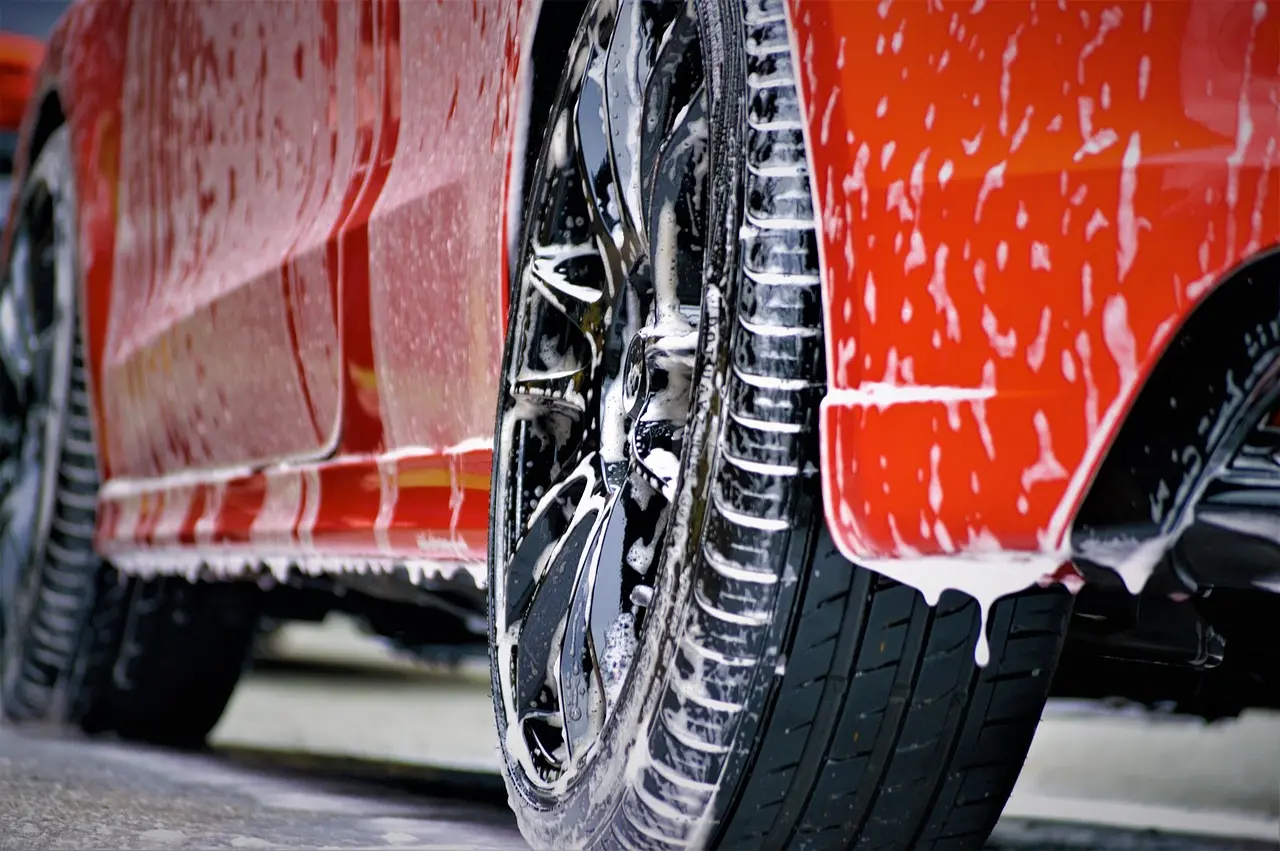
The right foam cannon soap does three jobs at once. It has to make enough foam to stay on the panel, add lubricity so grime moves instead of grinding, and rinse away without film. Big bubbles alone do not clean a car.
Foam density vs. cleaning ability
Dense foam looks impressive, but it only matters if it helps loosen traffic film and road grime. A soap can look thick in the bottle and still leave a weak wash film on paint. The real test is whether the foam carries dirt down the panel and releases it at rinse time.
That is why a good pre-wash soap is only part of the process. Foam cannon use works best as a pre-wash step, followed by a contact wash if the car is actually dirty. On heavy road film, foam alone is not enough.
Lubricity and rinse-clean behavior
Good car wash soaps add lubrication so grime glides off paintwork instead of dragging across the clear coat. That matters more than flashy foam when you are washing dusty daily-driver paint, bug residue, or winter film. If the soap rinses poorly, you can trade dirt removal for streaks and residue.
Safety on wax, sealant, and ceramic
pH-balanced formulas are the safer starting point for wax, sealant, and ceramic-coated paint, but that is a general maintenance-wash guideline rather than a guarantee for every product. Product-specific claims vary, so use the bottle’s labeling to judge whether the soap is intended for protected finishes and keep the chemistry simple.
How much soap should you use?
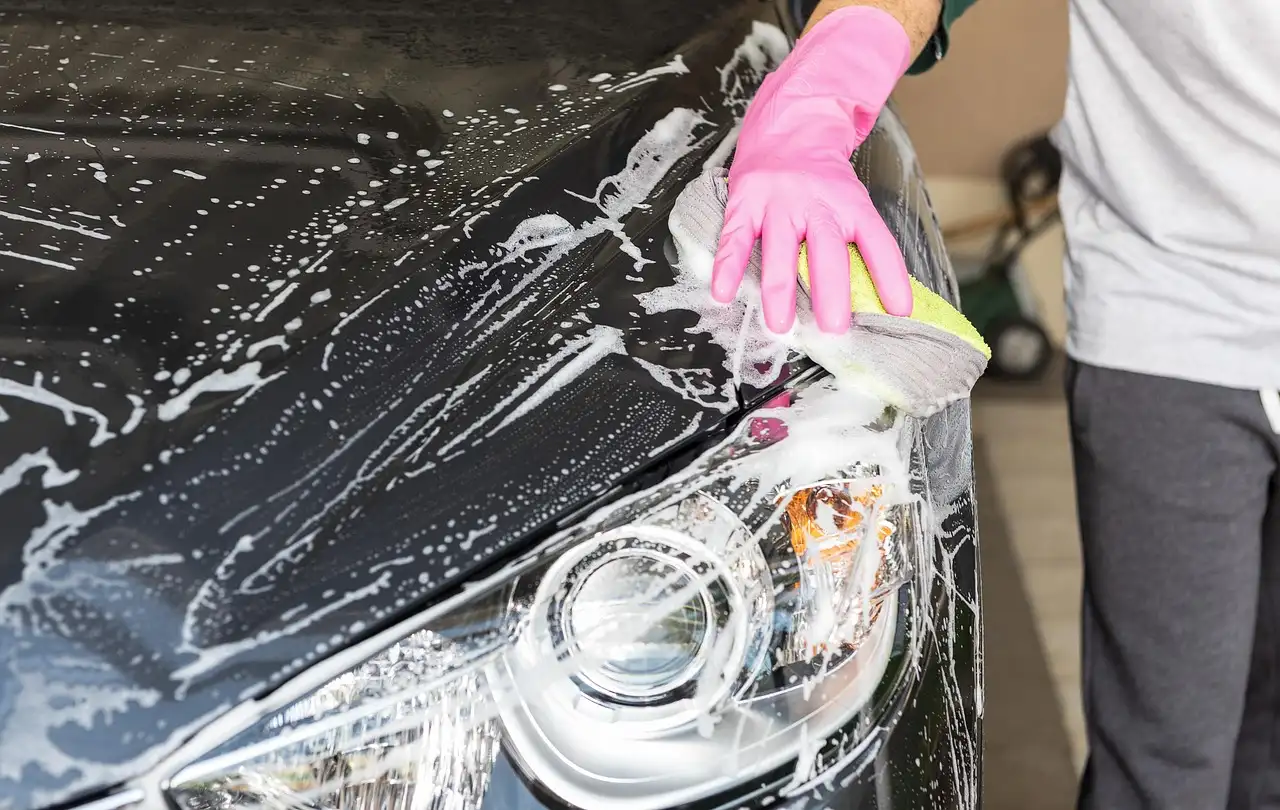
Start with the bottle’s directions, then adjust for your foam cannon setup, water hardness, and how dirty the vehicle is. A common foam cannon baseline is 1-2 ounces of soap in a 32-ounce bottle, but the working dilution can change a lot by product and equipment.
Bottle mix ratio vs. final dilution
Do not mix up the bottle fill ratio with the final wash dilution. A bottle mix ratio is what you pour into the foam cannon reservoir. Final dilution is the soap-to-water strength that comes out of the cannon once pressure washer water and air are added.
Typical foam cannon dilution ratios range from 1:20 to 1:64. A general starting ratio is listed as 1:9. Those are not the same number written two ways; they describe different ways of measuring soap strength depending on the product and the setup.
Starting dilution guidance
For many consumer foam cannons, a practical first fill is 1 to 2 ounces of soap in a 32-ounce bottle, then top the rest with water. That is a sensible starting point for maintenance washes. If the foam is too watery, increase soap a little. If the foam is heavy and sticky, reduce the mix.
Say your foam cannon leaves thin suds on a gray sedan after a 2-minute dwell. That often means the mix is too light, the water is hard, or the cannon is underpowered for the nozzle setup. Change only one variable first, usually the soap amount.
When to change the mix
Use a stronger mix when the car has heavier road film or when your water suppresses foam. Use a lighter mix when the soap clings too long, leaves residue on trim or glass, or starts to feel hard to rinse. The goal is enough foam for contact reduction, not a foam blanket that dries on the panel.
- Check the bottle label. Start with the manufacturer’s mix guidance if it is printed on the bottle. If the label gives a range, stay inside it before changing anything else.
- Fill the reservoir first. Add the measured soap, then add water to the fill line. That helps the soap disperse evenly instead of sitting in one concentrated layer at the bottom.
- Adjust in small steps. Change the soap amount by small increments, not huge jumps. Small changes make it easier to see whether weak foam comes from dilution, pressure, or hard water.
Foam cannon soap selection matrix
This table separates foam output from real wash performance. Use it to match the soap to your goal, not to chase the tallest pile of suds.
| Soap | Foam density | Lubricity | Rinse cleanliness | Protection safety | Value per wash | Best use case | Troubleshooting |
|---|---|---|---|---|---|---|---|
| Chemical Guys Mr. Pink | High and stable | Strong | Good | Best for routine use on protected paint, per labeling | Good | Maximum foam with a balanced wash feel | Watery foam: increase soap or check water hardness. Clinging foam: reduce mix. Residue: rinse sooner. |
| Meguiar’s Gold Class | Moderate to high | Strong | Very good | Best for routine use on protected paint, per labeling | Good | Routine washing with a glossy finish bias | Watery foam: raise concentration slightly. Clinging foam: shorten dwell. Residue: use less product and rinse fully. |
| Rain-X Foaming Car Wash | High | Moderate | Good | Intended for clear coats and similar paint-care use cases | Very good | Lowest cost per wash | Watery foam: increase mix and verify pressure washer output. Clinging foam: cut soap back. Residue: avoid overfilling the bottle. |
| Armor All Ultra Shine Wash & Wax | Moderate | Moderate | Good | Leaves light wax protection | Good | Wash-and-wax convenience | Watery foam: raise soap slightly. Clinging foam: shorten dwell. Residue: do a final rinse and avoid sun-baked panels. |
What affects foam performance?

Foam performance changes with the water in your area, the pressure washer feeding the cannon, and how long the foam sits on the paint. That is why one soap can look excellent on one setup and weak on another.
Water hardness
Water hardness affects foam density and can reduce foam performance. Hard water can make a good soap look weak even when the formula is fine. If your mix suddenly looks thin, hard water is one of the first things to check.
- Thin foam: hard water, weak mix, or low washer output
- Fast collapse: not enough soap or poor atomization
- Sticky foam: too much product or too much dwell time
- Residue: overmixing, drying panels, or poor rinsing
Picture a foam cannon that gives dense foam on one hose bib and thin foam on another. If the soap and nozzle are unchanged, the water supply is often the difference. That is why the same bottle can behave differently from one driveway to the next.
Pressure washer output
Consumer foam cannons work best when the washer gives enough output to draw and atomize the soap consistently; lower-output washers can still work, but the foam is often thinner and less uniform. If the washer is underpowered, even a good soap may look weak or collapse quickly.
Dwell time and dry-time risk
Foam should dwell 3-5 minutes before washing. Do not let it dry on paint. Dwell time is there to loosen grime before contact washing, not to bake soap onto the surface.
A common first-timer mistake is filling the foam cannon with dish soap, which can strip wax, instead of using a pH-balanced car wash soap. The foam can dry on glass or black trim, then leave streaking or residue that takes extra rinsing to remove. Work in shade when possible and rinse before the foam flashes dry.
Which soap should you choose for your setup?
Choose the soap by job, not by hype. If you want the most foam, choose a soap known for stable foam and run a pressure washer that supports it. If you want easier rinsing or cheaper washes, that may be the better tradeoff.
Maximum foam
Pick Chemical Guys Mr. Pink when your goal is the strongest-looking foam with broad compatibility for routine maintenance washing. It is a good fit if you want dense coverage for a pre-wash and prefer a balanced wash feel.
Best glide for routine washing
Pick Meguiar’s Gold Class when you care more about wash feel and clean rinse behavior than giant foam output. It fits maintenance washes on protected paint, especially when the vehicle is dusty rather than heavily soiled.
Lowest cost per wash
Pick Rain-X Foaming Car Wash when value matters most. The 100 fl oz bottle gives it an advantage for frequent washing, and it makes sense if you want a foam-first soap without paying for extra features you will not use.
Wash-and-wax convenience
Pick Armor All Ultra Shine Wash & Wax when you want a light protection boost during the wash. It is not the best choice if your only goal is maximum foam or the cleanest pre-wash. It is better when time is tight and you want a modest shine step built in.
How do you use foam cannon soap correctly?
The right soap still fails if the process is wrong. Mix the bottle correctly, spray with even coverage, let the foam dwell briefly, then rinse before touching the paint.
- Mix the bottle. Start with the label directions or a 1 to 2 ounce baseline in a 32-ounce bottle. Adjust the concentration only after you see how the foam behaves with your water and washer.
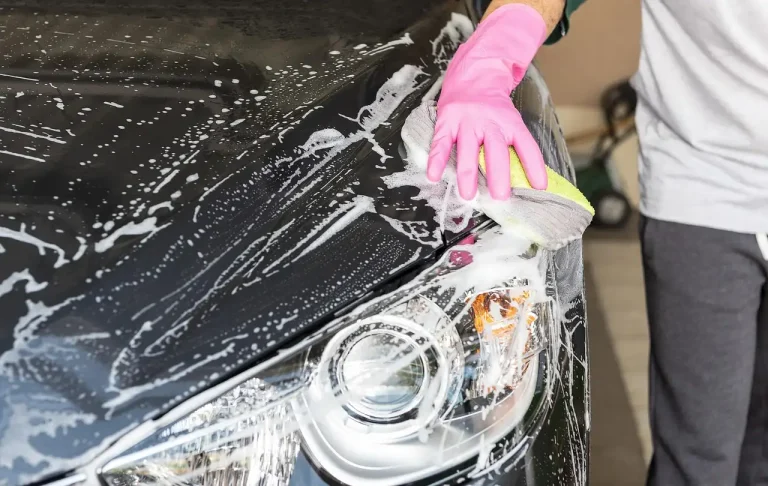
- Spray the vehicle. Cover the panels evenly, usually from lower areas upward or in overlapping passes that keep coverage uniform. The goal is full panel wetting, not spotty foam islands.
- Let it dwell. Give the foam about 3-5 minutes to loosen grime. Stop sooner if the sun or heat starts to dry the film.
- Rinse before contact. Wash off the loosened grime before you touch the paint with a mitt. That is where the swirl-risk reduction happens.
Frequently asked questions
What car wash soap works best for a foam cannon?
The best foam cannon soap is a pH-balanced product made for pressure sprayers that rinses clean, adds lubricity, and behaves well with your water and washer. Chemical Guys Mr. Pink is the strongest all-around foam-first pick here, while Meguiar’s Gold Class is the safer choice for routine washing and protection-friendly cleanup.
Can you use car wash soap in a foam cannon?
Yes, if the soap is designed to work in a foam cannon or pressure sprayer and the dilution is right. Regular car wash soaps can work, but foam output, cling, and rinse behavior vary. Use a pH-balanced formula when possible and avoid harsh detergents that are not meant for paint care.
How much car wash soap should I use in a foam cannon?
A common foam cannon baseline is 1-2 ounces of soap in a 32-ounce bottle, then fill the rest with water. Some products need more or less, and the effective working range can vary from about 1:20 to 1:64 depending on the soap and setup. Start light and adjust in small steps.
Is pH-balanced soap better for a foam cannon?
For most paint care, yes. A pH-balanced soap is a safer starting point for wax, sealant, ceramic, and clear coat because it is less likely to be harsh during routine washing. It still has to rinse well and add enough lubricity; pH balance alone does not guarantee better foam or better cleaning.
Can you put any car wash soap in a foam cannon?
No. Some soaps foam well but clean poorly, while others rinse poorly or leave residue. Use a soap that is intended for foam cannon use or clearly compatible with pressure washing. If the label does not support that use, the results can be weak foam, streaking, or poor rinse behavior.
What foam cannon soap ratio should I start with?
Start with the manufacturer’s direction if it is listed. If you need a general baseline, begin around 1 to 2 ounces in a 32-ounce bottle and adjust from there. If the foam is watery, increase concentration a little. If it is sticky or leaves residue, reduce it and rinse sooner.