Brake dust: Causes, removal and prevention
Brake dust is commonly made up of material from pad and rotor wear; some front-wheel dust is normal, but heavy buildup on one wheel, a burning smell, heat, vibration, or braking pull can point to a brake problem. Use the wrong cleaner or brush, and you can etch clear-coated wheels, stain bare aluminum, or overlook a sticking caliper. This guide explains what causes brake dust, how to separate normal dust from a fault, how to remove it safely by wheel finish, and which prevention options actually reduce buildup.
What is brake dust?
Brake dust is a friction byproduct from brake pads and rotors made of tiny particulate matter. It forms as pads clamp the rotors during braking, and it can range from light gray to dark brown. Some stays loose, while some bonds to wheel surfaces and becomes harder to remove after repeated heat cycles.
What brake dust is made
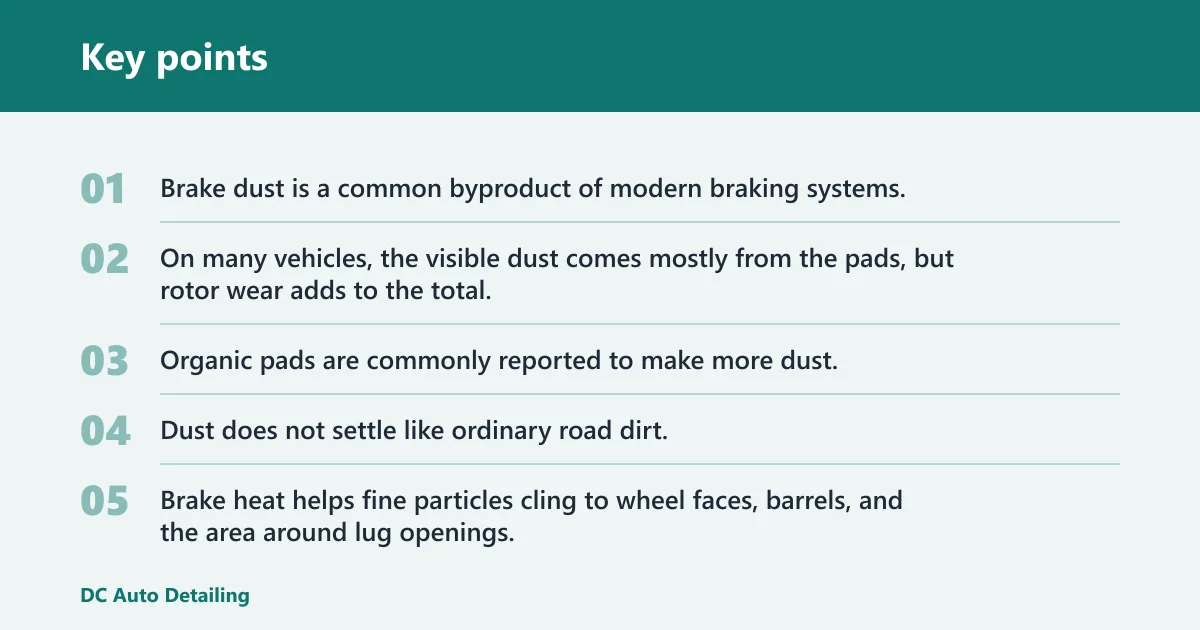
Brake dust is a common byproduct of modern braking systems. It comes from friction between brake pads and rotors, so the mix can include worn pad material, rotor material, and fine metallic residue. On many vehicles, the visible dust comes mostly from the pads, but rotor wear adds to the total.
Pad composition changes what you see. Organic pads are commonly reported to make more dust. Semi-metallic pads are often dustier than ceramic, while ceramic pads typically leave less visible dust than metallic pads and are often described as quieter than semi-metallic pads.
Why it sticks to wheels
Dust does not settle like ordinary road dirt. Brake heat helps fine particles cling to wheel faces, barrels, and the area around lug openings. If the wheel already carries a film of old dust, fresh dust sticks to it faster and can turn into bonded contamination instead of simple loose grime.
That matters because repeated dry wiping or hard scrubbing can grind those particles into the finish. Bare aluminum and some uncoated polished wheels are especially prone to staining or etching when dust sits too long.
Why color and texture vary
Brake dust can vary in color from light gray to dark brown. Lighter dust often looks powdery. Darker dust can look greasy or baked on, especially after repeated heat cycles. Color alone does not diagnose a fault, but a sudden change in amount, one-sided buildup, or dust paired with odor or noise deserves attention.
What causes brake dust on wheels?
Brake dust lands on wheels because every stop sheds some pad and rotor material, and the wheel sits directly in that airflow. Front wheels often collect more because weight shifts forward under braking, so the front brakes do a larger share of the work and tend to run hotter. More heat, harder stops, stop-and-go traffic, steep grades, and added vehicle load all raise dust output.
Pad and rotor friction
The basic cause is friction. Pads clamp the rotor, convert speed into heat, and wear a little each time. That wear is normal. What changes from vehicle to vehicle is how fast the pad wears, how the rotor surface looks, and how much heat the system sees.
Rotor condition matters more than many wheel-cleaning guides admit. Glazing, uneven wear, heat spots, and rough rotor surfaces can raise dust generation because the pad no longer meets a stable surface. Excessive dust may indicate wear, reduced braking performance, or improper pad-rotor compatibility.
Why front wheels usually collect more
Some front-wheel dust is normal because most vehicles rely more heavily on the front brakes during weight transfer, and front-biased brake systems convert more stopping force into heat at the front axle. That is why a clean rear wheel and a dustier front wheel pair usually do not point to a defect by themselves.
The pattern matters more than the absolute amount. Even left-to-right dust on both front wheels is usually less concerning than one front wheel turning dark much faster than the other.
How heat and braking load change dust output
Hard repeated stops raise rotor and pad temperature, which speeds pad wear and leaves more residue on the wheel. Frequent stop-and-go traffic does the same because the brakes have little time to cool between applications. Mountainous driving raises heat and wear in the same way. Towing, repeated downhill braking, and a full vehicle load can also raise dust output, even if the pad material has not changed.
Suppose a crossover comes back from a long downhill route with four adults and luggage. If both front wheels are evenly darker than usual and braking feel stays smooth, the extra dust can fit the heat and load rather than a fault. If one wheel is much hotter and darker, the pattern changes the answer.
What causes excessive brake dust?
Excessive brake dust usually means the pattern, speed of buildup, or related symptoms have changed. Common causes include dust-prone pad material, fast pad wear, glazed or uneven rotors, a sticking caliper, or driving conditions with repeated heavy braking, steep grades, towing, and stop-and-go traffic.
Pad material and wear rate
Pad choice is the fastest way to change normal dust output. Organic pads often dust more. Semi-metallic pads are often dustier than ceramic. Ceramic pads usually dust less, but they are not automatically the best match for every vehicle, because friction feel, cold bite, noise, rotor compatibility, and intended use still matter.
Heavy dust right after a recent pad change can be normal during bedding or early wear-in, especially if the old rotor surface and the new pad are still mating. That should trend toward stable, even dust on the axle. If the buildup stays extreme, appears on one wheel only, or comes with pull, squeal, drag, or heat, inspection comes before another cleaner or wax.
Rotor glazing, uneven wear, and heat spots
A glazed rotor can reduce stable friction and increase residue. Uneven rotors can make the pad contact patch inconsistent, which often leaves more dust and may add pulsation. Heat spots do something similar by changing how the pad transfers material to the rotor face.
Dust plus vibration is a stronger warning than dust alone. When those symptoms appear together, rotor condition and pad transfer should be checked before chasing cosmetics.
Sticky calipers and brake drag
Calipers shape the dust pattern because they control how evenly the pads release. A sticking caliper can keep one pad dragging on one rotor, which can raise heat, speed wear, and create noticeably more dust on one wheel.
One-wheel-only dust is often a clear inspection trigger. If that wheel is also hotter to the touch after a short drive, or there is a burning smell, the problem is no longer about dirty wheels.
Driving pattern, terrain, and vehicle load
Frequent short trips in traffic, repeated hard stops, steep grades, towing, and a heavily loaded vehicle all push the system toward more heat and more pad wear. Those causes tend to affect both wheels on the same axle in a similar way. A lopsided pattern still points back to hardware, not just route choice.
Dust pattern diagnosis table
| Dust pattern | Likely cause | Urgency | Next step |
|---|---|---|---|
| Both front wheels get dusty faster than the rears, with no pull, noise, heat, or vibration | Normal front-brake workload and routine pad wear | Low | Clean on a regular cadence, then add wheel sealant or wax to make later removal easier |
| One wheel gets much darker than the matching wheel on the same axle | Sticking caliper, dragging pad, or uneven pad release | High | Inspect soon for drag, wheel heat, pad thickness difference, and caliper movement |
| Heavy dust appears soon after new pads were installed, but braking stays straight and smooth | Normal bedding or early wear-in, or a dustier pad compound than before | Medium | Monitor for a short period; if dust remains extreme or becomes one-sided, inspect pad and rotor compatibility |
| Dusty wheels plus squeal | Pad wear, glazed pads or rotors, contamination, or caliper hardware issues | Medium to high | Inspect pads, rotors, hardware, and contact points before focusing on cleaning products |
| Dusty wheels plus vibration or pedal pulsation | Uneven rotor surface, heat spots, or pad transfer issues | High | Inspect rotor condition and braking feel; fix the brake issue before trying lower-dust products |
| Dusty wheel plus burning smell or obvious drag after a short drive | Brake drag, sticking caliper, or pad not releasing | High | Limit driving until the brake system is checked |
| All four wheels get dirty much faster after a route with steep descents or towing | Heat and braking load increased normal wear | Low to medium | Clean promptly, then review pad choice if the route is common |
When is brake dust a brake problem?
Brake dust becomes a brake problem when the pattern is uneven, the buildup is unusually fast, or it appears with squeal, grinding, burning smell, wheel heat, vibration, pulsation, or pulling. Dust by itself is often routine. Dust plus another symptom is where inspection matters more than wheel appearance.
One wheel gets much dustier than the others
This is the pattern that deserves the least delay. A single dark wheel on an otherwise normal car often points to a sticking caliper, seized slide, or pad drag. The same wheel may also feel hotter after a short drive.
Say your front left wheel turns brown again two days after cleaning while the front right still looks clean. That is not the usual front-brakes-do-more pattern. It is a left-versus-right pattern, and that points toward hardware.
Heavy dust after new pads
Recent pad replacement can create temporary heavy dust during bedding and early surface transfer. That can be acceptable when the axle dusts evenly and the car stops straight without odor, drag, or noise. It becomes concerning when the dust stays extreme, turns one-sided, or shows up with squeal or heat.
Dust with squeal, grinding, or burning smell
Squeal can mean pad wear, glazing, contamination, or hardware issues. Grinding is more serious and can suggest very worn friction material or metal-to-metal contact. A burning smell, especially from one corner, raises concern for drag or overheating.
These symptoms change cleaning advice too. If a wheel is abnormally hot, do not spray cleaner on it. Wheels should be cool before cleaning, and hot wheels are more prone to cleaner damage.
Dust with vibration, pulsation, or pulling
Vibration or pedal pulsation points toward rotor surface problems, heat variation, or unstable pad transfer. Pulling under braking can point to uneven braking force side to side. In either case, dust is acting like a clue, not the main problem.
Picture a sedan that develops steering shake from 55 mph during moderate braking and both front wheels start dusting more than usual. The dust matters, but the shake moves rotor and pad inspection to the top of the list.
How do you remove brake dust safely?
Remove brake dust safely by working on cool wheels, choosing a wheel cleaner that matches the finish, using rinse water and soft or dedicated brushes, and stopping short of hard scrubbing when dust is bonded. The goal is to lift contamination without damaging clear coat, paint, powder coat, polished metal, or matte finishes.
Safe cleaning process
- Let the wheels cool. Wait until the wheel and brake area are cool to the touch before any cleaner touches the surface. Cleaner on a hot wheel can dry too fast, spot the finish, and raise the chance of staining or etching. For a basic overview, see wikihow.com.
- Wear basic protection. Avoid breathing brake dust, and wear protective gloves when working around it. That matters most when dust is dry and concentrated near the barrel, caliper area, or lug openings.
- Rinse loose debris. Use plain water first to float off grit that could scratch during brushing. A thorough rinse also shows which contamination is loose dust and which areas are baked on or bonded.
- Apply finish-safe cleaner. Use a non-corrosive, wheel-safe cleaner that matches the wheel finish, or use warm, soapy water if the finish is unknown and the wheel is only lightly soiled. Let the cleaner dwell briefly according to the label, but do not let it dry.
- Brush with light pressure. Use soft or dedicated wheel brushes for the face, spokes, lug recesses, and inner barrel. Light agitation is enough for routine dust; hard scrubbing often adds marring without removing bonded contamination.
- Rinse completely. Flush the cleaner and loosened dust out of crevices and away from the tire shoulder. Leftover cleaner residue can streak, especially on dark wheels and satin finishes.
- Repeat only if needed. If a second round is needed, repeat with the same finish-safe chemistry before moving to anything stronger. Repeated harsh attempts on the wrong finish cause more damage than the dust itself.
- Protect the clean wheel. Apply wheel sealant or wax after cleaning to create a protective barrier for wheels to repel dust. It will not stop dust completely, but it makes future removal easier and helps reduce staining.
When dust is bonded, not loose
If routine cleaner and light brushing leave peppered spots or a stained film, the issue may be bonded contamination rather than fresh dust. At that point, the answer is a stronger but finish-safe decontamination product or method, not more pressure with the same brush.
On unknown finishes, start with the least aggressive method. Reaching for acidic or highly caustic chemistry on a mystery wheel is where avoidable damage starts.
Which wheel cleaners are safe for your finish?
The safe cleaner is the one that matches the wheel finish and is used on a cool wheel. Clear-coated, painted, and powder-coated wheels usually tolerate mild wheel-safe cleaners well. Polished metal, bare aluminum, alloy, matte, and satin finishes need more caution because harsh chemistry can stain, etch, or change the appearance.
Clear-coated, painted, and powder-coated wheels
These finishes usually respond well to non-corrosive wheel cleaners, rinse water, and soft brushes. They are still not immune to damage. Brake dust can etch and stain aluminum wheels, and coated wheels can spot if cleaner dries on the surface.
Painted and powder-coated wheels benefit most from regular cleaning cadence because the finish is easier to keep clean before dust bakes on.
Polished, bare aluminum, and alloy wheels
Bare or polished metal has less margin for error. Strong, unspecified wheel chemicals can stain polished lips and discolor bare aluminum. Alloy wheels vary in coating, so if the finish is uncertain, warm, soapy water is the safer first pass.
If brown staining remains after a gentle wash, do not assume more force is the answer. The wheel may need a finish-safe decontamination product rather than another round of scrubbing.
Matte and satin finishes
Matte and satin wheels need cleaners that do not add gloss, haze, or blotching. Aggressive chemicals and stiff brushes can change the texture or sheen, and some protectants are wrong for these finishes.
A common first-timer mistake is treating a matte powder-coated wheel like a glossy clear-coated one, then chasing a stain with stronger cleaner and a stiff brush. The dust may come off, but the finish can change more than the dirt did.
Why cool wheels matter before any cleaner touches them
Heat speeds chemical action and evaporation. That shortens dwell time, makes residue harder to rinse, and raises the chance of spotting or etching. It also makes diagnosis harder, because a hot wheel may already be warning about brake drag or overworked brakes.
How do you stop brake dust on wheels?
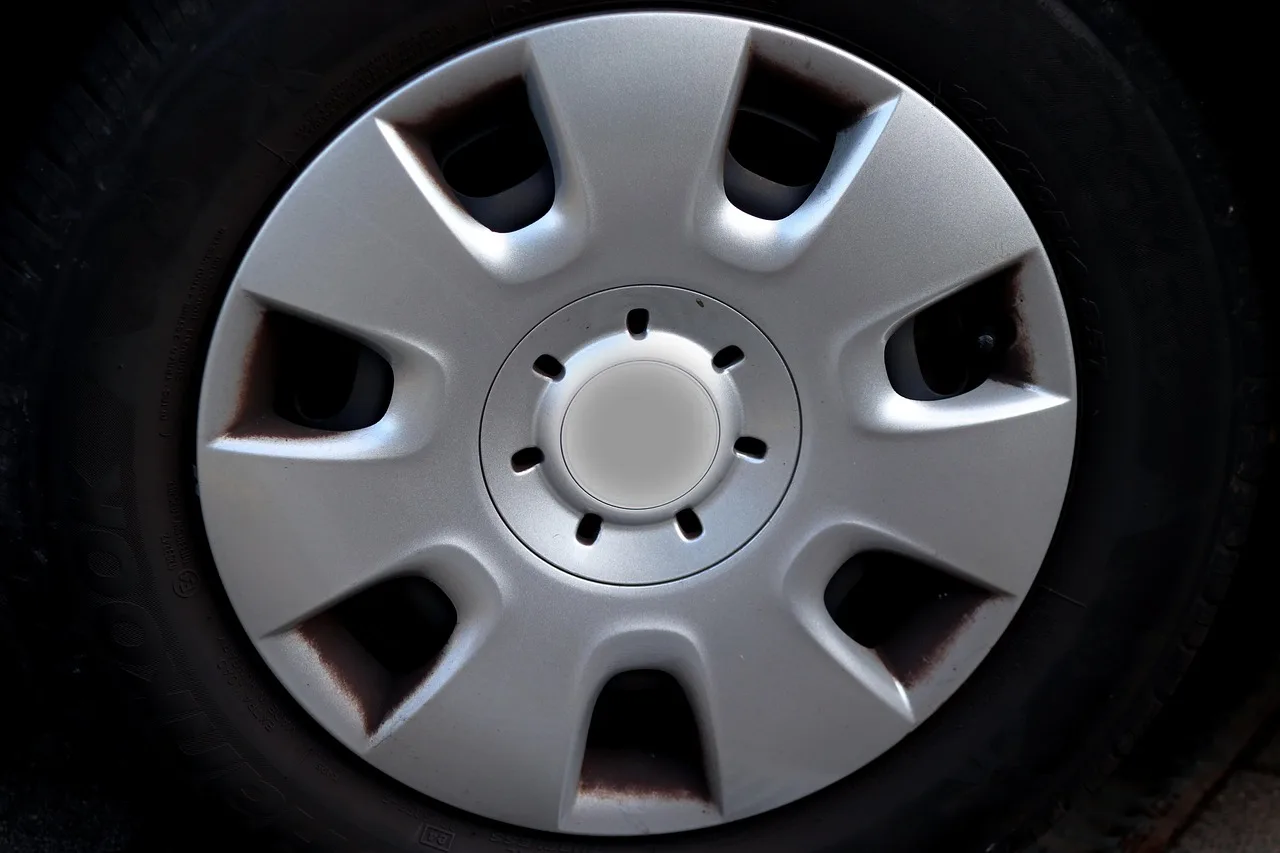
You reduce brake dust fastest by choosing a lower-dust pad where it fits the vehicle, then backing that up with regular cleaning and wheel protection. Braking habits matter too. Shields can reduce deposition, but they bring possible noise, cooling, and clearance tradeoffs and should be considered carefully.
Lower-dust pad choices and tradeoffs
Ceramic pads usually create less visible dust than organic or semi-metallic pads, and they are often quieter than semi-metallic pads. That makes them a strong option for many street-driven vehicles with dark wheels, polished lips, or owners who clean often.
They are not the answer for every car. Some vehicles respond better to their original pad type for pedal feel, low-temperature bite, rotor compatibility, or intended use. If a car sees repeated heavy descents, towing, or performance-style braking, pad choice should match that job first and wheel-cleaning goals second.
Wheel sealant or wax after cleaning
A wheel sealant or wax creates a barrier that helps future dust removal. It does not eliminate dust, but it lowers how strongly fresh dust bonds to the finish. That is often the quickest prevention step short of changing pads.
Cleaning cadence that prevents staining
Regular cleaning works because it stops repeated heat cycles from baking dust into the finish. If dust is allowed to sit until it turns into staining, prevention has already been missed.
Dark-colored wheels and polished finishes often need a tighter cadence because they show buildup sooner or stain more easily. Light routine cleaning is safer than occasional aggressive cleaning.
Brake dust shields and their cooling and fitment tradeoffs
Brake dust shields can reduce how much dust reaches the wheel face, and there is even a US patent covering a brake dust cover, 11242903. A patent does not prove real-world effectiveness or safety. Added parts can affect airflow, introduce noise, or create clearance issues with wheel design and brake hardware.
On vehicles that already run warm brakes, any change that reduces cooling should be judged carefully. If the main complaint is cosmetic dust and the car already has a clean, healthy brake system, a pad change and wheel protection are usually simpler first moves.
How to Handle Baked-On Brake Dust on Rims
When brake dust has hardened onto a wheel, the goal is to remove it without damaging the finish. The supporting guide explains a safe step-up process: start with a strong rinse, follow with a pH-balanced wheel cleaner, and use a soft brush before trying anything harsher. It also shows how to tell whether the wheel’s coating is still safe to clean or whether the deposit is too far gone for normal detailing. That matters because baked-on residue can etch clear coat, stain bare aluminum, and turn a simple wash into a repair. See the full baked brake dust process for the safest next step.
How to choose the best prevention strategy
The best prevention strategy depends on why the dust is there. For normal, even dust, start with pad choice, wheel protection, and a realistic cleaning cadence. For one-sided dust, drag, noise, or vibration, skip products and inspect the brakes. Hardware faults beat cosmetic fixes every time.
Daily commuting and stop-and-go traffic
Frequent stop-and-go traffic increases dust, so daily commuters often benefit most from lower-dust pads if the vehicle accepts them well. Add a wheel sealant or wax, then clean often enough that dust never gets baked on.
Performance driving, towing, and mountain routes
Vehicles that see steep grades, towing, or repeated hard stops create more heat and more wear. Here, pad selection should favor the braking job first. Lower-dust goals still matter, but the wrong low-dust pad can be a poor trade if braking feel, fade resistance, or compatibility suffers.
Sensitive wheel finishes and dark-colored wheels
If the vehicle has matte, satin, polished, bare aluminum, or dark painted wheels, finish sensitivity should weigh heavily in the decision. Even normal dust is more visible there, and some finishes have less tolerance for aggressive cleaners.
In those cases, the practical order is simple: confirm dust is normal, switch to a lower-dust pad only if the brake setup allows it, protect the finish, and shorten the cleaning interval.
When a brake inspection matters more than a product change
If the dust comes with pull, pulsation, vibration, squeal, grinding, a burning smell, visible wheel heat, or one-sided buildup, inspection moves ahead of prevention products. Excessive dust may indicate wear, reduced braking performance, or improper pad-rotor compatibility, and a cleaner or shield will not solve that.
Frequently asked questions
What causes brake dust?
Brake dust comes from normal friction between brake pads and rotors. As the pads clamp the rotor, tiny particles wear away and settle on the wheel. Heat, pad material, and braking load change how much dust appears and how strongly it sticks.
How do you get rid of brake dust?
Start on cool wheels with rinse water, then use warm, soapy water or a wheel-safe cleaner matched to the finish. Agitate with soft or dedicated brushes, rinse fully, and protect the wheel with sealant or wax. If staining remains, use a stronger finish-safe decontamination method rather than harder scrubbing.
Is brake dust normal on front wheels?
Yes, some front-wheel brake dust is normal because front brakes usually do more of the stopping work. What is less normal is a strong left-to-right difference on the same axle, very fast buildup after short drives, or dust that shows up with drag, burning smell, squeal, or pulsation.
Is brake dust harmful?
It can be harmful in two ways. On the car, it can stain or etch aluminum and other wheel finishes if left in place. Around people, concentrated brake dust should not be inhaled during cleaning, so avoiding dust inhalation and using protective gloves is sensible.
What does excessive brake dust mean?
It can mean the brake system is wearing faster than expected, the pad compound is naturally dustier, the rotor surface is not healthy, or the caliper is not releasing evenly. The meaning depends on pattern and symptoms: even axle-wide dust is different from one-wheel-only dust with heat or pull.