Should you use a drying aid after rinseless wash?
Use a drying aid after a rinseless wash only when it adds real slickness, helps the towel move, or gives extra margin on soft paint; otherwise, skip it. Used badly, it leaves residue, causes streaking, and adds wiping that increases marring risk. This guide explains when a drying aid is worth the product cost, which surfaces benefit most, and how to use it without leaving film.
How drying aids affect the final wipe-off
A drying aid is optional, not automatic. A rinseless wash already carries dirt away with encapsulation and lubricity, so the extra spray only helps when the panel still feels grabby, the towel starts to drag, or the finish tends to streak during wipe-off. If the surface already dries cleanly, extra product can do more harm than good.
What a drying aid changes during the wipe-off
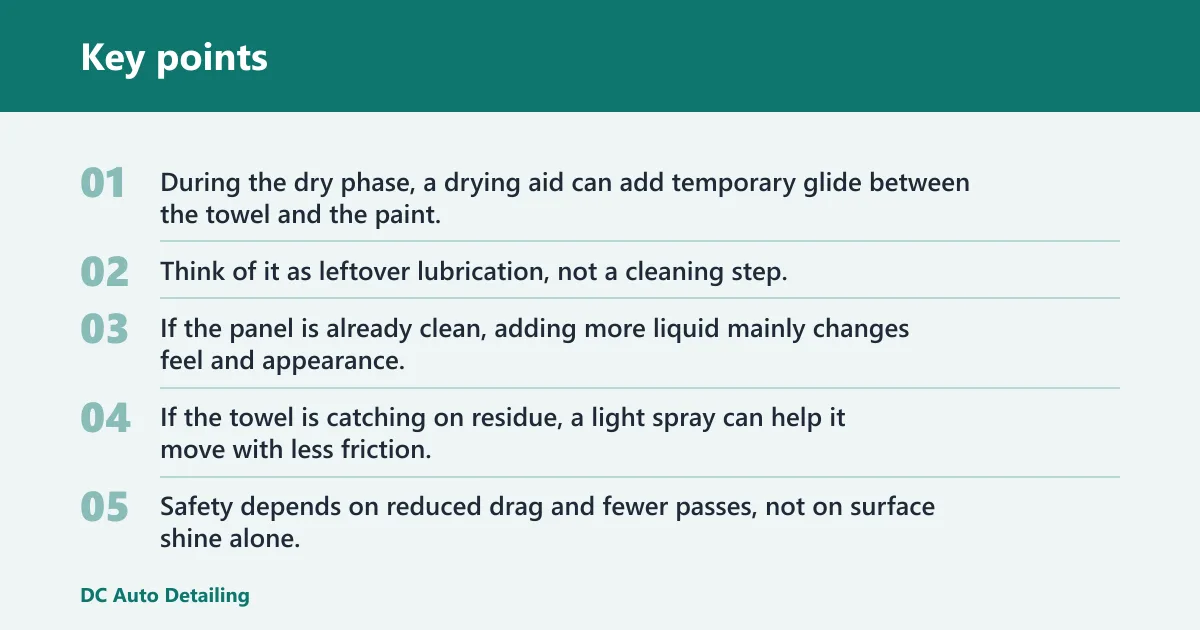
During the dry phase, a drying aid can add temporary glide between the towel and the paint. That can cut the pressure needed to finish a panel, which matters on softer clear coat and on finishes that haze easily with extra passes. It does not remove dirt by itself, and it does not make a rough wash safe.
Think of it as leftover lubrication, not a cleaning step. If the panel is already clean, adding more liquid mainly changes feel and appearance. If the towel is catching on residue, a light spray can help it move with less friction.
Why gloss and slickness are not the same thing
More gloss does not prove less marring. A product can leave a shinier look because it leaves a film, fills fine haze, or changes how light reflects, while the actual wipe pressure stays the same. Safety depends on reduced drag and fewer passes, not on surface shine alone.
That difference matters with rinseless washing because the wash solution already provides lubricity. A drying aid may improve the last pass, but the real benefit is lower friction when the towel or surface is not cooperating.
Say your compact sedan has light dust and a plush towel, but the air is humid and the finish starts to feel sticky halfway through the roof. A light drying aid may help the towel move without forcing harder pressure. If the same car wipes clean and slick with the wash solution alone, the extra spray is unnecessary.
When a drying aid helps and when it does not
Use one when the panel is soft, the towel is not gliding well, or the conditions make wipe-off harder than usual. Skip it when the paint is clean enough that the towel moves easily, the panel is already dry enough to finish with one pass, or the added product is likely to leave streaks that need more wiping.
Light dust through moderate road film is commonly treated as the useful range for rinseless washing. Heavy contamination often changes the equation because extra lubrication alone will not fix a dirty surface that needs a pre-wash or a different wash method first.
Suppose a black hood has moderate road film after a highway run, and a microfiber towel starts to drag before the panel is finished. That is a good case for a light drying aid or a wetter wash towel. If the same hood has caked mud on the lower edge, the answer is not more spray; it is a safer pre-rinse or touchless pre-wash first.
Drying aid after rinseless wash: use it or skip it?
| Soil level | Paint type | Towel quality | Weather | Product residue | Recommended action |
|---|---|---|---|---|---|
| Light dust | Normal clear coat | Clean plush towel | Cool, shaded, dry | Minimal | Skip it; dry with the rinseless solution and towel only. |
| Light to moderate road film | Soft clear coat | Plush towel but one face is damp | Humid or slightly warm | Low, but wipe feels grabby | Use a light drying aid on the towel or panel. |
| Moderate road film | Coated paint | Good towel, clean face rotation | Shade only | Some film remains after first pass | Use a small amount if it reduces drag; stop if streaking starts. |
| Heavy contamination | Any finish | Any towel | Any weather | Visible dirt or grit | Skip drying aid and pre-wash first; do not dry a dirty panel. |
| Very light soil | Matte or sensitive finish | High-pile towel | Cool panel, low wind | Little residue | Usually skip it; extra spray can leave visible film on matte surfaces. |
How to apply a drying aid without streaks
-
Start with a small section.
Work one panel or half-panel at a time. A light mist is enough; too much product can leave residue that takes extra passes to remove. -
Mist lightly and spread.
Use a fine spray, then spread it with a clean microfiber drying towel using straight-line passes. Two to four light mists per average panel is usually enough; stop before you see pooling or a wet sheen that lingers. -
Stop at the first streak.
If the towel starts smearing, the panel turns hazy, or streaks appear after one pass, stop adding product. Switch to a dry towel face or finish with the rinseless solution alone so you are not wiping the same film twice.
Rinseless wash concentrates already provide the wash-stage lubrication that makes the method work. Optimum No Rinse uses 1 oz in 2 gallons for washing, Griot’s Garage Rinseless Wash uses 1 oz per 2 gal, and P&S Absolute Rinseless Wash is labeled 1 oz per 2 gal. Product-specific directions still matter, especially when a formula is also used as a drying aid or detail spray.
What towel and wash method reduce marring most?
The safest setup is a clean plush microfiber drying towel, a lubricated rinseless wash solution, and a panel-by-panel sequence that never leaves the surface wet for long. A drying aid can help, but towel quality and technique usually matter more. If the towel is dirty, the spray will not fix the scratch risk.
Microfiber drying towel choice and face rotation
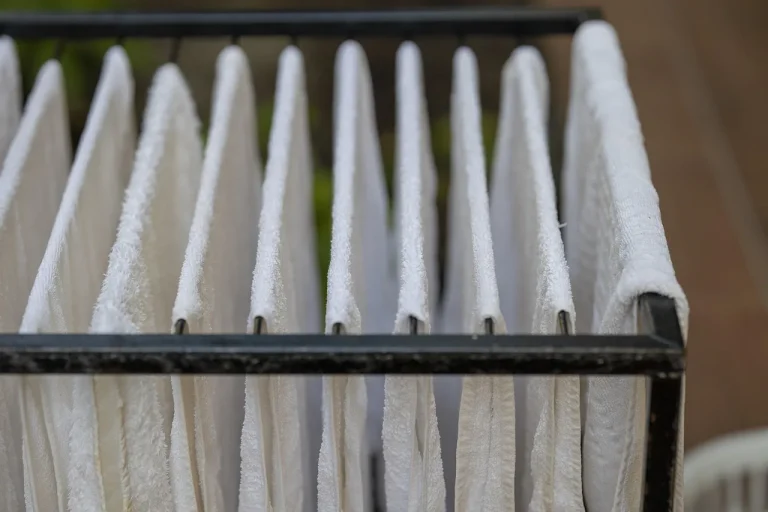
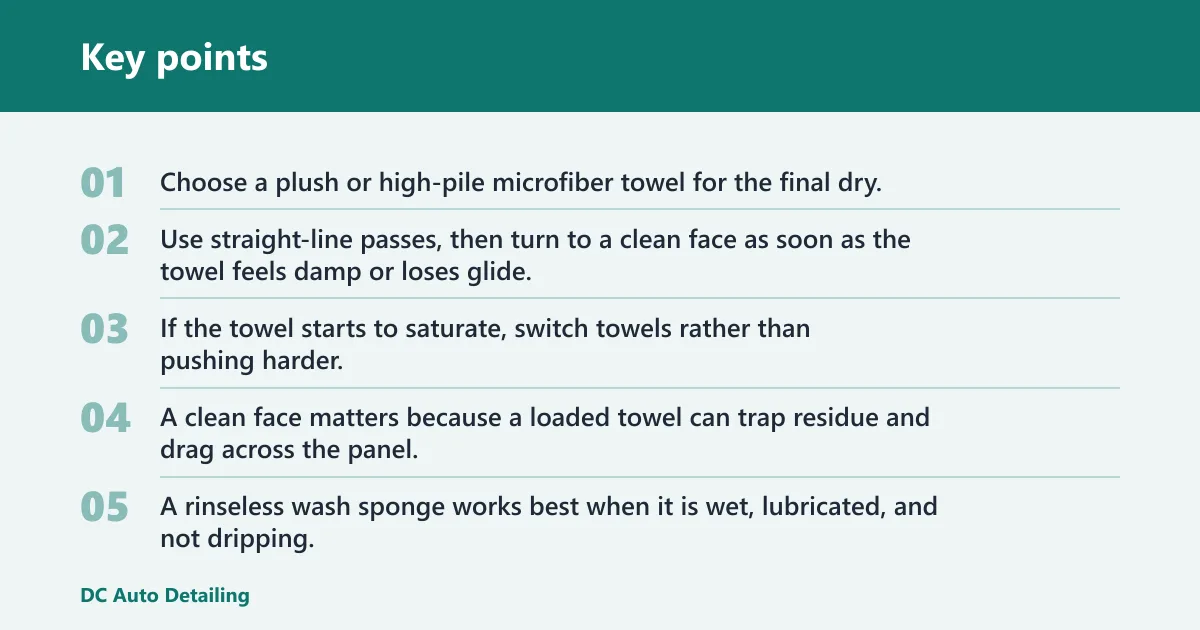
Choose a plush or high-pile microfiber towel for the final dry. Use straight-line passes, then turn to a clean face as soon as the towel feels damp or loses glide. If the towel starts to saturate, switch towels rather than pushing harder.
A clean face matters because a loaded towel can trap residue and drag across the panel. That is when marring risk climbs, especially on black paint, soft clear coat, and any finish that already shows fine marks easily.
Rinseless sponge use with a pre-treatment sprayer
A rinseless wash sponge works best when it is wet, lubricated, and not dripping. Light pressure is the goal. If the panel has heavier deposits, pre-treat it first with the same wash dilution in a sprayer so the surface is wet before contact and friction stays lower.
That pre-treatment matters on road film and winter grime. It does not turn a rinseless wash into a rescue wash, but it does reduce the chance that the sponge drags contamination across the paint.
Panel-by-panel wash order and dry timing
Work one panel at a time: spray, wipe, dry. Do not let the solution dry on the panel, and do not move across several panels before drying the first one. Shade or a cool surface gives you more time and less spotting.
The Hawaii Detailing guide says a full vehicle typically uses 2–3 gallons, the standard wash dilution is 1 oz per 2 gallons, and a panel should be dried immediately after wiping. It also warns against heavy contamination for rinseless washing. Those points line up with the same basic rule: keep the surface wet only long enough to clean it.
A common first-timer mistake is spraying a large door, then waiting to see if the gloss improves before drying. By the time the towel arrives, the solution has started to flash, and the panel needs more wiping. That extra wiping is what adds risk, not the absence of a drying aid.
Can you use the rinseless solution as the drying aid?
Yes, sometimes the wash mix is enough. A rinseless solution already contains lubricity, so a damp drying towel can finish the panel without another product. Add a dedicated drying aid only when the towel starts to grab, residue remains after the first pass, or the finish needs more glide than the wash mix provides.
When the wash mix is enough
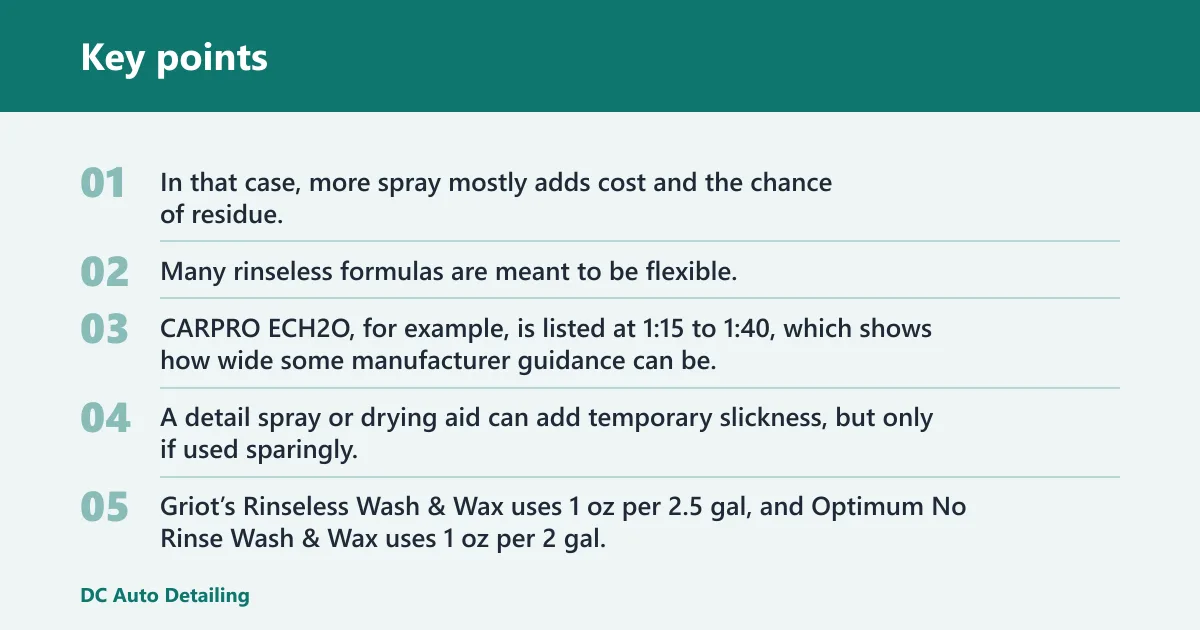
If the paint is lightly soiled, the towel is clean, and the panel dries without streaking, the rinseless solution has already done the job. In that case, more spray mostly adds cost and the chance of residue. This is the normal outcome for maintenance washes on lightly dirty vehicles.
Many rinseless formulas are meant to be flexible. CARPRO ECH2O, for example, is listed at 1:15 to 1:40, which shows how wide some manufacturer guidance can be. That flexibility does not mean every panel needs extra detailing spray afterward.
When a dedicated spray is the better choice
Choose a dedicated drying aid when the surface feels sticky, the towel is not gliding, or humidity is making the last pass annoying enough that you would otherwise press harder. A detail spray or drying aid can add temporary slickness, but only if used sparingly.
Be careful with mixed products. Griot’s Rinseless Wash & Wax uses 1 oz per 2.5 gal, and Optimum No Rinse Wash & Wax uses 1 oz per 2 gal. Those products can leave more residue than a straight rinseless wash, which means they may need less help in some situations and more caution in others.
How coatings, PPF, and matte paint change the answer
Coated finishes and film can still benefit from careful drying, but they do not remove the need to follow the label. A drying aid may be fine on ceramic coating or PPF if the product says it is safe, but that is product-specific. Matte paint is less forgiving because any film or gloss change can show up fast.
Finish-specific compatibility
For ceramic coating and PPF, use gentle technique and check whether the drying aid is stated as safe for the finish. Some products are fine on these surfaces, but the label is the authority. If the coating is slick already, the extra spray may add little beyond residue risk.
On matte paint, skip glossy sprays unless the product explicitly says it is safe for matte finishes. Even a light residue can change the look. The drying step still matters, but the product choice matters more.
Residue, streaking, and label checks
Residual film is the main failure case after rinseless washing. Hard water, humid weather, and over-application all make streaking more likely because they slow drying and leave more material behind. If the first section streaks, stop and reduce spray before continuing.
Product-specific directions matter on every surface, including paint, glass, trim, and some interiors. Many rinseless washes are labeled safe on those surfaces when used as directed, but that does not mean every drying aid belongs there too.
Frequently asked questions
Should you use a drying aid after a rinseless wash?
Only when it adds useful slickness or reduces drag. If the towel already glides and the panel dries cleanly, skip it. A rinseless wash already provides lubrication, so the drying aid should solve a specific wipe-off problem, not be treated as a default final step.
Does a drying aid reduce marring after rinseless washing?
It can, but only indirectly. The benefit comes from lower friction and fewer hard passes, not from gloss. If the spray causes streaking or makes you wipe longer, it can raise marring risk instead of lowering it.
Will drying aid add gloss to a rinseless wash?
Often, yes. A drying aid may leave a glossier look, especially on dark paint. That does not prove it improved safety. Gloss and marring reduction are separate outcomes, so judge the product by how the towel moves and whether the panel finishes cleanly.
Can you use a detail spray as a drying aid after rinseless wash?
Yes, if the label allows it and you use a light amount. A detail spray can work as a drying aid because it adds temporary slickness, but some sprays streak easily on warm panels or in humidity. Test on one section before committing to the whole vehicle.
How much drying aid should you use after rinseless wash?
Use the smallest amount that improves glide. Light mists over a small section are enough; flooding the panel is not. If streaking starts, stop adding product and finish with a dry towel face or the rinseless solution alone.
When should you skip drying aid after a rinseless wash?
Skip it when the vehicle is only lightly dusty, the towel is clean and plush, and the surface already dries without drag. Also skip it on matte paint unless the product is rated safe. Extra spray is not helpful if it only creates residue or forces more wiping.
What towel is best when drying after a rinseless wash?
A plush microfiber drying towel is the safest default. It should have clean faces that you rotate as the towel loads up. Use straight-line passes and switch to a dry side as soon as the towel starts to feel damp or grabby.
How do you keep a rinseless wash from leaving swirl marks?
Keep the soil level low, use a lubricated wash solution, and dry each panel immediately after wiping. Use light pressure, a clean towel, and a pre-treatment sprayer on dirtier sections. The biggest mistakes are too much pressure, dirty media, and trying to push through heavy contamination.