Tire shine: How to choose, apply, and make it last
Tire shine lasts longest and slings least when you match the formula to your goal: water-based for a satin, daily-driver look, solvent-based gel for maximum gloss and durability, then apply 1 thin coat to a dry tire. Skip the prep or overapply, and you get brown residue, sling on paint, and a shine that fades after the first rain. This guide shows how to choose tire shine by driving conditions and finish goal, then clean, apply, and maintain it for longer wear.
The tradeoff is simple. The glossier the finish target, the more attention you need to give prep, cure time, and reapplication. A natural new-tire look usually asks less from both the product and the owner than a wet-look sidewall expected to stay glossy through rain and highway miles.
Use case matters more than brand hype. A daily commuter, a garage-kept weekend car, a wet-climate highway car, and a show car do not need the same formula, the same finish, or the same reapplication schedule.
How should you choose tire shine for your driving?
Choose tire shine by deciding what matters most on your car: low sling and simple upkeep for a daily driver, water resistance and dry-to-touch behavior for rain and highway use, or maximum gloss for a weekend or show car. Set the formula from the finish goal and driving conditions before you worry about format.
Daily driver: low sling matters more than maximum gloss
For a daily driver, a satin finish or natural new-tire look is usually the smart target. Water-based dressings usually fit that job best because they tend to dry cleaner, are commonly biodegradable, and spread into a thin coat with less effort than thick gloss products.
That matters if the car sees short errands Monday through Friday, curbside parking, and only occasional hand-washing. The finish may not look as wet as a solvent-heavy gel, but lower residue and easier touch-ups often matter more.
Wet-climate or highway commuter: water resistance and cure time matter
If the car spends hours at highway speed or lives in frequent rain, ignore the label photo. Dry-to-touch performance, buffing response, and water resistance matter more than initial shine because they decide how much product stays on the tire instead of ending up on paint.
Some tire shine products can last 2-4 weeks in normal use. Severe weather can cut that to 1 week. Those numbers only mean much when the tire was cleaned properly, dried fully, and given enough cure time before the car moves.
Weekend and show cars: gloss target sets the maintenance schedule
A garage-kept weekend car can tolerate a higher-maintenance product because it sees fewer wet commutes and fewer wash cycles. That is where solvent-based gels and high-gloss dressings make sense if the goal is a wet look that reads darker and glossier from a few steps away.
Show-car prep is different. The tire may need a second thin coat for evenness, but that does not mean a heavy coat. Gloss and durability are separate. More product often raises sling risk long before it improves wear.
Picture a black coupe that only comes out on dry Sundays. A high-gloss gel can fit that use well because the owner can allow full drying time and accept more frequent touch-ups to keep the wet look consistent.
When Tire Shine Helps—and When It Doesn’t
Tire shine is only useful when the product matches the tire and the application is careful. The supporting guide explains that rubber-safe formulas can add a cleaner look and a light layer of protection, but only if the sidewall is clean, the coat is thin, and nothing reaches the tread. It also spells out the common mistakes that cause sling, dust buildup, and a slippery finish.
If you want to know whether a specific product is worth using, this tire shine guide shows how to judge water-based versus solvent-based dressings, when to skip tire shine altogether, and how to use it without making the tire look greasy or overworked.
Should you choose spray, gel, foam, or aerosol?
Choose the format by weighing application speed against placement control. Sprays are quick for routine maintenance, gels give the best sidewall precision, foam is simple but can waste product on textured rubber, and aerosol is convenient but raises overspray risk. The right format is the one that suits the tire and the job.
Spray dressings: fast, but watch overspray
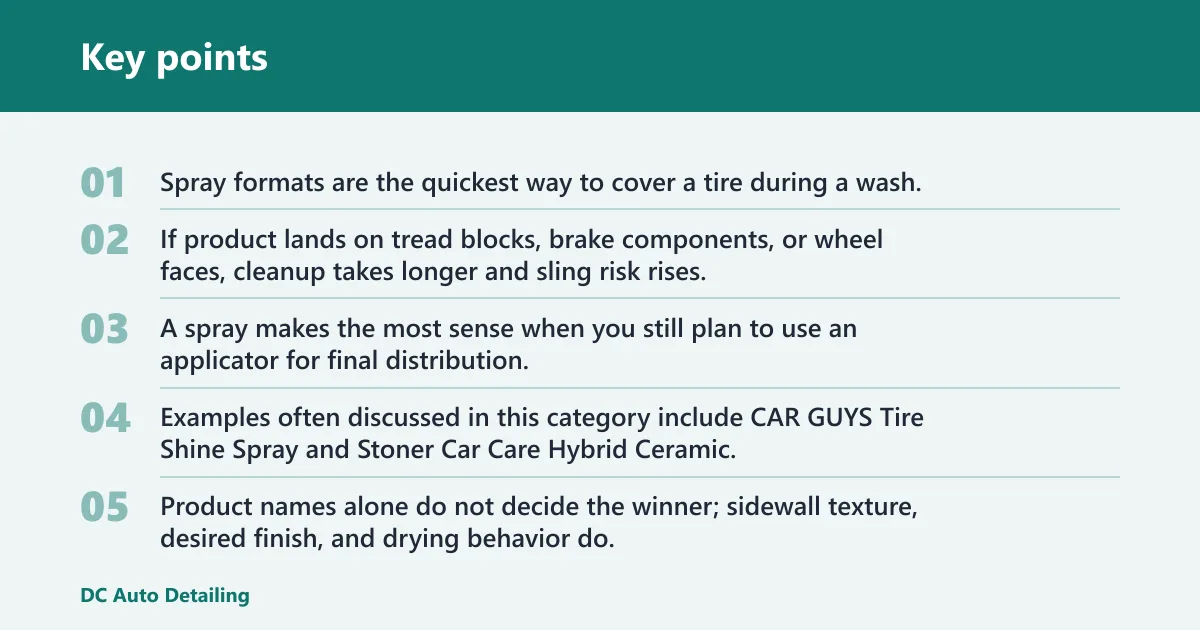
Spray formats are the quickest way to cover a tire during a wash. They also vary a lot. Some are thin dressings meant to be spread with an applicator, while others are direct-spray products designed to level on their own.
Overspray is the weak point. If product lands on tread blocks, brake components, or wheel faces, cleanup takes longer and sling risk rises. A spray makes the most sense when you still plan to use an applicator for final distribution.
Examples often discussed in this category include CAR GUYS Tire Shine Spray and Stoner Car Care Hybrid Ceramic. Product names alone do not decide the winner; sidewall texture, desired finish, and drying behavior do.
Gel dressings: slower, but easier to control
Gel gives more control near lettering, serrated sidewalls, and the rim edge. It stays where the applicator puts it, which helps on low-profile tires where a sloppy pass can stain the wheel lip or leave shiny smears on the tread shoulder.
Meguiar’s Endurance Tire Gel is one widely known example in this group. Gel is often the best choice when the owner wants a high-gloss wet look and is willing to spend more time applying a thin, even layer.
Foam and aerosol: convenience with tradeoffs
Foam can be easy for basic coverage, especially on smoother sidewalls, but it tends to hide how much product actually went down. That can lead to patchiness once the foam collapses, or too much product in deep sidewall texture.
Aerosol is fast and can look uniform at first, but it carries the highest chance of overspray and waste. On a windy driveway or near freshly cleaned paint, that convenience can backfire fast.
Black Magic Intense Tire Wet is often grouped with high-gloss, quick-application products. That style fits an appearance-first job better than a low-maintenance commuter routine.
Water-based vs solvent-based tire shine
How each formula behaves on dry rubber
Water-based dressings usually spread more easily on a fully dry tire and are less likely to feel greasy after buffing. Solvent-based dressings are usually clear and greasy, and they often leave a darker, wetter-looking finish that can last longer if applied carefully.
Neither formula fixes bad prep. If old dressing, road film, or browning residue is still on the sidewall, both types can streak, flash unevenly, or fade faster than expected.
Finish range, dry-to-touch feel, and rain resistance
Water-based products usually work best for matte, low-sheen, and satin finishes, though some can be layered to a medium gloss. Solvent-based products are more often chosen for a high-gloss wet look and stronger water resistance, especially in gel form.
Dry-to-touch matters because it predicts sling better than shine level alone. A tire that still feels wet on the surface is more likely to throw product at highway speed, even if the gloss looks good in the driveway.
Where UV claims fit
UV protection claims can be useful, but they should not be treated as proof that one formula will automatically last longer or protect better in every climate. Judge products by gloss retention, ease of application, sling resistance, and dry-to-touch performance.
Some dressings marketed for trim and tires, such as Adam’s Polishes Graphene VRT and Chemical Guys VRP Dressing, are chosen as much for finish style and versatility as for any protection claim.
Tire shine decision table
| Use case | Recommended formula type | Finish goal | Expected reapplication window | Sling risk | Prep steps before applying |
|---|---|---|---|---|---|
| Daily driver | Water-based dressing, preferably dry-to-the-touch | Satin or natural new-tire look | About 2-4 weeks in normal use, or sooner after frequent washes | Low if 1 thin coat is buffed and allowed to dry | Remove old dressing, scrub road film, rinse fully, dry sidewall completely, apply lightly around the rim edge |
| Garage-kept weekend car | Solvent-based gel or richer dressing | High gloss wet look | About 2-4 weeks, often limited more by owner preference than weather | Medium if overapplied; low with thin coats and full cure time | Deep-clean sidewall, remove browning residue, dry fully, use an applicator for even coverage and a final buff |
| Wet-climate commuter | Water-based or hybrid dressing with good water resistance and dry-to-touch behavior | Satin to medium gloss | Often about 1 week in severe weather | Medium because rain and highway speed expose excess product fast | Strip residue thoroughly, clean grooves and lettering, dry completely, use a thin coat, then let it cure before driving |
| Show car | Solvent-based gel or gloss-focused dressing | Wet look or deep gloss | Reapply as needed for event prep; durability is secondary to appearance | Medium to high if a second coat is rushed or excess is left on the surface | Clean until browning stops transferring, dry fully, apply a controlled first coat, level a second thin coat only if needed, buff excess before moving the car |
What prep makes tire shine last longer?
Prep that lasts means more than “clean and dry.” Remove old dressing, road film, and brown blooming residue before fresh product goes on, and make sure the tire is fully dry before application. If residue stays behind, the new dressing bonds to contamination instead of rubber and wears off faster.
What to remove before reapplying
Brown residue often gets blamed on the shine itself when the real problem is blooming or leftover dressing mixed with grime. If the tire still feels slick after cleaning, or a towel pulls brown residue from the sidewall, prep is not finished.
Say your crossover has 235/55R18 tires and still shows brown streaks after a basic wash. Adding more shine at that point only seals in residue, makes the patchiness darker, and shortens the next wear cycle.
Why a fully dry tire surface matters
Water trapped in sidewall texture dilutes the dressing at the exact spots where even coverage matters most. The result is blotchy gloss, weak dry-to-touch performance, and less resistance to the first rain or highway run.
This is one reason tires often look good right after application but fade unevenly within a day. The product did not fail by itself. It was spread across mixed wet and dry areas.
How sidewall texture changes product use
Smooth sidewalls need less product and show streaks faster when overapplied. Aggressive truck or SUV sidewalls with deep lettering and ribs can absorb more dressing, but they also trap excess in pockets that later sling out.
That means textured sidewalls benefit from a slower applicator pass, more leveling, and more buffing. They do not benefit from a heavier coat.
Testing often cited in buyer guides covered 15 different vehicles over 60 days, including rain and direct sunlight. That kind of mixed-condition context matters because sidewall shape and exposure change how a product behaves.
Prep checklist
- Rinse the sidewall. Flush loose grit from the tire first so the cleaning step does not grind dirt into the rubber texture. Pay extra attention to shoulder blocks and raised lettering.
- Clean off old dressing. Use a dedicated tire cleaner or a strong wash solution with a tire brush until the residue stops looking brown or greasy. This step does the most to reduce the “shine turned brown” complaint.
- Rinse completely. Leftover cleaner can interfere with bonding and leave dull patches. Rinse until runoff looks clear and no suds remain in lettering or grooves.
- Dry the tire fully. Towel-dry the sidewall and then allow extra air-drying time if the surface has deep texture. Product spreads and cures more evenly on truly dry rubber.
- Inspect before dressing. Check for damp spots, leftover browning, and residue near the bead area by the wheel. If any remain, repeat cleaning there instead of covering them.
How do you apply tire shine without sling?
Apply tire shine without sling by using a small amount on an applicator, spreading 1 thin coat evenly, keeping product off the tread and wheel, then letting it dry and buffing away excess. Sling usually comes from a chain of mistakes: too much product, poor leveling, and driving before the surface cures.
Applicator choice and rim-edge control
A foam applicator gives predictable coverage on most tires. A wave applicator can work better on curved sidewalls because it follows the tire contour and reaches recessed lettering with less pressure. Chemical Guys Wonder Wave Applicator is one example often mentioned for that reason.
The best applicator is the one that lets you keep product away from the wheel edge while still reaching the outer shoulder of the sidewall. Precision there matters because smears near the rim lip are easy to miss until they dry.
Exact anti-sling sequence
- Load the applicator lightly. Put a small amount of product on the foam or wave pad rather than flooding the tire directly. Starting light makes it easier to add product than to remove a greasy excess layer.
- Spread one thin coat. Work around the sidewall in overlapping passes, pressing just enough to reach texture and lettering. Keep the product off the tread face and off the wheel to reduce both sling and cleanup.
- Level uneven spots. Re-pass the tire with the same applicator, now with little or no added product, to even out dark and light sections. This step matters most on rough sidewalls and raised branding.
- Let it dry. Allow the coating to settle until it looks uniform rather than wet and mobile. A product that still looks pooled near lettering is not ready for the road.
- Buff the excess. Wipe the sidewall lightly with a separate towel or dry applicator to remove surface residue. Buffing is the easiest way to improve dry-to-touch results and cut sling before highway driving.
Where most sling starts
Overspray is one cause, but not the main one. Most sling starts when excess product remains on the outermost high points of the sidewall, especially after a rushed second coat or immediate driving.
A common first-timer mistake is spraying until the sidewall looks uniformly wet, then leaving without buffing. At neighborhood speed it may look fine, but at highway speed the extra film can move outward and mark the lower doors.
How long does tire shine last in rain and highway driving?
Tire shine usually lasts 2-4 weeks in normal use, can drop to 1 week in severe weather, and may also be thought of as lasting about 3-4 washes on all four tires, depending on the product. Rain, wash frequency, highway speed, and sidewall texture change the result more than a label promise does.
Typical wear windows by condition
The practical way to judge durability is by condition, not by one universal number. A garage-kept car that avoids storms may hold a satin dressing toward the long end of the range. A commuter that faces rain, direct sun, and highway spray may burn through the same dressing much faster.
Some solutions are described as providing 3-4 washes for all four tires. That is useful because it frames durability around maintenance reality, not just calendar time.
Why results shorten
Three factors shorten wear fast: over-application, short cure time, and rough sidewalls. Product sitting on top of the texture instead of in a thin, even film is easy for water and airflow to strip away.
Suppose a sedan gets dressed right before a 40-mile wet highway commute. If the sidewalls were still damp and the product was not buffed, the shine can look half gone by the next day even though the formula itself was not unusually weak.
Cost per application framework
A realistic value check is cost per application, not bottle size alone. Divide bottle size by the amount needed for one thin coat on four tires, then factor in whether the product typically needs one coat or two and how often it must be reapplied in your conditions.
If one formula needs frequent reapplication to maintain a wet look, and another keeps a satin look longer with a single coat, the second can be the cheaper routine even if the bottle costs more upfront. Maintenance interval changes value as much as bottle size does.
Frequently asked questions
What is the best tire shine for a daily driver?
For most daily drivers, the best choice is a water-based dressing that dries close to the touch and leaves a satin or natural new-tire look. That combination lowers sling risk, is easier to maintain, and usually needs less product than a high-gloss formula on a commuter schedule.
Should I choose tire shine spray or gel?
Choose spray if speed matters and you are willing to control overspray with an applicator. Choose gel if you want better rim-edge precision, more control on low-profile tires, and a stronger path to high gloss. Spray is faster; gel is usually easier to place exactly where it belongs.
Is water-based tire shine better than solvent-based?
Neither is better in every case. Water-based dressings are usually cleaner, easier to level, and a strong match for satin finishes and routine maintenance. Solvent-based dressings are usually clearer and greasier, often glossier, and often chosen when maximum gloss and stronger water resistance matter more than cleanup speed.
Why is my tire shine turning brown or disappearing quickly?
Browning usually points to blooming, leftover dressing, or road-film residue under the new product rather than a simple product defect. Fast fading often comes from under-cleaning, applying to a damp tire, overapplying, or driving too soon. Clean until residue stops transferring, dry fully, then use a thin coat.
What applicator gives the most even tire shine finish?
A foam applicator is the safe default because it spreads evenly and keeps product controlled. A wave applicator can be even better on curved or deeply textured sidewalls because it follows the contour and reaches lettering with less excess. The most even finish comes from light loading and a final leveling pass.
When should I apply tire shine after washing the car?
Apply tire shine only after the tire has been fully cleaned and fully dried. That means after washing the wheels and tires, after rinsing away cleaner, and after towel- or air-drying the sidewall. Applying onto damp rubber weakens coverage, hurts dry-to-touch results, and shortens wear in rain.