How to use ceramic coating spray without streaks
Use a clean microfiber towel for fresh streaks within about 1–5 minutes, or reapply a light mist of spray and buff again; if the coating has cured, stop wiping and switch to a panel-safe cleaner or a polish test spot. Ignoring the difference can turn a simple wipe-off mistake into hazing, smeared residue, or a high spot that needs correction. This guide shows how to identify each case and remove streaks without making the finish worse.
Why ceramic spray streaks happen
Streaks usually come from too much product, poor leveling, or the wrong wipe-off timing. Product excess leaves high spots, towel contamination leaves lint or residue, and heat or direct sun can flash the coating before it spreads evenly. The fix depends on which of those three caused the mark.
Product excess and thin-film leveling issues
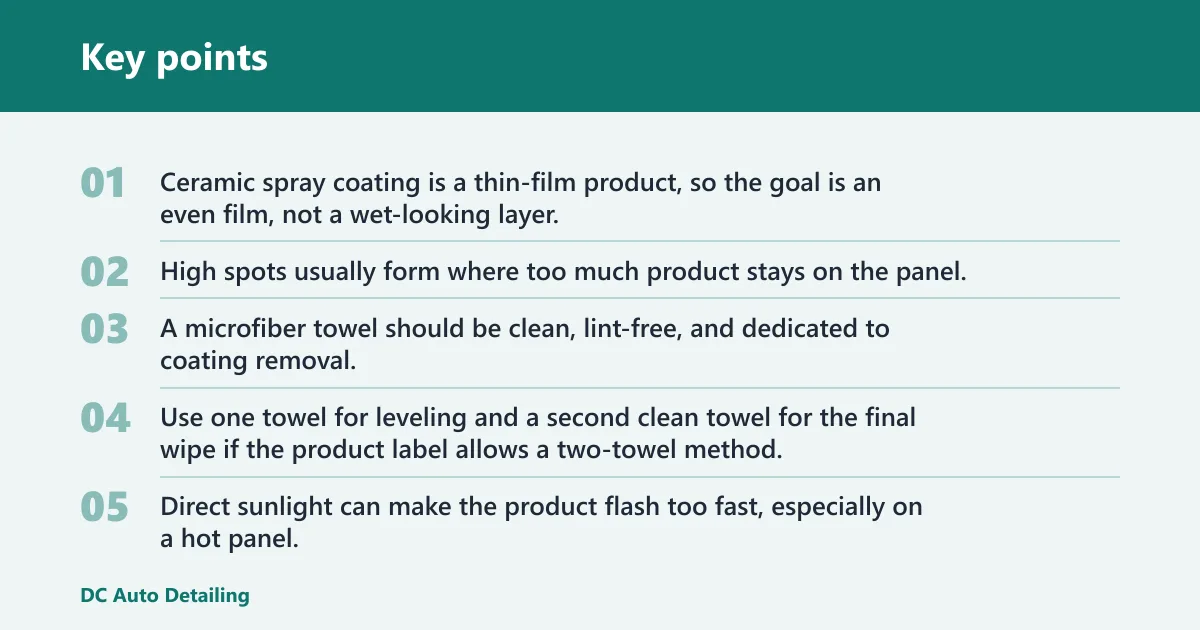
Ceramic spray coating is a thin-film product, so the goal is an even film, not a wet-looking layer. Competitor instructions differ by chemistry: some products are spray-and-buff, while one rinse-off ceramic coating is applied during the rinse step. Other spray coatings are used on wet or dry paint depending on the label, so the application method has to follow the product, not a generic routine.
High spots usually form where too much product stays on the panel. Those areas often read as streaks or smears first, then dry into a harder-to-correct patch if you wait too long.
Towel contamination and lint transfer
A microfiber towel should be clean, lint-free, and dedicated to coating removal. Fabric softeners can leave residue that interferes with leveling, and a towel that already holds wax or dressing can smear that residue back onto the paint. Use one towel for leveling and a second clean towel for the final wipe if the product label allows a two-towel method.
Flash drying from heat, sunlight, or overworking
Direct sunlight can make the product flash too fast, especially on a hot panel. Wipe time matters because the coating has to level before it sets; if you keep working it after the film starts to grab, you can leave a haze that looks like streaking. Adams notes that dust, pollen, or wind-blown debris can also leave uneven streaks, which is why a shaded, controlled area matters.
What you need before you start
Gather the right basics before you touch the panel again. A clean microfiber towel, a second dry towel, the product bottle, a soft applicator if the label calls for one, and a bright inspection light are the minimum tools for rescue work. If the streak is cured, add a panel-safe cleaner and be ready to stop if the finish starts to haze.
- Clean microfiber towel for leveling and final wipe
- Second dry microfiber towel for inspection wipe
- Bright light for checking high spots
- Product label for flash time and cure time
- Panel-safe cleaner for cured residue testing
How to prep paint so spray coating levels cleanly
Wash and decontaminate first, because wax, oils, and residue can keep the film from spreading evenly. The panel also needs to be cool to the touch and out of direct sunlight. That matters more than speed. A hot panel can flash the product before you can level it.
Wash and dry before application
Start with a thorough wash, then dry the vehicle completely unless the specific product is designed for wet application or rinse-off use. Wipe New says its spray coating is applied while the vehicle is wet, but Wipe New also says to dry the vehicle thoroughly and avoid letting the product dry on the surface for its own process. That label-specific detail is why you should not assume one spray behaves like another.
Wipe New also recommends a microfiber towel to dry the car completely, and says the coating can be used on paint, glass, mirrors, and canvas tops. That does not change the leveling rule: the surface has to be in the condition the label expects before you begin.
Decontaminate and remove wax, oils, and residue
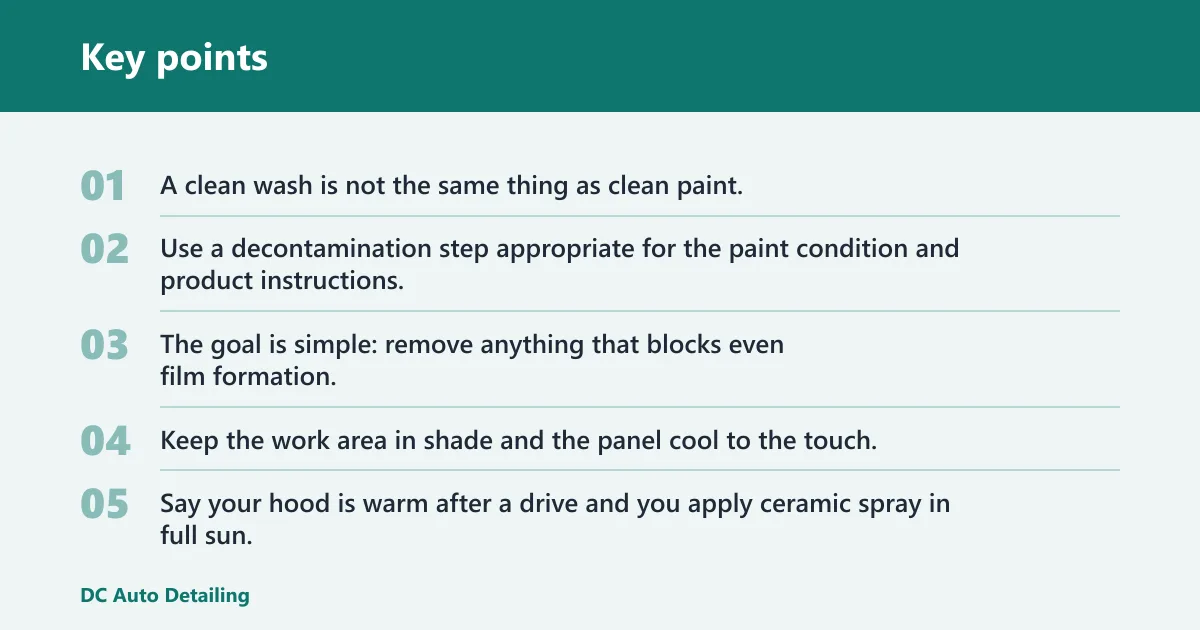
A clean wash is not the same thing as clean paint. If the panel carries old wax, polishing oils, road film, or residue from previous dressings, the coating can lay unevenly and leave streaks. The same source says poor surface preparation can cause ceramic coating streaking, and that is one of the most common avoidable causes.
Use a decontamination step appropriate for the paint condition and product instructions. The goal is simple: remove anything that blocks even film formation.
Check that the panel is cool and shaded
Keep the work area in shade and the panel cool to the touch. The same source says direct sunlight can contribute to streaking, and Wipe New says to keep the surface cool and out of direct sunlight. That advice is especially important on dark paint, hood tops, roof panels, and doors that have been baking in open air.
Say your hood is warm after a drive and you apply ceramic spray in full sun. The product flashes before you finish the second pass, and the towel starts dragging. The result is usually a visible smear line that is much easier to prevent than correct.
How do you apply ceramic spray without streaks?
Apply in small sections, use thin layers, and inspect under bright light before moving on. The best defense against streaking is not a heavier coating pass; it is controlled coverage with early correction. Thin layers level more predictably and give you time to catch residue before it cures.
-
Split the panel.
Use a section about the size of half a door or a quarter hood instead of spraying the whole panel at once. Smaller areas let you level the film before it flashes. -
Apply a light mist.
Use only enough product to create a thin, even film. Adams advises applying thin layers with microfiber applicators, and the same thin-film logic applies to spray products.Stop as soon as the surface looks evenly damp, not wet. Extra product is what leaves high spots.
-
Level immediately.
Use a clean microfiber towel to spread and level the film before it dries. If the towel starts to skip or grab, stop and switch to a fresh towel section. -
Inspect under bright light.
Check the section from different angles with a bright light. Uneven sheen, a darker patch, or a drag line usually means excess product remains on the surface.
Picture a door panel handled in two passes, each about two feet wide. One light mist, one leveling pass, one inspection. That rhythm is slower than a broad spray-and-chase routine, but it catches streaks before they lock in.
Ceramic spray troubleshooting table
Use this table to separate a fresh wipe-off mistake from a cured high spot. The correction changes based on timing, because the wrong move after cure can make the finish harder to fix.
| Symptom | Most likely cause | Exact fix | Rework now? |
|---|---|---|---|
| Fresh smear that appears within minutes | Too much product or incomplete leveling while the film is still wet | Use a clean microfiber towel and level the section again within 1–5 minutes; if needed, add a light mist of product and buff with a dry towel | Yes |
| Cured high spot that looks like a dull streak | Excess product left to dry into a thicker patch | Stop wiping. Let it fully cure, then test a small area with a panel-safe cleaner or a mild polish approach before expanding correction | No |
| Towel haze after the final wipe | Microfiber contamination, lint transfer, or overworking the film | Swap to a clean, lint-free towel and lightly re-level the haze; avoid fabric-softener-treated towels | Yes |
| Water-spot-like streaking right after application | Flash drying from heat, sun, wind, or a panel that was not cool enough | Move to shade, cool the panel, then reapply a very light mist only if the label allows it | Yes |
| Ragged streaks with dust marks | Airborne dust, pollen, or debris landing on the wet film | Stop, clean the area, and rework the section with fresh towels in a cleaner spot | Yes |
Can you fix streaks after the coating dries?
Yes, but only if you identify whether the mark is still fresh or already cured. Fresh smears can often be leveled again, while cured high spots need a different path because more wiping can spread the defect or mar the finish. The longer you wait, the less forgiving the correction becomes.
Fresh smears versus cured high spots
Fresh smears usually respond to a clean microfiber towel within 1–5 minutes, or to a light mist followed by a careful buff if the product allows it. A cured high spot is different. It has already set into a thicker patch, and the correction usually shifts from wipe-off to controlled removal or polishing test spots.
A common first-timer mistake is treating every streak the same way. A streak from towel lint can disappear with a clean wipe, while a cured excess patch may need a separate correction step. Mixing those up can turn a small defect into a larger one.
When to re-level, reapply, or strip and restart
-
Test the timing first.
Lightly touch the area with a clean microfiber towel. If the residue moves, it is still fresh enough for re-leveling. If it resists and leaves a hard edge, stop treating it like fresh product. -
Re-level fresh residue.
Use a dry, clean towel and one light pass. If the mark remains, add a very light mist only if the label says that method is allowed for the product. -
Leave cured spots alone.
Once a high spot has cured, do not keep scrubbing it with dry towels. That often creates haze around the defect and widens the problem. -
Escalate carefully.
For a cured high spot, test a small area with a panel-safe cleaner or polish on a hidden section first. If that does not level the area safely, stop and consult the product instructions before proceeding.
Do not rewash or rework too early. Curing time controls durability, and premature exposure to rain, dust, or sunlight can worsen defects before the coating locks down. Follow the product label exactly on cure time and protected-dry conditions.
Frequently asked questions
How do I stop ceramic coating spray from streaking?
Wash and decontaminate first, keep the panel cool and shaded, apply only a thin layer, and level it immediately with a clean microfiber towel. Most streaks start with excess product or heat-induced flash drying, so small sections and bright-light inspection are the easiest prevention tools.
What causes streaks after ceramic spray coating?
The main causes are product excess, contaminated towels, and flash drying from heat or direct sunlight. Poor prep can also leave wax, oils, or residue on the panel, which prevents even leveling. Dust, pollen, and wind-blown debris can add uneven streaks as well.
Can I fix high spots or streaks after spraying ceramic coating?
Fresh smears can often be corrected right away with a clean microfiber towel or a light re-mist and buff if the label allows it. Cured high spots are harder to fix and should not be treated like fresh residue. Once they cure, use a more cautious correction path.
Should ceramic spray coating be applied in shade or sunlight?
Apply it in shade on a cool panel. Direct sunlight can flash the product too fast and leave streaks or drag marks, especially on warm paint. If the panel is hot to the touch, move the vehicle or wait until the surface cools before applying.
How much ceramic spray coating should I apply at one time?
Apply only a small section at a time and keep the layer thin. A broad-panel spray routine makes it harder to level the film before it sets, which raises the chance of high spots. Thin, even coverage is the safer approach for most spray coatings.
Do I need a special towel to remove streaks from ceramic spray coating?
You need a clean, lint-free microfiber towel dedicated to coating removal. Avoid towels with fabric softener residue, and avoid using a towel that has already picked up wax, dressing, or dirt. Those contaminants can create more streaks instead of removing them.
How soon should I buff ceramic coating spray off?
Buff it as soon as the product is spread and leveled, before it dries on the panel. Some products need a spray-and-buff method, while others are spray-and-rinse or wet-application formulas, so the label controls the timing. Waiting too long raises the risk of haze and high spots.
What is the difference between ceramic spray and ceramic coating?
Ceramic spray usually means a quicker spray-on product that is easier to apply and maintain, while traditional ceramic coating generally refers to a more involved coating process with longer prep and cure demands. The spray version can still streak if overapplied, so easier application does not mean no correction is needed.
How long does ceramic spray coating last?
Durability depends on product chemistry, prep, and care. Some spray ceramic coatings are claimed to last up to 12 months and endure 50 washes, but those figures are product-specific, not universal. Follow the label and protect the coating during cure for the best result.
Does spray on ceramic coating really work?
Yes, spray coatings can work when you follow the label, prep the surface properly, and apply thin layers in small sections. They do not fix scratches or wash marring, and they are not all the same. The difference between a clean finish and streaking is usually technique and timing.